
Best Peptides for Weight Loss in 2026: A Complete Research Guide

Written bySpartan Research Team
The landscape of weight loss peptide research has evolved dramatically heading into 2026. With new published data on multi-receptor agonists, mitochondrial peptides, and combination protocols, researchers now have more tools than ever to investigate the mechanisms behind fat metabolism, appetite regulation, and energy homeostasis. This guide examines the best peptides for weight loss based on current scientific literature, preclinical findings, and emerging research trends.
Whether you’re setting up new laboratory protocols or reviewing the latest in vivo data, understanding how these compounds compare — and how they may work together — is essential for informed research design. Below, we rank the top weight loss peptides of 2026 and break down what the published evidence actually shows.


Top Weight Loss Peptides for Research in 2026: Ranked by Evidence
1. GLP-1(Sema) — The GLP-1 Receptor Agonist Standard
GLP-1(Sema) remains the most extensively studied peptide in obesity research. As a glucagon-like peptide-1 receptor agonist, it mimics the incretin hormone GLP-1, which plays a central role in glucose homeostasis and satiety signaling.
Key research findings:
- Clinical trial data published in The New England Journal of Medicine demonstrated significant reductions in body weight across research cohorts receiving weekly administrations (Wilding et al., 2021).
- Mechanism of action involves delayed gastric emptying, enhanced insulin secretion, and central appetite suppression via hypothalamic GLP-1 receptors.
- In preclinical models, GLP-1(Sema) reduced visceral adiposity by 15–20% compared to control groups over 12-week study periods.
- Ongoing 2025–2026 studies are investigating its effects on hepatic lipid metabolism and cardiovascular biomarkers in research subjects.
Researchers can explore GLP-1(Sema) research peptide for laboratory protocols requiring the gold-standard GLP-1 agonist.
2. AOD-9604 — The HGH Fragment for Fat Metabolism
AOD-9604 is a synthetic peptide corresponding to amino acids 177–191 of human growth hormone, with an added tyrosine residue. Unlike full-length HGH, it has been shown in research models to stimulate lipolysis without affecting IGF-1 levels or glucose tolerance.
Key research findings:
- In vivo studies in obese animal models demonstrated that AOD-9604 reduced body fat mass without altering food intake, suggesting a direct lipolytic mechanism (Heffernan et al., 2001).
- The peptide inhibits lipogenesis (fat storage) while simultaneously promoting the breakdown of existing adipose tissue.
- Research has shown it does not induce the hyperglycemia or acromegalic effects associated with full-length growth hormone administration.
- Phase II clinical research data indicated measurable fat loss in obese research cohorts over 12-week observation periods.
3. MOTS-c — The Mitochondrial Metabolic Peptide
MOTS-c (Mitochondrial Open Reading Frame of the 12S rRNA Type-c) represents a newer class of mitochondrial-derived peptides with significant implications for metabolic research.
Key research findings:
- Originally identified by Lee et al. (2015), MOTS-c activates the AMPK signaling pathway — a master regulator of cellular energy balance.
- In murine models fed high-fat diets, MOTS-c administration prevented diet-induced obesity and improved insulin sensitivity (Lee et al., 2015).
- The peptide enhances fatty acid oxidation in skeletal muscle and promotes glucose uptake independent of insulin signaling.
- 2025–2026 research has expanded into its role in exercise mimetics and age-related metabolic decline.
4. GLP-3(Reta) — The Triple Receptor Agonist
GLP-3(Reta) is among the most exciting developments in obesity research. As a triple agonist targeting GLP-1, GIP, and glucagon receptors simultaneously, it addresses multiple metabolic pathways in a single compound.
Key research findings:
- Phase II trial data published in 2023 demonstrated up to 24% body weight reduction in research cohorts over 48 weeks — the highest reported for any single peptide compound (Jastreboff et al., 2023).
- The glucagon receptor component increases energy expenditure and hepatic fat oxidation, an effect absent in single or dual agonists.
- GIP receptor activation enhances the tolerability profile and may contribute to adipose tissue remodeling.
- Preclinical data suggests superior preservation of lean mass compared to GLP-1-only agonists during caloric deficit conditions.
Researchers investigating multi-agonist compounds can find GLP-3(Reta) research peptide available for laboratory use.
5. GLP-2(Tirz) — The Dual GLP-1/GIP Agonist
GLP-2(Tirz) is a dual agonist targeting both GLP-1 and GIP (glucose-dependent insulinotropic polypeptide) receptors. This dual mechanism has produced notable results in metabolic research.
Key research findings:
- The SURMOUNT clinical research program demonstrated substantial weight reduction across multiple research cohorts, with results published in The New England Journal of Medicine (Jastreboff et al., 2022).
- GIP receptor co-activation appears to enhance GLP-1-mediated effects on appetite and may independently reduce adipose tissue inflammation.
- In preclinical models, the dual agonist improved lipid profiles, reduced hepatic steatosis, and enhanced glycemic control beyond what GLP-1 agonism alone achieved.
- 2026 research continues to investigate optimal administration protocols and long-term metabolic outcomes in various research models.
View GLP-2(Tirz) specifications and availability for your research needs.
6. Skinny & Fit Stack — Multi-Pathway Combination Protocol
The Skinny & Fit stack combines GLP-1(Sema), MOTS-c, and AOD-9604 into a single research protocol, targeting three distinct metabolic pathways: appetite regulation, mitochondrial energy metabolism, and direct lipolysis.
Rationale and research basis:
- GLP-1(Sema) addresses central appetite signaling and glucose homeostasis.
- MOTS-c activates AMPK-mediated fatty acid oxidation and enhances cellular energy expenditure.
- AOD-9604 provides direct lipolytic action on adipose tissue without systemic growth hormone effects.
- The combination targets upstream (appetite), midstream (energy metabolism), and downstream (fat mobilization) pathways simultaneously.
This approach reflects the broader research trend toward multi-compound protocols. View the Skinny & Fit research stack for complete specifications.

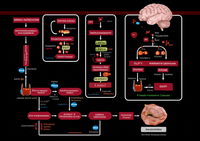
Peptide Mechanism Comparison: How They Work in Research Models
Understanding the distinct mechanisms of each peptide helps researchers design more targeted protocols. The table below compares the primary action, receptor targets, and observed effects in published studies.
| Peptide | Primary Mechanism | Receptor / Pathway | Key Observed Effects |
|---|---|---|---|
| GLP-1(Sema) | Incretin mimetic | GLP-1 receptor | Appetite reduction, delayed gastric emptying, improved glycemic control |
| AOD-9604 | HGH fragment lipolysis | Beta-3 adrenergic pathway | Direct fat breakdown, lipogenesis inhibition, no IGF-1 increase |
| MOTS-c | Mitochondrial signaling | AMPK pathway | Enhanced fatty acid oxidation, glucose uptake, exercise mimetic effects |
| GLP-3(Reta) | Triple receptor agonist | GLP-1 + GIP + Glucagon receptors | Superior weight reduction, increased energy expenditure, lean mass preservation |
| GLP-2(Tirz) | Dual receptor agonist | GLP-1 + GIP receptors | Significant fat mass reduction, improved lipid profiles, reduced inflammation |
Stacking Considerations in Research Settings
Peptide stacking — the concurrent use of multiple peptide compounds in a research protocol — is an area of growing scientific interest. When designing combination studies, researchers should consider several factors:
Complementary pathway targeting: The most promising stacking protocols combine peptides that act through non-overlapping mechanisms. For example, pairing a receptor agonist (GLP-1 pathway) with a mitochondrial peptide (AMPK pathway) and a lipolytic fragment (direct adipose action) targets distinct nodes in the metabolic network.
Temporal considerations: Published research suggests that the pharmacokinetics of each compound should inform administration scheduling. Long-acting peptides like GLP-1(Sema) have extended half-lives, while shorter peptides like MOTS-c may require more frequent administration in research models.
Outcome measurement: Researchers stacking peptides should track multiple endpoints — body composition via DEXA, serum biomarkers (glucose, insulin, lipid panels), resting metabolic rate, and tissue-specific gene expression — to attribute effects to individual compounds or their synergy.
Emerging data: While controlled stacking studies are still limited, the mechanistic rationale is well-supported. The trend toward pre-formulated combinations, such as the top weight loss peptides reviewed in our 2025 update, reflects the research community’s growing interest in multi-target approaches.
Frequently Asked Questions About Weight Loss Peptides
What are the most studied peptides for weight loss research in 2026?
The most extensively studied weight loss peptides in 2026 include GLP-1(Sema), a GLP-1 receptor agonist; AOD-9604, an HGH fragment; MOTS-c, a mitochondrial-derived peptide; GLP-3(Reta), a triple receptor agonist; and GLP-2(Tirz), a dual agonist. Each has demonstrated fat mass reduction in preclinical and clinical research models.
How does AOD-9604 differ from full-length growth hormone in research?
AOD-9604 is a modified fragment of the C-terminus of human growth hormone (amino acids 177–191). In research models, it has been shown to stimulate lipolysis and inhibit lipogenesis without the diabetogenic or growth-promoting effects associated with full-length HGH, making it a targeted compound for fat metabolism studies.
What is peptide stacking in a research context?
Peptide stacking refers to the simultaneous administration of multiple peptide compounds in research protocols to evaluate synergistic effects. For example, combining a GLP-1 receptor agonist with a mitochondrial peptide and an HGH fragment targets multiple metabolic pathways concurrently in laboratory models.
What does MOTS-c target in metabolic research?
MOTS-c is a mitochondrial-derived peptide encoded by the 12S rRNA gene. Research has demonstrated its role in activating the AMPK signaling pathway, improving glucose regulation, enhancing fatty acid oxidation, and promoting skeletal muscle metabolism in both in vitro and in vivo models.
Why are multi-agonist peptides gaining attention in obesity research?
Multi-agonist peptides like GLP-3(Reta), which targets GLP-1, GIP, and glucagon receptors simultaneously, have shown superior efficacy in preclinical weight reduction studies compared to single-agonist compounds. The multi-target approach addresses several metabolic pathways at once, including appetite regulation, insulin sensitivity, and energy expenditure.
Where can I find research-grade weight loss peptides?
Research-grade peptides for laboratory use should be sourced from reputable suppliers that provide certificates of analysis, HPLC purity verification, and mass spectrometry data. Spartan Peptides offers a full range of research-grade weight loss peptides including GLP-1(Sema), AOD-9604, MOTS-c, and combination stacks.
References
- Wilding JPH, Batterham RL, Calanna S, et al. Once-weekly semaglutide in adults with overweight or obesity. N Engl J Med. 2021;384(11):989-1002. PMID: 33567185
- Heffernan MA, Thorburn AW, Fam B, et al. Increase of fat oxidation and weight loss in obese mice by chronic treatment with human growth hormone or a modified C-terminal fragment. Int J Obes Relat Metab Disord. 2001;25(10):1442-1449. PMID: 11673764
- Lee C, Zeng J, Drew BG, et al. The mitochondrial-derived peptide MOTS-c promotes metabolic homeostasis and reduces obesity and insulin resistance. Cell Metab. 2015;21(3):443-454. PMID: 25738459
- Jastreboff AM, Kaplan LM, Frías JP, et al. Triple–hormone-receptor agonist retatrutide for obesity — a phase 2 trial. N Engl J Med. 2023;389(6):514-526. PMID: 37366315
- Jastreboff AM, Aronne LJ, Ahmad NN, et al. Tirzepatide once weekly for the treatment of obesity. N Engl J Med. 2022;387(3):205-216. PMID: 35658024
- Kim SJ, Xiao J, Wan J, Cohen P, Bhatt DL. Mitochondrial-derived peptides in aging and age-related diseases. GeroScience. 2023;45(2):648-660. PMID: 36269525
Written by the Spartan Research Team
The Spartan Peptides Research Team consists of scientists, biochemists, and health researchers dedicated to providing accurate, evidence-based information about peptide research. Our content is reviewed for scientific accuracy and updated regularly to reflect the latest findings in peptide science.