
BPC-157 and TB-500 (Wolverine Protocol) for Injury Recovery

Written bySpartan Research Team
Benefits of the Wolverine peptide stack

The Wolverine peptide stack offers a range of regenerative, protective, and analgesic benefits by combining the BPC-157 and TB-500 peptides.
Here’s a breakdown of these benefits:
- Improves mobility and flexibility: By increasing actin levels, which boosts cell repair and movement, TB-500 promotes increased range of motion, flexibility, and overall mobility. These benefits are essential for joint stiffness and exercise-related injuries.
- Enhances connective tissue and joint health: The Wolverine peptide stack could help strengthen ligaments, tendons, and cartilage. These capabilities can help people with tendonitis, arthritis, and chronic joint pain recover joint stability and reduce re-injury risk.
- Reduces pain and inflammation: The Wolverine peptide stack offers anti-inflammatory and pain reduction benefits, reducing swelling, pain, and discomfort. It could even prevent excess tissue damage and ease the healing process.
- Boosts muscle and tissue healing: Whether it’s joint injury, muscle strain, or torn ligaments, the Wolverine peptide stack offers faster healing potential. It supports cellular regeneration and repair, helping users quickly recover and return to normal.
- Supports gut health: Gut health’s role in reducing systemic inflammation is crucial. BPC-157 offers gut-healing properties by boosting nutrient absorption and supporting digestion, enhancing overall well-being.
Who can benefit most from the Wolverine peptide stack?
Athletes and fitness enthusiasts could benefit the most from using the Wolverine peptide stack regularly. However, anyone needing faster healing, injury repair, and pain reduction could benefit from it.
Anyone taking part in intense training and injury-prone activities could benefit from the protective and regenerative qualities the Wolverine peptide stack offers.
Individuals with arthritis and chronic joint pain or inflammation could benefit from its anti-inflammatory and analgesic properties.
Anyone wanting faster tissue repair or post-op recovery, and healing optimization could benefit from using the Wolverine peptide stack.
Responsible use and considerations
It’s essential to note that neither of the peptides included in the Wolverine peptide stack is FDA approved. That’s because there hasn’t been sufficient human testing to determine its long-term effects.
Both BPC-157 and TB-500 are meant for research purposes to further our knowledge and understanding of their potential. That’s why sourcing them from reliable suppliers like Spartan Peptides is essential.
We provide the highest quality peptides, with purity exceeding 99%, to ensure your research and applications produce the most accurate results.
It’s also important to note the potential side effects before using the Wolverine peptide stack. They include the following:
- Mild headaches
- Dizziness or light-headedness after injections
- Swelling, pain, or redness at the injection site
Ensure you consult with a medical professional when conducting long-term protocols. Dosing and administration often depend on the desired outcome of the research.

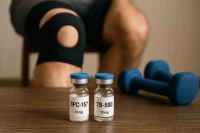
What is the Wolverine peptide blend for injury recovery?
The Wolverine peptide blend refers to the combination of two peptides, BPC-157 and TB-500, often used together in research to aid injury recovery. Athletes dubbed this duo the “Wolverine stack” after the fast-healing X-Men character, hoping it might speed up tendon repair and tissue regeneration. BPC-157 (a 15-amino-acid body protection compound derived from stomach protein) and TB-500 (a fragment of Thymosin Beta-4, a natural wound-healing protein) each promote healing through different mechanisms like boosting blood vessel growth and reducing inflammation.
What is BPC-157?
BPC-157 is a synthetic peptide derived from a protective protein found in human gastric juices. Its name stands for Body Protection Compound 157, reflecting its early role in gut protection and ulcer healing. In research settings, BPC-157 has shown a remarkable ability to accelerate healing of various injuries.
How BPC-157 Works
Preclinical studies indicate BPC-157 promotes angiogenesis – the formation of new blood vessels – at injury sites. More blood flow means more oxygen and nutrients delivered to damaged tissues, aiding repair. It also stimulates collagen synthesis in tendons and muscles, providing the building blocks for tissue regeneration. Additionally, BPC-157 exhibits significant anti-inflammatory effects, which can reduce swelling and pain around an injury. These combined actions create a nurturing environment for tissues to heal.
Research Highlights
Scientists have tested BPC-157 mostly in animal models. Notably, a rodent study on completely severed Achilles tendons found BPC-157 dramatically improved tendon healing and strength. Treated rats showed higher collagen fiber formation, better functional recovery, and a smaller gap at the injury site compared to controls. Other experiments report enhanced survival and migration of tendon cells with BPC-157 exposure, suggesting it helps orchestrate the cellular rebuilding of injured tissue. Beyond tendons, BPC-157 has demonstrated protective effects in muscles, ligaments, bones, and even the brain in various injury models.
Importantly, BPC-157’s benefits have been observed without the unwanted calcification or scar tissue that some growth factors cause in healing tendons. This makes it especially intriguing as a potential sports injury peptide. Given its broad regenerative influence – from gut lining to connective tissue – some researchers even call BPC-157 a “Wolverine peptide” in its own right for its healing prowess.
(For a deeper dive into BPC-157’s healing potential, see our post Healing from Within with BPC-157.)
What is TB-500 (Thymosin Beta-4)?
TB-500 is the synthetic form of Thymosin Beta-4 (Tβ4), a 43-amino-acid peptide present throughout the body that plays a key role in regeneration. Unlike BPC-157 (which was isolated from the stomach), Tβ4 is naturally found in most tissues and fluids (virtually everywhere except red blood cells). TB-500 is commonly used to refer to this peptide in research contexts.
How TB-500 Works
Thymosin Beta-4 is released by platelets and other cells at the site of an injury as an instant response to trauma. It binds to actin (a cell-structural protein) and directs cells to move. In effect, Tβ4 guides cell migration – bringing healing cells like fibroblasts, keratinocytes, and stem/progenitor cells to the injured area. It also markedly promotes angiogenesis, helping form new blood vessels that supply the damaged tissue with nutrients. By reducing cell death and inflammation in the wound environment, TB-500 protects tissues from further damage. The peptide has even been shown to increase collagen deposition and promote faster wound closure in skin injuries.
Research Highlights
Thymosin Beta-4’s reparative abilities have been documented in both animals and preliminary human trials. In animal studies, applying Tβ4 led to significantly quicker wound healing – one study noted improved wound closure and more collagen within just 4 days of treatment. In Phase 2 clinical trials on humans with chronic wounds (like pressure ulcers and venous stasis ulcers), TB-500 accelerated the rate of healing and was well tolerated. Patients receiving Tβ4 had faster tissue repair in these hard-to-heal ulcers, hinting at real-world efficacy. Tβ4 has also shown promise in diverse injury models: it aided recovery in heart attack models, improved outcomes in brain and spinal cord injury experiments, and even helped regenerate corneas in eye injury studies. This broad reach is due to its anti-inflammatory and anti-fibrotic effects across many tissues.
While TB-500 is best known as a wound-healing peptide, these findings suggest it might assist recovery from tendon or muscle injuries as well, by reducing inflammation and scarring.
(For more on Thymosin Beta-4’s role in recovery, see our post Accelerating Recovery and Repair with Thymosin Beta-4.)
BPC-157 vs TB-500: Comparing Mechanisms and Uses
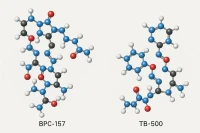
BPC-157 and TB-500 are often combined as a post-injury stack because they complement each other’s healing pathways. Still, each peptide has unique attributes. Here’s how they compare:
Mechanisms of Action
- BPC-157: Triggers growth and repair at injury sites primarily by promoting new blood vessel formation (via eNOS activation) and boosting growth factor receptors in tissues. It directly encourages tendon cells and other fibroblasts to migrate and survive, which kickstarts the repair process. BPC-157 also acts systemically to reduce inflammation, protecting cells from damage due to injury or even harsh chemicals.
- TB-500: Accelerates healing by mobilizing the body’s own repair cells. Thymosin Beta-4 (TB-500) sends signals for cells to move into the wounded area and form new blood vessels. It essentially orchestrates tissue regeneration by preventing cell death and promoting a well-vascularized, healthy healing environment. The result is often faster closure of wounds and less scar tissue after injury.
Research Findings
- BPC-157: Research is largely preclinical but impressive. Multiple rodent studies demonstrate BPC-157 can heal tendon injuries that would normally be debilitating. For instance, in Achilles tendon rupture models, BPC-157 treatment restored tendon integrity and function far beyond what natural healing achieved. Researchers observed stronger tendons with more organized collagen fibers and less inflammatory damage. BPC-157 has also countered muscle wasting and even protected organs in extreme injury models. It’s currently being explored for soft tissue healing in sports medicine and regenerative medicine contexts.
- TB-500: The evidence base includes both animal and early human studies. Animal models of skin and muscle injuries show that TB-500 speeds up the formation of new tissue and blood vessels, leading to quicker healing than in untreated injuries. Uniquely, TB-500 progressed into clinical trials: in studies with patients suffering from non-healing wounds (including diabetic ulcers and epidermolysis bullosa), Tβ4 significantly improved healing rates and was deemed safe. These trials underscore TB-500’s potential translational value for human injury therapy, pending further research.
Potential Benefits and Use Cases
- BPC-157: In research scenarios, BPC-157 is considered particularly useful for localized injuries. Scientists often apply or inject it near injured tendons, ligaments, or muscles to study its regenerative effects. Potential benefits include faster tendon healing (with better quality repair), reduced joint pain or arthritis symptoms, and even gut-healing properties (given its origin). Athletes in forums have anecdotally used BPC-157 for issues like tendonitis or muscle tears, reporting quicker return to training. However, formal human data is lacking, so these uses remain experimental.
- TB-500: TB-500 is generally used for more systemic or widespread healing. Because Thymosin Beta-4 circulates through the body, researchers administer TB-500 (usually via subcutaneous injection) to observe broad anti-inflammatory and recovery effects. It might benefit cases of extensive trauma or multi-site injuries by reducing inflammation and fibrosis throughout the body. Athletes who experiment with TB-500 often aim to ease general muscle aches, joint inflammation, or to recover from heavy training loads. It’s also commonly paired with BPC-157 – the idea being that TB-500 sets the stage for whole-body healing while BPC-157 zeroes in on specific injury sites.
Synergy in the Wolverine Stack
Using BPC-157 and TB-500 together – the Wolverine protocol – is believed to provide a comprehensive healing boost. The two peptides operate on intersecting pathways: BPC-157 upregulates growth and repair factors internally, and TB-500 recruits cells and blood flow to rebuild tissues. Anecdotally, researchers and biohackers report that combining them leads to faster recovery than either alone, though no controlled studies have yet confirmed a synergistic effect. The Wolverine blend essentially attempts to mimic the comic book healing factor, attacking injury recovery from multiple angles (cellular, vascular, and inflammatory).
Anecdotal Evidence from Athlete Communities

Beyond the labs and animal studies, much of the Wolverine stack’s fame comes from athlete anecdotes. In online fitness and biohacking communities, users share personal stories of recovery after using BPC-157 and TB-500:
- Faster Healing of Sprains and Tears: Numerous posters on forums and Reddit claim that chronic injuries like tendon sprains or muscle tears healed in record time with the BPC/TB-500 combo. For example, one bodybuilder described reinjuring his pectoral muscle but, after a couple of BPC-157 injections into the area, noted he “can’t feel the injury now” when stretching and could even resume light exercises without pain.
- Reduced Inflammation and Pain: Athletes also report easing joint pain and swelling. Some with long-standing tendinitis or nagging joint injuries have called the Wolverine peptide blend “game-changing” for allowing them to train with less discomfort. In one discussion, a user noted that after a week of BPC-157/TB-500, his stubborn elbow pain was “barely noticeable” during workouts.
- Post-Surgery Recovery: There are even anecdotes of people using this peptide stack after surgeries (like ACL reconstructions or rotator cuff repairs) and feeling it significantly sped up their rehab. They often cite improved mobility and strength earlier than expected in their recovery timeline.
Disclaimer: These reports are unverified personal experiences. While they showcase the buzz around BPC-157 and TB-500, they should be taken with caution. People tend to share successes online more than failures, and factors like rest, nutrition, or placebo effect could explain some improvements.
Safe Exploration of the Wolverine Protocol
For U.S.-based athletes, trainers, and researchers intrigued by these peptides, the key is to approach them responsibly and legally.
When exploring the Wolverine peptide blend:
- Do Your Homework: Review the scientific literature (e.g., PubMed studies on tendon regeneration and wound repair) to understand what is known and unknown. We’ve cited several peer-reviewed studies above to provide a starting point.
- No Medical Claims: Remember that any benefits discussed are potential and not guaranteed.
- Monitor and Record: Those who do self-experiment (despite the lack of approval) should be extremely cautious – monitor health markers, work with a knowledgeable physician, and cease use if any adverse reactions occur.
By keeping a scientific mindset, one can be open to the possibilities of BPC-157 and TB-500 without jumping to premature conclusions. The goal is to bridge the gap between anecdote and evidence through responsible research.
Healing Like Wolverine – Hope or Hype?

BPC-157 and TB-500 have earned a legendary reputation in the world of injury recovery peptides – perhaps too legendary at times. On one hand, solid science backs their regenerative effects in animal models: improved tendon and muscle healing, reduced inflammation, and quicker tissue repair have all been documented.
For now, the Wolverine peptide blend offers intriguing potential as a tool for healing from within. Spartan Peptides provides access to these compounds for legitimate research use – allowing the scientific and athletic communities to further explore whether Wolverine-like healing is fact or fiction.
If you’re interested in investigating these repair & recovery peptides, you can find high-quality research materials at Spartan Peptides. Check out our Repair & Recovery products – including the popular Wolverine BPC-157 + TB-500 blend – to support your next experiment. As always, stay informed, stay safe, and happy researching on your journey to bounce back stronger!
Frequently Asked Questions
How does BPC-157 promote tissue healing in research models?
BPC-157 is a synthetic pentadecapeptide derived from a gastric protective protein. Preclinical research shows it may promote angiogenesis by upregulating VEGF receptor expression, enhance growth factor receptor signaling, and reduce inflammatory markers in injured tissues.
What specific injuries has BPC-157 been studied for in animal models?
Animal research has examined BPC-157 in models of tendon injuries (Achilles, patellar), muscle tears, bone fractures, spinal cord injuries, and intestinal damage. Rodent studies consistently show accelerated healing across multiple tissue types.
How does TB-500 (Thymosin Beta-4) contribute to wound healing?
Thymosin Beta-4 regulates actin polymerization critical for cell migration during wound healing. Research shows it promotes keratinocyte and endothelial cell migration to wound sites, supports angiogenesis, and has anti-inflammatory properties in cardiac, corneal, and dermal wound models.
Why is the combination called the ‘Wolverine Protocol’?
The ‘Wolverine Protocol’ is informal terminology used in research communities, not an official medical or scientific term. It reflects the theoretical synergy between BPC-157’s systemic healing effects and TB-500’s cell migration promotion in preclinical research.
Are BPC-157 or TB-500 approved for human therapeutic use?
Neither BPC-157 nor TB-500 is FDA-approved for human therapeutic use. Both remain research compounds intended for laboratory use only, and any human research requires appropriate regulatory approval.
Ready to advance your Wolverine Stack research?
Spartan Peptides offers ≥98% purity Wolverine Stack with full in-house purity verification and in-house quality testing.
⚠️ Research Use Only — Not for Human Consumption
The peptides discussed in this article are intended for laboratory and research purposes only. They are not intended for human consumption. All information presented is based on published preclinical research and is provided for educational purposes only.