
BPC-157 Dosage Guide: Research Protocols and Administration Methods

Written bySpartan Research Team
BPC-157 dosage represents one of the most critical variables in peptide research. Whether you’re reviewing published animal studies or evaluating preclinical protocols, understanding how researchers calibrate BPC-157 dose—and why—provides essential context for interpreting the literature. This guide breaks down published dosing parameters, administration routes, reconstitution protocols, and storage considerations drawn from peer-reviewed research.
What Is BPC-157 and Why Does Dosage Matter?
BPC-157 (Body Protection Compound-157) is a 15-amino acid synthetic peptide derived from a gastroprotective protein isolated in human gastric juice. Its stability in gastric acid and broad tissue-protective effects have made it a prominent subject of preclinical research. Unlike many peptides that degrade rapidly in biological environments, BPC-157 maintains structural integrity under acidic conditions—a property that directly influences how researchers approach oral versus systemic administration.
Dosage matters in peptide research because even small variations in quantity, frequency, and route of administration can produce measurable differences in observed outcomes. The preclinical literature on BPC-157 spans studies examining tendon healing, gastrointestinal repair, neurological effects, and musculoskeletal recovery—each with distinct dosing parameters calibrated to the model being studied.
Published Animal Study Dosing: The mcg/kg Framework
In animal research, BPC-157 dosing is typically expressed in micrograms per kilogram of body weight (mcg/kg). This weight-based approach accounts for metabolic differences across species and allows researchers to construct dose-response relationships.
The preponderance of published rodent studies has utilized doses in the range of 1–10 mcg/kg, with 2 mcg/kg and 10 mcg/kg being the most commonly reported effective doses in peer-reviewed literature. Studies by Sikiric et al. have repeatedly demonstrated significant effects at these thresholds across multiple tissue types.
- Low-dose range (1–2 mcg/kg): Used in gastric ulcer and gut barrier studies; associated with measurable cytoprotective effects in rodent models.
- Mid-dose range (2–10 mcg/kg): The most extensively studied range; appears in tendon, ligament, bone, and neurological research.
- High-dose range (10–100 mcg/kg): Used in select studies to establish dose-response curves; some gastrointestinal studies have explored up to 100 mcg/kg without observing toxicity in rodents.
A 2013 study published in Journal of Physiology-Paris noted that BPC-157 demonstrated consistent effects across a broad dose range—including at very low doses—suggesting high potency relative to other gastroprotective agents studied. This dose-independence across multiple tissue types has been a hallmark observation in the BPC-157 literature.
Species and Tissue-Specific Dosing Considerations
Rodent studies use lean body mass conversions that do not translate directly to other species. Research in rat models examining tendon and joint healing has consistently used 10 mcg/kg administered either subcutaneously or intraperitoneally. Studies focused on gastrointestinal outcomes—including gut healing models—have employed both 2 mcg/kg and 10 mcg/kg with comparable effect profiles, suggesting that gut tissue may be especially responsive to BPC-157.
Importantly, no established lethal dose (LD50) has been published for BPC-157, and it does not appear in toxicology registries as acutely toxic at experimentally studied doses. This absence of toxicity data at standard research doses is frequently noted as a distinguishing feature of the compound.
Common Research Protocols: Frequency and Duration
Animal study protocols typically employ once-daily administration for defined study durations. The following patterns appear frequently across the published literature:
| Study Type | Typical Dose | Frequency | Duration |
|---|---|---|---|
| Tendon healing | 10 mcg/kg | Once daily | 7–21 days |
| Gastric ulcer | 2–10 mcg/kg | Once daily | 3–7 days |
| Bone repair | 10 mcg/kg | Once daily | 21–42 days |
| Neurological models | 10 mcg/kg | Once daily | 7–14 days |
| IBD/colitis models | 2–10 mcg/kg | Once or twice daily | 7–21 days |
Once-daily dosing reflects a pragmatic research convention rather than a pharmacokinetic optimization. BPC-157’s half-life in biological systems is not yet well-characterized in published human data, making direct translation speculative. The once-daily pattern has produced consistent results across tissue models, which is why it has become the de facto standard in preclinical protocols.
Administration Routes in BPC-157 Research
BPC-157 research has explored three primary administration routes: subcutaneous injection, intramuscular injection, and oral administration. Each has distinct characteristics relevant to bioavailability, onset, and tissue targeting.
Subcutaneous (SC) Administration
Subcutaneous administration involves injection into the fatty tissue layer beneath the skin. In the BPC-157 literature, subcutaneous dosing is the most commonly reported systemic route. It produces gradual absorption and has been shown effective in studies targeting both local and distant tissue effects.
Research protocols using subcutaneous BPC-157 have demonstrated effects on tissues not directly adjacent to the injection site, suggesting systemic distribution following SC administration. This route is commonly selected in studies examining systemic effects and side effect profiles because it allows for consistent dosing and reliable absorption kinetics in rodent models.
Intramuscular (IM) Administration
Intramuscular administration delivers BPC-157 directly into muscle tissue. Some studies have chosen IM delivery when targeting muscle repair specifically, or when faster absorption kinetics are desired. IM injection typically results in more rapid absorption compared to subcutaneous, though both routes have produced comparable outcomes in head-to-head preclinical comparisons within the same study cohorts.
In the Wolverine stack protocol research, IM delivery near the site of interest has been explored to evaluate whether local application amplifies tissue-specific effects versus remote subcutaneous dosing. Results across studies have been generally consistent, though proximal delivery may provide additive local benefit in some musculoskeletal models.
Oral Administration
Oral administration of BPC-157 is uniquely viable among research peptides because BPC-157 demonstrates unusual resistance to acid-mediated and enzymatic degradation in the gastrointestinal tract. Most peptides are rapidly broken down by gastric proteases, making oral delivery ineffective. BPC-157’s structural stability allows it to resist this degradation—a property that has made oral dosing a legitimate research variable.
Multiple studies have shown that orally administered BPC-157 produces measurable effects on gastric mucosa, intestinal integrity, and—in some models—systemic markers. Oral doses in the published literature typically range from 10–100 mcg/kg, somewhat higher than injectable doses, reflecting reduced bioavailability compared to direct parenteral delivery.
For a detailed comparison of oral versus injectable BPC-157 research, including bioavailability data, see our dedicated analysis.

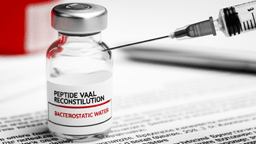
Reconstitution: The Math Behind Peptide Preparation
BPC-157 is supplied in lyophilized (freeze-dried) powder form and requires reconstitution with bacteriostatic water or sterile saline before use in research applications. Accurate reconstitution math is essential for consistent dosing across experiments.
Standard Reconstitution Protocol
A standard 5 mg vial of BPC-157 reconstituted with 2 mL of bacteriostatic water yields a solution of 2,500 mcg/mL (2.5 mg/mL). This concentration is a common starting point for research preparation. Using a standard 1 mL insulin syringe with 100 units marked:
- 1 mL (100 units) = 2,500 mcg
- 0.1 mL (10 units) = 250 mcg
- 0.04 mL (4 units) = 100 mcg
- 0.02 mL (2 units) = 50 mcg
Researchers calibrating to a mcg/kg dose for a given subject weight would first calculate the target dose in mcg, then determine the corresponding volume from the known concentration.
Example calculation: For a 250g rat at 10 mcg/kg target dose: 0.25 kg × 10 mcg/kg = 2.5 mcg required. At 2,500 mcg/mL: 2.5 ÷ 2,500 = 0.001 mL (1 microliter). This underscores why precision pipetting or calibrated micro-syringes are essential in rodent research contexts.
Alternative Concentrations
Some researchers prefer different reconstitution ratios depending on the volume constraints of the delivery method:
- 5 mg in 1 mL: 5,000 mcg/mL — useful for higher-dose protocols or where minimal injection volume is desired
- 5 mg in 5 mL: 1,000 mcg/mL — easier math for certain dosing ranges
- 5 mg in 10 mL: 500 mcg/mL — common for low-dose oral or gavage protocols in rodents
Consistency within a study is more important than the specific concentration chosen, provided the volume delivered is within the physiological tolerance of the research model.
Stability and Storage in Research Settings
Proper storage of BPC-157 directly affects the reliability and reproducibility of research findings. Degraded peptide produces unreliable or null results, undermining the scientific validity of any study.
Lyophilized (Powder) Form
Lyophilized BPC-157 is the most stable form and has the longest shelf life when stored correctly:
- Room temperature (short-term): Stable for up to 4 weeks in sealed vials away from light and moisture
- Refrigerated (2–8°C): Stable for 6–12 months
- Frozen (−20°C): Stable for 24+ months with minimal degradation
Avoid repeated freeze-thaw cycles, which can cause peptide bond degradation and aggregation. Aliquoting before freezing is standard practice in research laboratories handling lyophilized peptides.
Reconstituted Solution
Once reconstituted, BPC-157 stability decreases significantly compared to the lyophilized form:
- Refrigerated (2–8°C): Use within 30 days when reconstituted with bacteriostatic water
- Frozen (−20°C): Stable for up to 3 months; avoid repeated freeze-thaw
- Room temperature: Use within 24–48 hours; degradation accelerates
Bacteriostatic water (containing 0.9% benzyl alcohol as a preservative) is preferred over sterile water for multi-use vials because it inhibits microbial contamination over the life of the vial. Sterile saline is acceptable for single-use preparations.
Purity and Quality Considerations
Research-grade BPC-157 should be characterized by third-party analytical testing. Minimum acceptable purity for research applications is typically ≥98% by HPLC analysis. Certificate of Analysis (CoA) documentation should confirm peptide identity via mass spectrometry and purity via high-performance liquid chromatography.
Spartan Peptides supplies BPC-157 5mg with third-party CoA documentation. Purity verification is essential for research applications where dosing accuracy depends on knowing the active peptide content of the preparation.
Frequently Asked Questions
The following questions address common research considerations around BPC-157 dosing and administration protocols.
What dose of BPC-157 is used in most animal studies?
The majority of published BPC-157 animal studies have used doses of 2 mcg/kg or 10 mcg/kg administered once daily. The 10 mcg/kg dose is particularly common across tendon, muscle, bone, and neurological research models in rats. Some gastrointestinal studies have used as low as 1 mcg/kg and observed significant effects.
How is BPC-157 reconstituted for research?
BPC-157 lyophilized powder is typically reconstituted with bacteriostatic water. A common protocol is adding 2 mL of bacteriostatic water to a 5 mg vial, yielding 2,500 mcg/mL. The bacteriostatic agent (benzyl alcohol) prevents microbial growth in multi-use vials. Sterile saline is an alternative for single-dose preparations.
What is the difference between subcutaneous and intramuscular BPC-157 administration?
Subcutaneous administration involves injection into the fat layer under the skin and produces slower, more sustained absorption. Intramuscular administration injects directly into muscle tissue for faster absorption. Both routes have been used effectively in BPC-157 research. Subcutaneous is more commonly reported in the literature; intramuscular may be preferred when rapid systemic availability or local muscle targeting is the research objective.
Can BPC-157 be taken orally in research protocols?
Yes. BPC-157’s unusual resistance to gastric acid and proteolytic enzymes makes oral administration viable, unlike most research peptides. Published studies have demonstrated effects via oral gavage in rodents at doses typically 3–10x higher than injectable doses, accounting for reduced bioavailability via the oral route. Oral dosing is particularly relevant for gastrointestinal research models.
How should reconstituted BPC-157 be stored?
Reconstituted BPC-157 should be refrigerated at 2–8°C and used within 30 days when prepared with bacteriostatic water. Freezing at −20°C extends stability to approximately 3 months. Avoid repeated freeze-thaw cycles. Lyophilized (unreconstituted) BPC-157 stored at −20°C maintains stability for 24+ months.
Is there a toxic dose established for BPC-157?
No established LD50 (lethal dose) has been published for BPC-157 in the peer-reviewed literature. Studies exploring wide dose ranges in rodents have not reported acute toxicity at doses used in standard preclinical protocols. The absence of reported toxicity at research doses is noted across the literature as a distinguishing feature of the compound, though comprehensive toxicological studies in humans have not been published.
Research Disclaimer: BPC-157 is a research peptide intended for laboratory and preclinical research use only. It is not approved by the FDA or any regulatory authority for human use, diagnosis, treatment, or prevention of any medical condition. All information presented in this article is for scientific and educational purposes only and does not constitute medical advice. Do not use research peptides for self-administration. Consult a qualified healthcare professional for any health-related concerns. Spartan Peptides supplies research compounds exclusively for legitimate scientific research in compliance with all applicable laws and regulations.
Written by the Spartan Research Team
The Spartan Peptides Research Team consists of scientists, biochemists, and health researchers dedicated to providing accurate, evidence-based information about peptide research. Our content is reviewed for scientific accuracy and updated regularly to reflect the latest findings in peptide science.