
Exploring GLP-3 Reta: A Next-Generation Research Peptide for Metabolic Studies

Written bySpartan Research Team
At Spartan Peptides, we are committed to providing researchers with access to high-quality peptides designed to support innovative studies in health, longevity, and wellness. Our Weight Loss Peptides collection has expanded with the addition of GLP-3 Reta, a novel research peptide that is generating significant interest in the scientific community for its potential role in weight management research.
In this article, we will highlight GLP-3 Reta’s research significance, compare it to other peptides in our Weight Loss category, and explore the direction of current studies in this field.
What is GLP-3 Reta?
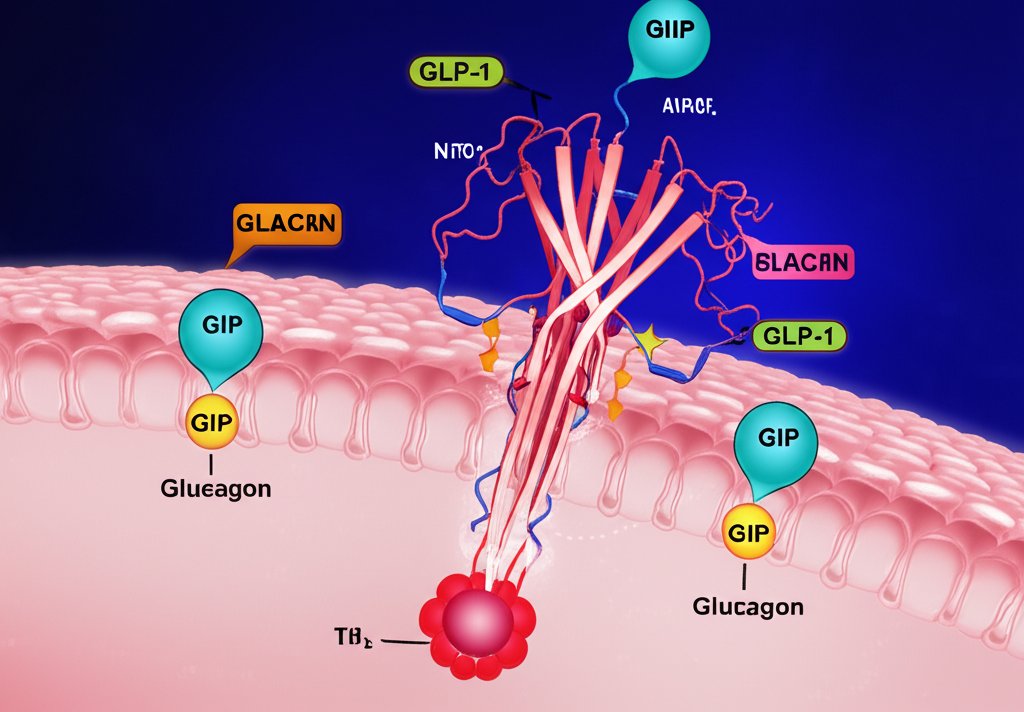
GLP-3 Reta is a synthetic peptide under investigation for its ability to influence pathways linked to appetite regulation, metabolism, and body composition. Early studies suggest it may act as a multi-receptor agonist, targeting pathways that overlap with those of GLP-1 (glucagon-like peptide-1) and GIP (glucose-dependent insulinotropic polypeptide).
Researchers are particularly interested in GLP-3 Reta because of its broad metabolic signaling profile, which may help expand understanding of how multiple receptor pathways can be leveraged in weight loss research.
For research use only. Not for human consumption.
How GLP-3 Reta Compares to Other Weight Loss Peptides
Spartan Peptides’ Weight Loss Peptides collection features several compounds of interest to the research community. While GLP-3 Reta is a newer addition, it can be evaluated alongside other well-studied peptides for potential applications in laboratory research.
1. AOD 9604
Often studied for its role in fat metabolism, AOD 9604 is a fragment of the human growth hormone (HGH) sequence. Research has examined its ability to promote lipolysis (fat breakdown) while reducing lipogenesis (fat storage). Compared to GLP-3 Reta, AOD 9604’s mechanisms are more targeted to fat metabolism, whereas GLP-3 Reta’s action may be broader across appetite and metabolic regulation.
2. GLP-1 Sema
GLP-1 Sema is a GLP-1 receptor agonist, widely studied for its effects on appetite suppression and blood glucose control. GLP-3 Reta is unique in that it may target GLP-1, GIP, and glucagon receptors, suggesting a triple-action profile that distinguishes it from single-receptor agonists like GLP-1 Sema.
3. GLP-2 Tirz
GLP-2 Tirz has been studied as a dual agonist (GLP-1 and GIP), making it a closer comparator to GLP-3 Reta. However, GLP-3 Reta’s potential triple receptor engagement sets it apart, positioning it as a next-generation peptide for weight loss research.
Why GLP-3 Reta is Generating Interest
The main reason GLP-3 Reta is creating buzz in the scientific research community is its multi-pathway approach. Instead of working through a single receptor like GLP-1, it appears to engage multiple metabolic regulators, which could lead to broader insights into weight management, satiety, and glucose metabolism.
This places GLP-3 Reta in a unique position relative to other weight loss peptides, as it may help researchers study:
- Appetite regulation at multiple receptor levels
- The balance of fat oxidation and glucose utilization
- Long-term effects of dual and triple receptor agonism
All products are for laboratory research purposes only. Not for human use, consumption, or injection.
The Future of Weight Loss Peptide Research
As the field of peptide research continues to evolve, peptides like AOD 9604, GLP-1 Sema, GLP-2 Tirz, and now GLP-3 Reta will play an important role in advancing the understanding of metabolic health.
Spartan Peptides is proud to provide high-quality research materials to support this ongoing work. Our expanded Weight Loss category ensures researchers have access to a diverse range of peptides for their laboratory studies.
Final Thoughts
The launch of GLP-3 Reta within Spartan Peptides’ weight loss collection represents a significant step forward for research in this field. By comparing it to other compounds like AOD 9604, GLP-1 Sema, and GLP-2 Tirz, researchers can better understand the diversity of pathways involved in weight management studies.
Spartan Peptides remains committed to offering premium-quality research-only peptides, empowering laboratories to push the boundaries of discovery in metabolic and weight loss research.


GLP-3(Reta): Mechanism of Action in Detail
To understand why GLP-3(Reta) represents such a significant step forward, it is necessary to appreciate the distinct role each receptor plays in energy homeostasis. GLP-1 receptor activation slows gastric emptying, stimulates insulin secretion in a glucose-dependent manner, and suppresses glucagon release — all contributing to reduced food intake and improved glycaemic control. GIP receptor co-activation enhances the insulinotropic response and may exert direct effects on adipose tissue energy storage and expenditure. The third limb, glucagon receptor agonism, increases hepatic glucose output and basal metabolic rate, driving additional energy expenditure beyond what appetite suppression alone can achieve.
In preclinical models, this triple-receptor approach appears to produce synergistic effects. Each pathway reinforces the others: GLP-1 and GIP receptor activation together reduce caloric intake while glucagon receptor agonism simultaneously elevates caloric burn. The combined result in Phase 2 human studies was a mean body weight reduction exceeding 17% at 24 weeks in the highest dose cohort — a figure that positioned GLP-3(Reta) as a promising subject for ongoing Phase 3 investigation.
GLP-3(Reta) in the Research Pipeline: Phase Timelines and Study Design
Clinical research into GLP-3(Reta) has progressed through several stages. Phase 1 studies established pharmacokinetics and tolerability, demonstrating a half-life that supports once-weekly subcutaneous administration in human studies. Phase 2 enrolled participants across multiple weight categories and metabolic profiles, generating dose-response data across six distinct dose levels.
Phase 3 trials are evaluating primary endpoints including percentage body weight change from baseline, cardiovascular risk biomarker shifts, HbA1c reduction in participants with type 2 diabetes, and long-term safety outcomes. Secondary endpoints include liver fat content measured by MRI, lean mass preservation metrics, and patient-reported satiety outcomes.
For laboratory researchers, Phase 3 design details provide a framework for structuring in vitro experiments. Understanding which biomarkers the clinical programme prioritises can guide researchers in selecting relevant outcome measures for their own studies with research-grade GLP-3(Reta) peptide.
Comparing GLP-3(Reta) to GLP-1(Sema) and GLP-2(Tirz) in Research Contexts
Research programmes often compare compounds within the same mechanistic class to understand the incremental value of receptor additions. GLP-1(Sema) functions as a monoagonist, engaging only the GLP-1 receptor. GLP-2(Tirz) adds GIP receptor engagement, producing a dual-agonist profile. GLP-3(Reta) extends this to the glucagon receptor, completing the triple-agonist architecture.
Researchers studying these compounds in parallel can examine how each receptor addition alters key metabolic parameters: insulin secretion curves, glucagon suppression depth, adipose tissue turnover rates, and hepatic lipid metabolism markers. This comparative approach provides mechanistic insight that isolated single-agent studies cannot deliver.
When designing comparative studies, consistent purity standards across all compounds are essential. Any purity differential between GLP-1(Sema), GLP-2(Tirz), and GLP-3(Reta) samples could introduce experimental confounds that obscure receptor-specific effects. Spartan Peptides applies ≥98% purity verification to all three compounds to support clean comparative research designs.
Research Considerations: Storage, Handling, and Experimental Design
GLP-3(Reta) is supplied as a lyophilised powder requiring reconstitution prior to use. Researchers should consult the peptide reconstitution guide for detailed protocols covering bacteriostatic water selection, dilution calculations, storage temperature requirements, and aliquoting strategies to minimise freeze-thaw degradation cycles.
Sourcing quality matters as much as experimental design. The peptide safety resource outlines what to look for in a research peptide supplier — including COA documentation, HPLC trace availability, and third-party mass spectrometry confirmation. These criteria apply directly to sourcing GLP-3(Reta) for any research programme.
For researchers exploring broader metabolic questions, complementary compounds may be relevant to study alongside GLP-3(Reta). AOD-9604, a fragment of the growth hormone sequence, targets lipolytic pathways through a distinct mechanism. MOTS-C influences mitochondrial function and insulin sensitivity through AMPK activation — a pathway that may interact with GLP receptor signalling in complex ways. Understanding these mechanistic relationships enriches the overall research picture.
Why Researchers Choose GLP-3(Reta) as a Starting Point
For laboratories entering the field of GLP receptor biology, GLP-3(Reta) offers a compelling entry point precisely because its triple-receptor architecture captures all three major incretin-related pathways in a single compound. This efficiency is valuable in laboratory settings where time, resources, and sample quantities are constrained. A single well-designed dose-response study using GLP-3(Reta) can generate mechanistic hypotheses about GLP-1, GIP, and glucagon receptor interactions that would otherwise require three separate compound series to investigate.
Researchers can also use GLP-3(Reta) data to contextualise findings from earlier studies using GLP-1(Sema) or GLP-2(Tirz), allowing retrospective mechanistic interpretation of data already in the literature. This retrospective utility adds scientific value beyond prospective experimental design alone.
📚 Further Reading
Frequently Asked Questions
What makes GLP-3 Reta a next-generation research peptide?
GLP-3 Reta (GLP-3(Reta)) is considered next-generation because it simultaneously activates three metabolic receptors—GLP-1R, GIPR, and GcgR—unlike earlier GLP-1 monotherapy or dual-agonist approaches. Phase 2 data suggest this triple-receptor strategy may achieve greater weight reduction than currently available single or dual-agonist agents.
How is GLP-3 Reta being evaluated in metabolic studies?
GLP-3(Reta) is currently in Phase 3 clinical trials evaluating efficacy and safety in obese adults and patients with type 2 diabetes. Research endpoints include percentage body weight change, HbA1c reduction, cardiovascular risk markers, liver fat content, and long-term tolerability.
What is the significance of glucagon receptor agonism in GLP-3 Reta?
The glucagon receptor component is being studied for its ability to increase energy expenditure and hepatic glucose production. In obesity research, elevated glucagon signaling may enhance basal metabolic rate and fat oxidation, contributing to weight loss beyond what GLP-1 and GIP receptor activation alone achieves.
How does GLP-3 Reta compare to currently studied GLP-1 therapies?
Phase 2 data showed GLP-3(Reta) achieving over 17% mean weight reduction at 24 weeks at the highest dose, comparing favorably to available GLP-1 agonists in equivalent timeframe studies. GLP-3 Reta’s broader receptor profile is theorized to offer additional metabolic benefits beyond glycemic and appetite control.
What research compounds are commonly studied alongside GLP-3 Reta?
Researchers studying GLP-3(Reta) often compare it to GLP-1 Sema (GLP-1(Sema) analog) and GLP-2 Tirz (GLP-2(Tirz) analog). These compounds represent progressive generations of GLP-receptor targeting strategies used to understand how receptor combination profiles affect metabolic outcomes in research models.
Ready to advance your GLP-1 Sema research?
Spartan Peptides offers ≥98% purity GLP-1 Sema with full in-house purity verification and in-house quality testing.
⚠️ Research Use Only — Not for Human Consumption
The peptides discussed in this article are intended for laboratory and research purposes only. They are not intended for human consumption. All information presented is based on published preclinical research and is provided for educational purposes only.

Written by the Spartan Research Team
Our team of peptide researchers and biochemists reviews every article for scientific accuracy. Learn more about our team →