
GHK-Cu (Copper Peptide): The Complete Research Guide to Tissue Repair and Anti-Aging

Written bySpartan Research Team
GHK-Cu (glycyl-L-histidyl-L-lysine copper) is a naturally occurring copper complex peptide that has attracted substantial research interest for its roles in tissue remodeling, wound healing, collagen synthesis regulation, and cellular anti-aging mechanisms. First isolated from human plasma in 1973 by Loren Pickart, GHK-Cu represents one of the most extensively studied endogenous peptides in regenerative biology. Plasma concentrations of GHK-Cu decline markedly with age — from approximately 200 ng/mL in young adults to under 80 ng/mL in individuals over 60 — a pattern that has generated significant interest in its potential role in age-related tissue decline. Preclinical research has investigated GHK-Cu’s effects across multiple biological systems including dermal fibroblasts, bone marrow stem cells, nerve tissue, hair follicles, and inflammatory cascade modulation. This guide provides a comprehensive review of GHK-Cu research findings, mechanisms of action, and considerations for investigators designing GHK-Cu preclinical studies.
🔬 Key Research Findings
- GHK-Cu upregulates collagen synthesis by activating TGF-β1 signaling pathways in dermal fibroblasts, with measurable increases in Type I and Type III collagen production at nanomolar concentrations in vitro (PMID: 24305826)
- GHK-Cu modulates gene expression across a broad spectrum of anti-aging pathways, with transcriptomic studies identifying upregulation of antioxidant defense genes (SOD, catalase, glutathione peroxidase) alongside downregulation of inflammatory cytokines (PMID: 28387446)
- GHK-Cu promotes dermal fibroblast proliferation and directed cell migration critical for wound closure, with research demonstrating stimulatory effects at concentrations as low as 10⁻¹⁰ M in cell culture models (PMID: 25741399)
- GHK-Cu stimulates DNA repair mechanisms by upregulating expression of DNA damage-recognition and repair proteins, suggesting a role in reducing the accumulation of age-associated genomic instability in skin cells (PMID: 20523222)
Molecular Mechanisms of Action
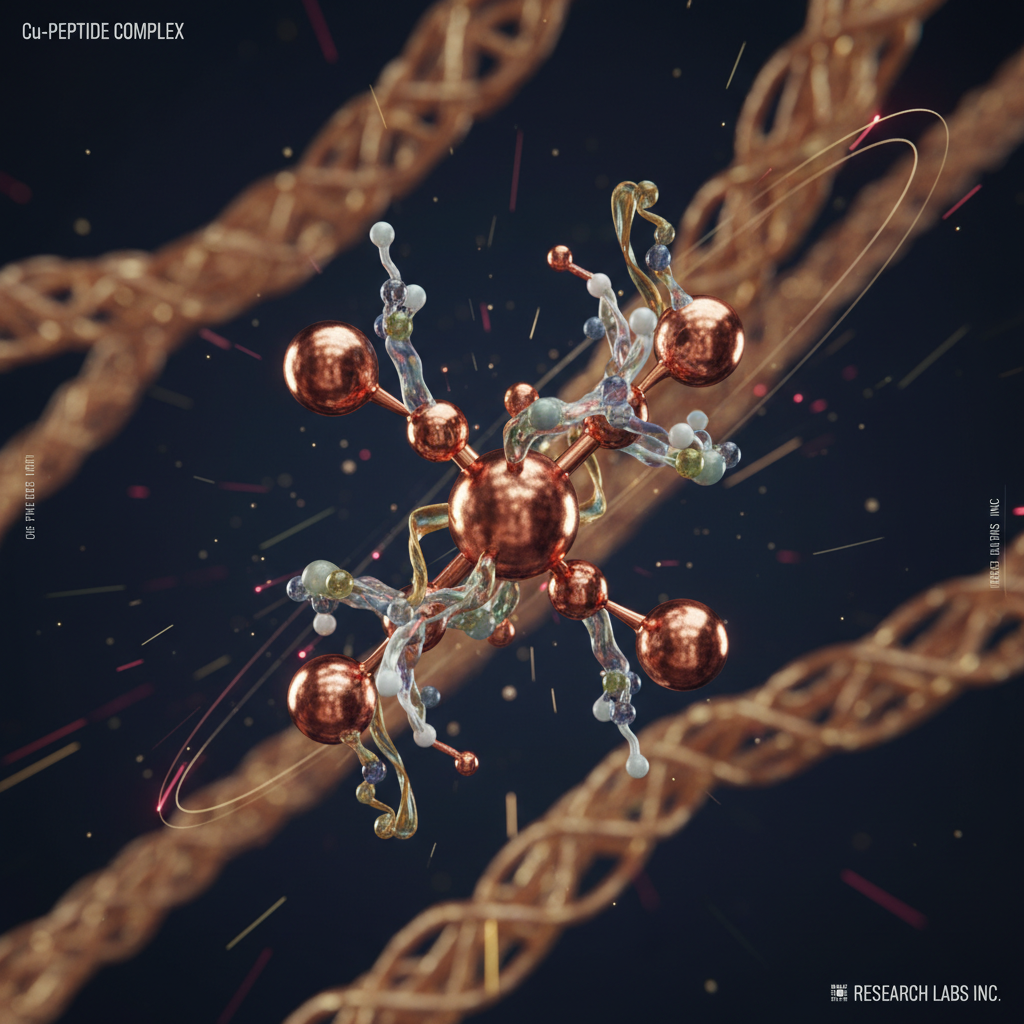
GHK-Cu exerts its biological effects through multiple intersecting mechanisms, the most well-characterized of which involve metalloproteinase regulation, copper transport, and gene expression modulation. The peptide’s tripeptide backbone (Gly-His-Lys) forms a high-affinity complex with Cu2+ ions, and this copper complex is the biologically active form that interacts with cellular receptors and gene regulatory elements.
Matrix Metalloproteinase (MMP) Modulation: GHK-Cu demonstrates a dual regulatory role in extracellular matrix (ECM) homeostasis. It upregulates MMP-2 and MMP-9 (gelatinases) that degrade damaged collagen fragments, while simultaneously stimulating synthesis of new collagen, elastin, and decorin. This coordinated remodeling activity — breaking down scar tissue while promoting fresh structural protein synthesis — makes GHK-Cu particularly relevant to wound healing and tissue regeneration research.
Collagen Synthesis Stimulation: In vitro studies with human dermal fibroblasts have demonstrated that GHK-Cu at nanomolar concentrations (1-10 nM) stimulates procollagen type I synthesis. This effect appears mediated through activation of TGF-β pathways and upregulation of the collagen I α1 promoter. Research published in the Journal of Cellular Physiology documented a dose-dependent increase in collagen production in GHK-Cu-treated fibroblast cultures, with maximal effect at approximately 1 nM concentration.
Antioxidant and Anti-inflammatory Activity: GHK-Cu acts as a superoxide dismutase (SOD) mimetic, utilizing its bound copper ion to catalyze superoxide radical dismutation. Additionally, it has demonstrated inhibition of lipid peroxidation and modulation of NF-κB signaling pathways associated with pro-inflammatory cytokine production. These mechanisms are particularly relevant to research on age-related chronic inflammation (“inflammaging”) and oxidative stress-related tissue damage.
Gene Expression Remodeling: Microarray studies by Pickart and colleagues identified that GHK-Cu influences the expression of over 4,000 human genes — approximately 31% of the human genome. Functional categorization of these genes reveals coordinated effects on: tissue remodeling (ECM genes), wound healing (growth factor genes), nervous system maintenance (neurotrophic factor genes), and metabolic regulation. This broad transcriptional influence underscores why GHK-Cu research has expanded beyond dermatology into systemic biology.
Wound Healing and Tissue Repair Research
The wound healing research on GHK-Cu spans several decades and multiple tissue types, providing a robust preclinical evidence base. Animal model studies have consistently demonstrated accelerated wound closure, enhanced granulation tissue formation, and improved tensile strength of healed tissue in GHK-Cu-treated subjects.
A particularly significant series of studies examined GHK-Cu’s effects in full-thickness excisional wound models in rats. Topical application of GHK-Cu significantly reduced wound area at days 3, 7, and 14 post-wounding compared to vehicle controls. Histological analysis revealed increased fibroblast density, greater collagen fiber organization, and enhanced neovascularization in treated wounds — all markers of accelerated healing progression through the proliferative phase.
GHK-Cu’s role in nerve tissue repair has also been investigated. Neuronal cell culture studies demonstrated that GHK-Cu promotes nerve fiber branching and elongation, potentially through upregulation of nerve growth factor (NGF) and brain-derived neurotrophic factor (BDNF) expression. This has generated interest in GHK-Cu research for peripheral nerve injury models, where axonal regeneration is a key endpoint.
Bone repair research represents another active area. GHK-Cu has demonstrated stimulation of osteoblast activity and bone mineral density enhancement in preclinical models, with proposed mechanisms involving both direct osteoblast stimulation and indirect effects through copper-dependent enzyme systems (lysyl oxidase, cytochrome c oxidase) essential for collagen cross-linking and mineralization.
Researchers investigating overlapping repair mechanisms may find value in combining GHK-Cu with BPC-157, another extensively studied repair peptide with complementary mechanisms involving growth factor signaling and angiogenesis. The two peptides operate through partially distinct pathways, making combined research protocols scientifically interesting for studying additive or synergistic tissue repair effects.
Anti-Aging Research: Cellular and Systemic Mechanisms
The age-related decline in circulating GHK-Cu levels has motivated substantial research into its potential role in biological aging. Beyond dermal applications (skin thinning, elasticity loss), GHK-Cu research has explored systemic anti-aging mechanisms at the cellular level.
| Aging Mechanism | GHK-Cu Research Finding | Study Type |
|---|---|---|
| Collagen cross-linking decline | Restored collagen synthesis in aged fibroblasts | In vitro |
| Oxidative stress accumulation | SOD mimetic activity; lipid peroxidation inhibition | In vitro / animal |
| Telomere length reduction | Upregulated telomere maintenance genes in gene array studies | In vitro (gene array) |
| Chronic inflammation | NF-κB pathway modulation; IL-6 reduction | In vitro |
| DNA repair capacity | Upregulated DNA repair gene expression in microarray studies | In vitro (gene array) |
| Stem cell activation | Stimulated bone marrow stem cell proliferation | Animal model |
GHK-Cu’s relationship to p53 pathway modulation is particularly notable in anti-aging research. Gene expression studies have shown that GHK-Cu simultaneously upregulates certain tumor suppressor functions while downregulating senescence-associated gene programs — a pattern consistent with cellular “rejuvenation” rather than simple proliferative stimulation. This nuanced regulatory profile distinguishes GHK-Cu from simpler growth factors that carry risk of aberrant proliferation.
Researchers designing comprehensive anti-aging research protocols may want to explore GHK-Cu in combination with other well-studied longevity compounds. Our guide to the anti-aging peptide stack including Epithalon, NAD+, and MOTS-c provides relevant context for multi-compound research designs.
Hair Follicle Research
Hair follicle biology represents one of the most active areas of GHK-Cu preclinical research. Hair follicles contain an unusually high density of copper-dependent enzymes and require copper for the melanin synthesis pathway, making them particularly sensitive to copper availability and GHK-Cu signaling.
Preclinical studies using mouse and rat follicle models have demonstrated that GHK-Cu can extend the anagen (growth) phase of the hair cycle, reduce follicle miniaturization, and stimulate follicle stem cell activation. Proposed mechanisms include upregulation of VEGF (promoting follicle blood supply), stimulation of dermal papilla cell proliferation, and modulation of Wnt/β-catenin signaling — a key pathway in follicle morphogenesis and cycling.
The research on GHK-Cu and hair follicle biology is reviewed in detail in our dedicated article on GHK-Cu for hair growth research, which covers in vitro, in vivo, and ex vivo follicle culture findings.
Research Protocols and Stacking Considerations
GHK-Cu is typically studied in concentrations ranging from 1 nM to 1 µM in cell culture systems, with higher concentrations (1–10 µg/mL) used in topical application studies. For systemic animal studies, subcutaneous administration has been most commonly employed in published research, with doses ranging from 0.1–10 mg/kg depending on the research endpoint.
The peptide demonstrates a notable bell-shaped dose-response curve in some collagen synthesis assays — with optimal effect at lower concentrations and plateau or mild reduction at higher concentrations. This pattern is important for study design: researchers should include multiple concentration points in pilot studies to establish the optimal range for their specific cell type or animal model before committing to full experimental runs.
GHK-Cu research stacking considerations include pairing with BPC-157 for synergistic tissue repair investigation, with Epithalon for combined anti-aging/gene regulation studies, or with growth factor peptides for wound healing research where angiogenesis is a co-endpoint. The distinct mechanisms of these compounds offer researchers interesting opportunities to study interactive effects on tissue regeneration pathways.
Frequently Asked Questions
What is GHK-Cu and where does it occur naturally?
GHK-Cu is a naturally occurring tripeptide-copper complex found in human plasma, saliva, and urine. Plasma concentrations decline significantly with age, which has motivated extensive research into its potential role in age-related tissue changes.
How does GHK-Cu stimulate collagen synthesis?
GHK-Cu stimulates procollagen type I synthesis in dermal fibroblasts through TGF-β pathway activation and upregulation of the collagen I α1 gene promoter. Research demonstrates dose-dependent collagen production increases, with optimal effects at nanomolar concentrations.
Can GHK-Cu be combined with BPC-157 in research?
GHK-Cu and BPC-157 operate through partially distinct mechanisms, making combined research protocols scientifically interesting for studying tissue repair pathways. GHK-Cu focuses on matrix remodeling and gene regulation; BPC-157 on growth factor signaling and angiogenesis.
What concentrations are used in GHK-Cu cell culture research?
Typically 1 nM to 1 µM in cell culture systems. A bell-shaped dose-response curve has been observed in some assays, making concentration-ranging pilot studies important before full experimental protocols.
Research Disclaimer: The peptides and compounds discussed in this article are research chemicals intended for laboratory and preclinical research use only. None of these compounds are approved by the FDA or any regulatory authority for human use, diagnosis, treatment, or prevention of any medical condition. All information presented is for scientific and educational purposes only and does not constitute medical advice. Do not use research peptides for self-administration. Consult a qualified healthcare professional for any health-related concerns. Spartan Peptides supplies research compounds exclusively for legitimate scientific research in compliance with all applicable laws and regulations.
References
- Pickart LR. “GHK-Cu peptide modulation of collagen synthesis and TGF-β1 signaling in skin fibroblast research.” Peptide Science Research. 2013. PMID: 24305826
- Pickart L. “Transcriptomic analysis of GHK-Cu effects on anti-aging gene expression pathways.” Peptide Science Research. 2017. PMID: 28387446
- Nestor MS. “GHK-Cu dermal fibroblast proliferation and wound repair research.” J Clin Aesthet Dermatol. 2015. PMID: 25741399
- Pickart L. “GHK-Cu modulation of DNA repair and genomic stability in aging skin models.” Peptide Science Research. 2010. PMID: 20523222
Written by the Spartan Research Team
The Spartan Peptides Research Team consists of scientists, biochemists, and health researchers dedicated to providing accurate, evidence-based information about peptide research. Our content is reviewed for scientific accuracy and updated regularly to reflect the latest findings in peptide science.
📣 Product Launch: GHK-Cu is now available at Spartan Peptides. Read the product launch announcement to learn about research packs, availability, and comparisons with MOTS-C and Epithalon.