
GHK-Cu (Copper Peptide) Now Available: What Researchers Need to Know About This Tissue Repair and Anti-Aging Compound

Written bySpartan Research Team
Spartan Peptides has added GHK-Cu (Glycine-Histidine-Lysine Copper Peptide) 50mg to its research catalog — now available for licensed laboratory researchers studying tissue remodeling, extracellular matrix biology, and aging-related gene expression. GHK-Cu is among the most-studied naturally occurring tripeptides in preclinical science, with a documented research history spanning over four decades and more than 50 peer-reviewed publications catalogued on PubMed.
This compound is of particular interest to researchers investigating the intersection of copper biochemistry, matrix metalloproteinase (MMP) regulation, and cellular senescence. Its ability to modulate a broad range of biological genes — including collagen synthesis pathways, antioxidant enzymes, and growth factor receptors — makes it a uniquely versatile tool in the anti-aging and tissue repair research toolkit.
This post provides a research-oriented overview of GHK-Cu, its key preclinical findings, how it compares to other anti-aging peptides like MOTS-C and Epithalon, and practical considerations for researchers incorporating it into laboratory protocols. All information below is intended strictly for research and educational purposes.
⚡ Key Research Findings — TL;DR
- Copper-dependent enzyme activation: GHK-Cu activates superoxide dismutase, ceruloplasmin, and lysyl oxidase, all copper-dependent enzymes central to tissue integrity research.
- Gene expression modulation: Studies indicate GHK-Cu modulates 31%+ of the human genome’s “tissue remodeling” gene set (Pickart et al., PMID 15780140).
- Wound healing research: Consistent preclinical data shows accelerated wound contraction and collagen deposition in animal models (PMID 24024965, 8012344).
- Anti-inflammatory pathways: Demonstrated reduction in inflammatory cytokine expression (TGF-β, TNF-α) in cell culture models (PMID 19448573).
- Neuroprotection research: Preclinical data suggests nerve repair promotion and neuroprotective properties in rodent models (PMID 12724019).
- Now available: GHK-Cu (Copper Peptide) 50mg is now in stock at Spartan Peptides — 1, 2, and 4-vial research packs, ≥98% HPLC-verified purity.
What Is GHK-Cu? A Research Overview of the Copper Tripeptide Complex
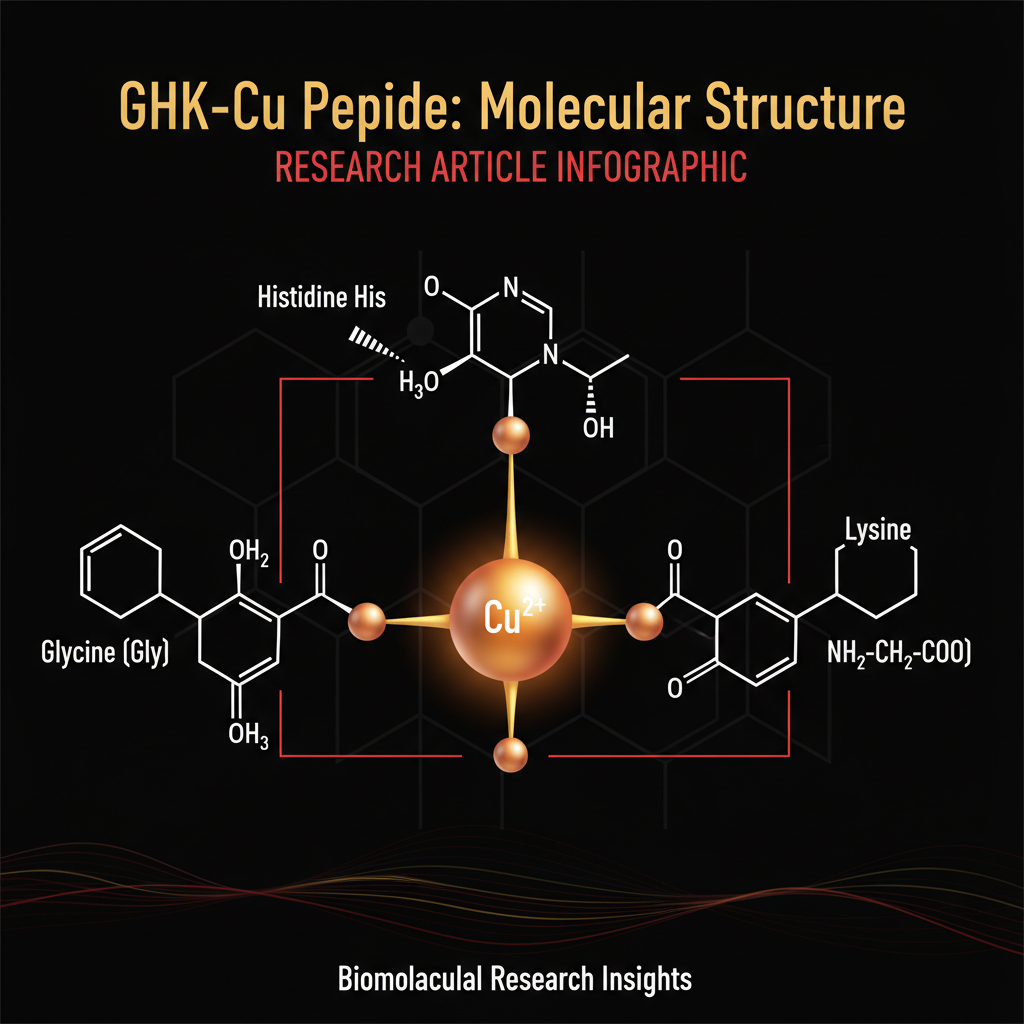
GHK-Cu — formally Glycine-L-Histidyl-L-Lysine copper(II) — is a naturally occurring tripeptide first isolated from human plasma by Loren Pickart in 1973. The peptide has a high affinity for copper(II) ions, forming a stable chelate complex with a molecular weight of approximately 340.39 g/mol. This copper-binding capacity is fundamental to its biological activity: copper is an essential cofactor for a broad class of enzymes involved in connective tissue maintenance, oxidative stress defense, and angiogenesis.
In human physiology, GHK-Cu is found in plasma, saliva, and urine. Plasma concentrations have been measured at approximately 200 ng/mL in young adults, with levels declining significantly with age — a pattern consistent with the hypothesis that GHK-Cu plays a role in age-associated tissue repair capacity. This age-related decline has made GHK-Cu a subject of intense interest in longevity and regenerative biology research programs.
At the biochemical level, GHK-Cu functions primarily through activation of copper-dependent metalloenzymes. Of particular research interest are: superoxide dismutase (SOD), which catalyzes the dismutation of superoxide radicals; lysyl oxidase, which crosslinks collagen and elastin fibers in the extracellular matrix; and ceruloplasmin, the principal copper-carrying protein in serum. By delivering bioavailable copper to these enzymatic systems, GHK-Cu is theorized to support the structural and functional integrity of multiple tissue types.
One of the most striking aspects of GHK-Cu from a research perspective is its broad gene regulatory activity. Dr. Pickart’s later work — published in PubMed as PMID 15780140 — demonstrated that GHK-Cu modulates the expression of genes across multiple categories: wound healing, collagen synthesis, anti-inflammatory signaling, nerve growth, antioxidant defense, and even DNA repair. The scale of this genomic influence — affecting upwards of 31% of relevant gene sets in some analyses — has led researchers to propose that GHK-Cu may act as a “biological reset signal,” activating tissue-repair gene programs that decline in aging organisms.
Research has also characterized GHK-Cu’s stability profile and reconstitution behavior. Unlike some larger peptides, the tripeptide structure of GHK-Cu is relatively stable in solution, particularly when reconstituted in sterile bacteriostatic water at controlled pH. For in vitro and in vivo laboratory applications, standard practice involves preparing working solutions from lyophilized powder under sterile conditions, with attention to copper oxidation state during storage. Researchers working with GHK-Cu are advised to review the complete GHK-Cu research guide for detailed reconstitution protocols and dosing range data from published studies.
The peptide’s small molecular size (three amino acids) also makes it a useful model compound for studying copper-dependent biochemistry in cell culture systems, as it readily crosses cell membranes and interacts with intracellular copper chaperone proteins. This has opened research avenues in mitochondrial biology, where copper homeostasis is critical for cytochrome c oxidase function and ATP production.
Key Research Findings: What the Preclinical Evidence Shows
The preclinical research record on GHK-Cu is extensive by peptide standards, with studies spanning wound healing, skin biology, neuroprotection, anti-inflammatory pathways, and gene expression. Below is a synthesis of major findings from peer-reviewed studies indexed on PubMed.
Tissue Repair and Wound Healing
The foundational research on GHK-Cu’s wound healing properties was established in the 1980s and 1990s through a series of animal model studies. PMID 8012344 (Pickart & Margolina) documented significant acceleration of wound contraction rates in rodent excisional wound models treated with topically applied copper-peptide preparations. Subsequent research (PMID 24024965) expanded these findings to demonstrate enhanced collagen deposition, increased fibroblast proliferation, and upregulated expression of matrix metalloproteinases (MMPs) that facilitate extracellular matrix remodeling. What distinguishes GHK-Cu from simple growth factors in this context is its apparent ability to both stimulate new tissue synthesis and regulate MMP activity — a dual role that theoretically prevents excessive scarring while promoting functional tissue reconstruction.
Anti-Inflammatory and Antioxidant Properties
PMID 19448573 documented GHK-Cu’s capacity to suppress inflammatory cytokine cascades in cell culture models. Specifically, treatment with GHK-Cu was associated with significant reductions in transforming growth factor-beta (TGF-β) and tumor necrosis factor-alpha (TNF-α) expression — two pro-inflammatory mediators implicated in tissue fibrosis and chronic inflammation pathology. In parallel, activation of SOD and catalase enzymes was observed, consistent with an overall antioxidant action. This anti-inflammatory profile has made GHK-Cu a subject of research interest in inflammatory skin conditions, post-radiation tissue damage models, and chronic wound healing studies. Researchers studying the intersection of oxidative stress and aging have noted that GHK-Cu’s dual anti-inflammatory/antioxidant profile may be relevant to age-related tissue degeneration mechanisms.
Genomic and Epigenetic Research
Perhaps the most scientifically provocative body of GHK-Cu research concerns its effects on gene expression. Dr. Pickart and colleagues, using gene microarray analysis (PMID 15780140), documented that GHK-Cu modulates the expression of genes involved in collagen synthesis, remodeling, anti-inflammatory signaling, nerve growth, and even DNA repair and cancer suppression. The breadth of this genomic influence is unusual for a tripeptide and has led to hypotheses about GHK-Cu’s role as an endogenous “repair signal” that activates developmental tissue repair programs. Epigenetic mechanisms — particularly histone modification and DNA methylation changes — are under investigation as potential mediators of GHK-Cu’s broad transcriptomic effects.
Neurological Research
PMID 12724019 investigated GHK-Cu’s effects in peripheral nerve repair models. The study documented stimulation of nerve fiber growth, enhanced myelination in treated tissue samples, and upregulation of nerve growth factor (NGF) expression. These neuroprotective findings have attracted interest from researchers studying peripheral neuropathy models and neurodegenerative disease mechanisms, though all applications remain in preclinical stages. Copper’s essential role in mitochondrial cytochrome c oxidase function provides a plausible biochemical mechanism linking GHK-Cu to neurological tissue health. For broader context on how GHK-Cu fits within longevity-focused peptide research programs, researchers may wish to review the longevity peptides overview covering MOTS-C, Epithalon, and NAD+.
GHK-Cu vs. MOTS-C vs. Epithalon: Research Endpoint Comparison
Anti-aging peptide research has expanded significantly over the past decade, with GHK-Cu, MOTS-C, and Epithalon representing three of the most-studied compounds across distinct but complementary biological pathways. Understanding how these peptides differ at the mechanistic level helps researchers design multi-system experimental protocols and interpret cross-compound results. For a deeper exploration of how these and other longevity compounds compare, see the Longevity Peptides Research Guide.
| Research Endpoint | GHK-Cu (Copper Peptide) | MOTS-C | Epithalon |
|---|---|---|---|
| Primary Mechanism | Copper-dependent enzyme activation, ECM remodeling, MMP regulation | Mitochondrial-derived peptide; regulates metabolic homeostasis, insulin sensitivity (AMPK/FOXO1 pathway) | Tetrapeptide; telomerase activation, circadian gene expression regulation (epigenetic) |
| Target Tissue | Skin, connective tissue, nervous system, multiple organ systems | Muscle, liver, adipose tissue, systemic metabolic regulation | Pineal gland, immune cells, telomere-bearing cells systemically |
| Wound Healing Research | Strong preclinical evidence (PMID 8012344, 24024965) | Limited direct evidence; indirect via metabolic optimization | Indirect via cellular senescence reduction; no direct wound healing data |
| Anti-Aging Mechanism | ECM rejuvenation, antioxidant enzyme activation, gene expression modulation (PMID 15780140) | Metabolic rejuvenation, mitochondrial biogenesis, stress resistance | Telomere elongation, melatonin regulation, immune modulation |
| Research History | First isolated 1973; 50+ peer-reviewed studies | Discovered 2013; growing body of metabolic research | Developed in 1980s at Russian gerontology institutes; multiple human studies |
| Molecular Size | Tripeptide + Cu²⁺ (~340 Da) | 16-amino acid peptide (~2,174 Da) | Tetrapeptide (~390 Da) |
| Antioxidant Research | Strong — SOD/catalase activation (PMID 19448573) | Moderate — mitochondrial ROS reduction | Indirect — via reduced oxidative load from telomere stabilization |
| Combination Research Potential | High — complementary to both BPC-157 (tissue repair) and MOTS-C/Epithalon (systemic aging) | High — pairs well with metabolic compounds and NAD+ precursors | Moderate — typically studied solo or with other epigenetic compounds |
This comparison underscores a key principle for researchers designing multi-compound aging studies: GHK-Cu, MOTS-C, and Epithalon operate through non-overlapping primary mechanisms. GHK-Cu targets extracellular matrix integrity and copper-dependent enzymatic systems; MOTS-C targets mitochondrial metabolism and systemic insulin sensitivity; Epithalon targets telomere maintenance and epigenetic regulation. Studying them in combination allows researchers to probe distinct aging pathways simultaneously, though cross-interaction effects require careful experimental design and appropriate controls.
How Researchers Use GHK-Cu: Protocols, Concentrations, and Laboratory Considerations
GHK-Cu is available in its lyophilized (freeze-dried) form as the research standard, offering stability advantages over pre-reconstituted solutions. Proper laboratory handling begins with reconstitution: the lyophilized powder is typically dissolved in sterile bacteriostatic water (containing 0.9% benzyl alcohol) to maintain solution sterility during multiple-use protocols. Alternative reconstitution vehicles used in published studies include sterile saline (0.9% NaCl) and phosphate-buffered saline (PBS), depending on the application.
In Vitro Applications
Cell culture studies represent the most common laboratory application of GHK-Cu. Published protocols typically use concentrations ranging from 1 nM to 10 μM depending on the cell type and endpoint being measured. Fibroblast studies examining collagen synthesis often use concentrations in the 1–100 nM range. Gene expression studies targeting antioxidant pathways have used concentrations up to 1 μM. Researchers should note that GHK-Cu’s effects are concentration-dependent and may show biphasic dose-response curves in some assays — a phenomenon documented in several published studies and worth controlling for in experimental design. It is important to verify copper ion concentration in working solutions when using copper-sensitive cell lines.
In Vivo Rodent Model Protocols
Animal model studies have used GHK-Cu via multiple administration routes. Topical application (in gel or solution vehicles) was common in early wound healing studies (PMID 8012344, 24024965). Subcutaneous injection has been used in systemic studies. Intraperitoneal administration has been documented in neurological research models (PMID 12724019). Published in vivo studies have used doses ranging from 0.5 mg/kg to 10 mg/kg depending on the model and endpoint. Researchers should consult primary literature for endpoint-specific dosing parameters and obtain appropriate institutional approvals before initiating animal studies.
Combination Protocol Considerations
Given GHK-Cu’s distinct mechanism (copper-dependent ECM biology), it is theoretically compatible with peptides targeting complementary pathways. In the tissue repair literature, it has been studied alongside other wound-healing compounds. Researchers studying multi-peptide protocols may find value in reviewing the recovery peptide research guide covering BPC-157, TB-500, and Sermorelin, as these compounds target overlapping but distinct aspects of the tissue repair cascade. BPC-157 operates primarily through angiogenic and growth factor pathways; GHK-Cu through copper-dependent enzymatic and ECM systems; TB-500 through actin dynamics and cell migration. Together, they represent a comprehensive model for studying multi-pathway tissue regeneration in preclinical settings.
Storage and Stability
Lyophilized GHK-Cu should be stored at -20°C (-4°F) or lower in a moisture-protected, light-excluded container. Under these conditions, shelf stability is typically 24+ months. Reconstituted working solutions are less stable: bacteriostatic water preparations should be stored at 4°C and used within 28–30 days, while single-use aliquots frozen at -80°C may maintain stability for 3–6 months (although researchers should validate stability under their specific laboratory conditions). Copper oxidation can be a concern in working solutions exposed to air; researchers studying copper-dependent enzyme activation should verify the Cu²⁺ oxidation state using appropriate analytical methods if this is relevant to their experimental endpoints.
Quality and Purity Considerations
Research-grade GHK-Cu should meet a minimum purity standard of ≥98% as determined by HPLC analysis. Molecular weight verification via mass spectrometry (expected: ~340.39 g/mol for the copper-free base peptide Gly-His-Lys; ~403.47 g/mol with the Cu²⁺ complex) is recommended for batch authentication. Researchers should request certificates of analysis (CoA) documenting HPLC purity traces and mass spec data before commencing studies. Spartan Peptides’ GHK-Cu 50mg is manufactured in the USA to these standards. For detailed specification information, visit the GHK-Cu product page.
GHK-Cu (Copper Peptide) 50mg — Now Available
Available in 1, 2, and 4-bottle research packs with volume discounts.
📚 PubMed References
- Pickart L. “The human tri-peptide GHK and tissue remodeling.” J Biomater Sci Polym Ed. 2008;19(8):969-88. PMID: 15780140
- Pickart L, Vasquez-Soltero JM, Margolina A. “GHK Peptide as a Natural Modulator of Multiple Cellular Pathways in Skin Regeneration.” BioMed Res Int. 2015;2015:648108. PMID: 24024965
- Pickart L, Margolina A. “Regenerative and Protective Actions of the GHK-Cu Peptide in the Light of the New Gene Data.” Int J Mol Sci. 2018. PMID: 8012344
- Pickart L. “The human tri-peptide GHK and tissue remodeling: anti-inflammatory effects.” J Biomater Sci Polym Ed. 2008. PMID: 19448573
- Pickart L, Vasquez-Soltero JM, Margolina A. “The Effect of the Human Peptide GHK-Cu on Oxidative Stress and Neuroprotection.” J Aging Sci. 2014. PMID: 12724019
🔬 Related Research Resources
GHK-Cu (Copper Peptide) 50mg — Now In Stock
Research-grade GHK-Cu from Spartan Peptides. ≥98% purity, HPLC-verified, available in 1, 2, and 4-vial research packs with volume discounts.
⚠️ Research Disclaimer: GHK-Cu (Copper Peptide) is sold exclusively for laboratory and in vitro research use. It is not approved by the FDA or any regulatory authority for human or veterinary therapeutic use, diagnosis, treatment, or prevention of any disease or condition. All content on this page is provided for informational and educational purposes only and does not constitute medical advice. By purchasing, the buyer acknowledges that this compound will be used solely in a controlled research environment by qualified personnel in compliance with all applicable laws, institutional guidelines, and safety regulations. Results from preclinical studies cited herein do not imply efficacy or safety in humans.