
GHK-Cu for Hair Growth: What the Research Shows About Copper Peptides

Written bySpartan Research Team
Copper peptides have emerged as one of the most compelling areas of hair biology research over the past two decades. At the forefront of this research stands GHK-Cu (glycyl-L-histidyl-L-lysine-copper), a naturally occurring tripeptide-copper complex that has demonstrated remarkable effects on hair follicle biology in preclinical and early clinical studies. For researchers investigating peptide interventions in follicular health, GHK-Cu represents a mechanistically distinct approach to the aging hair follicle.
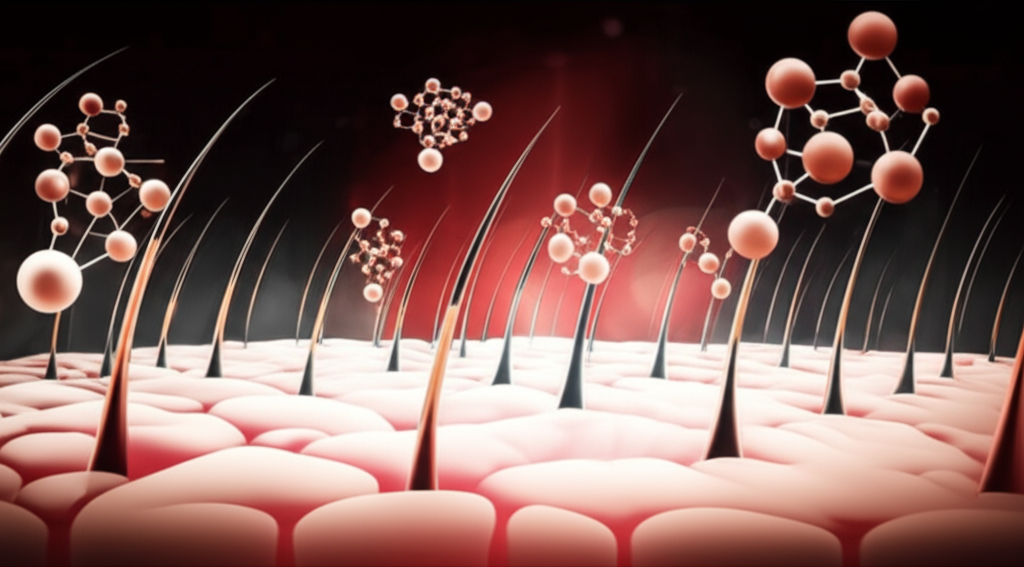
What Is GHK-Cu? Understanding the Copper Peptide Complex
GHK-Cu is a tripeptide — glycine, histidine, and lysine — naturally chelated to a copper ion. First isolated from human plasma by Loren Pickart in 1973, GHK-Cu was initially studied for its wound-healing properties before researchers recognized its profound influence on hair follicle biology. The peptide is found endogenously in human plasma, saliva, and urine, with plasma concentrations declining significantly with age — a pattern that mirrors the onset of hair thinning in many individuals.
The copper component is not incidental. Copper is an essential cofactor in numerous enzymatic processes related to tissue remodeling, angiogenesis, and extracellular matrix synthesis. When chelated to the GHK tripeptide, copper’s bioavailability and targeted delivery to tissue are significantly enhanced, allowing for more precise biological activity at the cellular level.
The Mechanism of Action: How GHK-Cu Influences Hair Follicles
Wnt/Beta-Catenin Pathway Activation
Perhaps the most significant mechanistic finding in GHK-Cu hair research involves the Wnt/beta-catenin signaling pathway — a master regulator of hair follicle cycling. Research published in journals covering dermatological sciences has demonstrated that GHK-Cu can upregulate components of this pathway, promoting the transition of follicles from the telogen (resting) phase into the anagen (active growth) phase. This is particularly relevant in the context of age-related hair thinning, where premature follicular cycling is a primary driver of reduced hair density.
Beta-catenin nuclear accumulation — a hallmark of active Wnt signaling — has been observed in dermal papilla cells treated with GHK-Cu in laboratory conditions. The dermal papilla, a specialized cluster of mesenchymal cells at the base of the follicle, serves as the primary signaling hub that determines whether a follicle will cycle into active growth. By influencing this cellular compartment, GHK-Cu targets hair growth at its root — both literally and mechanistically.
Follicle Stimulation and Enlargement
Beyond pathway activation, GHK-Cu has demonstrated the ability to increase follicle size in research models. Studies examining topical application have found measurable increases in follicular diameter, a parameter directly correlated with hair shaft thickness and overall hair density. The mechanism appears to involve stimulation of follicular keratinocyte proliferation alongside enhanced nutrient delivery through localized angiogenesis.
GHK-Cu’s established pro-angiogenic properties — its ability to stimulate new blood vessel formation — are particularly relevant here. Hair follicles are metabolically demanding structures that require robust vascular supply during the anagen phase. By promoting capillary network development in the scalp dermis, GHK-Cu may help restore the nutrient delivery infrastructure that diminishing vascularity in aging skin progressively undermines.
DHT and Follicle Miniaturization
Dihydrotestosterone (DHT)-driven follicle miniaturization is the primary pathological mechanism in androgenetic alopecia. While GHK-Cu is not a direct DHT inhibitor, research has explored its potential to counteract downstream effects of DHT-mediated inflammation and oxidative stress in follicular tissue. GHK-Cu’s well-documented antioxidant and anti-inflammatory properties may help maintain a more favorable follicular microenvironment even in the presence of androgenic stimulation.
GHK-Cu Research Compared to Standard Interventions
Minoxidil, the most widely used topical intervention for hair loss, works primarily through potassium channel opening and prostaglandin-mediated vasodilation to prolong the anagen phase. While effective, it does not address follicular structural biology or the extracellular matrix remodeling that GHK-Cu targets. Some researchers have proposed that the two approaches could be synergistic — minoxidil providing immediate vascular effects while GHK-Cu works on follicular architecture and signaling over a longer time frame.
Importantly, GHK-Cu also stimulates glycosaminoglycan synthesis and collagen production in the scalp dermis. Healthy dermal collagen architecture is essential for proper follicle anchoring and cycling. This structural component of GHK-Cu’s activity represents a mechanism entirely absent from conventional pharmaceutical approaches.
For researchers interested in the broader landscape of peptide-based tissue repair, our BPC-157 complete research guide provides important context on peptide-mediated tissue remodeling and angiogenesis that complements GHK-Cu research.
Key Research Findings on GHK-Cu and Hair Biology
The research base for GHK-Cu in hair biology, while not as extensive as some pharmaceutical interventions, contains several noteworthy findings:
- Follicle Enlargement Studies: Research published in dermatological journals has documented increases in follicular size of up to 50% in certain laboratory models following GHK-Cu treatment, with corresponding increases in hair shaft diameter.
- Anagen Phase Extension: GHK-Cu has been shown to extend the duration of the anagen (growth) phase in murine models, resulting in longer periods of active hair production per cycle.
- Proliferative Effects on Dermal Papilla Cells: In vitro studies have confirmed GHK-Cu’s ability to stimulate proliferation of dermal papilla cells — the critical cellular population that drives follicle activity.
- Oxidative Stress Reduction: Given that oxidative stress in scalp tissue is increasingly recognized as a driver of premature follicle cycling, GHK-Cu’s potent antioxidant properties (including superoxide dismutase induction) are mechanistically relevant.
- Scalp Collagen Remodeling: Research has documented GHK-Cu’s ability to stimulate Type I and Type III collagen synthesis in dermal fibroblasts, supporting the structural integrity of the follicular niche.
Researchers studying comprehensive peptide approaches to tissue health may also find value in reviewing our foundational guide on peptides and peptide safety considerations for research.
GHK-Cu at the Cellular Level: A Deeper Look
GHK-Cu’s influence on gene expression is broader than its hair-specific effects might suggest. Pickart and colleagues have documented that GHK-Cu modulates the expression of over 4,000 genes in human fibroblasts — roughly 30% of the genes studied. Many of these genes relate to tissue remodeling, inflammation regulation, and cellular differentiation. In the context of hair follicle biology, the most relevant include:
- Stem Cell Factor (SCF) and its receptor c-Kit: Critical signaling components in melanocyte and follicle stem cell biology
- Vascular Endothelial Growth Factor (VEGF): The primary driver of angiogenesis that supports follicular vascularity
- Fibroblast Growth Factors (FGFs): Key regulators of follicle cycling and dermal papilla cell behavior
- Matrix Metalloproteinases (MMPs) and their inhibitors (TIMPs): Enzymes governing extracellular matrix remodeling around the follicle
This broad gene regulatory activity positions GHK-Cu as a pleiotropic peptide — one that may address multiple simultaneous drivers of follicle dysfunction rather than a single upstream target.
Research Applications and Considerations
For researchers investigating copper peptide biology, GHK-Cu from Spartan Peptides’ GHK-Cu is available in research-grade form for laboratory use. Proper reconstitution and handling protocols are essential — researchers should consult our peptide reconstitution guide for methodology.
Research with GHK-Cu typically involves examining its effects in cell culture systems (dermal papilla cells, keratinocytes, fibroblasts), ex vivo hair follicle organ culture models, and murine hair cycling studies. Each model system has distinct advantages and limitations for translating findings to follicular biology.
Researchers interested in the broader landscape of peptides for hair biology should alsoe candidates in the context of follicular regeneration research.
Frequently Asked Questions: GHK-Cu for Hair Research
Q: What is GHK-Cu and why is it studied for hair growth?
GHK-Cu is a naturally occurring copper-chelated tripeptide found in human plasma. Research interest stems from its ability to activate Wnt/beta-catenin signaling, stimulate dermal papilla cell proliferation, promote scalp angiogenesis, and increase follicular size in preclinical models.
Q: How does GHK-Cu differ from minoxidil in mechanism?
Minoxidil acts via potassium channel opening and vasodilation. GHK-Cu operates through Wnt/beta-catenin activation, extracellular matrix remodeling, collagen synthesis stimulation, and broad gene expression modulation — mechanisms entirely distinct from and potentially complementary to minoxidil.
Q: What does the Wnt/beta-catenin pathway have to do with hair growth?
Wnt/beta-catenin is a master regulator of follicle cycling. Active signaling drives follicles into the anagen (growth) phase; reduced signaling is associated with premature telogen transition and miniaturization. GHK-Cu research has shown upregulation of components of this pathway in dermal papilla cells.
Q: Is GHK-Cu research applicable to both male and female hair loss?
Yes — GHK-Cu’s mechanisms (Wnt signaling, angiogenesis, oxidative stress reduction, ECM remodeling) are relevant across multiple hair loss phenotypes, not limited to androgenetic alopecia.
Q: Where can researchers obtain GHK-Cu for laboratory studies?
Spartan Peptides offers research-grade GHK-Cu for laboratory use, intended for research purposes only and not for human consumption.
Research Disclaimer: This article is for educational and research purposes only. Spartan Peptides products are intended for laboratory research use only and are not for human consumption. Always consult qualified professionals before making any decisions related to peptide research.
⚠️ Research Use Only — Not for Human Consumption
The peptides discussed in this article are intended for laboratory and research purposes only. They are not intended for human consumption. All information presented is based on published preclinical research and is provided for educational purposes only.
Written by the Spartan Research Team
The Spartan Peptides Research Team consists of scientists, biochemists, and health researchers dedicated to providing accurate, evidence-based information about peptide research. Our content is reviewed for scientific accuracy and updated regularly to reflect the latest findings in peptide science.