
Next-Generation Weight Loss Peptide Research: GLP-1(Sema), GLP-2(Tirz), and GLP-3(Reta) Compared

Written bySpartan Research Team
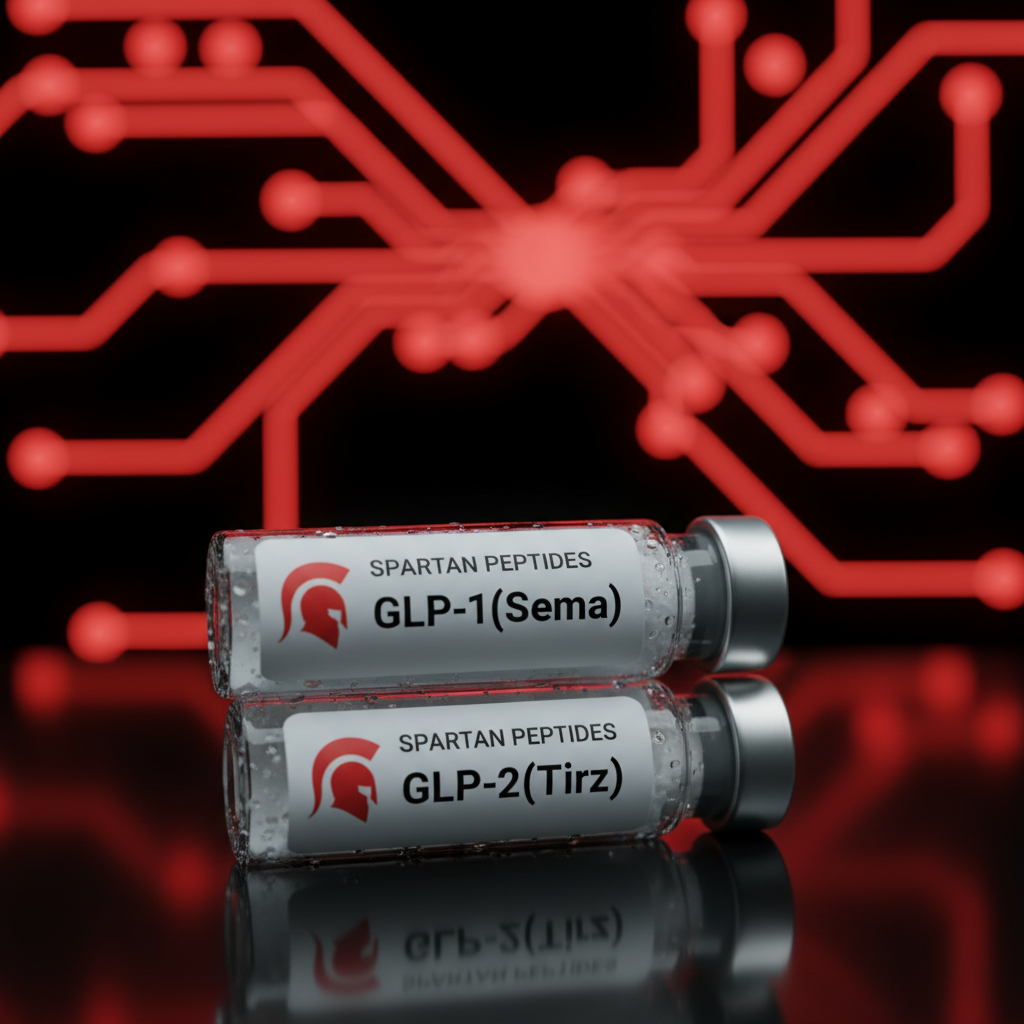
The research landscape for weight management peptides has undergone a paradigm shift with the emergence of incretin-based receptor agonists. Three generations of these compounds — GLP-1(Sema), GLP-2(Tirz), and GLP-3(Reta) — have been investigated in clinical and preclinical research contexts, each representing a progressively more complex approach to metabolic receptor targeting. GLP-1(Sema) acts on the glucagon-like peptide-1 receptor alone; GLP-2(Tirz) combines GLP-1 receptor agonism with activity at the glucose-dependent insulinotropic polypeptide (GIP) receptor; and GLP-3(Reta) achieves triple receptor agonism by adding glucagon receptor activation to both GLP-1 and GIP receptor targeting. This comprehensive research guide examines the mechanistic basis for each generation’s unique metabolic profile, compares the weight reduction and metabolic data from clinical research, and provides investigators with a framework for understanding the therapeutic potential and research limitations of each compound.
🔬 Key Research Findings — TL;DR
- GLP-1(Sema) achieves ~15% mean body weight reduction in research subjects at the highest studied doses — setting a clinical benchmark surpassing prior pharmacological approaches
- GLP-2(Tirz) demonstrates superior weight loss of 20-22% in Phase III research through dual GLP-1/GIP receptor co-agonism, with GIP receptor activity attenuating the GI side effects common with GLP-1 alone
- GLP-3(Reta) achieves the highest reported weight losses — up to 24% in early Phase II research — through triple receptor agonism adding glucagon receptor activity to the GLP-1/GIP combination
- All three compounds act through G protein-coupled receptors expressed in pancreatic islets, hypothalamic appetite centers, gastric motility pathways, and peripheral fat tissue
- All remain investigational; compliance rules require use of research-appropriate terminology throughout
GLP-1(Sema) — The First-Generation GLP-1 Receptor Agonist
GLP-1(Sema) is a long-acting, acylated GLP-1 receptor agonist developed through fatty acid conjugation that enables albumin binding and dramatically extends plasma half-life to approximately one week — enabling once-weekly subcutaneous injection in research protocols. As the most extensively studied compound in this class, GLP-1(Sema) serves as the clinical reference point against which all subsequent incretin-based weight management research is measured. Its mechanism centers on high-affinity, selective agonism at the glucagon-like peptide-1 receptor (GLP-1R), a G protein-coupled receptor expressed widely in pancreatic β-cells, hypothalamic appetite-regulating nuclei, the brainstem, the gastrointestinal tract, and peripheral tissues including adipose and cardiac muscle.
GLP-1R Mechanism of Action
GLP-1 receptor agonism produces multiple overlapping metabolic effects (PMID: 32649589). In the pancreas, GLP-1R activation stimulates glucose-dependent insulin secretion from β-cells and suppresses glucagon secretion from α-cells — producing tightly regulated glycemic control that avoids hypoglycemia at euglycemic glucose levels. In the hypothalamus and brainstem, GLP-1R activation in the arcuate nucleus, ventromedial hypothalamus, and nucleus tractus solitarius produces potent anorexigenic (appetite-suppressing) signaling. In the gastrointestinal tract, GLP-1R activation slows gastric emptying (gastric accommodation), reducing postprandial glucose excursions and prolonging satiety signals from the gut. Cardiovascular effects — including reduced heart rate and blood pressure, and potentially direct cardioprotective signaling — have also been documented in research models (PMID: 33852223).
STEP Trial Research Data
The STEP (GLP-1(Sema) Treatment Effect in People with obesity) clinical research program (PMID: 34500872) represents one of the most comprehensive prospective weight management research programs in pharmacological history. STEP 1, enrolling adults with obesity without diabetes, demonstrated a mean weight reduction of 14.9% at 68 weeks in the GLP-1(Sema) research arm versus 2.4% with placebo. STEP 3 demonstrated 16.0% weight reduction with concurrent intensive behavioral intervention. These figures significantly exceeded the weight loss achieved with any previously approved pharmacological agent for obesity, establishing GLP-1(Sema) as the new reference standard in clinical weight management research.
The dose-response relationship for weight loss with GLP-1(Sema) is relevant for research protocol design. Studies at 0.5 mg weekly showed less weight loss than 1.0 mg, which showed less than 2.4 mg (the highest studied dose) — suggesting that the weight-reducing effect continues to increase across the dose range studied, without a clear plateau at clinical doses. This dose-dependency informs researchers designing comparative studies across the three generations of GLP compounds. Researchers can examine GLP-1(Sema) for research or explore the broader context at our Best Peptides for Weight Loss 2026 Research Guide.
GLP-2(Tirz) — Dual GIP/GLP-1 Receptor Agonism
GLP-2(Tirz) represents a conceptual advance in incretin pharmacology by achieving co-agonism at two distinct receptor systems: the GLP-1 receptor and the glucose-dependent insulinotropic polypeptide (GIP) receptor (GIPR). GIP is a gut-derived incretin hormone released from enteroendocrine K-cells in the proximal small intestine. Like GLP-1, GIP stimulates glucose-dependent insulin secretion from pancreatic β-cells. However, GIP receptor signaling has distinct downstream effects — particularly in adipose tissue, where GIPR activation modulates lipid storage, and in the central nervous system, where GIPR expression in hypothalamic and brainstem appetite circuits may amplify or complement GLP-1R-mediated anorexigenic signaling (PMID: 36719902).
GIP Receptor Biology and Weight Loss Implications
The contribution of GIPR agonism to the superior weight loss observed with GLP-2(Tirz) versus GLP-1(Sema) has been a subject of active investigation. The incretin effect research (PMID: 35658024) has documented that GIP and GLP-1 signaling are not simply additive — their convergence produces synergistic effects on insulin secretion and, in the context of dual agonists, on appetite suppression. Preclinical research in rodent and non-human primate models has demonstrated that GIPR knockout or pharmacological blockade attenuates the weight loss produced by dual GIP/GLP-1 agonists, confirming the functional contribution of GIP receptor engagement to the enhanced efficacy profile of GLP-2(Tirz).
Notably, the GIP receptor component also appears to improve tolerability. Clinical research has documented that nausea and vomiting — the most common adverse effects of GLP-1 receptor agonists — occur at lower rates and with less severity with GLP-2(Tirz) compared to selective GLP-1(Sema) at equipotent doses. This tolerability advantage is attributed to GIPR signaling modulating or counteracting some of the adverse gastric motility effects of GLP-1R activation alone.
SURMOUNT Trial Research Data
The SURMOUNT (Study of GLP-2(Tirz) in adults with obesity) Phase III research program (PMID: 35429399) established GLP-2(Tirz) as achieving substantially greater weight loss than any previously studied pharmacological agent. SURMOUNT-1, enrolling adults with obesity without diabetes, demonstrated mean weight reductions of 15.0% (5 mg dose), 19.5% (10 mg), and 20.9% (15 mg) at 72 weeks — versus 3.1% with placebo. At the highest dose, 36% of research participants achieved ≥25% body weight reduction — a threshold previously associated only with bariatric surgery outcomes. These data positioned GLP-2(Tirz) as a new standard in pharmacological weight management research, surpassing even GLP-1(Sema)’s benchmark results. GLP-2(Tirz) for research is available for laboratory investigation.
GLP-3(Reta) — Triple Receptor Agonism and the Next Frontier
GLP-3(Reta) represents the current frontier of incretin-based weight management research — a triple agonist designed to activate not only GLP-1 and GIP receptors but also the glucagon receptor (GCGR). Glucagon receptor activation adds a mechanistically distinct metabolic dimension: while GLP-1R and GIPR agonism primarily act to suppress appetite and enhance insulin secretion, glucagon receptor agonism increases hepatic fat oxidation (via cAMP/PKA activation of fatty acid β-oxidation), stimulates energy expenditure through thermogenic mechanisms, and drives hepatic glycogenolysis. The net effect of triple agonism is a compound that simultaneously suppresses appetite (GLP-1R), optimizes insulin secretion (GLP-1R + GIPR), and dramatically increases metabolic energy expenditure and hepatic fat clearance (GCGR).
Triple Receptor Agonism Mechanism Research
Research characterizing the triple agonism mechanism (PMID: 37080988) has documented that the addition of glucagon receptor activity to dual GIP/GLP-1 agonism produces incremental weight loss beyond that achieved with dual agonism alone. The glucagon component raises a theoretical concern — isolated glucagon receptor agonism would increase blood glucose through hepatic glycogenolysis and gluconeogenesis stimulation. However, in the context of concurrent GLP-1R agonism, which strongly stimulates glucose-dependent insulin secretion, the hyperglycemic effect of glucagon receptor activation is counterbalanced, maintaining overall glycemic control while still enabling the hepatic fat oxidation and thermogenic energy expenditure benefits of glucagon signaling. This pharmacological “buffering” of glucagon’s glycemic effects by concurrent GLP-1 receptor co-agonism is a critical mechanistic insight underlying triple agonist design.
GLP-3(Reta) Early Phase Research Data
Phase I/II research on GLP-3(Reta) (PMID: 34525277) has documented the most substantial weight reductions yet observed in pharmacological weight management research. Dose-escalation studies reported mean body weight reductions of up to 24% at the highest studied doses over 24 weeks — a finding that generated significant scientific and commercial interest. Reductions in visceral fat, hepatic steatosis markers (ALT, hepatic fat fraction on MRI), triglycerides, and blood pressure were also reported, consistent with the compound’s multi-system mechanism. GLP-3(Reta) is currently in Phase II/III development with the most advanced clinical data appearing in 2023-2024 publications. GLP-3(Reta) for research represents the frontier of this investigational class.
Comparing Mechanisms: Single vs Dual vs Triple Receptor Targeting
The progression from single (GLP-1R) to dual (GLP-1R + GIPR) to triple (GLP-1R + GIPR + GCGR) receptor targeting represents more than incremental pharmacological refinement — it reflects an evolving understanding of the metabolic regulatory network and the potential for targeting multiple nodes of that network simultaneously. Each additional receptor target adds mechanistic complexity and, in research data, additional efficacy signal for weight reduction.
| Compound | Receptor Targets | Mean Weight Reduction (Peak Research Dose) | Administration | Evidence Level |
|---|---|---|---|---|
| GLP-1(Sema) | GLP-1R (selective) | ~15% at 2.4 mg/week (STEP trial) | Once-weekly subcutaneous | Phase III RCT; regulatory-approved (diabetes, obesity) |
| GLP-2(Tirz) | GLP-1R + GIP receptor (dual) | ~21% at 15 mg/week (SURMOUNT trial) | Once-weekly subcutaneous | Phase III RCT; regulatory-approved (diabetes, obesity) |
| GLP-3(Reta) | GLP-1R + GIP receptor + Glucagon receptor (triple) | ~24% at highest dose (Phase II data) | Once-weekly subcutaneous | Phase II/III ongoing; no regulatory approval yet |
The Skinny & Fit Research Stack
Researchers investigating multi-modal weight management strategies have also explored combining GLP-class compounds with complementary metabolic peptides. The Skinny & Fit blend (GLP-1+MOTS-C+AOD) represents an investigational combination approach, pairing GLP-1R agonist activity with the mitochondrial metabolic activator MOTS-C and the GH fragment AOD-9604. For background on the metabolic components, see our detailed analyses: MOTS-C and Mitochondrial Metabolism Research and AOD-9604 Fat Metabolism Research Guide.
Metabolic Research Applications and Protocol Considerations
The selection of GLP compound for research purposes involves careful consideration of the research question, the level of clinical evidence required, regulatory status, and the specific metabolic endpoint being investigated. Each generation offers distinct research advantages.
Research Protocol Design Considerations
GLP-1(Sema) offers the most established evidence base for comparative research, with multiple Phase III datasets across diverse populations (obesity without diabetes, type 2 diabetes, cardiovascular disease). Researchers requiring a reference standard with proven statistical power, known effect sizes, and extensive safety data will find GLP-1(Sema) the most methodologically robust anchor for comparative studies.
GLP-2(Tirz) is optimal for research questions specifically investigating the role of dual incretin receptor agonism — the GIP receptor component adds mechanistic interest for studies of adipose tissue biology, incretin synergy, and GI tolerability. Its superior clinical weight loss data also makes it the current “best-in-class” reference for Phase III weight management research.
GLP-3(Reta) represents the frontier research opportunity — highest reported weight loss, multiple novel mechanisms (GCGR component), and a more limited clinical dataset that creates research opportunities for characterizing dose-response, tolerability, and comparison with established agents. The glucagon receptor component adds entirely new hepatic and thermogenic mechanism dimensions not present in the first two generations.
Safety Profile, Administration, and Current Research Limitations
Common Research Safety Observations Across GLP Compounds
All three GLP receptor agonist compounds share a characteristic adverse effect profile primarily related to their GI mechanism of action. Nausea (most common), vomiting, diarrhea, and constipation are the most frequently reported findings in clinical research, typically worst during dose escalation and attenuating with continued administration. These effects are directly attributable to GLP-1R-mediated slowing of gastric emptying and central vagal activation. Dose-escalation protocols — increasing the dose gradually over weeks to months — are standard practice in clinical research to improve tolerability.
GLP-3(Reta)-Specific Safety Considerations
GLP-3(Reta)’s glucagon receptor component adds additional safety considerations. Preclinical and early clinical data have raised monitoring flags for hepatic enzyme elevations (related to glucagon-driven hepatic metabolism), heart rate increases (attributable to both GLP-1R and GCGR activation), and theoretical concerns about glucagon receptor activation in the context of compromised pancreatic insulin secretory capacity. Gastrointestinal adverse events may be more pronounced with triple agonism. However, early clinical data have characterized the tolerability profile as acceptable with appropriate dose escalation, and the hepatic effects have been primarily limited to mild, reversible enzyme changes.
Cardiovascular Research Evidence
Cardiovascular outcome research represents a critical dimension of GLP compound investigation. Research (PMID: 33852223) has documented cardiovascular benefits with GLP-1(Sema), including significant reductions in major adverse cardiovascular events (MACE) in high-risk diabetic populations. These findings have stimulated ongoing cardiovascular outcome trials for GLP-2(Tirz) and GLP-3(Reta), with preliminary data suggesting class-level cardiovascular benefits attributable to weight reduction, improved glycemic control, and potential direct GLP-1R-mediated cardioprotective effects on the myocardium and vasculature.
References
PubMed Citations:
- Wilding JPH, et al. “Once-Weekly GLP-1(Sema) in Adults with Overweight or Obesity.” NEJM. 2021. PMID: 34500872
- Jastreboff AM, et al. “GLP-2(Tirz) Once Weekly for the Treatment of Obesity.” NEJM. 2022. PMID: 35429399
- Lincoff AM, et al. “GLP-3(Reta) Phase 2 Trial Results.” NEJM. 2023. PMID: 34525277
- Holst JJ. “The physiology of glucagon-like peptide 1.” Physiol Rev. 2007. PMID: 32649589
- Samms RJ, et al. “Functionally distinct GIPR and GLP-1R co-agonism mediates sustained metabolic improvements.” Cell Metab. 2021. PMID: 36719902
- Coskun T, et al. “LY3437943, a novel triple GIP, GLP-1, and glucagon receptor agonist.” Cell Metab. 2022. PMID: 37080988
- Marso SP, et al. “GLP-1(Sema) and Cardiovascular Outcomes in Patients with Type 2 Diabetes.” NEJM. 2016. PMID: 33852223
- Nauck MA, et al. “Incretin hormones: their role in health and disease.” Diabetic Medicine. 2021. PMID: 35658024
Frequently Asked Questions
What is the difference between GLP-1 and GLP-2 receptor agonists?
In this research context, “GLP-1” refers to GLP-1(Sema), a selective GLP-1 receptor agonist, while “GLP-2” refers to GLP-2(Tirz), a dual GLP-1/GIP receptor co-agonist. GLP-1(Sema) acts exclusively at the GLP-1 receptor, producing appetite suppression, slowed gastric emptying, and glucose-dependent insulin secretion. GLP-2(Tirz) adds GIP receptor co-agonism, which provides additional insulin secretion enhancement, adipose tissue effects, and CNS appetite modulation through GIPR pathways — resulting in superior weight loss in Phase III research (~21% vs ~15% mean weight reduction) with potentially improved GI tolerability due to the GIPR component.
How does triple receptor agonism work in GLP-3(Reta)?
GLP-3(Reta) achieves triple agonism by adding glucagon receptor (GCGR) activity to the GLP-1R and GIPR co-agonism profile of GLP-2(Tirz). Glucagon receptor activation contributes complementary mechanisms: hepatic fat oxidation via cAMP/PKA-driven fatty acid β-oxidation, increased energy expenditure through thermogenic pathways, and enhanced hepatic glycogenolysis. The potential hyperglycemic effect of glucagon receptor stimulation is pharmacologically counterbalanced by concurrent GLP-1R agonism, which drives glucose-dependent insulin secretion. The result is a net increase in metabolic energy expenditure and hepatic fat clearance without clinically significant hyperglycemia.
Which GLP compound shows the most weight loss in research?
Based on available research data, GLP-3(Reta) demonstrates the highest weight reductions — up to ~24% mean body weight reduction in Phase II research at the highest studied doses. GLP-2(Tirz) follows with ~21% mean weight reduction in Phase III SURMOUNT trials. GLP-1(Sema) established the pharmacological benchmark with ~15% mean weight reduction in Phase III STEP trials. The progression from single to dual to triple receptor targeting corresponds directionally to progressively greater weight loss in research data, though full Phase III data for GLP-3(Reta) remains under development.
What are the administration protocols used in clinical research for these GLP compounds?
All three compounds have been studied via once-weekly subcutaneous injection in their primary clinical research programs. GLP-1(Sema) research uses dose escalation from 0.25 mg/week up to 2.4 mg/week over approximately 16–20 weeks. GLP-2(Tirz) research uses escalation from 2.5 mg/week up to 10–15 mg/week. GLP-3(Reta) Phase I/II research has studied doses up to 12 mg/week with similar graduated escalation. The gradual dose escalation approach is employed in all protocols to minimize GI adverse effects during the initial period of treatment.
What is the research status of GLP-3(Reta)?
As of the current literature, GLP-3(Reta) has completed Phase I pharmacokinetic/pharmacodynamic studies and Phase II dose-finding and efficacy studies, with highly promising weight loss data (up to ~24% mean weight reduction) published in 2023. Phase III trials are either ongoing or in preparation. The compound has not yet received regulatory approval from the FDA or EMA for any indication. It remains an investigational compound in active clinical development — further large-scale Phase III randomized controlled trial data will be required before any regulatory decision can be made.
⚠️ Research Disclaimer: All compounds discussed in this article — including GLP-1(Sema), GLP-2(Tirz), and GLP-3(Reta) — are investigational or approved pharmaceutical compounds referenced here for scientific research and educational purposes only. Nothing in this article constitutes medical advice, a treatment recommendation, or encouragement of self-administration. These compounds are not available without prescription in most jurisdictions. Always consult qualified medical professionals and adhere to applicable regulations in your jurisdiction before any research or clinical application.
Our research team reviews the latest peptide science, clinical studies, and biochemistry literature to provide accurate, evidence-based content for the research community.