
GLP-3 Reta vs. GLP-2 Tirz: A Research Comparison Guide

Written bySpartan Research Team
Finding effective ways to reduce body weight has become a major focus in health and wellness. GLP-3 Reta and GLP-2 Tirz are two peptides attracting a lot of attention, and both are part of the research‑grade products available through Spartan Peptides.
These compounds are studied in laboratories to understand how they influence appetite, metabolism, and blood sugar.
This article compares them in plain language so you can decide which peptide may be more suitable for your research projects.
In This Article
- How These Peptides Work
- Mechanism of Action: Dual vs. Triple
- Dosing and Administration
- Weight Loss Results and Research Findings
- Side Effects and Safety Considerations
- Answers to Common Questions
- Availability and Regulatory Status
- Which Peptide Should You Choose?
- Practical Tips for Researchers
- What Spartan Peptides Offers
- Conclusion: The Future of Peptide‑Based Weight Loss Research
How These Peptides Work
GLP-2 Tirz: A Dual Agonist
GLP-2 Tirz (branded as Mounjaro for diabetes and Zepbound for obesity) is a dual‑action peptide that mimics two gut hormones—GLP‑1 and GIP. By activating both receptors, it enhances insulin release, slows stomach emptying, and reduces appetite. This synergy helps reduce calorie intake and improve blood sugar control. Clinical trials show that patients taking high doses (15 mg) lost about 22.5 % of their body weight over 72 weeks.
GLP-2 Tirz is already approved for type 2 diabetes and chronic weight management in the U.S., and supplies are available for research use.
GLP-3 Reta: A Triple Agonist
GLP-3 Reta is a new peptide still being tested in phase 3 trials. Often called a “triple‑agonist,” it targets three hormone receptors at once—GLP‑1, GIP, and glucagon.
This extra glucagon activity is designed to boost energy expenditure and fat burning. In a phase 2 obesity trial, participants taking the highest dose (12 mg) lost 24.2 % of their body weight after 48 weeks.
At lower doses (4 mg and 8 mg), weight losses of 17.1 % and 22.8 % were recorded at 48 weeks. Early studies indicate that GLP-3 Reta can begin producing noticeable weight loss within four weeks, with about 5 % reduction at higher doses.
Because the peptide is still in trials, it is not yet approved for medical use and is only available to researchers.
Mechanism of Action: Dual vs. Triple
Understanding how these peptides influence hormones helps explain their differences:
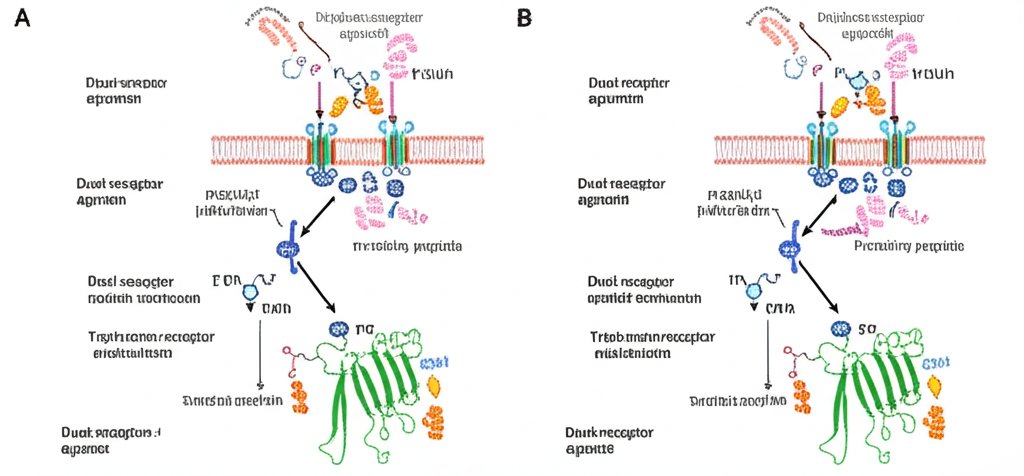
- GLP-2 Tirz (Dual Agonist) – Stimulates GLP‑1 and GIP receptors. GLP‑1 slows digestion and signals fullness, while GIP enhances insulin release. Working together, they lower appetite, improve blood sugar, and support weight loss.
- GLP-3 Reta (Triple Agonist) – Activates GLP‑1, GIP, and glucagon receptors. In addition to suppressing appetite and enhancing insulin secretion, the extra glucagon activity may increase energy expenditure and promote fat burning.
Preclinical data suggest this triple approach could preserve lean muscle while decreasing fat mass.
Because GLP-3 Reta engages an extra pathway, it has the potential to deliver greater metabolic benefits.
However, more data are needed to confirm long‑term safety and efficacy. GLP-2 Tirz offers a proven dual‑agonist mechanism with established clinical results.
Dosing and Administration
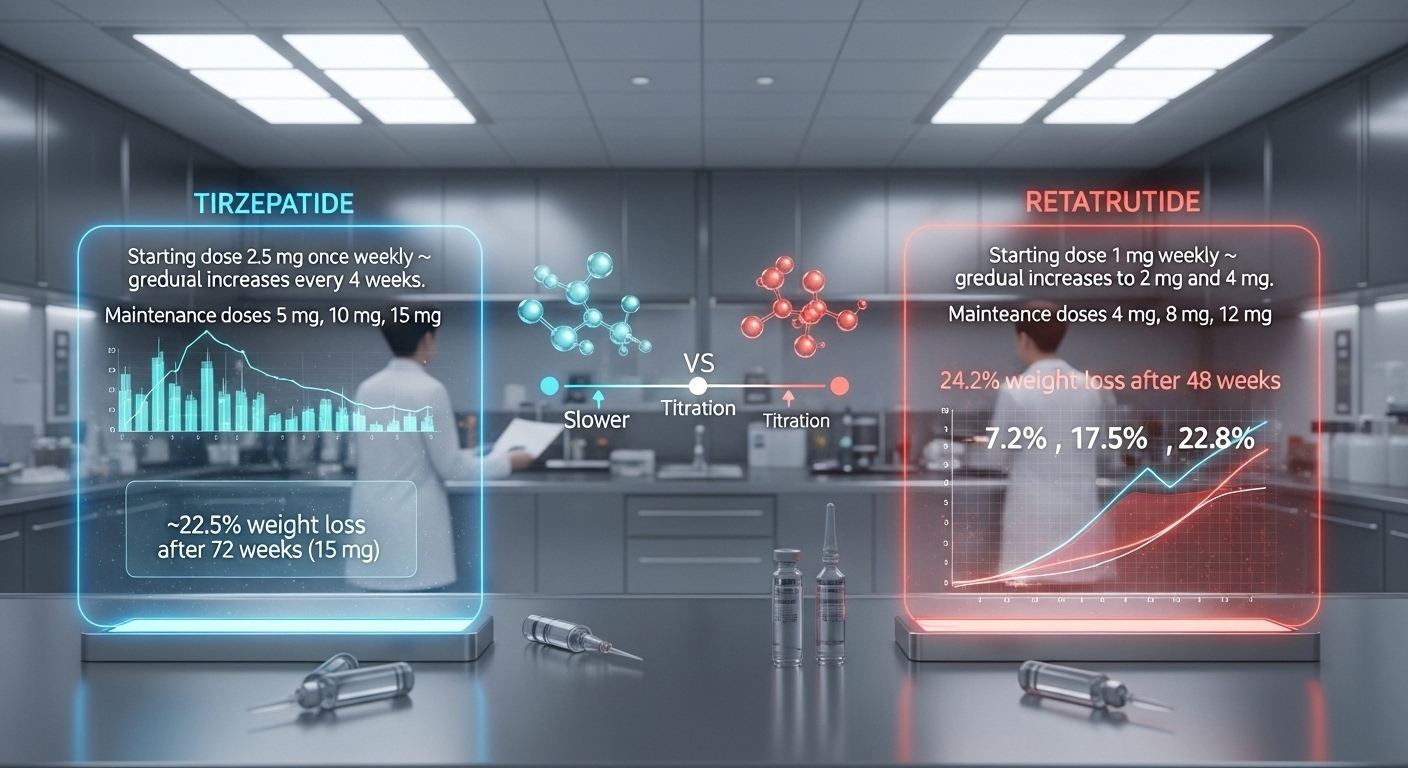
Both peptides are given as once‑weekly subcutaneous injections, but their starting doses and dose‑increase schedules differ.
GLP-2 Tirz dosing
- Start: 2.5 mg once weekly for 4 weeks, then increase by 2.5 mg every four weeks.
- Maintenance: 5 mg, 10 mg or 15 mg weekly depending on tolerance and research goals.
This slow titration helps reduce gastrointestinal (GI) discomfort.
Researchers often choose the highest tolerated dose to maximize weight loss, as seen in the SURMOUNT‑1 trial, where participants receiving 15 mg lost ~22.5 % of their body weight.
GLP-3 Reta dosing
- Start: 1 mg once weekly. After four weeks, the dose may increase to 2 mg, then to 4 mg, depending on tolerance.
- Maintenance: 4 mg, 8 mg, or 12 mg weekly are studied doses.
Clinical data show dose‑dependent results. For example, at 24 weeks, weight loss ranged from 7.2 % (1 mg) to 17.5 % (12 mg). At 48 weeks, weight loss reached 24.2 % with 12 mg. Because GLP-3 Reta is still under investigation, dosing guidelines continue to evolve.
Weight Loss Results and Research Findings
GLP-2 Tirz: Established Efficacy
In the SURMOUNT‑1 phase 3 trial involving adults without diabetes, GLP-2 Tirz produced mean weight reductions of 16 % (5 mg), 21.4 % (10 mg), and 22.5 % (15 mg) after 72 weeks. More than 80 % of participants lost at least 15 % of their baseline weight.
GLP-2 Tirz also improved blood sugar control, reduced waist circumference, and shifted the ratio of fat mass to lean mass in favor of fat loss.
GLP-3 Reta: Rapid and Robust Reduction
GLP-3 Reta’s weight‑loss profile appears even more dramatic. Phase 2 data showed that participants taking the highest dose lost an average of 24.2 % of their body weight at 48 weeks. Lower doses still produced substantial reductions: 17.1 % at 4 mg and 22.8 % at 8 mg.
Another analysis noted that 83 % of people at the 12 mg dose lost at least 15 % of their body weight, and many saw reversal of fatty liver disease.
Importantly, GLP-3 Reta’s effect begins early, with weight loss of around 5 % within the first four weeks at higher doses.
Meta‑analyses indicate significant reductions in body weight, BMI, waist circumference, and blood pressure, with no significant increase in adverse events compared with placebo.
These findings point to GLP-3 Reta’s potential to surpass current treatments. Yet, because it remains under investigation and lacks long‑term safety data, researchers must proceed cautiously.
Side Effects and Safety Considerations
Shared Side Effects
Both peptides can cause similar adverse effects, most of which are gastrointestinal and often decrease over time. Common issues include:
- Nausea and vomiting
- Diarrhea or constipation
- Reduced appetite or early satiety
- Bloating or abdominal discomfort
Other mild effects may include fatigue, changes in food preferences, and injection‑site reactions. These symptoms usually lessen as the body adjusts to the medication.
GLP-3 Reta‑specific concerns
GLP-3 Reta’s triple‑agonist action can lead to additional effects. Early reports suggest a few individuals experienced sleep disturbances and increased heart rate at higher doses.
Because trials are ongoing, it is too early to fully define the safety profile. Serious but rare events reported in small numbers include hypersensitivity reactions, pancreatitis, and hypoglycemia.
Due to these unknowns, GLP-3 Reta should never be used outside controlled research settings.
GLP-2 Tirz‑specific risks
GLP-2 Tirz has been on the market longer, so its risk profile is better understood. In addition to the common GI symptoms, warnings include:
- Pancreatitis and gallbladder disease
- Kidney injury from dehydration
- Hypersensitivity reactions and injection‑site swelling
- Thyroid C‑cell tumors in animal studies, leading to a boxed warning for people with a personal or family history of medullary thyroid carcinoma
Some patients may also experience hair loss, belching, or fatigue. People using insulin should monitor for hypoglycemia.
Because GLP-2 Tirz is approved, clinicians have experience managing these risks, but careful monitoring remains essential.
Availability and Regulatory Status
GLP-2 Tirz is approved for type 2 diabetes and chronic weight management.
In December 2024, the UK’s NHS approved it for weight loss therapy. It is widely available by prescription and via research suppliers such as Spartan Peptides.
GLP-3 Reta is still in phase 3 clinical trials and is expected to complete testing around 2026. At present, it is only accessible to researchers for laboratory studies.
Which Peptide Should You Choose?
If your study aims to evaluate a proven dual‑agonist with a well‑documented safety record, GLP-2 Tirz is the logical choice.
Its dosing schedule is familiar, and regulatory approvals facilitate clinical translation.
If you are exploring next‑generation peptide therapies and are prepared to manage unknown risks, GLP-3 Reta offers a fascinating triple‑agonist mechanism and faster, greater weight reduction.
However, the peptide remains experimental and should not be used outside controlled research.
For researchers interested in exploring complementary pathways, combining data from GLP-1 Sema, GLP-2 Tirz, and GLP-3 Reta may offer insights into how different receptor agonists influence metabolism.
Practical Tips for Researchers
- Start low and go slow: Gradually increase doses to minimize GI symptoms and monitor metabolic markers.
- Monitor participants closely: Regularly check blood glucose, blood pressure, liver enzymes, and electrolytes.
- Track body composition: Use scales or imaging to assess fat vs. lean mass; GLP-3 Reta may preserve lean mass, but verification is needed.
- Record dietary intake: Appetite suppression may lead to inadequate nutrient intake. Encourage balanced diets and resistance exercise.
- Watch for side effects: Promptly address nausea, vomiting, or hypoglycemia. For GLP-2 Tirz users, monitor thyroid and pancreatic markers.
What Spartan Peptides Offers
Spartan Peptides provides high‑purity peptides for laboratory use across categories such as weight‑loss peptides and anti‑aging formulations.
Our mission is to support innovation by offering transparent product information and rigorous testing standards.
Research customers can explore peptides like GLP-3 Reta and GLP-2 Tirz, knowing they have been handled with care and are intended solely for scientific study.
Conclusion: The Future of Peptide‑Based Weight Loss Research
GLP-3 Reta and GLP-2 Tirz represent exciting advances in peptide‑based weight‑loss therapy.
GLP-2 Tirz has already changed the landscape, offering substantial weight reduction with a manageable safety profile.
GLP-3 Reta raises the bar by activating an additional hormonal pathway and achieving weight‑loss rates approaching a quarter of body weight within a year.
Yet, with novelty comes uncertainty—GLP-3 Reta’s long‑term risks remain unknown, and availability for human use may be years away.
Our team is here to answer questions, provide batch data, and ensure you get the materials you need for your laboratory work.
Together we can pave the way for safer, more effective weight‑loss therapies.
Frequently Asked Questions
What is the key difference between GLP-3 Reta and GLP-2 Tirz?
GLP-2 Tirz (GLP-2(Tirz)) is a dual GLP-1/GIP receptor agonist, while GLP-3 Reta (GLP-3(Reta)) adds glucagon receptor activation to create a triple-agonist profile. This additional glucagon component is being studied for potential enhancements in energy expenditure and fat oxidation beyond dual agonism.
How do the clinical weight loss outcomes compare between these compounds?
GLP-2(Tirz) Phase 3 (SURMOUNT program) demonstrated 20-22% weight reduction at the highest approved doses. GLP-3(Reta) Phase 2 data showed approximately 17.5% at 24 weeks, with Phase 3 ongoing. The longer study duration in SURMOUNT-1 (72 weeks) versus Phase 2 comparisons must be considered when interpreting these results.
What receptor mechanisms does each compound target?
GLP-2(Tirz) targets GLP-1R and GIPR with balanced co-agonism. GLP-3(Reta) targets GLP-1R, GIPR, and GcgR (glucagon receptor). The glucagon component in GLP-3(Reta) may contribute additional thermogenic effects not present in GLP-2(Tirz), which is the primary mechanistic distinction between these compounds.
What are the research applications for GLP-2 Tirz vs GLP-3 Reta?
GLP-2 Tirz is being studied for type 2 diabetes, obesity, heart failure, and NAFLD. GLP-3 Reta is investigated for similar indications with particular interest in severe obesity where maximum metabolic effect is studied. Researchers use these compounds to compare receptor combination strategies.
Are there differences in the adverse event profiles of these compounds?
Both compounds share the GLP-1 class adverse event profile dominated by gastrointestinal effects including nausea, vomiting, and diarrhea. The glucagon component of GLP-3(Reta) theoretically introduces additional glycemic management considerations, though clinical trial data have not shown significantly increased hypoglycemia risk.
Ready to advance your GLP-2 Tirz research?
Spartan Peptides offers ≥98% purity GLP-2 Tirz with full in-house purity verification and in-house quality testing.
⚠️ Research Use Only — Not for Human Consumption
The peptides discussed in this article are intended for laboratory and research purposes only. They are not intended for human consumption. All information presented is based on published preclinical research and is provided for educational purposes only.
Written by the Spartan Research Team
Our team of peptide researchers and biochemists reviews every article for scientific accuracy. Learn more about our team →