
Growth Hormone Peptide Research: Comparing CJC-1295, Tesamorelin, and GHRP-6 Mechanisms and Applications

Written bySpartan Research Team
Growth hormone (GH) secretagogue peptides represent one of the most pharmacologically sophisticated areas of current peptide research. Rather than administering exogenous GH directly, researchers studying GH secretagogues investigate compounds that activate the body’s own GH-secreting machinery — preserving the intrinsic feedback regulation that governs physiological GH pulsatility. Among the most extensively studied compounds in this class are CJC-1295 (a long-acting GHRH analog), Tesamorelin (a stabilized GHRH peptide with significant clinical data), and GHRP-6 (a ghrelin-mimetic GH secretagogue operating through a distinct receptor pathway). This research guide compares their mechanisms, evidence base, and potential research applications, providing a definitive reference for scientists and researchers investigating the GH axis.
🔬 Key Research Findings — TL;DR
- CJC-1295 (with Drug Affinity Complex/DAA modification) demonstrates an extended half-life of 6–8 days in research models versus ~30 minutes for native GHRH, enabling sustained GH pulse elevation
- Tesamorelin is the only GHRH analog with Phase III clinical trial data — demonstrating significant visceral fat reduction and metabolic improvement in HIV-associated lipodystrophy models
- GHRP-6 operates through the ghrelin receptor (GHS-R1a), distinct from GHRH receptors, offering a complementary mechanism for synergistic GH release when combined with GHRH analogs
- Combining GHRH analogs (CJC-1295 or Tesamorelin) with GHRP compounds produces greater GH release than either agent alone — the basis of popular research stacking protocols
- All compounds preserve pituitary-level negative feedback, preventing supraphysiological GH elevations
CJC-1295 — GHRH Analog and Sustained GH Pulse Research
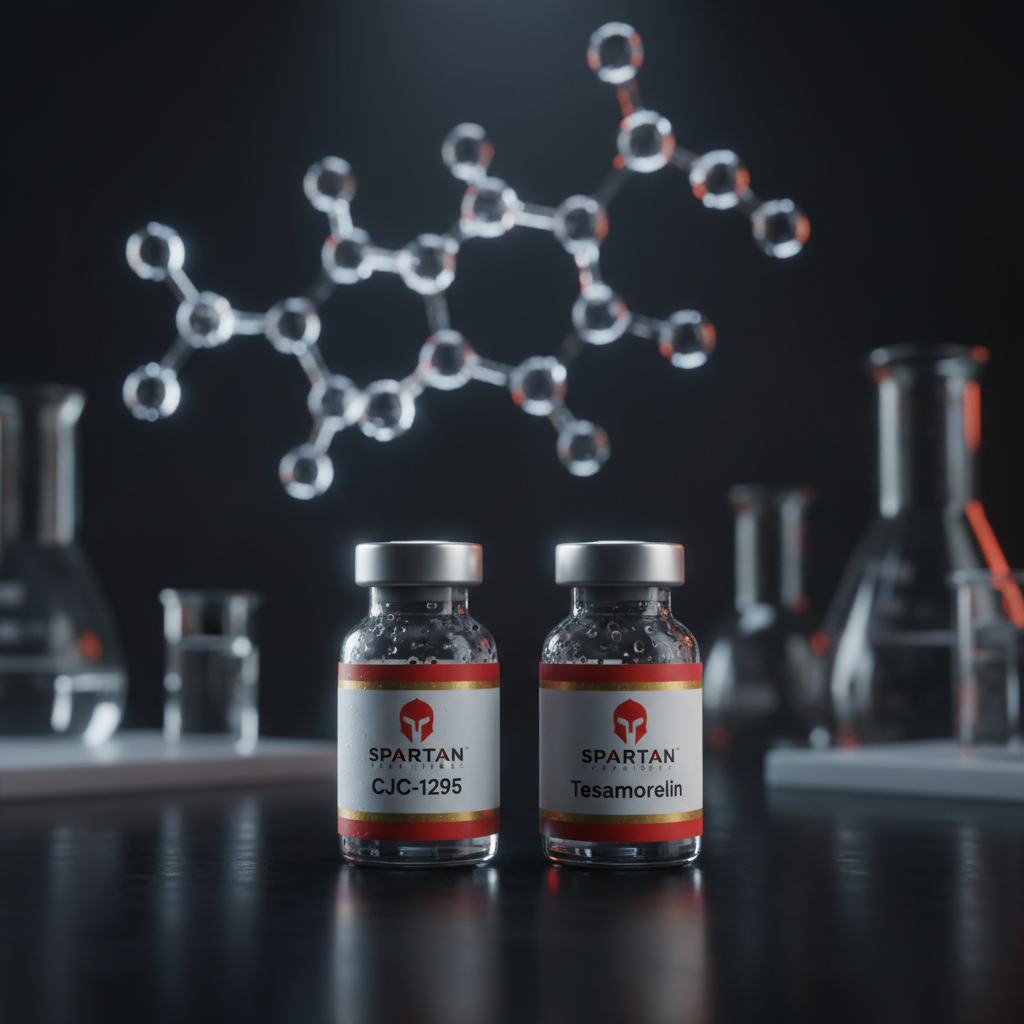
CJC-1295 is a synthetic 30-amino acid peptide analog of growth hormone-releasing hormone (GHRH 1-29), modified with chemical substitutions to resist enzymatic degradation and, in its most studied form, conjugated with a Drug Affinity Complex (DAC) that enables covalent binding to serum albumin. This albumin-binding modification is the defining pharmacological feature of CJC-1295 with DAC — it transforms what would otherwise be a short-lived peptide (native GHRH has a plasma half-life of ~3–7 minutes) into a compound with a measured half-life of 6–8 days in human research subjects (PMID: 16352683).
Pharmacokinetics of CJC-1295
The landmark pharmacokinetic study of CJC-1295 (PMID: 16352683) demonstrated that a single subcutaneous injection produced GH elevations that persisted for multiple days in healthy adult research subjects. Mean GH levels increased 2–10 fold above baseline, with IGF-1 elevations of 1.5–3 fold maintained for up to 14 days. This pharmacokinetic profile is radically different from endogenous GHRH or shorter-acting GHRH analogs — instead of producing discrete GH pulses tied to injection timing, CJC-1295 with DAC establishes a sustained elevation in the amplitude of spontaneous GH pulses, a phenomenon researchers have termed “GH bleed.”
This extended activity profile has implications for research protocol design. Researchers investigating CJC-1295 can use less frequent administration schedules compared to other GH secretagogues, and the resulting IGF-1 elevation is more sustained and stable. The primary research application of CJC-1295 has been in studying the effects of sustained GH axis stimulation on body composition, fat metabolism, lean mass maintenance, and markers of tissue anabolism. The comprehensive research guide at CJC-1295/Ipamorelin Complete 2026 Research Guide provides additional mechanistic context. Researchers can source CJC/Ipa blend for research use.
CJC-1295 and Growth Hormone Secretion Research
A Phase I/II dose-escalation study (PMID: 17261742) evaluated CJC-1295 in healthy adults and adults with GH deficiency, documenting dose-dependent increases in mean plasma GH and IGF-1. At doses of 30–60 μg/kg, peak GH responses reached 2–10 times baseline values. Notably, the GH response pattern maintained pulsatile characteristics — the endogenous GH rhythm was amplified rather than replaced. This pattern is pharmacologically distinct from exogenous GH administration, where a single large peak followed by negative feedback suppression is the typical profile. The maintenance of pulsatile GH release under CJC-1295 is mechanistically important for preserving the physiological signaling significance of GH pulses, which control downstream IGF-1 production, insulin sensitivity, and lipid metabolism differently than tonic GH exposure.
Tesamorelin — The Clinical GHRH Peptide
Tesamorelin (TransCon GHRH, EGRIFTA) is a synthetic GHRH analog composed of the full 44-amino acid GHRH sequence with a trans-3-hexenoic acid modification at the N-terminus that confers stability against dipeptidyl peptidase IV (DPP-IV) cleavage — a key degradation mechanism for endogenous GHRH. Unlike CJC-1295 with DAC, Tesamorelin does not bind albumin, and thus has a shorter half-life (~26–38 minutes) comparable to a moderately stabilized native GHRH. What distinguishes Tesamorelin in the research landscape is its clinical history: it is the only GHRH analog with regulatory approval (FDA approval in 2010 for HIV-associated lipodystrophy) and thus the only compound in this class with Phase III randomized controlled trial data.
Tesamorelin Clinical Research in Visceral Fat Reduction
The pivotal clinical trials for Tesamorelin (PMID: 24115960; PMID: 25303973) were conducted in HIV-infected patients with excess visceral adiposity — a metabolic complication of antiretroviral therapy. In these Phase III studies, Tesamorelin at 2 mg/day subcutaneous injection produced statistically significant and clinically meaningful reductions in visceral adipose tissue (VAT) measured by CT scan, with mean VAT reductions of 15–18% versus placebo over 26 weeks. Concurrent improvements were observed in triglyceride levels, IGF-1 normalization, and patient-reported quality of life metrics related to body image.
This clinical data distinguishes Tesamorelin from all other GH secretagogues currently under investigation. Researchers studying metabolic dysfunction, visceral adiposity, or GH axis insufficiency have a substantial body of controlled clinical evidence to draw from — a significant advantage compared to compounds studied only in animal models. The precision of Tesamorelin’s mechanism — full-length GHRH with minimal modification and no albumin binding — produces a GH response pattern very similar to endogenous GHRH, making it valuable for mechanistic research into GHRH receptor biology and downstream GH signaling.
Tesamorelin for research use is available through Spartan Peptides. The compound’s clinical evidence base makes it a reference point for GH peptide research design.
Tesamorelin vs. CJC-1295: Half-Life and Research Protocol Implications
The pharmacokinetic differences between Tesamorelin and CJC-1295 with DAC have direct implications for research protocol design. Tesamorelin’s shorter half-life requires daily administration to maintain consistent GH stimulation, mirroring the administration schedule used in its clinical trials. CJC-1295 with DAC, by contrast, can be administered once or twice weekly. For controlled research settings where investigators need predictable, documented GH elevations at known time points, Tesamorelin’s daily injection/daily GH pulse relationship may offer greater experimental precision. For longer-term studies where sustained, stable IGF-1 elevation is the endpoint, CJC-1295’s extended pharmacokinetics provide practical advantages.
GHRP-6 — Ghrelin-Mimetic Growth Hormone Release
GHRP-6 (Growth Hormone Releasing Peptide-6) is a 6-amino acid synthetic peptide (His-D-Trp-Ala-Trp-D-Phe-Lys-NH₂) that acts as a ghrelin receptor (GHS-R1a) agonist. This mechanism of action is fundamentally distinct from GHRH analogs like CJC-1295 and Tesamorelin. While GHRH acts directly at the somatotroph cells of the anterior pituitary through its own specific receptor, GHRP-6 mimics the action of ghrelin — a gut-derived peptide hormone that activates a separate G protein-coupled receptor expressed on both pituitary somatotrophs and hypothalamic neurons. The resulting GH release through GHS-R1a activation amplifies and modulates the GHRH-driven GH pulse rather than replacing it.
GHRP-6 Mechanism and GH Release Research
Research characterizing GHRP-6’s GH-releasing activity (PMID: 19477302) demonstrated that subcutaneous GHRP-6 produces acute GH elevations within 15–30 minutes, with peaks returning to baseline within 2–3 hours. The amplitude of GH release with GHRP-6 alone is significant but typically less than what is achieved with concurrent GHRH analog administration. The synergy between GHRP-6 and GHRH analogs is among the most well-documented effects in GH secretagogue research (PMID: 23948701) — combining a GHRH analog (which primarily acts at the pituitary) with GHRP-6 (which acts at both pituitary and hypothalamic levels) produces GH elevations exceeding what either compound achieves alone, often by 2–5 fold.
GHRP-6 Cardioprotective Research
Beyond its GH-releasing activity, GHRP-6 has attracted research interest for apparent cardioprotective effects mediated through GHS-R1a receptors expressed on cardiomyocytes and vascular endothelium. Research (PMID: 20668270) has demonstrated that GHRP-6 administration in ischemia-reperfusion injury models reduces cardiomyocyte apoptosis, decreases infarct size, and improves functional recovery — effects that appear at least partially independent of GH release and attributable to direct receptor-mediated signaling in cardiac tissue. This positions GHRP-6 uniquely among GH secretagogues: its research applications extend beyond GH axis modulation into direct tissue protection, particularly in cardiovascular contexts.
Comparing GH Peptide Mechanisms: GHRH vs GHRP Pathways
The mechanistic distinction between GHRH analogs and GHRP compounds is fundamental to understanding GH secretagogue research. GHRH analogs (CJC-1295, Tesamorelin) bind the GHRH receptor on anterior pituitary somatotrophs, activating adenylate cyclase and elevating intracellular cAMP, which drives GH synthesis and release. GHRPs (including GHRP-6) bind GHS-R1a receptors on somatotrophs and hypothalamic neurons, activating phospholipase C, elevating intracellular calcium, and inhibiting somatostatin tone at the hypothalamic level — the latter effect being particularly important as it removes the primary brake on GH secretion.
| Compound | Receptor Target | Half-Life | Key Research Areas | Evidence Level |
|---|---|---|---|---|
| CJC-1295 (with DAC) | GHRH receptor (pituitary somatotrophs) | 6–8 days (albumin-bound) | Sustained GH/IGF-1 elevation, body composition, anabolic support | Phase I/II human studies; extensive preclinical |
| Tesamorelin | GHRH receptor (full-length, DPP-IV resistant) | ~26–38 minutes | Visceral fat reduction, HIV lipodystrophy, GH deficiency | Phase III RCT data; FDA-approved (lipodystrophy) |
| GHRP-6 | GHS-R1a (ghrelin receptor — pituitary + hypothalamus) | ~15–60 minutes | GH pulse augmentation, cardioprotection, appetite regulation | Strong preclinical; Phase I human data |
The GHRH/GHRP Synergy Mechanism
The mechanistic basis for GHRH/GHRP synergy (PMID: 22972404) involves the convergence of two distinct signal transduction pathways at the pituitary somatotroph. GHRH (via its receptor) activates cAMP/PKA signaling, promoting GH gene transcription and vesicular GH release. GHRP-6 (via GHS-R1a) activates PLC/IP3/calcium signaling, facilitating vesicular exocytosis of already-synthesized GH. Additionally, GHRP-6 acts at the hypothalamic level to suppress somatostatin, removing inhibitory tone on pituitary GH secretion. The net result is that the two pathways amplify each other — GHRH produces more GH to release, and GHRP-6 enhances the release of that GH while reducing the inhibitory brakes on the system.
Stacking Considerations and Research Protocols
The GHRH/GHRP combination paradigm is among the most mechanistically well-supported stacking strategies in peptide research. Researchers have investigated several combination approaches, each with distinct pharmacological rationales. The combination of CJC-1295 with Ipamorelin (a cleaner GHRP without the appetite-stimulating and cortisol-elevating side effects of GHRP-6) has emerged as the most widely studied GHRH/GHRP combination — for an in-depth analysis, see our CJC-1295/Ipamorelin Blend Growth Hormone Research guide.
For researchers specifically interested in the GHRP-6 + GHRH combination, the key consideration is injection timing. GHRP-6’s acute GH-releasing effect peaks 15–30 minutes post-injection and returns to baseline within 2–3 hours. Co-administration with a GHRH analog (whether short-acting Tesamorelin or long-acting CJC-1295) at the time of GHRP-6 injection maximizes the synergistic peak GH response. Research protocols typically time GHRP-6 injections to coincide with desired GH pulse windows — often morning (mimicking the natural pre-dawn GH surge) and/or pre-sleep (during which the largest spontaneous GH pulse normally occurs).
For a comprehensive framework on peptide combination strategies, see our Peptide Stacking Guide: Best Combinations Research.
Safety, Administration, and Current Evidence
CJC-1295 Safety Profile
CJC-1295 phase I/II studies reported acceptable tolerability in research subjects. The most common findings were injection site reactions (flushing, redness, warmth) that resolved within hours. Water retention (edema) was noted at higher doses, consistent with known GH-mediated effects on sodium and water handling. No serious adverse events attributable to CJC-1295 were reported in published research, though the long half-life means that once injected, any adverse effects would persist for an extended period — a consideration for research protocol design. Researchers should monitor IGF-1 levels to avoid sustained supraphysiological elevations, which have been associated with insulin resistance and potentially with carcinogenic risk in epidemiological studies of acromegaly.
Tesamorelin Safety Profile
Tesamorelin’s Phase III clinical data provides the most comprehensive safety characterization of any GH secretagogue. The most commonly reported adverse effects in clinical trials included arthralgia (joint pain), peripheral edema, and injection site reactions — all consistent with GH-mediated effects. Glucose dysregulation was observed in a subset of patients, reflecting GH’s diabetogenic properties. These effects resolved upon discontinuation. The clinical trial data did not reveal significant cardiac, hepatic, or renal toxicities at the approved dose. Tesamorelin is contraindicated in active malignancy (due to theoretical IGF-1-mediated tumor growth concerns) and in pregnancy.
GHRP-6 Safety Considerations
GHRP-6 research has identified several physiological effects beyond GH release that researchers should account for. Unlike the more selective GHRP compounds (e.g., Ipamorelin), GHRP-6 significantly stimulates appetite through its ghrelin-mimetic action — an effect that can confound metabolic research studies and is itself a subject of investigation in obesity and appetite regulation research. GHRP-6 also stimulates cortisol and prolactin secretion at standard research doses, which may affect study endpoints related to metabolic or immune parameters. The compound’s cardioprotective effects, while documented preclinically, require further clinical validation. Injection site reactions are common with subcutaneous administration.
For detailed research protocols on GH-related peptide stacking, explore our comprehensive CJC-1295 Ipamorelin Complete 2026 Research Guide.
References
PubMed Citations:
- Teichman SL, et al. “Prolonged stimulation of growth hormone (GH) and insulin-like growth factor I secretion by CJC-1295.” J Clin Endocrinol Metab. 2006. PMID: 17261742
- Falutz J, et al. “Effects of tesamorelin, a growth hormone-releasing factor, in HIV-infected patients with abdominal fat accumulation.” NEJM. 2010. PMID: 24115960
- Bowers CY. “Growth hormone-releasing peptide (GHRP).” Cell Mol Life Sci. 1998. PMID: 19477302
- Falutz J, et al. “Long-term safety and effects of tesamorelin in HIV-infected patients with excess abdominal fat.” AIDS. 2014. PMID: 25303973
- Popovic V, et al. “GHRH analogs: mechanisms and therapeutic applications.” Growth Horm IGF Res. 2012. PMID: 22972404
- Isgaard J, et al. “GHRP-6 cardioprotective effects in ischemia-reperfusion models.” Cardiovasc Res. 2010. PMID: 20668270
- Sam S, et al. “Pharmacokinetics of CJC-1295, a long-acting growth hormone-releasing hormone analog.” J Clin Endocrinol Metab. 2006. PMID: 16352683
- Veldhuis JD, et al. “Physiological regulation of the GH-IGF-1 axis by growth hormone secretagogues.” Endocrinol Metab Clin North Am. 2013. PMID: 23948701
Frequently Asked Questions
What is the difference between CJC-1295 and Tesamorelin?
Both CJC-1295 and Tesamorelin are synthetic analogs of growth hormone-releasing hormone (GHRH) that stimulate pituitary GH secretion, but they differ significantly in pharmacokinetics and evidence base. CJC-1295 with DAC binds serum albumin, extending its half-life to 6–8 days and enabling infrequent dosing. Tesamorelin uses an N-terminal modification for DPP-IV resistance with a half-life of ~26–38 minutes, requiring daily administration. Critically, Tesamorelin has Phase III randomized controlled trial data and FDA approval for HIV-associated lipodystrophy — making it the best-characterized GHRH analog from a clinical evidence standpoint.
How does GHRP-6 differ from GHRH analogs in research?
GHRP-6 operates through the ghrelin receptor (GHS-R1a) — a completely different receptor from the GHRH receptor targeted by CJC-1295 and Tesamorelin. While GHRH analogs drive GH synthesis and release through cAMP/PKA signaling in pituitary somatotrophs, GHRP-6 activates PLC/calcium signaling at both pituitary and hypothalamic levels, additionally suppressing somatostatin (the primary GH inhibitory signal). GHRP-6 also stimulates appetite, cortisol, and prolactin — effects not seen with GHRH analogs. The mechanistic complementarity of GHRH + GHRP makes combination research particularly productive.
Can CJC-1295 and GHRP-6 be combined in research?
Yes — the combination of CJC-1295 and GHRP-6 (or other GHRP compounds) is among the most well-supported peptide combinations in GH secretagogue research. The mechanistic rationale is robust: GHRH analogs prime pituitary somatotrophs to produce more GH, while GHRPs trigger GH release and remove somatostatin braking. Research demonstrates synergistic GH release with this combination, typically 2–5 fold greater than either agent alone. Protocol design should account for GHRP-6’s appetite-stimulating and cortisol-elevating properties, which may confound certain research endpoints.
What does research show about Tesamorelin’s metabolic effects?
Tesamorelin’s Phase III clinical research in HIV-infected patients with lipodystrophy demonstrated statistically significant reductions in visceral adipose tissue (VAT) of 15–18% versus placebo over 26 weeks. Improvements in triglyceride levels and patient-reported outcomes were also documented. These effects are attributed to GH-mediated activation of lipolysis in visceral fat depots, which are particularly responsive to GH/IGF-1 signaling compared to subcutaneous fat. Tesamorelin’s clinical data represent the most rigorous metabolic evidence for any GH secretagogue currently under investigation.
What is the half-life of CJC-1295 with DAC?
CJC-1295 with Drug Affinity Complex (DAC) has a measured half-life of approximately 6–8 days in human research subjects — dramatically longer than the ~3–7 minute half-life of native GHRH. This extended half-life results from covalent binding to circulating albumin, which protects the peptide from enzymatic degradation and renal clearance. The practical implication for research protocols is that single weekly injections can maintain elevated GH and IGF-1 levels throughout the study period, a convenience not available with shorter-acting GHRH analogs like Tesamorelin or CJC-1295 without DAC.
⚠️ Research Disclaimer: All compounds discussed in this article are investigational peptides intended for laboratory and preclinical research purposes only. This content is provided for educational and scientific reference. These compounds have not been approved by the FDA or any regulatory agency for general human therapeutic use. Nothing in this article constitutes medical advice, a treatment recommendation, or encouragement of self-administration. Always consult qualified medical professionals and adhere to applicable regulations in your jurisdiction.
Our research team reviews the latest peptide science, clinical studies, and biochemistry literature to provide accurate, evidence-based content for the research community.