
How Does GLP-3 Reta Work? A Simple Guide for Researchers

Written bySpartan Research Team
How does GLP-3 Reta work? This question is at the forefront of metabolic science, as this investigational peptide is generating significant interest.
The journey of metabolic research has seen an evolution from compounds that target a single hormone pathway to more complex molecules that can influence multiple systems at once.
GLP-3 Reta represents the next step in this evolution, using a unique three-part mechanism to influence the body’s energy balance.
This novel approach is what sets it apart in the field of peptide research and makes it a compelling subject for study.
Understanding its multifaceted action is key to grasping its potential in exploring complex metabolic pathways.
In This Article
- What is GLP-3 Reta? The “Triple G” Peptide
- A Three-Pronged Approach to Metabolism
- How GLP-3 Reta Promotes Fat Loss
- Beyond Weight: Broader Metabolic Benefits
- A New Benchmark in Research
- Research Considerations: Preserving Lean Mass
- What Studies Show About Using GLP-3 Reta
What is GLP-3 Reta? The “Triple G” Peptide
It is an advanced research peptide being studied for its effects on metabolism and weight management.
It belongs to a class of molecules known as incretin mimetics, which are synthetic compounds that copy the actions of natural gut hormones called incretins.
These natural hormones are released after you eat and play a crucial role in managing blood sugar and appetite.
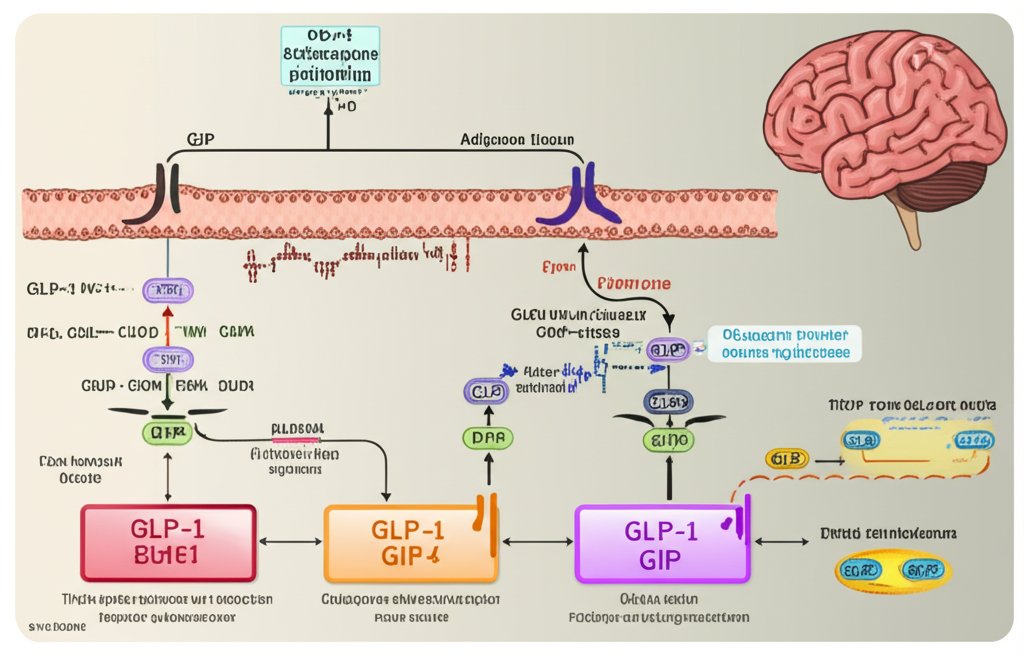
Because GLP-3 Reta activates three different hormone pathways, it has earned the nickname ‘Triple G’. This name refers to the three receptors it targets: GLP-1, GIP, and Glucagon.
A Three-Pronged Approach to Metabolism

To understand how GLP-3 Reta works, think of your body’s cells as having special locks called receptors. Hormones and peptides act as keys that fit into these locks to send specific signals and trigger actions within the cell.
GLP-3 Reta acts like a master key that can unlock three different but related pathways involved in metabolism. Each signal contributes to a coordinated effect on appetite, energy use, and nutrient processing.
Let’s look at what happens when each of these three locks is turned.
The Role of GLP-1
First, GLP-3 Reta activates the glucagon-like peptide-1 (GLP-1) receptor, a well-studied target in metabolic research.
When you eat, your gut naturally releases GLP-1, which signals your brain that you are full and tells your stomach to empty more slowly.
By mimicking this hormone, GLP-3 Reta helps reduce appetite and prolongs the feeling of satiety. This is a foundational mechanism shared with other well-known research peptides.
The Function of GIP
Next, the peptide targets the glucose-dependent insulinotropic polypeptide (GIP) receptor, adding another layer to its function.
GIP is another incretin hormone that helps improve how the body handles sugar after a meal by enhancing insulin release.
It also appears to play a role in how the body processes and stores fat, with some research suggesting it may help prevent fat buildup.
This dual action on both GLP-1 and GIP is also seen in peptides like Tiryepatide.
The Impact of Glucagon
The third and most unique target is the glucagon receptor. This is what makes GLP-3 Reta a triple-agonist and sets it apart from other compounds that are single or dual-agonists.
Traditionally, glucagon is known for raising blood sugar by telling the liver to release stored glucose.
However, activating this receptor in the context of GLP-3 Reta also sends a signal to the body to increase energy expenditure, essentially encouraging it to burn through its stored fat for fuel.
How GLP-3 Reta Promotes Fat Loss
So, does GLP-3 Reta actually burn fat? The research points to a clear mechanism for this effect, driven primarily by the unique activation of the glucagon receptor.
This signal directly boosts metabolism and enhances lipolysis, which is the scientific term for the breakdown of fats. This helps the body use its existing fat stores for energy, a process that is central to reducing overall body fat.
This action on the ‘energy out’ side of the metabolic equation is a powerful complement to the appetite-reducing effects of GLP-1. This combined effect creates a comprehensive approach to energy balance.
Beyond Weight: Broader Metabolic Benefits
The influence of GLP-3 Reta extends beyond simple weight reduction. Clinical studies have observed significant improvements in several key cardiometabolic health markers.
For example, research has shown that it can lead to lower blood pressure and better cholesterol levels. It also helps regulate blood sugar, with one trial noting that nearly 72% of participants with prediabetes returned to normal blood sugar lev
els.
Furthermore, its fat-burning mechanism has a profound impact on liver health.
Studies have shown it can dramatically reduce fat buildup in the liver, with over 85% of individuals with fatty liver disease seeing a reversal of the condition.
A New Benchmark in Research
The triple-agonist mechanism has produced remarkable results in clinical studies, setting a new benchmark for investigational weight loss peptides.
When people ask if GLP-3 Reta is better than older peptides, the early data are compelling.
Phase 2 trials have shown that GLP-3 Reta may lead to greater total weight reduction in a shorter amount of time compared to its predecessors.
At the highest dose, participants saw an average weight loss of 24.2% over 48 weeks, a figure that surpasses the results of previous compounds.
| Feature | GLP-1 Sema | GLP-2 Tirz | GLP-3 Reta (Investigational) |
|---|---|---|---|
| Mechanism | Single-Agonist | Dual-Agonist | Triple-Agonist (“Triple G”) |
| Target Receptors | GLP-1 | GLP-1, GIP | GLP-1, GIP, Glucagon |
| Max Avg. Weight Loss | ~15–17% | ~21–22% | ~24.2% |
| Trial Duration | 68 weeks | 72 weeks | 48 weeks |
The data suggest a clear progression in efficacy with each added mechanism of action. This highlights the potential of a multi-receptor approach in metabolic peptide research.
Research Considerations: Preserving Lean Mass
A critical question for any study involving significant weight changes is:
Do you lose muscle? It’s important to understand that any rapid weight loss, regardless of the method, typically involves a reduction in both fat and lean mass.
Studies show that lean mass can account for 20-40% of total weight lost with this class of peptides if countermeasures are not taken.
Because GLP-3 Reta is so potent, preserving muscle mass becomes a key consideration in research design.
For this reason, any research protocol should include methods to monitor body composition and implement strategies to mitigate muscle loss.
Ensuring adequate protein intake and incorporating resistance training are two of the most effective strategies.
The Role of Nutrition and Exercise
To preserve muscle, researchers should ensure study protocols account for proper nutrition.
A higher protein intake, around 0.8 to 1.2 grams per pound of body weight, provides the necessary building blocks to maintain muscle tissue during a calorie deficit.
Regular resistance training is equally crucial. Lifting weights or performing bodyweight exercises 2-3 times per week sends a powerful signal to the body to hold onto muscle mass, even while overall weight is decreasing.
What Studies Show About Using GLP-3 Reta
For researchers planning studies, understanding the practical aspects is crucial. So, what should you expect when working with GLP-3 Reta based on clinical trial data?
First, how quickly does GLP-3 Reta work? Some studies have reported noticeable weight reduction in as little as four weeks at higher doses, with participants losing around 5% of their body weight. The most significant results were observed over the full 48-week study duration.
Regarding administration, the peptide has a half-life of nearly six days. This favorable profile allows for a convenient once-weekly injection schedule in research settings, which can improve consistency and adherence in long-term studies.
As for what to expect in terms of tolerability, the side effect profile is similar to other incretin-based therapies. The most common observations are mild to moderate gastrointestinal issues like nausea, diarrhea, or constipation.
These effects are most often noted during the initial dose-escalation phase of a study. Research protocols typically use a gradual increase in dosage over several weeks to help improve tolerability and minimize discomfort.
Advance Your Metabolic Research
The field of metabolic science is constantly evolving, and GLP-3 Reta represents the cutting edge of this research.
Its unique triple-agonist mechanism offers a powerful tool for investigating the complex interplay of hormones that govern energy balance, fat storage, and overall metabolic health.
For laboratories and institutions dedicated to researching the next generation of metabolic peptides, sourcing high-purity compounds is paramount.
Spartan Peptides provides research-grade, rigorously tested peptides for identity and purity to support your most critical investigations.
View our catalog of weight loss peptides to find the tools for your next investigation.
Research Tools: Studying GLP-3(Reta) Mechanisms in the Lab
Understanding how GLP-3(Reta) works at a mechanistic level creates a foundation for structured laboratory investigation. Researchers examining the GLP-1 receptor component can establish comparison baselines using GLP-1(Sema), while dual-agonist controls are available via GLP-2(Tirz). Studying all three compounds under consistent conditions allows researchers to isolate the incremental contribution of each additional receptor engagement.
For studies examining metabolic effects beyond GLP receptor pathways, complementary peptides may be relevant. MOTS-C engages mitochondrial AMPK signalling in ways that may interact with energy expenditure pathways activated by glucagon receptor agonism. AOD-9604 targets lipolytic mechanisms through a growth hormone fragment pathway that is mechanistically distinct from GLP receptor activation, providing a useful experimental contrast.
Researchers should ensure that all compounds are handled and reconstituted consistently to avoid introducing variability. The reconstitution guide provides detailed protocols for lyophilised peptide preparation. For guidance on evaluating research peptide suppliers, consult the peptide safety resource.
Spartan Peptides supplies GLP-3(Reta) at ≥98% purity with full HPLC and mass spectrometry documentation, enabling reproducible mechanistic studies aligned with the research questions raised by clinical trial findings.
📚 Further Reading
Frequently Asked Questions
What receptors does GLP-3 Reta target?
GLP-3(Reta) (GLP-3 Reta) is a triple-receptor agonist that simultaneously activates GLP-1 (glucagon-like peptide-1), GIP (glucose-dependent insulinotropic polypeptide), and glucagon receptors. This multi-target approach is being studied for potentially greater metabolic effects than single or dual-receptor agonists.
How does GLP-1 receptor activation contribute to GLP-3(Reta)’s mechanism?
GLP-1 receptor activation suppresses appetite by acting on hypothalamic satiety centers, slows gastric emptying, and enhances glucose-stimulated insulin secretion. This component provides the core appetite regulation and glycemic control effects studied in GLP-1 monotherapy research.
What role does GIP receptor agonism play in GLP-3(Reta)?
GIP receptor agonism may enhance insulin secretion, improve lipid metabolism, and act synergistically with GLP-1 to amplify weight loss beyond what either receptor alone achieves. GIP receptors expressed in adipose tissue may also contribute to fat mobilization in research models.
Why is glucagon receptor agonism incorporated into this compound?
Glucagon receptor activation increases hepatic glucose output and elevates energy expenditure through thermogenic mechanisms. In obesity research, this component is hypothesized to increase basal metabolic rate and enhance fat oxidation, contributing to greater overall caloric deficit.
How does GLP-3(Reta) compare to GLP-1(Sema) mechanistically?
GLP-1(Sema) is a GLP-1 monoagonist, while GLP-3(Reta) activates three receptor types. The additional GIP and glucagon agonism is being studied for potentially additive or synergistic metabolic effects. Phase 2 data suggesting greater weight reduction compared to GLP-1 monotherapy are being confirmed in Phase 3 trials.
Ready to advance your GLP-1 Sema research?
Spartan Peptides offers ≥98% purity GLP-1 Sema with full in-house purity verification and in-house quality testing.
⚠️ Research Use Only — Not for Human Consumption
The peptides discussed in this article are intended for laboratory and research purposes only. They are not intended for human consumption. All information presented is based on published preclinical research and is provided for educational purposes only.