
NAD+ vs NMN vs NR: Which Precursor Delivers the Best Results in Research?

Written bySpartan Research Team
The conversation around NAD+ supplementation has never been more complex — or more scientifically compelling. Researchers, longevity scientists, and biohackers are now asking a sharper question than ever before: in the battle of NAD+ vs NMN vs NR, which precursor actually delivers superior results in human and animal research models?

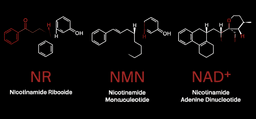
This guide cuts through the marketing noise. We’ll examine the biochemical pathway each compound travels, what peer-reviewed research actually says about bioavailability and efficacy, and why the growing body of evidence around direct NAD+ supplementation may represent a paradigm shift in how researchers approach cellular energy optimization and longevity science.
Understanding the NAD+ Precursor Hierarchy
Before comparing outcomes, it’s essential to understand how each compound relates to NAD+ at the molecular level. NAD+ (nicotinamide adenine dinucleotide) is the master coenzyme that drives cellular respiration, DNA repair, and the activation of longevity-associated sirtuins. It cannot be synthesized from scratch easily by adult human cells — the body depends on dietary precursors and recycling pathways.
The precursor pathway follows a clear hierarchy:
- NR (Nicotinamide Riboside) → converted to NMN by the enzyme NRK (nicotinamide riboside kinase)
- NMN (Nicotinamide Mononucleotide) → converted to NAD+ by NMNAT enzymes (three isoforms exist)
- NAD+ → the active coenzyme, ready to participate in over 500 enzymatic reactions
This hierarchy reveals an important biochemical reality: NR must complete two enzymatic conversions to become NAD+, while NMN requires one. Direct NAD+ supplementation bypasses the conversion cascade entirely — a consideration that has significant implications for research into bioavailability and tissue delivery efficiency.
The Research Landscape: What Studies Actually Show
NR (Nicotinamide Riboside) — The First Wave
NR was the first commercially viable NAD+ precursor to receive serious scientific scrutiny. Trammell et al. (2016) published landmark research in Nature Communications demonstrating that oral NR supplementation in healthy adults significantly elevated whole-blood NAD+ concentrations — the first human proof-of-concept that dietary NAD+ precursors could meaningfully raise systemic NAD+ levels.
Subsequent research from Elhassan et al. (2019) in Cell Reports confirmed NR’s ability to increase NAD+ metabolites in skeletal muscle, though the authors noted that tissue distribution was uneven and that much of the supplemented NR was first broken down to nicotinamide before being re-synthesized into NAD+. This metabolic detour raised questions about efficiency.
The limitation of NR research: while blood NAD+ rises are reproducible, translation to meaningful functional outcomes in humans has been inconsistent across trials. Studies on exercise performance, insulin sensitivity, and cardiovascular markers have yielded mixed results, suggesting that raising blood NAD+ does not automatically translate to intracellular NAD+ availability in target tissues.
NMN (Nicotinamide Mononucleotide) — The Second Wave
NMN research accelerated dramatically following Mills et al. (2016), a seminal study published in Cell Metabolism. In aged mice, NMN supplementation reversed several age-associated physiological declines — including improvements in energy metabolism, gene expression in muscle, insulin sensitivity, and eye function. The study generated enormous excitement and positioned NMN as a leading longevity compound.
The critical human data came in 2021. Yoshino et al. (2021), published in Science, conducted a randomized, placebo-controlled trial in postmenopausal women with prediabetes. Ten weeks of oral NMN supplementation (250 mg/day) enhanced muscle insulin signaling — specifically, NMN activated the PI3K-AKT pathway in skeletal muscle, improving insulin sensitivity. This was the first rigorous human evidence of NMN’s tissue-level metabolic effects beyond simply raising blood NAD+.
Additional NMN human research includes Igarashi et al. (2022) in NPJ Aging, which found 250 mg/day NMN improved walking speed and grip strength in older adults over 12 weeks, and Liao et al. (2021), demonstrating improved aerobic capacity in recreational runners at doses of 300–600 mg/day.
The NMN challenge: a 2022 paper by Liu et al. raised an important bioavailability question, demonstrating that orally administered NMN is largely converted to NR and then nicotinamide in the gut before absorption — suggesting NMN’s in vivo mechanism may partially overlap with NR’s pathway rather than representing a distinct advantage.
Direct NAD+ Supplementation — The Third Wave
For years, direct NAD+ supplementation was considered scientifically impractical. NAD+ is a large, charged molecule (molecular weight 663 Da) that was assumed to have poor oral bioavailability — the prevailing theory held that it would be degraded in the gut before meaningful absorption could occur.
This assumption is now being challenged. Emerging research and pharmacokinetic data suggest that NAD+ can be absorbed via specific transport mechanisms, and that intravenous or sublingual delivery achieves rapid, verifiable tissue saturation. Camacho-Pereira et al. (2016) demonstrated in Cell Metabolism that extracellular NAD+ participates in CD38-mediated signaling pathways — evidence that NAD+ at the cell surface has biological relevance even before intracellular transport occurs.
The logical appeal of direct NAD+ supplementation is straightforward: it bypasses the enzymatic conversion steps that NR and NMN depend on. Conversion efficiency is not uniform across tissues, ages, or individuals. NAMPT (the rate-limiting enzyme in the NAD+ salvage pathway) declines with age, and NRK expression varies by tissue. By supplying NAD+ directly, researchers hypothesize that the conversion bottleneck is eliminated entirely.
For researchers interested in exploring this approach, Spartan Peptides’ NAD+ 750mg is formulated specifically for research applications. Our comprehensive NAD+ 750mg research guide provides detailed methodology context for laboratory use.
NAD+ vs NMN vs NR: Head-to-Head Comparison
The following table synthesizes current research data on the three primary NAD+ research compounds:
| Property | NAD+ | NMN | NR |
|---|---|---|---|
| Molecular Weight | 663.4 Da | 334.2 Da | 255.2 Da |
| Conversion Steps to NAD+ | 0 (direct) | 1 (via NMNAT) | 2 (via NRK, then NMNAT) |
| Oral Bioavailability | Emerging / route-dependent | Moderate (partial gut conversion) | Moderate (well-established) |
| Human RCT Evidence | Limited (emerging) | Strong (Yoshino 2021, Igarashi 2022) | Strong (Trammell 2016, Elhassan 2019) |
| Animal Model Evidence | Moderate | Extensive (Mills 2016) | Extensive |
| Research Maturity | Early stage | Intermediate | Most established |
| Tissue Penetration | Dependent on delivery route | Variable by tissue/age | Variable by tissue/age |
| Key Enzymes Required | None (direct) | NMNAT 1/2/3 | NRK1/2 → NMNAT 1/2/3 |
| Sirtuin Activation Potential | High (direct substrate) | High | Moderate-High |
The Conversion Efficiency Problem
The precursor pathway’s central weakness is conversion efficiency — specifically, how it varies with age and individual biology.

NAMPT (nicotinamide phosphoribosyltransferase), the rate-limiting enzyme in NAD+ biosynthesis from nicotinamide, declines significantly with age. Research published by Yoshida et al. in Nature Communications (2019) demonstrated that NAMPT expression in adipose tissue positively correlates with NAD+ levels, and that this relationship deteriorates in older subjects. The implication: as organisms age, their capacity to efficiently convert NAD+ precursors diminishes — precisely when NAD+ repletion may be most beneficial.
This creates a theoretical advantage for direct NAD+ supplementation in aged research models. Rather than depending on an enzymatic machinery that may be compromised, direct NAD+ delivery supplies the end-product. The challenge remains delivery: ensuring that supplemented NAD+ reaches intracellular compartments intact.
Research into CD38 — an NADase enzyme that degrades NAD+ — adds another layer of complexity. Camacho-Pereira et al. (2016) demonstrated that CD38 activity increases with age and is a primary driver of age-related NAD+ decline. Both NMN and direct NAD+ face CD38-mediated degradation, suggesting that the broader NAD+ ecosystem (including CD38 inhibition strategies) may ultimately matter as much as which precursor is chosen.
Researchers exploring multi-compound approaches to cellular energy optimization can find relevant context in our biohacking research overview and the energizer peptide stack research framework.
Sirtuin Activation: Where NAD+ Matters Most
Sirtuins (SIRT1–SIRT7) are NAD+-dependent deacylases that regulate aging, inflammation, DNA repair, and metabolic homeostasis. They are among the most researched longevity targets in modern biology, and every one of them requires NAD+ as a co-substrate — not NMN, not NR, but NAD+ itself.
This biochemical fact is often underappreciated in precursor discussions. NR and NMN must be converted to NAD+ before sirtuin activation can occur. The rate at which this conversion happens in specific tissues — liver, brain, skeletal muscle, heart — determines how effectively a precursor compound can amplify sirtuin activity in those compartments.
Imai et al.’s foundational research demonstrated that SIRT1 and SIRT3 activation is directly tied to intracellular NAD+ concentrations. When NAD+ levels are restored in aged tissues, sirtuin activity rebounds — driving improvements in mitochondrial biogenesis, reduction of oxidative stress, and enhanced DNA damage response. The precursor that most efficiently raises intracellular NAD+ in target tissues will produce the greatest sirtuin-mediated benefit.
For researchers interested in the intersection of NAD+ biology and broader anti-aging compound research, our anti-aging peptide research analysis provides complementary context on evidence-based longevity approaches.
Dosage Considerations in Research Models
Translating preclinical data to research dosing frameworks requires care. The mouse studies that produced dramatic longevity results typically used NMN doses of 300–500 mg/kg/day — doses that don’t translate linearly to human-equivalent amounts. The human trials that have shown positive results (Yoshino 2021, Igarashi 2022) used 250–300 mg/day of NMN.
For NR, human trials have used 1,000–2,000 mg/day to produce measurable NAD+ increases (Trammell 2016, Dollerup et al. 2018). The higher dose requirement relative to NMN may reflect NR’s two-step conversion process and lower conversion efficiency.
Direct NAD+ research is at an earlier stage of dose-finding. Given its higher molecular weight and unique bioavailability profile, the optimal research dose framework differs from precursor compounds. The 750mg formulation available through Spartan Peptides is designed specifically for research use cases where researchers want to work with the terminal molecule rather than upstream precursors.
The Verdict: Where Does the Evidence Point?
In the NAD+ vs NMN vs NR debate, no single answer applies to all research contexts — but the data does allow meaningful differentiation:
- NR has the longest human safety record and the most established pharmacokinetic profile. It’s well-suited for research into systemic NAD+ elevation, though conversion efficiency questions remain relevant for aged models.
- NMN has the most compelling recent human RCT data (Yoshino 2021) demonstrating tissue-level metabolic effects, not merely blood NAD+ elevation. Its single-step conversion gives it a theoretical efficiency advantage over NR.
- Direct NAD+ represents the hypothesis with the most biochemical logic for bypassing age-related conversion decline, but requires further human pharmacokinetic research to establish optimal delivery and dosing parameters. For researchers interested in working with the active molecule without conversion dependencies, it presents a compelling frontier.
The most sophisticated research frameworks don’t ask “which one?” in isolation — they examine how the compound of interest performs in specific tissue types, age groups, and in combination with other interventions targeting CD38, NAMPT, or sirtuin pathways.
Frequently Asked Questions
Q: Is NAD+ the same as NMN or NR?
No. NAD+ (nicotinamide adenine dinucleotide) is the active coenzyme. NMN and NR are precursor molecules that the body converts into NAD+ through enzymatic pathways. NMN requires one conversion step (via NMNAT enzymes), while NR requires two steps (NRK first, then NMNAT).
Q: Which has more human clinical trial evidence — NMN or NR?
Both have meaningful human RCT data. NR’s evidence base is older and larger in terms of trial count, with well-established pharmacokinetics. NMN’s most significant human trial (Yoshino et al., 2021, published in Science) demonstrated tissue-level metabolic effects in skeletal muscle — a more compelling functional outcome than blood NAD+ elevation alone.
Q: Can NAD+ be absorbed orally, or does it need to be injected?
This is an active area of research. The historical assumption was that oral NAD+ bioavailability was negligible due to its large molecular size and charge. Emerging pharmacokinetic data suggests partial oral absorption is possible via specific transporters, but route optimization (sublingual, IV) remains a focus of current research.
Q: Why does NAD+ decline with age?
Age-related NAD+ decline is driven by multiple mechanisms: decreased NAMPT expression (reducing precursor-to-NAD+ conversion efficiency), increased CD38 activity (the primary NADase enzyme), accumulated DNA damage triggering PARP consumption of NAD+, and decreased NRK activity. Research by Camacho-Pereira et al. (2016) and Yoshida et al. (2019) characterizes these mechanisms in detail.
Q: What is the significance of sirtuins in NAD+ research?
Sirtuins (SIRT1–SIRT7) are NAD+-dependent enzymes that regulate gene expression, DNA repair, inflammation, and metabolic efficiency. They require NAD+ (not NMN or NR) as a co-substrate. Raising intracellular NAD+ levels is believed to be a prerequisite for restoring sirtuin activity that declines with age — making NAD+ repletion central to longevity-focused research protocols.
Q: Are there safety concerns with high-dose NAD+ precursors?
Human trials with NR (up to 2,000 mg/day) and NMN (up to 1,200 mg/day) have generally reported favorable tolerability profiles. High-dose nicotinamide can inhibit sirtuins, which is why NR and NMN are preferred over plain niacinamide in research contexts. Direct NAD+ supplementation safety data at higher doses in humans remains limited and represents an active area of investigation.
Research Disclaimer: All content on this page is intended strictly for educational and research purposes. The compounds discussed — NAD+, NMN, and NR — are not approved by the FDA for the diagnosis, treatment, cure, or prevention of any disease or medical condition. References to published studies are provided for informational context only and do not constitute medical advice. Spartan Peptides products are sold exclusively for laboratory research use and are not intended for human consumption. Always consult a qualified healthcare professional before initiating any research protocol involving these compounds.
⚠️ Research Use Only — Not for Human Consumption
The peptides discussed in this article are intended for laboratory and research purposes only. They are not intended for human consumption. All information presented is based on published preclinical research and is provided for educational purposes only.
Written by the Spartan Research Team
The Spartan Peptides Research Team consists of scientists, biochemists, and health researchers dedicated to providing accurate, evidence-based information about peptide research. Our content is reviewed for scientific accuracy and updated regularly to reflect the latest findings in peptide science.