
Peptide Reconstitution and BAC Water: A Laboratory Handling Guide

Written bySpartan Research Team
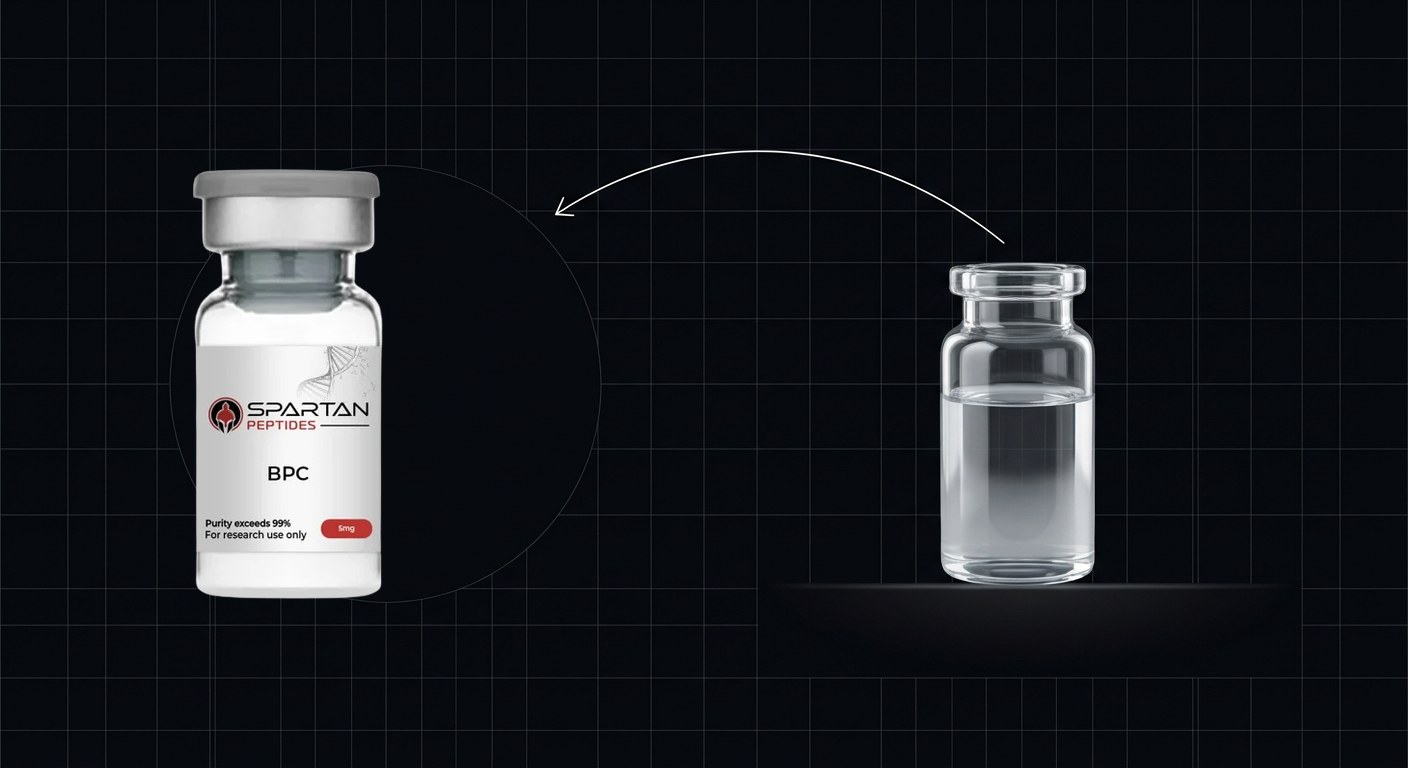
Reconstitution is the process of dissolving a lyophilised peptide in a sterile solvent to produce a solution of a known concentration, expressed in milligrams per millilitre. It is a laboratory preparation step, not a delivery step, and the goal is always the same: get from a sealed vial of freeze-dried powder to a solution whose concentration you can state with confidence. Get the solvent choice, the technique, and the math right, and the rest of a research protocol has a stable foundation to build on, whether that protocol involves a single compound or a multi-compound stack such as the Wolverine Stack (BPC-157 & TB-500).
Key Research Findings
- Bacteriostatic water contains 0.9% benzyl alcohol, the concentration defined in the USP Bacteriostatic Water monograph, which allows repeated septum access without a fresh sterile vial each time
- Benzyl alcohol itself can promote protein aggregation during reconstitution when the freeze-dried structure was already perturbed during drying, according to Roy et al. (2005) in the Journal of Pharmaceutical Sciences
- Shear and interfacial stress from shaking or vigorous mixing is a documented driver of protein degradation independent of temperature, per a 2024 review in the International Journal of Pharmaceutics
- UV light exposure measurably degrades peptide hormone structure. A 2012 PLoS One study found insulin lost over 60% of its recognizable structure after prolonged 276 nm light exposure
What reconstitution actually is
A lyophilised peptide is not a liquid that dried out by accident. It is deliberately freeze-dried, meaning the manufacturer froze the peptide solution solid, then pulled the water out under vacuum through sublimation rather than evaporation. That distinction matters. Sublimation lets water escape without ever passing back through a liquid phase, which avoids the surface tension and heat exposure that would otherwise unfold a lot of the peptide’s structure on the way out.
The result is a porous, powdery cake, not a compressed pellet. That structure is intentional too. A porous cake dissolves fast and evenly when solvent is added, where a dense clump would leave undissolved particles behind or require enough mixing energy to damage the peptide anyway. Butreddy and colleagues, in a widely cited 2021 review in the International Journal of Biological Macromolecules, walk through why the solid state is preferred for storage of protein and peptide therapeutics in the first place: liquid formulations are chemically and physically less stable over time, so drying the material down and storing it dry is the more conservative default.
Dissolving the powder back into solution, which is what reconstitution means, accomplishes exactly one thing: it puts the peptide back into an aqueous environment where it can be measured, diluted, or otherwise handled in solution form. It does not change the peptide chemically if the process is done correctly. It also doesn’t undo any structural perturbation that may have already occurred during the original freeze-drying, which is one reason storage conditions before you ever open the vial still matter.
Bacteriostatic water and other solvents
Bacteriostatic water, usually shortened to BAC water, is sterile water with 0.9% benzyl alcohol added as a preservative. That concentration isn’t arbitrary. It’s the figure specified in the United States Pharmacopeia’s Bacteriostatic Water monograph, and it’s the concentration researchers see on essentially every commercially available bottle.
Benzyl alcohol earns its place in the formula because of what happens after the first time a vial is accessed. Plain sterile water has no antimicrobial property at all. Once a septum has been pierced, any microorganism introduced during that access has nothing stopping it from growing in the remaining solution. Benzyl alcohol changes that. It’s bacteriostatic, meaning it suppresses microbial growth rather than sterilizing the solution outright, and that’s sufficient to make a vial safe for more than one access across a limited window, provided the septum is handled cleanly each time.
The tradeoff is that benzyl alcohol is not inert with respect to the peptide itself. Roy and colleagues, working with a recombinant interleukin-1 receptor antagonist, found that reconstituting a lyophilised protein with 0.9% benzyl alcohol produced measurably more aggregation than reconstituting the same material with plain water, and that the effect was strongest when the freeze-drying process had already left the protein’s secondary structure somewhat perturbed. Their finding wasn’t an argument against benzyl alcohol. It was a case for minimizing structural stress during the original lyophilisation step (something outside a researcher’s control once the vial ships) and for keeping reconstituted material at reduced temperature afterward, which is standard practice anyway.
Sterile water without a preservative is the other common option. It carries no aggregation risk of its own from a preservative, but a vial reconstituted with plain sterile water has no defense against microbial growth after the septum is broken. That makes it a single-access solvent in practice: once opened, the working assumption should be that the solution is used promptly rather than accessed repeatedly over a period of weeks.
| Solvent | Composition | Multi-access capability | Bacteriostatic action | Typical laboratory use |
|---|---|---|---|---|
| Bacteriostatic water (BAC water) | Sterile water, USP grade, with 0.9% benzyl alcohol | Yes, repeated septum access with clean technique | Yes, benzyl alcohol suppresses microbial growth | Multi-week laboratory use of a single reconstituted vial |
| Sterile water, USP grade | Sterile water, USP grade, no preservative | Limited, best treated as single-access | None | Short-window use, or where benzyl alcohol is undesirable for the specific application |
Some laboratories will occasionally use a mildly acidified sterile water (a small percentage of acetic acid) for peptides with poor aqueous solubility at neutral pH. That’s a solubility decision specific to the compound’s chemistry, not a general recommendation, and it falls outside the scope of a general reconstitution guide.
The concentration calculation
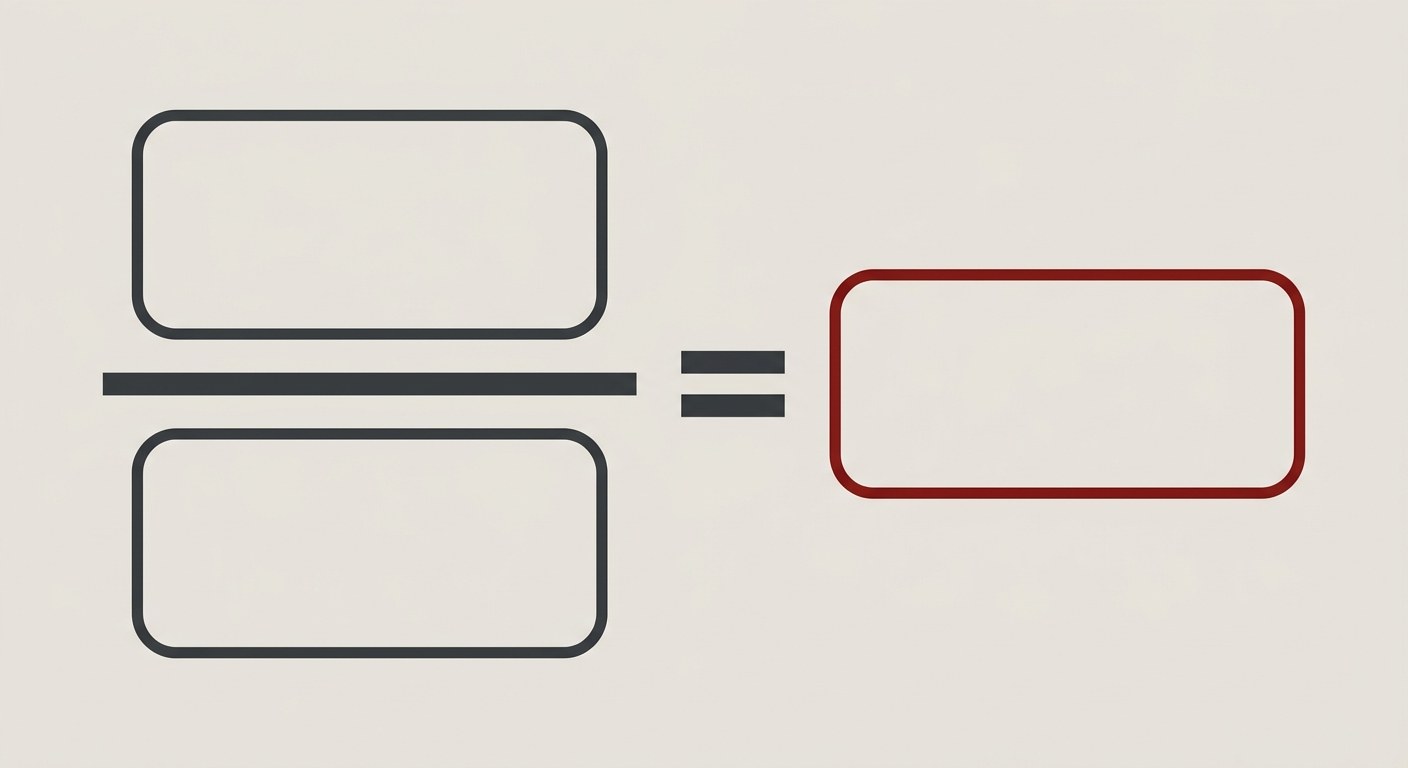
The math behind reconstitution is one formula. Concentration in milligrams per millilitre equals the peptide mass in the vial, in milligrams, divided by the volume of solvent added, in millilitres.
Concentration (mg/mL) = Peptide mass (mg) ÷ Solvent volume added (mL)
That’s the whole calculation. It outputs a concentration. It does not, and should not be extended to, a per-use or per-session amount. What a researcher does with a known concentration downstream is a separate question entirely, outside the scope of what this page covers. Three worked examples below show how the same formula behaves across different vial sizes and different solvent volumes.
Example A: a 2 mg vial
A 2 mg vial with 2 mL of solvent added: 2 mg ÷ 2 mL = 1 mg/mL. This produces a solution of 1 mg/mL.
Example B: a 5 mg vial
A 5 mg vial with 10 mL of solvent added: 5 mg ÷ 10 mL = 0.5 mg/mL. This produces a solution of 0.5 mg/mL. The same 5 mg vial with only 5 mL added instead yields 5 mg ÷ 5 mL = 1 mg/mL, a more concentrated solution from the identical starting material.
Example C: a 10 mg vial
A 10 mg vial with 4 mL of solvent added: 10 mg ÷ 4 mL = 2.5 mg/mL. This produces a solution of 2.5 mg/mL, a useful figure to sanity-check against a supplier’s certificate of analysis mass value before logging the vial into a study record.
Note what stays constant across all three: the formula never changes, only the two inputs do. A researcher who wants a lower concentration adds more solvent to the same peptide mass. A researcher who wants a higher concentration adds less. The calculation is symmetric and reversible, and it’s worth double-checking the arithmetic against the vial’s labeled mass rather than assuming a round number.
Sterile technique
Technique matters here as much as the math does, because a badly handled reconstitution can leave a researcher with an accurately calculated concentration of degraded material. None of the following requires anything beyond a clean workspace, gloves, and patience.
Start by swabbing the rubber septum on both the peptide vial and the solvent container with a fresh alcohol wipe, and let it air-dry for a few seconds before doing anything else. Skipping the dry time defeats the point of swabbing, since residual alcohol can be drawn into the vial along with the solvent.
When transferring solvent into the peptide vial, direct it down the interior glass wall rather than straight onto the lyophilised cake. Hitting the dried powder directly with a stream of incoming liquid creates localized turbulence right at the point where the peptide is most exposed, and that turbulence is exactly the kind of interfacial stress that a 2024 review in the International Journal of Pharmaceutics identifies as a real driver of protein degradation, separate from anything related to temperature or chemical breakdown. Letting the solvent run down the wall and pool at the bottom avoids that entirely.
Foaming is a warning sign, not a cosmetic issue. A foamy air to liquid interface is one of the more aggressive environments a peptide can encounter, because the interface itself promotes partial unfolding. If foam forms while adding solvent, it usually means the solvent was added too quickly or with too much force behind it. Slower is better here across the board.
Once solvent is in the vial, resist the instinct to shake it to speed up dissolution. Gentle swirling, or rolling the vial slowly between two palms, is enough to fully dissolve a properly lyophilised cake within a minute or two. Vigorous shaking introduces the same shear and interfacial stress described above, and it’s avoidable stress with zero benefit, since gentle mixing dissolves the material just as completely given a little more time.
After mixing, check the solution visually. It should be clear, without visible particulate matter. A faint tint is normal for a handful of compounds (copper-containing peptides like GHK-Cu can show a light blue cast from the copper ion itself), but cloudiness or visible particles are not normal and should prompt discarding the vial rather than continuing to use it.
Storage and stability after reconstitution
Lyophilised, unreconstituted peptide is the more stable of the two states by a wide margin, and it’s worth treating that difference as the reason storage guidance changes so much the moment a vial is opened.
Dry lyophilised powder tolerates refrigeration at 2 to 8°C for months, and freezer storage at negative 20°C substantially longer, provided the vial stays sealed and freeze-thaw cycling on the unopened powder is minimized. Once solvent is added, the picture changes. Reconstituted solution is far more chemically active, and both temperature and light exposure start doing real damage on a much shorter timescale.
Light is the more overlooked variable of the two. Correia and colleagues exposed insulin, a peptide hormone with a well-studied structure, to continuous UV light and found progressive formation of a covalent dityrosine crosslink along with breakage of its disulfide bridges. After roughly ninety minutes of exposure, over 60% of the insulin’s structure was no longer recognized by antibodies specific to its native form, and its measured biological function had dropped in step. That’s not a subtle effect, and it’s a strong argument for keeping reconstituted vials in amber glass, foil wrap, or simply a closed refrigerator drawer rather than a clear shelf under lab lighting.
Freeze-thaw cycling on already-reconstituted solution is its own separate hazard. Lu and colleagues, studying a bispecific antibody, traced freezing-induced aggregation to ice-water interface interactions and to molecular mobility that actually increases at less extreme freezer temperatures like negative 20°C compared with negative 80°C, which runs against the intuitive assumption that colder is always safer. Repeated freezing and thawing of the same reconstituted vial compounds this risk with each cycle, since every thaw reintroduces the ice-interface exposure that drives the aggregation in the first place. The practical takeaway echoed across the literature on this topic is the same one researchers already tend to follow: once reconstituted, keep the solution refrigerated rather than frozen unless a specific compound’s documentation says otherwise, and avoid cycling it between temperatures more than necessary.
The stable window for reconstituted solution held at 2 to 8°C typically runs several weeks for compounds prepared in bacteriostatic water, a figure that shrinks considerably at room temperature. Compounds noted for greater thermal sensitivity, including GLP-1(Sema) and GLP-2(Tirz), benefit from staying at the colder end of that refrigerated range rather than the warmer end.

Understanding purity and grade terminology
Researchers sourcing peptides run into a handful of terms that get used loosely across the industry, and it’s worth being precise about what each one actually means.
GMP stands for Good Manufacturing Practice, a regulatory framework governing how a facility documents, controls, and validates its production process. A facility operating under GMP conditions maintains batch records, environmental controls, and equipment validation to a defined standard. GMP describes the manufacturing process and the facility’s quality system. It does not, by itself, describe the purity of any single batch, and a GMP-compliant facility can still produce material at varying purity specifications depending on what the batch was manufactured to.
Research grade is a separate, less formally defined term. It generally signals that a compound is manufactured and sold for laboratory and in vitro research applications rather than for clinical or pharmaceutical use, without the regulatory documentation package that would accompany a clinical grade product. Research grade material can still be manufactured to a high purity specification. Grade and purity are related but not identical concepts, and a compound’s grade classification says more about its intended use case and documentation trail than it does about the actual chemical purity of a given vial.
A certificate of analysis, when one is provided by a manufacturer, typically reports two categories of data on a peptide batch: purity, most often measured by HPLC (high performance liquid chromatography) and expressed as a percentage, and identity confirmation, typically by mass spectrometry, which verifies the molecule’s mass matches the expected peptide rather than a synthesis byproduct or a different compound entirely. Some certificates also report residual solvent content or endotoxin levels depending on the intended application. These are the general categories of data a certificate of analysis in this industry is expected to include, independent of any specific supplier’s practice around whether or how a certificate is shared. For more detail on how Spartan Peptides approaches quality documentation, see the quality assurance page.
Common handling errors
A short list of mistakes shows up again and again in support questions and forum threads, and most of them are easy to avoid once you know to look for them.
Over-agitation is probably the most common. Researchers new to reconstitution sometimes shake a vial out of habit, the same motion used for a lot of other lab reagents, without realizing peptides are more shear-sensitive than a typical small-molecule solution. If a vial isn’t fully dissolved after a minute of gentle swirling, give it more time rather than more force.
Choosing the wrong solvent for the intended use case is the second most common issue. A researcher planning to access a vial repeatedly over several weeks but reconstituting with plain sterile water is setting up a contamination risk that bacteriostatic water was specifically designed to avoid. Match the solvent to how the vial will actually be used, not just to what happens to be on the shelf.
Poor light protection is easy to overlook because the damage isn’t visible in real time. A vial sitting on an open shelf under fluorescent lighting for weeks can lose meaningful structural integrity long before anyone notices a visual change, since the degradation Correia’s group documented doesn’t necessarily produce cloudiness or discoloration at lower exposure levels.
Repeated freeze-thaw cycling, discussed above, remains a frequent unforced error, usually from moving a vial between a benchtop and a freezer multiple times across a single week instead of keeping it consistently refrigerated.
Mixing incompatible solutions in the same vial, meaning combining two different reconstituted peptides or adding a second solvent to an already-reconstituted vial, can trigger aggregation or precipitation that isn’t obvious until the solution turns cloudy days later. Unless specific co-solubility data exists for a given combination, treat every reconstituted vial as its own closed system.
Frequently asked questions
What is bacteriostatic water?
Bacteriostatic water is sterile water with 0.9% benzyl alcohol added as a preservative, per the USP Bacteriostatic Water monograph. The benzyl alcohol suppresses microbial growth, which allows a single vial to be accessed more than once over a period of weeks with proper technique.
How do I calculate concentration in mg/mL?
Divide the peptide mass in the vial, in milligrams, by the volume of solvent added, in millilitres. A 5 mg vial with 5 mL of solvent added produces a solution of 1 mg/mL. Adding more solvent to the same vial lowers the resulting concentration.
What is the difference between bacteriostatic water and sterile water?
Bacteriostatic water contains a preservative (benzyl alcohol) that supports repeated septum access. Sterile water contains no preservative and offers no protection against microbial growth once a vial has been opened, so it is better suited to single-access use.
How long is a reconstituted solution stable?
Solutions prepared in bacteriostatic water and stored refrigerated at 2 to 8°C, protected from light, typically remain stable for several weeks. Solutions prepared in plain sterile water have a much shorter practical window and should generally be used promptly.
Why should reconstituted solutions not be shaken?
Shaking introduces shear and interfacial stress that can unfold or aggregate peptide structure, a mechanism documented in the pharmaceutical stability literature independent of any temperature effect. Gentle swirling dissolves the lyophilised cake just as effectively without that added stress.
What temperature should lyophilised peptides be stored at?
Unreconstituted, lyophilised peptide is generally stable under refrigeration at 2 to 8°C for shorter-term storage, and under freezer conditions around negative 20°C for longer-term storage, provided the vial remains sealed and is not repeatedly cycled between temperatures.
What does GMP grade mean?
GMP, or Good Manufacturing Practice, describes a facility’s documented manufacturing and quality control process rather than the purity of a specific batch. A facility can operate under GMP conditions while still producing material to a range of different purity specifications depending on the batch.
What should a certificate of analysis show?
In general industry practice, a certificate of analysis reports a compound’s purity, usually measured by HPLC, and identity confirmation, usually by mass spectrometry. Some certificates additionally report residual solvent or endotoxin data. Whether and how a certificate is made available varies by supplier.
All content is intended for laboratory and academic research purposes only. Not for human consumption.
References
- United States Pharmacopeia, Bacteriostatic Water monograph (compendial standard defining 0.9% benzyl alcohol concentration; no PMID, pharmacopoeial reference)
- Roy S, Jung R, Kerwin BA, Randolph TW, Carpenter JF (2005). Effects of benzyl alcohol on aggregation of recombinant human interleukin-1-receptor antagonist in reconstituted lyophilized formulations. Journal of Pharmaceutical Sciences. PMID: 15614819
- Butreddy A, Janga KY, Ajjarapu S, Sarabu S, Dudhipala N (2021). Instability of therapeutic proteins, an overview of stresses, stabilization mechanisms and analytical techniques involved in lyophilized proteins. International Journal of Biological Macromolecules. PMID: 33275971
- Correia M, Neves-Petersen MT, Jeppesen PB, Gregersen S, Petersen SB (2012). UV-light exposure of insulin, pharmaceutical implications upon covalent insulin dityrosine dimerization and disulphide bond photolysis. PLoS One. PMID: 23227203
- Lu X, Domingo-Yenes B, Cohen N, Grzincic E (2025). Freezing-induced protein aggregation in a bispecific antibody, characterization and mechanistic insights. Journal of Pharmaceutical Sciences. PMID: 40021009
- Moino C, Artusio F, Pisano R (2024). Shear stress as a driver of degradation for protein-based therapeutics, more accomplice than culprit. International Journal of Pharmaceutics. PMID: 38065348
Sourcing in bulk for your lab or institution?
Spartan Peptides offers wholesale access for research institutions, CROs, and licensed distributors. Minimum order quantities apply per SKU. Browse the full catalog of research compounds or apply for wholesale pricing below.
Apply for Wholesale Access →Spartan Research Library
Go Deeper on the Science
Browse study indexes, compound comparisons, and protocol stacks in the Spartan Peptides Research Library.
Written by the Spartan Research Team
Our team of peptide researchers and biochemists reviews every article for scientific accuracy. Learn more about our team →