
Peptides vs Stem Cell Therapy: A Regenerative Health Comparison

Written bySpartan Research Team
At Spartan Peptides, we often field questions about peptides vs stem cells when it comes to cutting-edge healing therapies. Both are promising regenerative medicine alternatives, but they work in very different ways. Today, we’ll examine the peptides vs stem cells question looking at how peptide therapy (with compounds like BPC‑157 and Thymosin Beta‑4) stacks up against stem cell treatments for healing and recovery in terms of mechanisms, safety
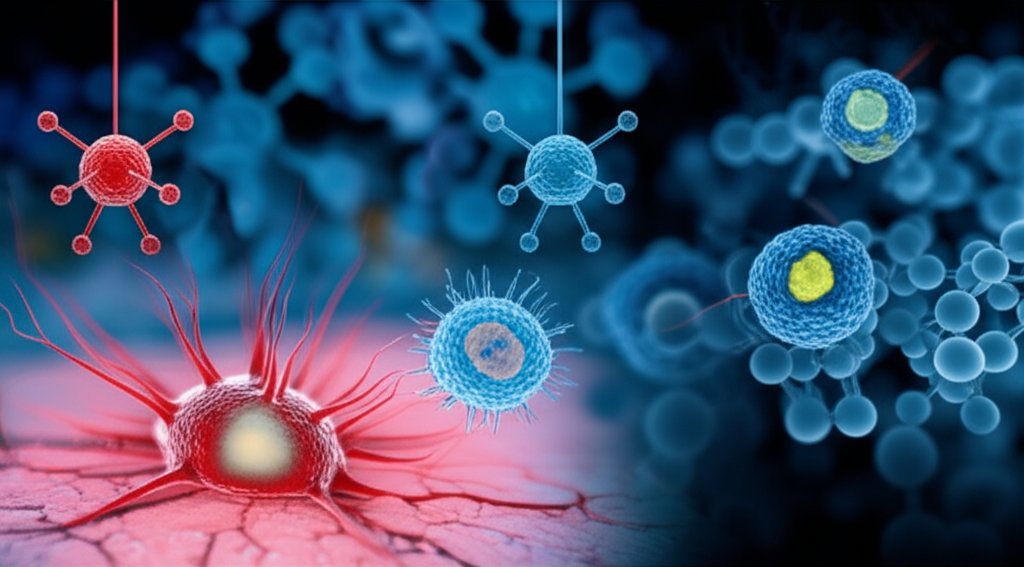
, and results.
What Are Peptides and How Do They Aid Recovery?

Peptides are short chains of amino acids that act as signaling molecules in the body. Certain bioactive peptides can promote tissue repair and reduce inflammation, essentially nudging the body’s own healing processes into high gear. For example, Body Protection Compound 157 (BPC-157) and Thymosin Beta-4 (TB-4) are two peptides renowned for their regenerative capabilities.
BPC-157’s role in tissue repair: BPC-157 is a synthetic peptide derived from a protein found in gastric juice. Researchers are fascinated by BPC-157’s healing potential; studies show it can speed up the repair of muscle, tendon, and even bone injuries. It appears to work by boosting the formation of new blood vessels (angiogenesis) and upregulating growth factors at injury sites, while also reducing inflammation that can delay recovery. In simpler terms, BPC-157 sends out a signal that says “heal this tissue now,” and the body responds by delivering more nutrients and repair cells to the area. This peptide has even improved tendon and ligament healing in laboratory models without causing excessive scar tissue. No wonder some researchers dub it the “Wolverine peptide” for its remarkable healing effects.
Thymosin Beta-4’s role in regeneration: Thymosin Beta-4 is another naturally occurring peptide known for orchestrating the body’s repair response. When you get injured, your platelets and immune cells release TB-4 as one of the first responders. Notably, TB-4 can mobilize your body’s own progenitor (stem) cells to the injury site. By binding to actin (a structural protein), TB-4 helps cells move and new blood vessels grow, facilitating tissue regeneration. It also has anti-inflammatory and cell-protective effects, reducing scar formation. Research has shown that applying TB-4 can speed up wound closure and improve tissue quality in skin, heart, and even eye injury models. In early clinical trials on hard-to-heal wounds (like pressure ulcers), TB-4 significantly accelerated healing and was well tolerated by patients. These broad benefits make Thymosin Beta-4 a powerful healing peptide in its own right.
In summary, peptide therapy leverages these targeted molecules (like BPC-157 and TB-4) to stimulate the body’s natural healing pathways. Rather than adding large amounts of new material to the body, peptides act as messengers that tell your cells “get to work and repair.” This is fundamentally different from how stem cell therapy operates, which we’ll discuss next.
How Does Stem Cell Therapy Work?
Stem cell therapy, often called regenerative medicine, involves using living stem cells to repair or replace damaged tissue. Stem cells are unique because they can transform into many different cell types and self-renew. In a typical stem cell treatment, doctors extract stem cells (for instance, from a patient’s bone marrow or fat tissue) and then inject them into the area needing repair. The idea is that these introduced cells will develop into healthy new tissue or secrete growth factors to aid healing. Thanks to their ability to become bone, cartilage, muscle, nerve, or other cell types as needed, stem cells offer a powerful route to regenerate injured tissues. Indeed, stem cell therapy has shown exciting potential in regenerative medicine, with studies exploring its use in various conditions.
However, stem cell therapy is complex. It often requires a procedure to harvest cells and a specialized method to deliver them. While some stem cell therapies (e.g. bone marrow transplants for blood cancers) are well-established, many others are still in experimental stages. Patients considering stem cell treatments typically must enroll in clinical trials or visit specialized clinics. Additionally, there are safety and ethical considerations – for example, ensuring the cells don’t form tumors or trigger immune reactions. So while the promise is high, careful research is still needed.
Peptides vs Stem Cells: Key Differences and Benefits
Let’s compare peptide therapy and stem cell therapy side by side. Both aim to promote healing and tissue regeneration, but they go about it in distinct ways:
- Mechanism of Action: Peptides act as biochemical messengers. When you use a peptide like BPC-157 or TB-4, you’re sending targeted instructions to your body to ramp up certain healing processes (such as new blood vessel growth or collagen production). The healing comes from within – your existing cells do the work, guided by those peptide signals. In contrast, stem cell therapy introduces actual cells that can become new tissue or release a broad range of regenerative factors.
- Invasiveness: Peptide therapy is relatively straightforward – peptides are typically given via a small subcutaneous injection or nasal/oral formulations. It’s minimally invasive. Stem cell treatments, on the other hand, are more involved. They often require harvesting cells from your body (e.g. drawing bone marrow or fat) and then infusing those cells into the target area. This makes stem cell therapy more like a minor surgical procedure, with associated recovery time and potential risks at the injection site.
- Safety: Both approaches are still being studied, but their risk profiles differ. Peptides like BPC-157 and TB-4 have shown favorable safety in studies, with low toxicity observed in preclinical research. Stem cell therapy can offer dramatic healing but comes with additional risks. If the stem cells come from your own body (autologous), rejection risk is low; if from a donor, immune rejection is possible. There’s also a risk that transplanted cells might not behave as intended (in rare cases, they could form unwanted tissue).
- Availability and Cost: Peptide therapy is more accessible and affordable at this time. High-purity peptides are available from specialized suppliers, making them easier to obtain for investigation. Stem cell therapies are typically expensive (often several thousands of dollars) and usually available only through clinical trials or specialized regenerative medicine clinics.
In short, peptides vs stem cells isn’t about choosing one “best” solution for all situations. They each have unique strengths. Peptides excel at triggering your body’s innate repair mechanisms with precision, while stem cells can directly regenerate or replace damaged tissue. The optimal approach depends on the condition at hand and the context. For some scenarios (like a mild tendon injury), a peptide might do the trick. For others (like extensive tissue damage), stem cell therapy could be more appropriate.
Exploring Your Regenerative Options
At Spartan Peptides, we’re excited about the advances in regenerative science. The peptides vs stem cells discussion isn’t about declaring a winner, but about understanding your options. If you’re intrigued by the potential of peptide research, we invite you to explore our BPC-157 and Thymosin Beta-4 product pages to learn more. These compounds offer a practical starting point for those interested in cutting-edge recovery science.
Frequently Asked Questions (FAQs)
What is the difference between peptide therapy and stem cell therapy?
Peptide therapy uses small signaling molecules to stimulate the body’s own healing processes, whereas stem cell therapy introduces live cells that can turn into new tissue. In essence, peptides act as messengers to boost repair from within, while stem cell treatments supply new cells to rebuild damaged tissue.
Can peptide therapy replace stem cell therapy?
Not exactly. Peptide therapy is a compelling alternative or complement in regenerative medicine, but it’s not a one-for-one replacement for stem cells. Peptides like BPC-157 and TB-4 can encourage significant healing responses and may be sufficient for many injuries. Stem cell therapy might still be considered for more extensive damage where actual tissue regeneration or replacement is needed.
Are peptides safer than stem cells for recovery?
Peptides are generally considered low-risk in research settings and tend to have fewer immediate side effects. They amplify natural repair signals instead of adding foreign cells, so there’s no risk of immune rejection. Studies so far have not flagged major toxicity issues with peptides. Stem cell therapy, while often safe when properly administered, involves more complex risks (like potential immune reactions or infection). Overall, peptides have a slight safety edge due to their simplicity and predictability.
Which peptides help with tissue repair and recovery?
Two of the most popular peptides for tissue repair are BPC-157 and Thymosin Beta-4 (TB-4). BPC-157 has shown an ability to support healing of muscles, tendons, and even gut tissue by promoting blood vessel growth and collagen synthesis. Thymosin Beta-4 aids recovery by reducing inflammation and recruiting progenitor (stem) cells to injured areas, accelerating wound repair. These peptides are frequently studied for speeding up recovery from injuries and improving tissue regeneration.
Ready to advance your BPC-157 research?
Spartan Peptides offers ≥98% purity BPC-157 with full in-house purity verification and in-house quality testing.
⚠️ Research Use Only — Not for Human Consumption
The peptides discussed in this article are intended for laboratory and research purposes only. They are not intended for human consumption. All information presented is based on published preclinical research and is provided for educational purposes only.
Written by the Spartan Research Team
Our team of peptide researchers and biochemists reviews every article for scientific accuracy. Learn more about our team →