
PT-141 vs Traditional ED Research Compounds: Mechanism Comparison in Preclinical Models

Written bySpartan Research Team
Sexual dysfunction remains one of the most actively researched areas in pharmacology, with investigators exploring compounds that target fundamentally different physiological pathways. For decades, PDE5 inhibitors — including the research compounds sildenafil and tadalafil — dominated preclinical and clinical investigation through their well-characterized peripheral vasodilation mechanism. More recently, peptide-based research compounds have opened an entirely new avenue: centrally mediated sexual response modulation via melanocortin receptors.
PT-141, also known as bremelanotide, represents this newer class. As a melanocortin receptor agonist, it operates through a mechanism fundamentally distinct from PDE5 inhibition — acting on the central nervous system rather than peripheral vasculature. This article provides a detailed comparison of these two pharmacological approaches as documented in the research literature, examining their mechanisms, applications, and implications for ongoing preclinical investigation.
How PDE5 Inhibitors Work in Research Models


Phosphodiesterase type 5 (PDE5) inhibitors — including the research compounds sildenafil, tadalafil, and vardenafil — have been studied extensively since the late 1990s. Their mechanism of action is well characterized in the research literature and centers on peripheral vasodilation.
The Nitric Oxide–cGMP Pathway
In preclinical models, sexual arousal triggers the release of nitric oxide (NO) from endothelial cells and non-adrenergic, non-cholinergic neurons in cavernosal tissue. Nitric oxide activates soluble guanylate cyclase, increasing intracellular concentrations of cyclic guanosine monophosphate (cGMP). Elevated cGMP promotes smooth muscle relaxation, allowing increased blood flow to erectile tissue (Corbin, 2004).
PDE5 enzymes normally degrade cGMP, terminating the vasodilatory signal. PDE5 inhibitors block this degradation, prolonging and amplifying the cGMP-mediated response. Crucially, this mechanism requires initial nitric oxide release — meaning the sexual arousal signal must already be present for the compound to produce its effect in research models.
Key Characteristics in Research Literature
- Site of action: Peripheral (cavernosal smooth muscle)
- Onset: 30–60 minutes (sildenafil); 30–120 minutes (tadalafil) in clinical studies
- Duration: 4–6 hours (sildenafil); up to 36 hours (tadalafil)
- Dependency: Requires existing sexual stimulation and NO release
- Limitation: Does not address desire, motivation, or arousal initiation
Research has demonstrated that PDE5 inhibitors are effective in models of erectile dysfunction caused by vascular insufficiency, but studies have shown limited efficacy in models where the primary deficit involves desire or central arousal pathways (Boolell et al., 1996).
How PT-141 (Bremelanotide) Works: The Melanocortin Receptor Mechanism
PT-141 (bremelanotide) is a synthetic cyclic heptapeptide and a non-selective melanocortin receptor agonist, with particular affinity for the melanocortin-4 receptor (MC4R). Its mechanism of action in research models is fundamentally different from PDE5 inhibitors — it operates through the central nervous system rather than peripheral vasculature.
Melanocortin-4 Receptor Activation in the CNS
The melanocortin-4 receptor is a G-protein-coupled receptor densely expressed in hypothalamic nuclei, the medial preoptic area, and limbic structures — brain regions strongly implicated in sexual motivation, arousal, and desire. In preclinical studies, MC4R activation by PT-141 peptide research compounds has been shown to initiate pro-erectile and pro-sexual responses through descending neural pathways, independent of peripheral vascular effects (Wessells et al., 2000).
This CNS-mediated mechanism means that PT-141 can potentially modulate the initiation of sexual arousal — not just the downstream vascular response. In animal models, intracerebroventricular administration of melanocortin agonists produced erectile responses even in the absence of peripheral stimulation, confirming the central origin of the effect (Martin & MacIntyre, 2004).
Development from Melanotan II
PT-141 was developed as a metabolite of Melanotan II, another melanocortin receptor agonist originally studied for its tanning properties. When researchers observed pro-sexual effects in early Melanotan II studies, the active fragment was isolated and optimized as bremelanotide. This development represents a broader trend in peptide research for sexual wellness, where compounds are refined for targeted receptor specificity.
Key Characteristics in Research Literature
- Site of action: Central nervous system (hypothalamus, limbic system)
- Receptor target: Melanocortin-4 receptor (MC4R), with activity at MC1R and MC3R
- Onset: ~30–60 minutes (subcutaneous administration in clinical studies)
- Duration: 6–72 hours (variable by endpoint measured)
- Dependency: Does not require pre-existing sexual stimulation to initiate response
- Unique property: Addresses desire and arousal initiation, not just vascular response
Head-to-Head Comparison: PT-141 vs PDE5 Inhibitors in Research

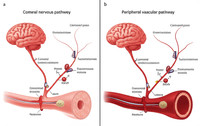
The following table summarizes key differences between these two compound classes as documented across the bremelanotide comparison literature:
| Parameter | PT-141 (Bremelanotide) | PDE5 Inhibitors (Sildenafil/Tadalafil) |
|---|---|---|
| Compound Class | Melanocortin receptor agonist (peptide) | Phosphodiesterase type 5 inhibitor (small molecule) |
| Primary Target | MC4R in CNS | PDE5 enzyme in cavernosal tissue |
| Mechanism | Central — modulates desire and arousal initiation | Peripheral — enhances vasodilation via cGMP |
| Onset | ~30–60 min (subcutaneous) | 30–60 min (oral) |
| Duration | 6–72 hours | 4–36 hours (compound dependent) |
| Route (Research) | Subcutaneous injection | Oral |
| Requires Stimulation | No (initiates arousal centrally) | Yes (amplifies existing NO signal) |
| Female Model Efficacy | Demonstrated (Phase III data) | Limited / inconclusive |
| Addresses Desire | Yes | No |
This comparison highlights what makes the PT-141 vs Viagra research discussion so compelling in pharmacology: these are not competing compounds targeting the same pathway, but rather complementary approaches addressing different aspects of the sexual response cycle.
PT-141 Research in Female Models: A Unique Advantage
Perhaps the most significant differentiator in the bremelanotide comparison literature is PT-141’s demonstrated efficacy in female models of sexual dysfunction — an area where PDE5 inhibitors have consistently underperformed.
Why PDE5 Inhibitors Showed Limited Efficacy in Female Models
Multiple clinical trials investigated sildenafil and tadalafil in women with sexual arousal disorder and hypoactive sexual desire disorder (HSDD). Results were largely disappointing. While some studies showed modest improvements in genital vasocongestion, subjective measures of desire, arousal, and satisfaction did not reach clinical significance in most female populations studied (Basson et al., 2002).
The reason is mechanistic: female sexual dysfunction — particularly HSDD — is predominantly a disorder of central desire and motivation pathways, not peripheral blood flow. PDE5 inhibitors, which act exclusively on vascular smooth muscle, simply target the wrong pathway for most female sexual dysfunction presentations.
PT-141’s CNS Mechanism and Female Sexual Dysfunction
By contrast, PT-141’s central mechanism of action directly targets the desire and motivation pathways implicated in HSDD. The RECONNECT Phase III clinical trials (Kingsberg et al., 2019) demonstrated statistically significant improvements in:
- Female Sexual Function Index (FSFI) desire domain scores
- Satisfying sexual events (SSEs)
- Female Sexual Distress Scale — Desire/Arousal/Orgasm (FSDS-DAO) scores
These results led to FDA approval of bremelanotide for premenopausal women with acquired, generalized HSDD — making it a landmark compound in PT-141 research for women’s libido. This remains one of the strongest arguments for investigating melanocortin agonists as a distinct pharmacological class rather than simply an alternative to PDE5 inhibitors.
Broader Implications for Peptide Research
The success of PT-141 in female models has also stimulated interest in the broader role of hormone optimization peptides and related neuropeptide systems — including kisspeptin, oxytocin, and other hypothalamic signaling molecules — in sexual function research.
Combination Research: Potential Synergistic Effects in Laboratory Studies
Given that PT-141 and PDE5 inhibitors target entirely non-overlapping pathways — central initiation versus peripheral amplification — researchers have explored whether combined administration might produce synergistic effects in preclinical models.
Theoretical Rationale
The theoretical basis for combination research is straightforward: PT-141 activates descending pro-sexual neural pathways from the CNS, which ultimately trigger nitric oxide release in peripheral erectile tissue. PDE5 inhibitors then amplify this downstream signal by preventing cGMP degradation. In principle, a centrally initiated signal enhanced by peripheral amplification could produce responses greater than either compound alone.
Preclinical Evidence
In animal models, co-administration of melanocortin agonists with PDE5 inhibitors has shown additive or synergistic erectile responses at subthreshold doses of each compound individually (Giuliano et al., 2006). These findings suggest that combination protocols may allow researchers to study sexual response facilitation at lower individual compound concentrations.
However, it must be emphasized that combination research remains in early stages. The interaction profiles, optimal ratios, and safety considerations of combined melanocortin agonist–PDE5 inhibitor administration require substantially more investigation before any firm conclusions can be drawn.
Limitations and Considerations in Research Settings
While the comparison between PT-141 and PDE5 inhibitors reveals compelling mechanistic differences, researchers should be aware of several important limitations and methodological considerations.
PT-141 Considerations
- Nausea: Clinical studies have consistently reported transient nausea as the most common adverse effect of bremelanotide, occurring in approximately 40% of subjects in Phase III trials (Kingsberg et al., 2019). This CNS-mediated side effect is relevant for study design and subject compliance.
- Blood pressure effects: Transient increases in blood pressure have been documented following bremelanotide administration, necessitating cardiovascular screening in research protocols.
- Melanocortin receptor non-selectivity: PT-141 activates MC1R (involved in melanogenesis) and MC3R in addition to MC4R, potentially introducing confounding variables in research models.
- Smaller evidence base: Compared to PDE5 inhibitors with 25+ years of clinical data, the bremelanotide literature — while growing — is relatively young.
PDE5 Inhibitor Considerations
- Non-responders: Research literature documents a 30–40% non-response rate to PDE5 inhibitors, particularly in models with neurogenic or psychogenic etiology where NO signaling is impaired upstream.
- Cardiovascular interactions: The vasodilatory mechanism creates well-documented contraindications with nitrate compounds in research models.
- Limited scope: PDE5 inhibitors do not address desire, arousal initiation, or most female sexual dysfunction presentations.
Methodological Considerations
Researchers comparing these compound classes should note that endpoint selection significantly influences results. PDE5 inhibitor studies typically measure erectile rigidity and tumescence (peripheral endpoints), while PT-141 studies often measure desire, motivation, and satisfying sexual events (central endpoints). Direct head-to-head comparisons require careful endpoint harmonization.
Frequently Asked Questions
How does PT-141 differ from PDE5 inhibitors in research models?
PT-141 (bremelanotide) acts centrally through melanocortin-4 receptors in the central nervous system, while PDE5 inhibitors such as sildenafil and tadalafil act peripherally by promoting vasodilation through the nitric oxide–cGMP pathway. This fundamental mechanistic difference means the two compound classes target entirely different stages of the sexual response cascade in preclinical models.
Has PT-141 been studied in female preclinical and clinical models?
Yes. PT-141 (bremelanotide) has been extensively researched in female models of hypoactive sexual desire disorder (HSDD). Phase III clinical trials demonstrated statistically significant improvements in desire endpoints, leading to regulatory approval for premenopausal women with HSDD — an area where PDE5 inhibitors showed limited efficacy.
What is the melanocortin-4 receptor and why is it relevant to sexual function research?
The melanocortin-4 receptor (MC4R) is a G-protein-coupled receptor expressed in hypothalamic and limbic brain regions associated with sexual arousal and motivation. Activation of MC4R by agonists such as PT-141 has been shown in preclinical studies to initiate centrally mediated erectile and pro-sexual responses independent of peripheral vascular mechanisms.
Can PT-141 and PDE5 inhibitors be combined in research settings?
Preliminary preclinical data suggest potential synergistic effects when combining a centrally acting melanocortin agonist with a peripherally acting PDE5 inhibitor, as they target non-overlapping pathways. However, combination research remains in early stages and further controlled studies are needed to characterize safety profiles and interaction dynamics.
What are the main limitations of PT-141 research compared to PDE5 inhibitor research?
PDE5 inhibitors benefit from over two decades of extensive clinical literature and well-characterized pharmacokinetics. PT-141 research, while growing rapidly, has a smaller body of long-term data. Additionally, melanocortin receptor agonists can produce transient side effects such as nausea and flushing in clinical studies, and CNS-mediated mechanisms introduce additional complexity in dose–response modeling.
What is the typical onset and duration profile of PT-141 in research literature?
In published clinical studies, bremelanotide demonstrated onset of pro-sexual effects approximately 30–60 minutes after subcutaneous administration, with a duration of action reported between 6 and 72 hours depending on the endpoint measured. By comparison, PDE5 inhibitors like sildenafil typically show onset within 30–60 minutes with duration of 4–6 hours in research settings.
References
- Kingsberg SA, Clayton AH, Portman D, et al. Bremelanotide for the Treatment of Hypoactive Sexual Desire Disorder: Two Randomized Phase 3 Trials. Obstet Gynecol. 2019;134(5):899-908. PMID: 31599840
- Wessells H, Fuciarelli K, Hansen J, et al. Synthetic melanotropic peptide initiates erections in men with psychogenic erectile dysfunction: double-blind, placebo controlled crossover study. J Urol. 2000;160(2):389-393. PMID: 9679884
- Clayton AH, Althof SE, Kingsberg S, et al. Bremelanotide for female sexual dysfunctions in premenopausal women: a randomized, placebo-controlled dose-finding trial. Womens Health (Lond). 2016;12(3):325-337. PMID: 27207470
- Corbin JD. Mechanisms of action of PDE5 inhibition in erectile dysfunction. Int J Impot Res. 2004;16 Suppl 1:S4-S7. PMID: 15224127
- Boolell M, Allen MJ, Ballard SA, et al. Sildenafil: an orally active type 5 cyclic GMP-specific phosphodiesterase inhibitor for the treatment of penile erectile dysfunction. Int J Impot Res. 1996;8(2):67-52. PMID: 8858389
- Martin WJ, MacIntyre DE. Melanocortin receptors and erectile function. Eur Urol. 2004;45(6):706-713. PMID: 15149740
- Giuliano F, Rampin O, Allard J. Neurophysiology and pharmacology of female genital sexual response. J Sex Marital Ther. 2002;28 Suppl 1:101-121. PMID: 11898694
- Basson R, McInnes R, Smith MD, et al. Efficacy and safety of sildenafil citrate in women with sexual dysfunction associated with female sexual arousal disorder. J Womens Health Gend Based Med. 2002;11(4):367-377. PMID: 12150499
Written by the Spartan Research Team
The Spartan Peptides Research Team consists of scientists, biochemists, and health researchers dedicated to providing accurate, evidence-based information about peptide research. Our content is reviewed for scientific accuracy and updated regularly to reflect the latest findings in peptide science.
Related Research: PT-141 Complete Melanocortin Research Guide — Full review of MC3R/MC4R mechanisms and clinical data
\n