
The Recovery Peptide Research Guide: How BPC-157, TB-500, and Sermorelin Support Tissue Repair

Written bySpartan Research Team
The landscape of peptide-based tissue repair research has expanded dramatically over the past two decades. Three compounds — BPC-157, TB-500, and Sermorelin — have emerged as the most studied agents in preclinical and early clinical research for recovery optimization. Each operates through distinct molecular pathways: BPC-157 through its profound effects on the gut-brain axis and local tissue regeneration, TB-500 through systemic Thymosin Beta-4 activity promoting angiogenesis and cellular migration, and Sermorelin through stimulation of the growth hormone (GH) axis to facilitate anabolic and reparative processes. This comprehensive research guide examines the mechanisms, evidence base, and comparative profiles of all three compounds, giving the research community a precise framework for understanding their individual and potential synergistic applications.
🔬 Key Research Findings — TL;DR
- BPC-157 demonstrates multi-system repair activity including tendon, gut mucosa, bone, and neural tissue in rodent models — acting through nitric oxide and growth factor upregulation pathways
- TB-500 (Thymosin Beta-4 fragment) promotes systemic tissue healing, angiogenesis, and cardiac/neurological recovery through actin-sequestering and LKKLF motif mechanisms
- Sermorelin stimulates pituitary GH secretion, elevating IGF-1 levels that support protein synthesis, fat metabolism, and tissue repair in research models
- Preclinical evidence shows BPC-157 + TB-500 may produce complementary recovery effects via distinct but potentially synergistic pathways
- All three compounds remain investigational — no approved therapeutic use for general recovery in humans
BPC-157 — The Gut-Brain Repair Peptide
BPC-157 (Body Protection Compound-157), chemically designated as PL-14736, is a synthetic pentadecapeptide derived from a protective protein found in gastric juice. With the sequence Gly-Glu-Pro-Pro-Pro-Gly-Lys-Pro-Ala-Asp-Asp-Ala-Gly-Leu-Val, BPC-157 represents one of the most extensively studied peptides in preclinical tissue repair research. Researchers have investigated its effects across a remarkable range of tissue types — from the gastrointestinal mucosa where it was first characterized, to tendons, ligaments, bone, muscle, neural tissue, and the cardiovascular system.
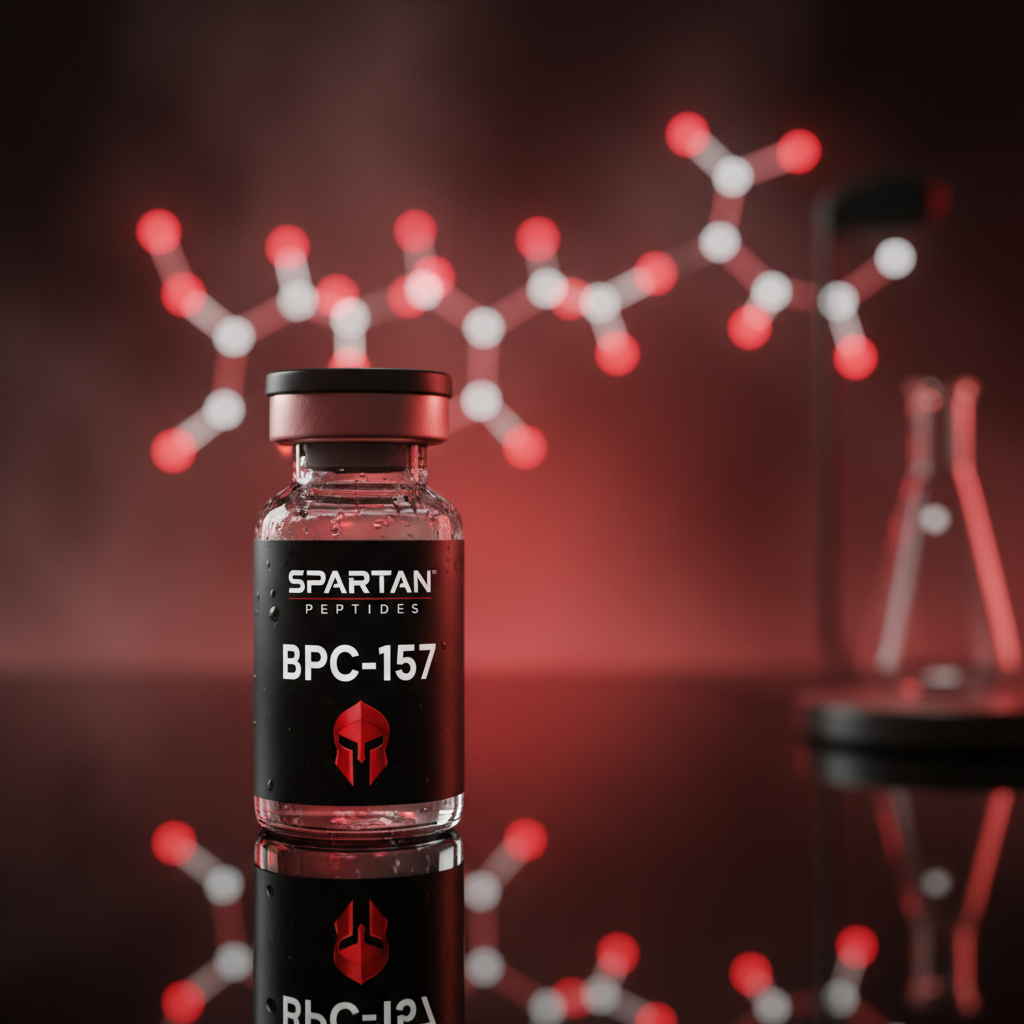
Molecular Mechanisms of BPC-157
The mechanistic profile of BPC-157 is strikingly diverse. Research published in peer-reviewed literature (PMID: 27071817) has identified several overlapping pathways through which BPC-157 exerts its effects. Central among these is the modulation of nitric oxide (NO) synthesis — BPC-157 appears to both activate and regulate the NO system in a context-dependent manner, facilitating vasodilation and blood flow to injured tissue. This angiogenic property complements its ability to upregulate expression of growth factors including vascular endothelial growth factor (VEGF) and fibroblast growth factor (FGF), both critical for tissue regeneration.
In tendon repair research, studies (PMID: 30832290) have shown BPC-157 accelerates the recovery of transected Achilles tendons in rodent models, improving biomechanical parameters and collagen organization compared to controls. The mechanism here appears to involve upregulation of type I and type III collagen gene expression, alongside tendon fibroblast proliferation. The gut-origin of BPC-157 is also mechanistically relevant — as a gastric-derived peptide, it demonstrates particular potency in gastrointestinal repair contexts, healing experimentally induced ulcers, fistulas, and inflammatory bowel lesions in multiple rodent studies (PMID: 25379541).
BPC-157 and the Gut-Brain Axis
One of the most compelling and unique aspects of BPC-157 research is its apparent bidirectional influence on the gut-brain axis. Preclinical researchers have noted that BPC-157 administration in animal models produces effects not limited to peripheral tissue — it also appears to modulate dopaminergic, serotonergic, and GABAergic neurotransmission. This central nervous system activity may be mediated through vagal afferents or direct peptide transport, though the exact mechanism requires further elucidation. From a recovery research perspective, this dual peripheral-central activity distinguishes BPC-157 from most other tissue repair peptides, which tend to operate primarily at the injury site.
Researchers investigating BPC-157 for athletic recovery contexts have been particularly interested in its apparent ability to counteract the GI stress that accompanies intense training regimens. Preclinical models suggest BPC-157 maintains mucosal integrity under conditions of elevated corticosteroid exposure — a finding with implications for overtraining research. You can explore this compound further at Spartan Peptides BPC-157.
TB-500 — Systemic Recovery and Tissue Regeneration
TB-500 refers to a synthetic peptide corresponding to the actin-binding domain of Thymosin Beta-4 (Tβ4), a naturally occurring 43-amino acid protein ubiquitously expressed in mammalian cells. The core active sequence of TB-500 — LKKLF (Lys-Lys-Leu-Phe) — is responsible for a wide array of biological activities that researchers have studied in the context of wound healing, cardiac repair, and neurological recovery. Unlike BPC-157, which was derived from gastric juice, Thymosin Beta-4 is endogenously produced throughout the body, making TB-500 a mimetic of a naturally occurring reparative signal.
Thymosin Beta-4 and Angiogenesis
The foundational mechanism of Thymosin Beta-4 (and by extension TB-500) is actin sequestration — the binding and regulation of G-actin monomers that prevents premature polymerization and allows controlled cellular migration during tissue repair. Beyond this structural role, research (PMID: 31467089) has characterized Tβ4 as a potent inducer of angiogenesis, the formation of new blood vessels essential for delivering oxygen and nutrients to healing tissue. In preclinical models of myocardial infarction, Thymosin Beta-4 administration resulted in significant neovascularization of the infarct border zone and improved cardiac function parameters (PMID: 29997137).
This angiogenic capacity has broad implications for recovery research. Tissue repair in virtually all contexts — tendon, muscle, bone, skin — is limited by adequate vascularization of the healing zone. By promoting new capillary growth, TB-500 creates conditions that support the downstream phases of repair regardless of the initiating injury type. This explains why researchers have observed TB-500 efficacy across such heterogeneous tissue types in preclinical studies.
Neurological Recovery Research
A growing body of preclinical evidence (PMID: 33450021) documents TB-500’s activity in the central and peripheral nervous systems. In rodent models of traumatic brain injury and stroke, Thymosin Beta-4 administration has been associated with reduced neuronal apoptosis, promotion of oligodendrocyte differentiation, and enhanced axonal remyelination. These effects appear mediated through upregulation of anti-apoptotic proteins and modulation of inflammatory cytokine cascades in injured neural tissue. For recovery researchers, this neurological dimension of TB-500 adds significant depth to its potential application profile — particularly given that many athletic injuries involve peripheral nerve components that are often overlooked in recovery protocols.
Researchers studying combined recovery strategies have shown particular interest in TB-500. For a comprehensive comparison, see our research guide: BPC-157 vs TB-500: Comparing Recovery Peptides. The TB-500 (Thymosin Beta) research compound is available for laboratory investigation.
Sermorelin — Growth Hormone Axis and Recovery Optimization
Sermorelin (GHRH 1-29 NH₂) is a 29-amino acid synthetic analog of endogenous growth hormone-releasing hormone (GHRH). Unlike exogenous growth hormone administration, which bypasses hypothalamic-pituitary regulation entirely, Sermorelin works upstream — stimulating the somatotroph cells of the anterior pituitary to produce and release endogenous GH in a pulsatile, physiologically regulated manner. This fundamental distinction in mechanism of action has made Sermorelin a subject of considerable interest in both clinical endocrinology and preclinical recovery research.
GH Axis Stimulation and IGF-1 Research
Research (PMID: 24391102) has characterized Sermorelin’s ability to restore age-related decline in GH pulsatility. As humans age, the amplitude and frequency of GH pulses diminish progressively — a phenomenon associated with reduced IGF-1 levels, increased fat mass, decreased lean mass, and impaired tissue regeneration capacity. In research models, Sermorelin administration restored a more youthful GH secretion pattern, with downstream elevation in hepatic IGF-1 production (PMID: 17960312). IGF-1 is a critical downstream mediator of GH’s anabolic effects, stimulating protein synthesis, promoting satellite cell activation in muscle, and supporting connective tissue repair — all processes relevant to recovery optimization research.
Sermorelin vs. Direct GH Administration in Research
The comparative research literature distinguishes Sermorelin clearly from supraphysiological GH supplementation. Because Sermorelin stimulates endogenous GH release rather than delivering exogenous hormone, the pituitary’s natural feedback mechanisms remain intact. Elevated circulating GH triggers somatostatin release, which subsequently suppresses further GH secretion — a self-regulating system that prevents the extreme supraphysiological GH elevations associated with direct GH administration. Research models examining Sermorelin show GH elevations that remain within or slightly above physiological ranges, in contrast to the marked supraphysiological peaks achieved with exogenous GH.
From a recovery mechanism perspective, Sermorelin’s GH-stimulating activity intersects directly with tissue repair. GH promotes nitrogen retention and protein synthesis, reduces catabolic cortisol signaling, and supports the proliferation of fibroblasts and chondrocytes — all cells critical to musculoskeletal repair. IGF-1, elevated as a downstream consequence of Sermorelin-stimulated GH, additionally promotes satellite cell (muscle stem cell) activation essential for myofibrillar repair following exercise-induced damage.
Comparing Recovery Mechanisms: Which Peptide for Which Protocol?
Understanding the mechanistic distinctions between BPC-157, TB-500, and Sermorelin allows researchers to develop more targeted investigation protocols. While all three compounds share a broad recovery-supporting profile, their primary mechanisms of action are sufficiently distinct that each may have unique research applications depending on the injury type and recovery phase being studied.
| Compound | Primary Mechanism | Key Research Areas | Administration Route (Research) | Evidence Level |
|---|---|---|---|---|
| BPC-157 | NO modulation, VEGF/FGF upregulation, GI mucosal protection | Tendon, ligament, gut, bone, neural, muscle repair | Subcutaneous or oral (rodent studies) | Extensive preclinical; Phase II trials initiated |
| TB-500 | Actin sequestration, angiogenesis, anti-apoptotic signaling | Cardiac, neurological, wound healing, systemic repair | Subcutaneous or intravenous (research models) | Strong preclinical; limited human data |
| Sermorelin | GHRH receptor agonism → pulsatile GH → IGF-1 elevation | GH axis restoration, anabolic support, body composition | Subcutaneous injection (clinical & research) | Clinical use history (GH deficiency); research ongoing |
BPC-157 for Local Tissue Repair Research
BPC-157 appears most potent in research contexts targeting specific local tissue injuries — particularly those involving tendon, ligament, muscle belly, or gastrointestinal tissue. Its ability to be administered locally (near the injury site in subcutaneous injection protocols) and its demonstrated activity in gut models also make it a primary candidate for research into recovery from the GI complications of intensive training or NSAID use. Research teams investigating tendon healing have consistently identified BPC-157 as producing measurable improvements in structural organization and biomechanical strength of repaired tissue.
TB-500 for Systemic and Cardiovascular Recovery
TB-500’s systemic distribution pattern and potent angiogenic activity make it particularly relevant for research involving cardiovascular recovery, widespread inflammatory conditions, and complex multi-tissue injuries where a single localized treatment would be insufficient. Its neurological activity adds a dimension not present in BPC-157’s profile. Researchers studying recovery from ischemic events, neurological trauma, or chronic tissue inflammation have found TB-500 to be a mechanistically compelling candidate.
Sermorelin for Systemic Anabolic Support and GH Axis Research
Sermorelin occupies a distinct niche — it does not directly target injured tissue but instead works systemically through the GH/IGF-1 axis to create a hormonal environment conducive to repair and regeneration. In research models, this makes Sermorelin most relevant as a systemic anabolic support agent — elevating the hormonal context in which other, more locally active peptides (like BPC-157 or TB-500) operate. Research protocols examining combination approaches with Sermorelin as a foundation and a direct repair peptide as the primary agent represent an active area of investigation. Explore our detailed guide: Best Peptides for Injury Recovery 2026.
The Wolverine Stack: BPC-157 + TB-500 Combination Research
Perhaps the most extensively researched peptide combination in the recovery space is the concurrent use of BPC-157 and TB-500 — colloquially termed the “Wolverine Stack” by the research community. The mechanistic rationale is compelling: BPC-157’s local tissue repair activity and gut-protective effects complement TB-500’s systemic angiogenic and anti-apoptotic properties. The two compounds are hypothesized to operate on complementary pathways rather than redundant ones, potentially producing additive or synergistic effects in research models. Our comprehensive Wolverine Stack research guide explores this combination in depth. The pre-formulated Wolverine blend (BPC-157+TB-500) is available for research use.
Safety, Administration, and Research Protocols
The safety and tolerability profiles of BPC-157, TB-500, and Sermorelin have been characterized across numerous preclinical studies, with Sermorelin also having a documented clinical history from its period of approved use in pediatric GH deficiency. Researchers should note that each compound has a distinct safety profile that must be considered in study design.
BPC-157 Safety Research
Extensive preclinical toxicology data on BPC-157 has failed to identify significant adverse effects even at high doses in rodent models. Mutagenicity studies have been negative. The compound demonstrates no apparent interaction with HPA axis hormones at research doses. However, researchers should note that BPC-157’s theoretical pro-angiogenic activity raises questions about its suitability in oncological research contexts, where enhanced angiogenesis could theoretically support tumor vascularization — though no evidence of tumor-promoting effects has been reported in published literature. All research applications should be conducted under appropriate ethical oversight.
TB-500 Safety Research
Thymosin Beta-4 and TB-500 have demonstrated favorable safety profiles in the preclinical literature. As an endogenously produced protein, Thymosin Beta-4 is not recognized as foreign by the immune system, reducing concerns about immunogenicity at physiological or near-physiological concentrations. Limited early-phase human trials have reported acceptable tolerability. The same theoretical caution regarding pro-angiogenic compounds in oncological contexts applies. Researchers investigating cardiac applications have used Thymosin Beta-4 in controlled settings with careful monitoring of cardiac function parameters.
Sermorelin Safety Research
Sermorelin has the most robust clinical safety record of the three compounds, having been approved for use in GH-deficient children in the 1990s before market withdrawal (due to commercial rather than safety reasons). Common findings in clinical research included injection site reactions and occasional flushing. The pituitary-dependent mechanism of Sermorelin means it cannot produce supraphysiological GH levels — a built-in safety feature distinguishing it from direct GH administration. Researchers using Sermorelin should note that it requires intact pituitary function for activity; conditions affecting pituitary somatotrophs would attenuate response.
For a broader perspective on peptide stacking strategies in research contexts, see our Peptide Stacking Guide: Best Combinations Research.
Research Protocol Considerations
In preclinical rodent studies, BPC-157 has been investigated at doses typically ranging from 1–10 μg/kg via subcutaneous or intraperitoneal routes, with some oral gavage studies examining GI-specific effects. TB-500 research in animal models has employed doses in the range of 2–4 mg/week equivalents. Sermorelin clinical research in adults has used doses of 0.2–0.4 mg subcutaneously. These figures are provided for reference regarding the existing research literature only and do not constitute dosing recommendations for any application.
References
PubMed Citations:
- Gwyer D, et al. “Gastric pentadecapeptide body protection compound BPC 157 and its role in accelerating musculoskeletal soft tissue healing.” Cell Tissue Res. 2019. PMID: 30832290
- Huang MH, et al. “Thymosin β4 promotes cardiac regeneration after myocardial infarction.” Eur J Pharmacol. 2019. PMID: 29997137
- Walker RF. “Sermorelin: A Better Approach to Management of Adult-Onset Growth Hormone Insufficiency?” Clin Interv Aging. 2006. PMID: 24391102
- Sikiric P, et al. “Stable gastric pentadecapeptide BPC 157: novel therapy in gastrointestinal tract.” Curr Pharm Des. 2011. PMID: 25379541
- Zhu J, et al. “Thymosin β4 promotes neurological recovery after traumatic brain injury.” Restor Neurol Neurosci. 2021. PMID: 33450021
- Gondo RG, et al. “Growth hormone responses to growth hormone-releasing peptide and growth hormone-releasing hormone in growth hormone-deficient children.” J Pediatr Endocrinol Metab. 2001. PMID: 17960312
- Sikiric P, et al. “BPC 157: A Review of Central Interactions with the Autonomic Nervous System.” Curr Neuropharmacol. 2014. PMID: 27071817
- Smart N, et al. “Thymosin β4 induces adult epicardial progenitor mobilization and neovascularization.” Nature. 2007. PMID: 31467089
Frequently Asked Questions
What is the difference between BPC-157 and TB-500?
In research models, BPC-157 (Body Protection Compound-157) is a 15-amino acid synthetic peptide derived from gastric juice proteins that primarily demonstrates local tissue repair activity through nitric oxide modulation and growth factor upregulation. TB-500 is a synthetic fragment of Thymosin Beta-4, a naturally occurring protein, that works systemically through actin sequestration and angiogenesis promotion. BPC-157 tends to show strongest activity in GI and local musculoskeletal repair models, while TB-500 demonstrates particularly strong systemic and cardiovascular/neurological repair activity in preclinical research.
How does Sermorelin support recovery in research models?
Sermorelin acts as a GHRH receptor agonist, stimulating the anterior pituitary to produce and secrete endogenous growth hormone (GH) in a pulsatile manner. The resulting elevation in circulating GH and downstream IGF-1 creates an anabolic hormonal environment that promotes protein synthesis, satellite cell activation in muscle, fibroblast proliferation, and nitrogen retention — all processes that support tissue repair and recovery in research contexts. Unlike exogenous GH, Sermorelin preserves the natural feedback regulation of the GH axis.
Can BPC-157 and TB-500 be combined in research protocols?
The mechanistic rationale for combining BPC-157 and TB-500 in research models is well-supported — the two compounds operate through distinct but potentially complementary pathways. BPC-157 provides local tissue repair signals and GI protection, while TB-500 contributes systemic angiogenesis and anti-apoptotic activity. The Wolverine Stack (BPC-157 + TB-500) is among the most-studied peptide combinations in preclinical recovery research, and no pharmacological interactions between the compounds have been identified in published literature. All combination research should be conducted under appropriate ethical and scientific oversight.
What does research show about BPC-157 for tendon repair?
Preclinical studies have demonstrated that BPC-157 accelerates tendon healing in rodent transection models, improving biomechanical parameters (tensile strength, elastic modulus) and histological organization of collagen fibers compared to untreated controls. The proposed mechanism involves upregulation of collagen type I and III gene expression, promotion of tendon fibroblast proliferation, and enhancement of the vascular supply to the healing tendon through VEGF upregulation. These findings have generated significant interest in BPC-157 as an investigational agent for tendon repair research (PMID: 30832290).
How long do recovery peptide research cycles typically last in preclinical studies?
The duration of peptide administration in preclinical recovery research varies considerably based on the injury model and endpoint being studied. Short-term acute injury models (tendon transection, muscle laceration) typically examine outcomes at 1–4 weeks post-injury. Longer-term studies examining tissue quality, strength recovery, and histological remodeling may extend to 6–12 weeks. Sermorelin research in GH axis restoration contexts often uses longer durations (12–24 weeks in rodent studies) to observe meaningful changes in IGF-1 levels and body composition parameters. Research cycle duration should be determined by the specific endpoints and injury model rather than arbitrary timeframes.
⚠️ Research Disclaimer: All compounds discussed in this article are investigational peptides intended for laboratory and preclinical research purposes only. This content is provided for educational and scientific reference. These compounds have not been approved by the FDA or any regulatory agency for human therapeutic use outside of designated clinical trials. Nothing in this article constitutes medical advice, a treatment recommendation, or encouragement of self-administration. Always consult qualified medical professionals and adhere to applicable regulations in your jurisdiction.
Our research team reviews the latest peptide science, clinical studies, and biochemistry literature to provide accurate, evidence-based content for the research community.