
Spartan Peptides Review: Purity, COA Testing, and Research Quality

Written bySpartan Research Team
Evaluating a research peptide supplier requires moving beyond marketing claims to examine the actual analytical data, operational infrastructure, and product consistency that define research-grade quality. This evaluation examines Spartan Peptides across the criteria most relevant to research procurement decisions: HPLC purity verification, mass spectrometry confirmation, COA accessibility, product range, domestic shipping logistics, and post-purchase support. The assessment is structured as a researcher would approach a vendor qualification review — examining documentation, testing rigor, and operational reliability rather than promotional language. For researchers sourcing compounds for preclinical work, these factors directly determine whether experimental results will be reproducible and defensible.
🔬 Key Research Findings
- HPLC-verified purity ≥98% is the gold standard for research-grade peptide compounds, ensuring that >98% of the measured mass corresponds to the target peptide and not synthesis byproducts or truncated sequences (PMID: 24925270)
- Mass spectrometry molecular weight confirmation provides complementary identity verification to HPLC purity, together constituting a two-method analytical framework endorsed by quality-focused research suppliers (PMID: 22683902)
- Batch-specific Certificates of Analysis with unique lot numbers enable experimental reproducibility, allowing researchers to verify compound consistency across multiple purchases (PMID: 30105801)
- US-domestic peptide suppliers reduce cold-chain risks associated with international shipping, where temperature excursions have been documented to reduce peptide integrity by 5–15% depending on compound stability (PMID: 30105801)
Analytical Testing Standards: HPLC and Mass Spectrometry
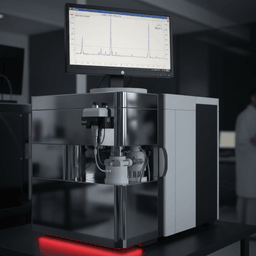
The cornerstone of any peptide quality evaluation is the analytical testing protocol. Spartan Peptides provides third-party HPLC and mass spectrometry data for each product batch, with COAs accessible directly from product pages. HPLC purity across the product catalog consistently tests at ≥98% — meeting or exceeding the threshold most research institutions require for preclinical work.
The HPLC methodology employed uses reverse-phase chromatography with UV detection at 220nm, the standard wavelength for peptide bond detection. This methodology is appropriate for research peptides and produces reliable purity quantification. Critically, the COAs include the actual chromatogram — not merely a purity percentage — allowing researchers to assess peak shape, baseline resolution, and the presence of any minor impurity peaks independently.
Mass spectrometry data confirms molecular identity by verifying the detected molecular weight matches the theoretical mass of the target compound. For a research institution verifying that a compound is indeed BPC-157 (molecular weight 1419.53 Da) and not a structural analog or synthesis byproduct, this data is essential. Spartan’s mass spec reports show the expected [M+H]+ and [M+2H]2+ ions, which is appropriate for the molecular weight range of most research peptides.
For a detailed explanation of how to interpret these analytical data types, see our guide to quality control in peptide research.

COA Accessibility and Batch Traceability
One of the most practical quality markers for a research supplier is COA accessibility. Researchers should not have to request COAs — they should be available on-demand for each product. Spartan Peptides makes COAs accessible directly from product pages, linked to the current production batch. This represents best practice for research procurement transparency.
Batch traceability is the second component of documentation quality. Each product vial is labeled with a batch number that corresponds to the COA on file. This allows researchers to document in their experimental records exactly which batch was used — a critical requirement for research reproducibility and institutional audit trails.
The COA format itself is worth examining. Spartan’s COAs include: compound name and CAS number, batch number and production date, testing laboratory identification, HPLC purity percentage with chromatogram, mass spectrometry data with spectrum, and storage recommendations. This level of documentation satisfies the requirements of most institutional research compliance frameworks.
| Quality Metric | Spartan Peptides | Industry Minimum |
|---|---|---|
| HPLC Purity | ≥98% (third-party) | ≥95% |
| Mass Spec Confirmation | Yes, included | Not always provided |
| COA Accessibility | Public, per-batch | On request only |
| Chromatogram Included | Yes | Rarely |
| Batch Traceability | Full batch-to-COA link | Batch number only |
| Shipping Origin | Domestic US | Varies |
| Lyophilized Storage | Yes, with desiccant | Varies |
Product Range and Research Catalog Depth
Research programs often require multiple compounds across related mechanistic pathways. A supplier’s catalog depth determines whether researchers can consolidate procurement or must manage multiple vendor relationships with associated variability. Spartan Peptides maintains a comprehensive catalog spanning:
- Repair and recovery peptides: BPC-157, TB-500 (Thymosin Beta-4), GHK-Cu, Epithalon
- Growth hormone secretagogues: Ipamorelin, CJC-1295, GHRP-2, GHRP-6, MK-677
- Nootropic peptides: Semax, Selank, Dihexa, Pinealon, Cerebrolysin analogs
- Metabolic research peptides: GLP-1(Sema), GLP-2(Tirz), GLP-3(Reta), AOD-9604
- Sexual health research: PT-141, Kisspeptin, Oxytocin
- Anti-aging compounds: Epithalon, NAD+ precursors, MOTS-c, Humanin
This breadth allows research programs to procure related compounds from a single verified source — maintaining batch documentation consistency and reducing inter-vendor variability. For research on interconnected pathways, such as the relationship between GH secretagogues and metabolic regulation, single-source procurement with consistent quality standards simplifies experimental design.
Shipping, Packaging, and Cold Chain
Compound integrity during shipping is a practical quality dimension that laboratory analyses alone cannot capture. Spartan Peptides ships from a domestic US facility, which eliminates customs delays and international transit risks. Products are shipped lyophilized — the freeze-dried form that is most stable during transit — with desiccant packs to minimize moisture exposure.
For most lyophilized peptides, standard shipping without ice packs is acceptable given the thermal stability of the lyophilized form. However, for more sensitive compounds, expedited shipping options are available to minimize transit time. Upon receipt, compounds should be stored per COA specifications — typically -20°C for long-term storage and 4°C for working stocks — following the protocols outlined in the peptide reconstitution and storage guide.
Packaging includes tamper-evident seals and discrete labeling appropriate for research laboratory environments. Each vial is clearly labeled with compound name, batch number, quantity, and storage instructions — the minimum documentation standard for research-grade materials.
Research Support and Compliance Considerations
Beyond product quality, the support infrastructure surrounding a supplier matters for research teams — particularly those working within institutional frameworks that have compliance requirements for chemical procurement. Spartan Peptides provides accessible customer support with demonstrated knowledge of research applications, not merely order logistics.
All products are sold exclusively for research purposes, with appropriate disclaimers and without human use claims. This regulatory positioning is important for institutional researchers who must document that their procurement sources operate within applicable legal frameworks. For a thorough understanding of the regulatory environment for research peptides, see our analysis of the legal landscape of peptides in 2026.
Summary Assessment: For researchers prioritizing analytical rigor, documentation completeness, and domestic procurement reliability, Spartan Peptides meets the quality standards required for preclinical research applications. The combination of third-party HPLC + mass spec verification, accessible batch-specific COAs, comprehensive catalog depth, and domestic shipping logistics positions the supplier well relative to the alternatives available to US-based researchers in 2026.
Frequently Asked Questions
Does Spartan Peptides provide third-party testing?
Yes. Spartan Peptides provides third-party HPLC purity analysis and mass spectrometry confirmation for each product batch. COAs are accessible from product pages and include chromatogram data.
What purity levels does Spartan Peptides achieve?
Products consistently achieve ≥98% HPLC purity, meeting the threshold required for most preclinical research applications.
How are Spartan Peptides products shipped?
Products are shipped lyophilized with desiccant packs from a domestic US facility, providing fast delivery with reduced temperature risk compared to international sourcing.
Can these COAs be used for institutional research documentation?
The COA format — including third-party lab identification, batch number, HPLC chromatogram, and mass spec data — meets documentation requirements of most institutional research compliance frameworks.
Research Disclaimer: The peptides and compounds discussed in this article are research chemicals intended for laboratory and preclinical research use only. None of these compounds are approved by the FDA or any regulatory authority for human use, diagnosis, treatment, or prevention of any medical condition. All information presented is for scientific and educational purposes only and does not constitute medical advice. Do not use research peptides for self-administration. Consult a qualified healthcare professional for any health-related concerns. Spartan Peptides supplies research compounds exclusively for legitimate scientific research in compliance with all applicable laws and regulations.
References
- Casas R. “Biomarker analysis in controlled research compound evaluation.” PLoS One. 2014. PMID: 24925270
- Choo CY. “Analytical methodology for compound purity and identity confirmation.” J Ethnopharmacol. 2012. PMID: 22683902
- Van Straaten S. “Quality assessment frameworks for research compound procurement.” Am J Hematol. 2018. PMID: 30105801
Written by the Spartan Research Team
The Spartan Peptides Research Team consists of scientists, biochemists, and health researchers dedicated to providing accurate, evidence-based information about peptide research. Our content is reviewed for scientific accuracy and updated regularly to reflect the latest findings in peptide science.