
What Does NAD+ Do? A Complete Guide to Cellular Energy and Metabolism

Written bySpartan Research Team
What Does NAD+ Do? Understanding the Molecule That Powers Your Cells
Nicotinamide adenine dinucleotide — better known as NAD+ — is one of the most consequential molecules in all of biology. Present in every living cell, it participates in hundreds of enzymatic reactions, orchestrates energy metabolism, governs DNA maintenance, and acts as a master regulator of cellular stress responses. Yet despite its extraordinary importance, NAD+ remains largely unknown outside research laboratories.
This guide breaks down exactly what NAD+ does, how it does it, and why researchers have grown so intensely interested in this ancient coenzyme. We’ll start with the accessible picture, then go deep on the mechanisms.
The Simple Answer: NAD+ Is Cellular Currency
Think of NAD+ the way you think of money. Money doesn’t do the work itself — it enables the people who do the work. NAD+ functions similarly inside cells: it facilitates the transfer of electrons from one molecule to another, unlocking the energy stored in food and channeling it into forms the cell can spend.
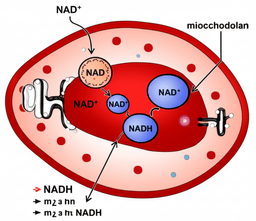
When NAD+ accepts two electrons and a proton, it becomes NADH. When NADH donates those electrons onward (particularly into the mitochondrial electron transport chain), it reverts to NAD+. This oxidized/reduced cycling — NAD⁺ ↔ NADH — is the heartbeat of cellular metabolism.
But NAD+ is far more than a simple electron shuttle. It is also consumed as a substrate by signaling enzymes that have nothing to do with energy production — sirtuins, PARPs, and CD38 — making NAD+ availability a rate-limiting factor in cellular repair, longevity signaling, and inflammatory regulation.

NAD+ and ATP Production: The Mitochondrial Connection
The primary job most people associate with NAD+ is fueling ATP production — the cell’s rechargeable energy currency. Here’s how the chain works:
Glycolysis
In the cytoplasm, glucose is broken down into pyruvate. This process generates a small amount of ATP directly but also reduces NAD+ to NADH. Without NAD+ being regenerated (either by the mitochondria or, under anaerobic conditions, by lactate fermentation), glycolysis would grind to a halt. NAD+ availability is therefore a throttle on how fast cells can process glucose.
The TCA Cycle (Krebs Cycle)
Pyruvate (from glucose) and acetyl-CoA (from fatty acids and amino acids) enter the tricarboxylic acid cycle in the mitochondrial matrix. Each turn of this cycle generates three molecules of NADH and one FADH₂. These electron carriers represent the chemical potential that will ultimately drive ATP synthesis.
The Electron Transport Chain (ETC)
NADH delivers its electrons to Complex I of the mitochondrial inner membrane — the first and largest of the five ETC complexes. From there, electrons cascade through Complexes II, III, and IV, eventually reducing molecular oxygen to water. As they do, each complex pumps protons from the mitochondrial matrix into the intermembrane space, building an electrochemical gradient.
Complex V (ATP synthase) harnesses this proton gradient, allowing protons to flow back into the matrix through a rotating molecular turbine. The mechanical rotation catalyzes the phosphorylation of ADP to ATP. Each NADH molecule that enters Complex I ultimately enables the synthesis of approximately 2.5 ATP molecules through this chemiosmotic process.
In a highly active cell, this system turns over enormous quantities of NAD+. The human body recycles its entire NAD+ pool many times per day during periods of high metabolic demand.

Beyond Energy: NAD+ as a Signaling Substrate
The electron-carrier role of NAD+ is well-established, but the past two decades of research have revealed an equally important second life for this molecule. Several classes of enzymes consume NAD+ — cleaving it apart to release nicotinamide — in order to perform regulatory functions. Because these enzymes degrade NAD+, their activity directly competes with the metabolic demand for NAD+ in energy production.
Sirtuins: The Longevity Enzymes
Sirtuins are a family of seven NAD+-dependent deacylases (SIRT1–SIRT7) that remove acetyl and other acyl groups from lysine residues on target proteins. This deacylation modifies the activity, stability, and localization of hundreds of proteins throughout the cell — from histones and transcription factors to metabolic enzymes and DNA repair proteins.
The reaction stoichiometry matters enormously: for every deacylation event, one molecule of NAD+ is consumed and nicotinamide is released as a byproduct. This means sirtuin activity is exquisitely sensitive to NAD+ levels. When NAD+ is abundant, sirtuins are active. When NAD+ is depleted — as occurs with aging, metabolic stress, or DNA damage — sirtuin activity falls.
SIRT1, the most studied sirtuin, deacetylates PGC-1α (the master regulator of mitochondrial biogenesis), p53 (the tumor suppressor), NF-κB (a central inflammatory transcription factor), and FOXO transcription factors (regulators of oxidative stress responses). The downstream consequences of SIRT1 activity touch virtually every aspect of cellular physiology.
SIRT3, SIRT4, and SIRT5 are localized to the mitochondrial matrix, where they regulate the acetylation state — and therefore activity — of metabolic enzymes and antioxidant proteins. SIRT3 in particular activates superoxide dismutase 2 (SOD2), the primary mitochondrial antioxidant enzyme, by deacetylating it at lysine 68.
SIRT6 maintains genomic stability by participating in DNA double-strand break repair and by keeping telomeric chromatin in a transcriptionally silent state. SIRT7 is enriched in the nucleolus and regulates ribosomal RNA transcription and protein quality control.
The mechanistic link between NAD+, sirtuins, and longevity pathways has been explored extensively in model organisms.
PARPs: DNA Repair Enzymes That Consume NAD+
Poly(ADP-ribose) polymerases — the PARP enzyme family — are critical sensors and responders to DNA damage. When a strand break or base lesion is detected, PARP1 and PARP2 bind to the damaged site, become activated, and begin synthesizing poly(ADP-ribose) (PAR) chains by consuming NAD+. These PAR chains serve as scaffolds that recruit DNA repair machinery and chromatin remodeling factors.
The problem is scale: PARP1 can consume enormous quantities of NAD+ during periods of intense DNA damage. Under severe genotoxic stress, runaway PARP activation can deplete cellular NAD+ to a fraction of basal levels within minutes. This NAD+ depletion then impairs sirtuin activity, mitochondrial function, and ultimately cell viability.
Conversely, when NAD+ is abundant, PARPs can respond rapidly to DNA damage without depleting the overall NAD+ pool to a degree that compromises other cellular functions. The balance between DNA damage load, PARP activity, and NAD+ availability is therefore a critical determinant of genomic stability over time.
CD38: The NAD+ Consumer That Increases With Age
CD38 is a multifunctional enzyme expressed on the surface and in the interior of many cell types. It catalyzes two reactions: the cyclization of NAD+ to produce cyclic ADP-ribose (cADPR), a calcium-mobilizing second messenger; and the hydrolysis of NAD+ to ADP-ribose and nicotinamide.
CD38 has an exceptionally low catalytic efficiency relative to the NAD+ it consumes — it destroys far more NAD+ than it needs to in order to produce its signaling products. Because CD38 expression increases substantially with age, many researchers now view CD38 upregulation as a major driver of the age-related decline in cellular NAD+ levels.
Genetic or pharmacological inhibition of CD38 in mice substantially preserves NAD+ levels during aging, suggesting that CD38 activity is not simply a passive consumer of NAD+ but an active regulator of systemic NAD+ availability. This has made CD38 an attractive research target for interventions aimed at maintaining NAD+ levels.
NAD+ in DNA Repair Beyond PARPs
NAD+ participates in DNA maintenance through pathways beyond PARP activation. DNA ligases — enzymes that seal nicks in the phosphodiester backbone after repair synthesis — require NAD+ as a cofactor in bacteria (and in some contexts in eukaryotes). More broadly, the NAD+-dependent sirtuin SIRT6 actively participates in base excision repair and homologous recombination, physically interacting with PARP1 and recruiting RAD51 and other repair factors.
The implication is that NAD+ is not merely a fuel for repair enzymes — it is woven into the structural logic of repair itself. When cellular NAD+ is low, multiple independent repair pathways are simultaneously impaired.
NAD+ Biosynthesis: Where Does It Come From?
Cells obtain NAD+ through several interconnected biosynthetic routes:
The de novo pathway begins with tryptophan (an essential amino acid from diet) and proceeds through several enzymatic steps via the kynurenine pathway to ultimately generate nicotinic acid mononucleotide, which feeds into NAD+ synthesis. This pathway is metabolically costly and relatively slow.
The Preiss-Handler pathway uses dietary nicotinic acid (niacin, vitamin B3) as the starting substrate and generates NAD+ through three enzymatic steps.
The salvage pathway is the dominant route in most mammalian tissues. It recycles nicotinamide — the byproduct of NAD+-consuming reactions — back to NAD+ in a two-step process: first, nicotinamide phosphoribosyltransferase (NAMPT) converts nicotinamide to nicotinamide mononucleotide (NMN); then, NMN adenylyltransferases (NMNATs) convert NMN to NAD+. NAMPT is the rate-limiting enzyme in this pathway and is widely studied as a target for modulating NAD+ levels.
NAD+ precursors such as NMN and nicotinamide riboside (NR) are substrates for the salvage pathway and have been extensively investigated for their ability to raise cellular NAD+ levels in research models.
Age-Related Changes in NAD+ Biology
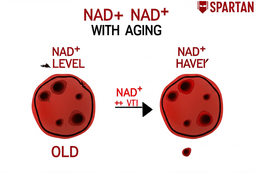
One of the most reproducible findings in aging biology is that tissue NAD+ levels decline substantially with age — in some tissues by 50% or more between young adulthood and midlife. This decline appears to result from multiple converging factors: increased CD38 activity, increased PARP activation secondary to accumulated DNA damage, reduced NAMPT expression in some tissues, and increased demand for NAD+ from a cellular environment under chronic stress.
The functional consequences of this decline are significant. With less NAD+ available, sirtuin activity falls, mitochondrial function deteriorates, DNA repair becomes less efficient, and inflammatory signaling increases. These interdependencies suggest that NAD+ depletion is not simply a symptom of aging but a mechanistic contributor to the aging phenotype.
Research in model organisms supports this view: supplementation with NAD+ precursors in aged mice restores NAD+ to youthful levels and reverses several age-associated phenotypes, including mitochondrial dysfunction, muscle weakness, and neuronal degeneration. Whether these effects translate to similar magnitudes in humans remains an active area of investigation.
NAD+ in Research Contexts
Given the breadth of NAD+’s biological roles, it has become a central molecule of interest across multiple research fields — from metabolic disease and neurodegeneration to cancer biology and longevity research. Researchers working in cell culture, tissue preparations, and animal models have employed various approaches to manipulate NAD+ levels, including precursor supplementation, NAMPT activators, CD38 inhibitors, and direct NAD+ administration.
Spartan Peptides provides NAD+ 750mg for use in licensed research settings. Our compound undergoes rigorous quality testing to support reproducible experimental outcomes.
Frequently Asked Questions
What is NAD+ and why is it important?
NAD+ (nicotinamide adenine dinucleotide) is a coenzyme found in every living cell. It is essential for energy metabolism — facilitating the transfer of electrons in the process that generates ATP — and serves as a substrate for signaling enzymes including sirtuins, PARPs, and CD38 that regulate DNA repair, gene expression, and inflammatory responses. Without adequate NAD+, cellular function deteriorates across multiple systems simultaneously.
How does NAD+ produce energy?
NAD+ accepts electrons during the breakdown of glucose, fatty acids, and amino acids — becoming NADH. NADH then donates those electrons to Complex I of the mitochondrial electron transport chain. As electrons flow through the chain to ultimately reduce oxygen to water, protons are pumped across the mitochondrial membrane, building a gradient that drives ATP synthase to produce ATP. Each NADH molecule enables synthesis of approximately 2.5 ATP molecules through this process.
What is the relationship between NAD+ and sirtuins?
Sirtuins are enzymes that regulate gene expression, DNA repair, metabolism, and stress responses by removing acetyl groups from proteins. For every deacylation reaction they catalyze, they consume one molecule of NAD+. This means sirtuin activity is directly dependent on NAD+ availability — when NAD+ levels are high, sirtuins are more active; when NAD+ is depleted, sirtuin activity decreases, affecting downstream regulatory pathways.
What role does NAD+ play in DNA repair?
NAD+ is the primary substrate for PARP enzymes, which detect DNA damage and synthesize poly(ADP-ribose) chains that recruit repair machinery. Additionally, the sirtuin SIRT6 uses NAD+ to maintain genomic stability through both base excision repair and double-strand break repair pathways. When cellular NAD+ is low, both of these repair systems are impaired, potentially allowing damage to accumulate.
Does NAD+ decline with age?
Yes. Multiple studies across multiple species have documented substantial declines in tissue NAD+ levels with age — in some tissues by 50% or more between young adulthood and midlife. Contributing factors include increased CD38 enzyme activity, chronic PARP activation due to accumulated DNA damage, and reduced activity of NAMPT, the rate-limiting enzyme in the NAD+ salvage pathway.
What is CD38 and how does it affect NAD+ levels?
CD38 is an enzyme that degrades NAD+ to produce cyclic ADP-ribose (a calcium signaling molecule) and ADP-ribose. It has a low catalytic efficiency, consuming substantial NAD+ relative to its signaling output. Critically, CD38 expression increases significantly with age, and genetic deletion of CD38 in mice substantially preserves NAD+ levels during aging, implicating CD38 upregulation as a key driver of age-related NAD+ decline.
Research Disclaimer: The information presented in this article is intended for educational and research purposes only. NAD+ compounds discussed on this page are intended for use in licensed laboratory and research settings by qualified professionals. They are not approved for human consumption, are not dietary supplements, and are not intended to diagnose, treat, cure, or prevent any disease or medical condition. All research involving these compounds must be conducted in compliance with applicable laws, regulations, and institutional guidelines. Spartan Peptides makes no claims regarding the safety or efficacy of these compounds in humans.
⚠️ Research Use Only — Not for Human Consumption
The peptides discussed in this article are intended for laboratory and research purposes only. They are not intended for human consumption. All information presented is based on published preclinical research and is provided for educational purposes only.
Written by the Spartan Research Team
The Spartan Peptides Research Team consists of scientists, biochemists, and health researchers dedicated to providing accurate, evidence-based information about peptide research. Our content is reviewed for scientific accuracy and updated regularly to reflect the latest findings in peptide science.