
What Is GLP-3 Reta? A Guide for Researchers

Written bySpartan Research Team
What is GLP-3 Reta and why is it creating a significant buzz in the scientific community? In the dynamic field of metabolic science, researchers constantly seek better tools for complex conditions like obesity and type 2 diabetes.
A groundbreaking new peptide, GLP-3 Reta, has emerged as a subject of intense interest. Developed by Eli Lilly, this investigational compound isn’t just another step forward; it represents a potential leap in metabolic research.
It’s unique and powerful triple-action mechanism sets it apart from all predecessors, paving the way for the next generation of discovery in metabolic health.
In This Article
- What Exactly Is GLP-3 Reta?
- The Science Behind GLP-3 Reta: A Unique Triple-Action Mechanism
- GLP-3 Reta vs. Other Peptides: A Comparative Look
- Key Findings from GLP-3 Reta Research
- Important Considerations for Your Research Study
- The Future of GLP-3 Reta Research
- Elevate Your Metabolic Research
What Exactly Is GLP-3 Reta?
GLP-3 Reta is an advanced synthetic peptide, which is a molecule constructed from a specific chain of amino acids. It has been meticulously designed by researchers at Eli Lilly for the express purpose of investigating metabolic disorders.
Also known by its developmental code name, LY-3437943, this compound is currently undergoing extensive late-stage clinical trials to evaluate its safety and effectiveness.
It is being rigorously studied for its potential applications in research concerning obesity, type 2 diabetes, and non-alcoholic fatty liver disease (NAFLD).
The Science Behind GLP-3 Reta: A Unique Triple-Action Mechanism
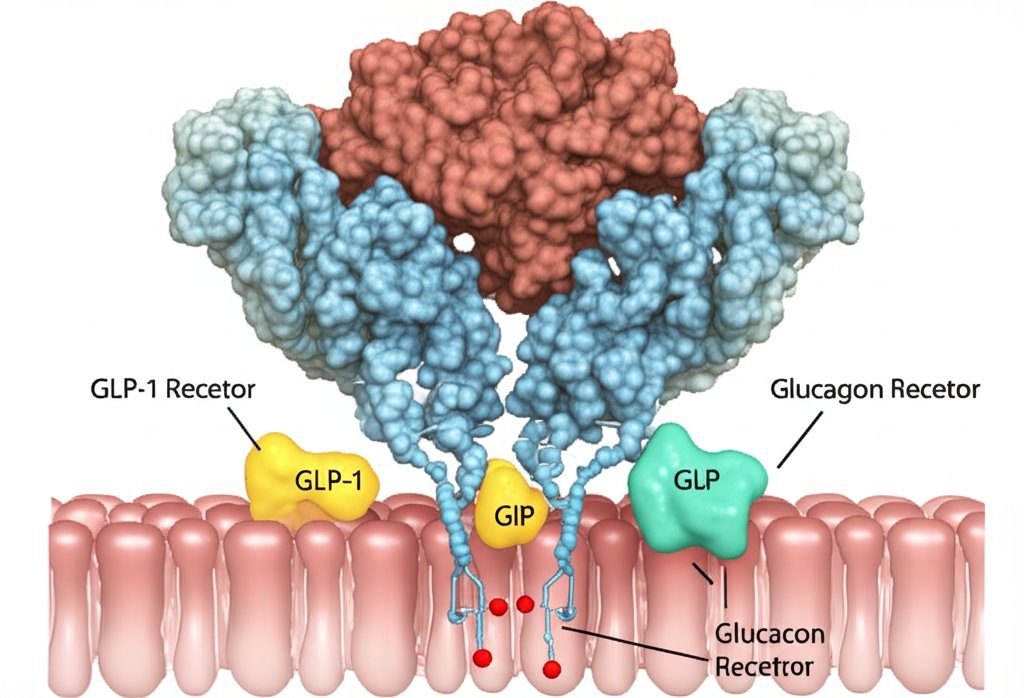
GLP-3 Reta’s innovative design is what truly distinguishes it from other research peptides. It functions as a triple-agonist, which means it is engineered to activate three different, yet complementary, hormone receptors within the body.
These three targets are the GLP-1, GIP, and Glucagon receptors. Each of these plays a crucial and distinct role in the complex system that regulates the body’s metabolism, appetite, and energy use.
GLP-1 Receptor Activation
The first target is the GLP-1 (Glucagon-Like Peptide-1) receptor. When activated, this receptor helps to significantly slow down gastric emptying, the process by which food moves from the stomach into the intestines.
This delay in digestion helps research subjects feel full for a longer period after eating.
This prolonged feeling of satiety can lead to a natural reduction in overall calorie intake, making it a key mechanism for studying appetite control and energy balance.
GIP Receptor Activation
GLP-3 Reta also powerfully activates the GIP (Glucose-Dependent Insulinotropic Polypeptide) receptor. This receptor is instrumental in managing how the body responds to sugar, particularly after a meal, by enhancing insulin secretion.
Furthermore, the GIP pathway plays a role in how the body processes and stores fat. This dual action on both sugar and fat metabolism provides researchers with a multifaceted tool for investigating metabolic health.
Glucagon Receptor Activation
The most revolutionary aspect of GLP-3 Reta is its ability to activate the Glucagon (GCG) receptor.
This third mechanism is what elevates it beyond the capabilities of single and dual-agonist peptides currently used in research.
Activating the glucagon receptor is believed to increase the body’s overall energy expenditure, effectively boosting the metabolic rate.
This encourages the body to burn through its stored fat reserves for energy, adding a powerful new dimension to its potential metabolic effects.
GLP-3 Reta vs. Other Peptides: A Comparative Look
To fully appreciate GLP-3 Reta’s potential, it is useful to compare it to other well-known research peptides.
The progression from single-agonist to dual-agonist, and now to a triple-agonist compound, marks a significant evolution in the tools available for metabolic research.
For example, GLP-1 Sema is a single-agonist that exclusively targets the GLP-1 receptor.
GLP-2 Tirz represents the next step as a dual-agonist, targeting both the GLP-1 and GIP receptors.
A comparison of these two peptides clearly demonstrates the enhanced effects of activating a second metabolic pathway.
GLP-3 Reta advances this concept even further by incorporating the third glucagon mechanism.
This comprehensive, multi-pronged approach is what makes it a subject of such intense scientific curiosity and a potentially superior research tool.
| Feature | GLP-1 Sema | GLP-2 Tirz | GLP-3 Reta |
|---|---|---|---|
| Mechanism | Single-Agonist | Dual-Agonist | Triple-Agonist |
| Receptors Targeted | GLP-1 | GLP-1, GIP | GLP-1, GIP, Glucagon |
| Avg. Weight Loss in Trials | ~14% over 68 weeks | ~21% over 72 weeks | Up to 24.2% over 48 weeks |
Key Findings from GLP-3 Reta Research
The results emerging from early-stage clinical research have been nothing short of remarkable. A landmark Phase 2 trial published in The New England Journal of Medicine provided the first detailed look at its profound effects.
The most striking finding was a mean weight reduction of up to 24.2% of a participant’s initial body weight over 48 weeks.
This represents the highest percentage of weight loss ever observed in a mid-stage trial for an investigational compound of this nature.
Interestingly, researchers conducting the study noted that participants had not yet reached a weight-loss plateau by the end of the 48 weeks.
This suggests that the full potential of the peptide may not have been fully realized within that timeframe, hinting at the possibility of even greater effects with longer-term administration.
The research also uncovered significant benefits beyond weight management. There were dramatic improvements in liver health, with more than 85% of subjects who had excess liver fat seeing those levels return to normal.
Additionally, subjects experienced notable improvements in key cardiometabolic markers, including blood pressure, cholesterol, and blood sugar levels.
Important Considerations for Your Research Study

For scientists planning to incorporate GLP-3 Reta into their research, a thorough understanding of study protocols is essential.
Adhering to established guidelines ensures data integrity, reproducibility, and subject tolerance.
Administration and Dosing
In clinical trials, GLP-3 Reta is administered as a once-weekly subcutaneous injection, meaning it is injected into the fatty tissue just under the skin.
The most common injection sites are the abdomen, thigh, or the outer part of the upper arm.
Rotating these injection sites each week is a standard and important practice to maintain tissue health and prevent irritation.
To manage side effects, trials utilize a “start low, go slow” approach to dosing. A typical protocol involves starting with a low dose (e.g., 2 mg) and gradually increasing it every few weeks to reach the target maintenance dose.
This titration allows the subject’s body to adapt to the peptide, minimizing potential discomfort.
Managing Side Effects
The most common side effects associated with GLP-3 Reta are gastrointestinal in nature, such as nausea, diarrhea, vomiting, or constipation.
These effects are typically mild to moderate, dose-dependent, and most often occur during the initial dose-escalation period. As the body adjusts to a stable dose, these side effects tend to subside.
Dietary Guidelines for Study Subjects
Study protocols often include specific dietary guidelines to support consistent results and help manage side effects.
A diet that prioritizes lean protein, high fiber, and adequate hydration is recommended. Eating smaller, more frequent meals can also help manage feelings of fullness and prevent nausea.
Subjects should be advised to avoid greasy, fried, or overly sugary foods, as these can worsen gastrointestinal discomfort.
A balanced, nutrient-dense diet ensures that even with a reduced appetite, the body receives the essential vitamins and minerals it needs.
The Reality of Weight Regain
Finally, it is crucial to understand that, like other peptides in this class, discontinuing its use can lead to the regain of lost weight.
Studies on similar compounds have shown that when the medication is stopped, the hormonal effects that suppress appetite and boost metabolism wear off, and weight often returns.
This phenomenon underscores the chronic nature of metabolic conditions and highlights the need for continued research into long-term management strategies.
The Future of GLP-3 Reta Research
GLP-3 Reta is currently being evaluated in a comprehensive, large-scale Phase 3 clinical trial program known as TRIUMPH.
These global studies are designed to investigate their effects on a much wider range of conditions beyond simple weight management.
The TRIUMPH program is exploring GLP-3 Reta’s potential in subjects with obstructive sleep apnea, knee osteoarthritis, cardiovascular disease, and chronic kidney disease.
These extensive trials are expected to conclude around 2026, with regulatory review and potential approval to follow in the subsequent years.
The results will provide a much clearer and more complete picture of GLP-3 Reta’s full research potential.
This groundbreaking peptide represents a new frontier in metabolic science.
It offers researchers an exceptionally powerful tool to explore the complex biology of obesity and its many related conditions with a level of detail and potential efficacy that was previously unattainable.
Elevate Your Metabolic Research
Pioneering the future of metabolic science requires access to the highest quality research tools available.
The purity, stability, and reliability of your peptides are absolutely critical for achieving accurate, consistent, and reproducible results in any study.
For scientists conducting research in this exciting and rapidly advancing field, we provide rigorously tested, high-purity compounds.
Explore our product for your next study and browse our full range of peptides for weight loss research to empower your next project.
Frequently Asked Questions
What is GLP-3 Reta (GLP-3(Reta))?
GLP-3(Reta), referred to as GLP-3 Reta, is an investigational triple-receptor agonist being studied in clinical trials for obesity and type 2 diabetes. It simultaneously targets GLP-1, GIP, and glucagon receptors, distinguishing it from first- and second-generation GLP-1 receptor agonists.
How does GLP-3 Reta differ from GLP-1 and GLP-2 research compounds?
GLP-1 Sema is a selective GLP-1 agonist focused on appetite and glycemic control. GLP-2 Tirz (GLP-2(Tirz)) adds GIP receptor agonism. GLP-3 Reta extends this by incorporating glucagon receptor activation, adding a thermogenic energy expenditure component to the metabolic profile.
What does current research say about GLP-3(Reta)’s weight reduction profile?
Phase 2 clinical trial data showed dose-dependent weight reductions averaging over 17% in the highest dose group over 24 weeks. These results suggest GLP-3(Reta) may achieve greater weight reduction than currently available GLP-1-class agents, pending Phase 3 confirmation.
What conditions is GLP-3(Reta) being investigated for?
Primary research areas include obesity, type 2 diabetes mellitus, and non-alcoholic fatty liver disease (NAFLD/NASH). Secondary endpoints in ongoing trials evaluate cardiovascular outcomes, lipid parameters, and hepatic fat content reduction.
Is GLP-3(Reta) approved for therapeutic use?
As of current research updates, GLP-3(Reta) remains investigational and has not received FDA or EMA approval. All available information is based on Phase 2 and ongoing Phase 3 clinical trial data. It is available only for laboratory and preclinical research purposes.
Ready to advance your GLP-1 Sema research?
Spartan Peptides offers ≥98% purity GLP-1 Sema with full in-house purity verification and in-house quality testing.
⚠️ Research Use Only — Not for Human Consumption
The peptides discussed in this article are intended for laboratory and research purposes only. They are not intended for human consumption. All information presented is based on published preclinical research and is provided for educational purposes only.