
Best Place to Buy Research Peptides Online USA: 2026 Sourcing Guide

Written bySpartan Research Team
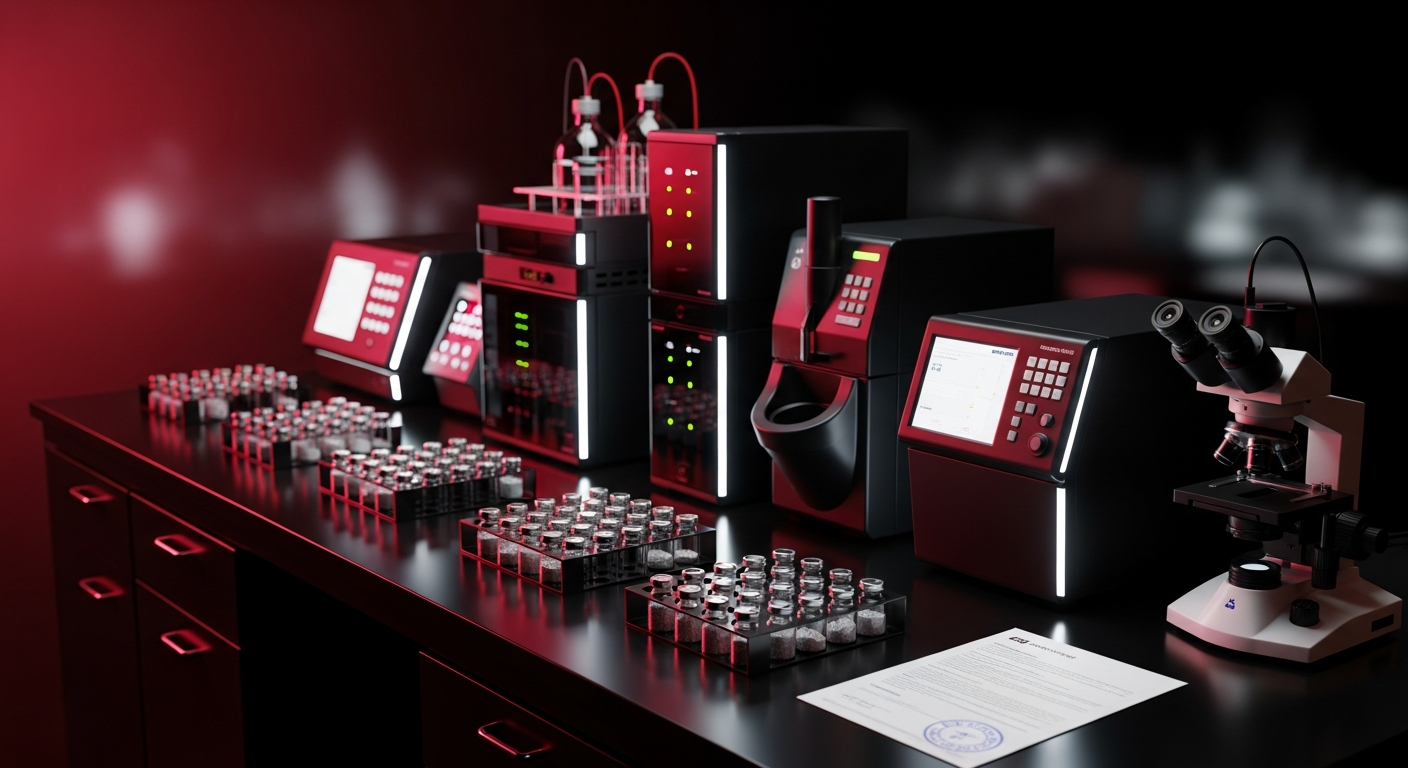

If you already know what you want — BPC-157, GHK-Cu, TB-500, NAD+, Ipamorelin — this guide is not about convincing you to research peptides. You are past that. The question you are asking is where to source reliably, how to tell a credible domestic supplier from the sea of overseas vendors flooding the low-price results, and what the research community treats as the non-negotiable quality benchmarks. In a market where quality variation has widened significantly in 2025-2026, getting this evaluation right is the difference between compounds that hold their documented preclinical profiles and vials that introduce uncontrolled variables into every experiment you run with them.
🔮 Key Research Findings
- Peptide stability is directly tied to formulation and storage method — lyophilized powders consistently outperform pre-dissolved solutions in analytical stability assessments, a finding with direct implications for research compound sourcing (PMID: 41389519).
- HPLC purity at 98% or greater is the research community’s functional definition of compound quality — below that threshold, the target peptide represents less than 98% of what is in the vial, introducing uncontrolled variables into every downstream research application.
- BPC-157 (Stable Gastric Pentadecapeptide) maintains its documented preclinical wound-healing profile as a function of compound stability and manufacturing integrity — sourcing from verified domestic suppliers is directly correlated with reproducible research outcomes (PMID: 34267654).
- In a market where dozens of new online suppliers have launched since 2024, the presence of batch-specific analytical data is the single variable most predictive of compound quality — most low-price overseas vendors publish none.
The 2026 Peptide Sourcing Landscape: More Suppliers, More Variation
The research peptide market has changed faster in the past two years than in the five before them. New suppliers have entered at a rate that exceeds the market’s ability to absorb them credibly — most backed by overseas manufacturing arrangements, minimal quality documentation, and pricing strategies designed to capture searches rather than build research relationships. In a market where overseas suppliers dominate low-price results, the research community has consistently identified the same variables that separate reliable domestic sources from the noise.
Optimization-focused researchers who have been in this space long enough have a shared vocabulary for the problem: bunk product from undisclosed overseas facilities, underdosed vials where purity was never verified, no batch-specific analytical data to evaluate, and customer service teams with no compound literacy whatsoever. The seven criteria below are the framework the research community uses to filter for credible suppliers before the first order is placed.
7 Criteria Every Researcher Should Apply Before Ordering
1. HPLC Purity Verification at 98% or Greater
This is the non-negotiable. HPLC (high-performance liquid chromatography) purity testing quantifies exactly what percentage of a given compound is the target peptide. The 98% threshold is what the research community has established as the minimum for compounds used in controlled preclinical research. When a supplier cannot produce batch-specific HPLC data — or publishes a percentage without disclosing the methodology — you have no basis for evaluating what you are actually receiving. Purity claims in marketing copy without supporting analytical data are not quality assurance. They are packaging.
2. USA Manufacturing
Where a compound is manufactured determines much of its contamination and adulteration risk profile. Domestic manufacturing facilities operate under oversight that most overseas alternatives cannot match — and when a supplier will not disclose where their compounds are made, you are being asked to accept an unquantified risk. Optimization-focused researchers whose results depend on compound identity treat domestic manufacturing as a baseline, not a premium. Overseas sourcing that lacks transparent facility disclosure introduces variables that no downstream research protocol can control for.
3. Lyophilized Form
Lyophilization (freeze-drying) is the preservation method that the research community has validated for peptide compound stability. Lyophilized powders are significantly more resistant to degradation from temperature variation, have longer shelf lives under standard storage conditions, and arrive at the research environment in a form that reflects the compound’s documented preclinical profile. Suppliers offering peptides only as pre-reconstituted solutions are delivering a product whose stability clock is already running — and whose purity at the time of research use is unknown.
4. Cold-Chain Shipping
Even lyophilized compounds benefit from cold-chain transit management. The research community’s expectation is insulated packaging with cold packs or equivalent temperature control from supplier to destination. Suppliers who ship research peptides without any temperature management are accepting a compound integrity risk that passes directly to the researcher. In warmer climates — or during summer months in any US region — this is not a theoretical concern. It is a routine sourcing risk for researchers who do not verify supplier shipping standards.
5. Peptide-Specific Expertise
A supplier who also sells vitamins, creatine, and general wellness products alongside research peptides is not a peptide specialist — they are a general catalog vendor who has added peptides as a category. The research community has consistently found that compound-specific expertise — an understanding of stability profiles, reconstitution requirements, storage sensitivities, and the preclinical literature — correlates with sourcing quality in ways that are not always visible in a product listing but become apparent the moment you try to ask a technical question.
6. Responsiveness to Research Inquiries
Optimization-focused researchers have compound-specific questions. How should this be stored at elevated ambient temperatures? What reconstitution protocols are consistent with the published preclinical literature for this peptide? What is the manufacturing batch date? A supplier whose team can engage meaningfully with these questions is one whose business is built around researchers rather than casual buyers. Evasive, generic, or uninformed responses to technical inquiries before a purchase are a reliable signal of what you will receive after one.
7. Consistent Compound Availability
Researchers mid-protocol do not have the flexibility to switch suppliers when a compound goes out of stock unexpectedly. Consistent availability reflects stable manufacturing relationships and reliable inventory management. Vendors with erratic stock — frequently showing BPC-157, GHK-Cu, or TB-500 as unavailable for extended stretches — are likely operating on spot-buy sourcing models that introduce batch-to-batch quality inconsistency alongside availability risk.
Red Flags the Research Community Has Learned to Recognize
Compound-literate researchers have developed a shared recognition of the patterns that reliably precede a bad sourcing experience. These are not edge cases — they are common in a market that has expanded faster than quality standards have followed.
No batch-specific purity data. The most important red flag in the market. If a supplier lists compounds without publishing HPLC purity percentages tied to specific batches, there is no quality basis for evaluation. The compound may be 95% pure, 80% pure, or contain adulterants — you have no way to know. This is not an oversight in credible operations; it is standard practice. Its absence is diagnostic.
Pricing significantly below market. Research-grade peptide production — USA manufacturing, HPLC testing, lyophilization, cold-chain logistics — has real cost floors. Suppliers pricing aggressively below the market are compressing margins somewhere in that chain. In the research community’s experience, that compression is almost always in manufacturing origin, quality testing, or both. Low price and documented 98% purity from a domestic facility are not compatible economics for most suppliers in this space.
Undisclosed or vague manufacturing origin. “Manufactured under strict standards” without a country of origin or facility type disclosed is not reassurance — it is a deflection. Credible domestic suppliers are transparent about where their compounds are made because that transparency is a quality differentiator. Opacity on manufacturing origin in this market has a consistent correlation with overseas sourcing that would not survive scrutiny.
Ambient-temperature shipping with no cold-chain. A research peptide that arrives warm — or whose product page specifies no cold-chain handling — has been subjected to temperature conditions that are inconsistent with preserving the compound’s documented preclinical profile. This is a sourcing standard that optimization-focused researchers do not negotiate on.
What “Research Grade” Actually Means
“Research grade” is a term used by every supplier in this market, including those who cannot define it analytically. It is not a regulatory classification. No federal body certifies research-grade status. In the research community, the term has an operational definition that serious suppliers meet and that most low-price vendors do not: HPLC purity at 98% or greater, confirmed by reverse-phase chromatography; mass spectrometry verification of molecular weight and identity; USA manufacturing under controlled conditions with documented quality controls; lyophilized formulation for stability.
The question optimization-focused researchers have learned to ask is not whether a supplier uses the phrase “research grade.” It is whether they can demonstrate it — with batch-specific data, on request, without friction. Suppliers who answer that question confidently are the ones worth ordering from.
Top Compounds the Research Community Is Sourcing in 2026
Several compounds consistently lead sourcing volume across the US research peptide market in 2026. Understanding the compound profiles that drive this demand contextualizes the quality standards required for each.
BPC-157 maintains its position as the most broadly sourced research peptide in the market. Its preclinical profile in tissue repair, gut healing, angiogenesis, and tendon-to-bone recovery research is exceptionally well-documented. Frequently co-sourced with TB-500 as the Wolverine Stack for connective tissue research applications. Full sourcing and research overview: BPC-157 sourcing guide.
TB-500 (Thymosin Beta-4) is the second element of the Wolverine Stack combination, with a preclinical focus on actin regulation, tissue repair, and angiogenesis consistent with its frequent co-sourcing alongside BPC-157.
GHK-Cu leads sourcing volume in anti-aging and longevity-adjacent research for its documented role in collagen synthesis, antioxidant enzyme activation, and wound repair in preclinical models. Top compound for optimization-focused researchers with a dermal biology or longevity research focus. Full overview: GHK-Cu research guide.
NAD+ (Nicotinamide Adenine Dinucleotide) is central to longevity research protocols globally for its documented role in mitochondrial function, DNA repair, and sirtuin pathway activation. Decline with biological age is well-established; frequently sourced as a foundational compound in multi-pathway cellular aging research stacks.
Ipamorelin and CJC-1295 are the most studied GHRH/GHRP combination for growth hormone secretagogue research. Their characterized preclinical profiles in GH pulse dynamics and lean mass pathways make them consistent sourcing choices for optimization-focused researchers. Full coverage: CJC-1295 research guide.
GLP-3 (Reta) — a triple agonist in preclinical development with documented activity at GIP, GLP-1, and glucagon receptors — has emerged as one of the highest-demand compounds in metabolic research since 2025. Its preclinical profile in fat mass, glucose metabolism, and body composition endpoints has driven sourcing volume among researchers studying advanced metabolic pathway interventions.
Why Spartan Peptides
Spartan Peptides was built for the optimization-focused researcher who knows what they want and needs a supplier who can deliver it reliably, at documented quality, without the sourcing anxiety that comes with unverified overseas vendors. Every compound in our catalog meets the seven criteria in this guide.
USA manufacturing. All compounds are made in the United States. We do not source from overseas manufacturers.
HPLC-verified purity at 98% or greater. Every batch is tested before it ships. The 98% threshold is our minimum, not our aspiration.
Lyophilized powder. Every peptide compound is supplied in lyophilized form. No pre-mixed solutions.
Cold-chain shipping. Temperature-controlled packaging is standard on every order. Compound integrity from our facility to your research environment is not optional.
Full compound range, consistent availability. BPC-157, TB-500, GHK-Cu, NAD+, Ipamorelin, CJC-1295, and the full research catalog — in stock, reliably.
Compound-literate team. Our team knows the compounds we sell. Technical questions get real answers.
Browse the full catalog: spartanpeptides.com/all-peptides
Frequently Asked Questions
What is the best place to buy research peptides online in the USA?
In a market where overseas suppliers dominate low-price searches, the research community has consistently identified the same variables that separate reliable domestic sources from the rest: HPLC-verified purity at 98% or greater, USA manufacturing, lyophilized form, cold-chain shipping, and compound-specific expertise. Spartan Peptides meets all seven criteria in this guide and ships to all US states.
Why does USA manufacturing matter when buying research peptides?
USA manufacturing eliminates the contamination and adulteration risk profile that comes with overseas suppliers — particularly those with undisclosed manufacturing origins. Optimization-focused researchers who depend on compound identity for reproducible results treat domestic manufacturing as a non-negotiable sourcing criterion, not a nice-to-have.
What does research grade actually mean for peptides?
Research grade is not a regulatory classification — no federal body certifies peptides as such. In the research community, it refers to a defined analytical standard: HPLC purity at 98% or greater, mass spectrometry confirmation of molecular weight, USA manufacturing under controlled conditions, and lyophilized formulation for stability. Suppliers who use the term without publishing purity data are using a marketing phrase that carries no operational meaning.
How do I verify peptide purity before ordering?
The question is not whether a supplier claims research-grade quality — it is whether they can demonstrate it. Ask for batch-specific HPLC purity data showing the percentage of target compound. The research community standard is 98% or greater by reverse-phase HPLC. Mass spectrometry confirmation of correct molecular weight is an additional quality signal. If a supplier cannot produce this data, move on.
Does Spartan Peptides ship to all US states?
Yes. Spartan Peptides ships research-grade compounds to all US states as lyophilized powder with cold-chain packaging. All compounds are intended for laboratory and research purposes only and are not approved for human consumption.
References
For research purposes only. Not for human consumption.
Spartan Research Library
Go Deeper on the Science
Browse study indexes, compound comparisons, and protocol stacks in the Spartan Peptides Research Library.
Written by the Spartan Research Team
Our team of peptide researchers and biochemists reviews every article for scientific accuracy. Learn more about our team →