
Quality Assurance & Testing Standards
Spartan Peptides
Every batch independently tested. Every compound verified at ≥98% purity before it ships.
Mass Spectrometry Verified
100% Batch Tested
USA Made
≥98%
Minimum Purity
100%
Batch Tested
3rd
Party Labs Only
Ships
Next Day
USA Domestic
How We Verify Quality
Three Layers of Verification
HPLC Analysis
High-Performance Liquid Chromatography separates the molecular components of each batch and quantifies the exact percentage of the target peptide. Every batch must achieve ≥98% before it is approved for release.
Mass Spectrometry
Mass spectrometry confirms molecular identity by matching the compound’s measured molecular weight against the theoretical mass. HPLC alone confirms purity. Mass spectrometry confirms the compound is exactly what it claims to be.
Independent Third-Party Labs
All testing is conducted by independent analytical laboratories, not in-house. Third-party testing eliminates conflicts of interest and ensures objective, unbiased verification. Internal testing would create exactly the conflict of interest that makes purity claims meaningless.
The Process
From Synthesis to Shipment
Step 01
Synthesis & Lyophilization
Peptides are synthesized using solid-phase peptide synthesis (SPPS) and freeze-dried to produce a stable, dry powder optimized for research storage and handling.
Step 02
Sample Extraction
A representative sample from each production batch is drawn and prepared for analytical testing. Sampling is conducted batch by batch, not by compound category or periodic spot-check.
Step 03
Third-Party HPLC + MS Testing
The sample is submitted to an independent analytical laboratory for HPLC purity analysis and mass spectrometry identity confirmation. Spartan has no involvement in running or interpreting these results.
Step 04
Purity Gate & Release
Batches that achieve ≥98% HPLC purity with confirmed identity via MS are approved for release. Batches that fall below threshold are rejected. Purity data is published on individual product pages.
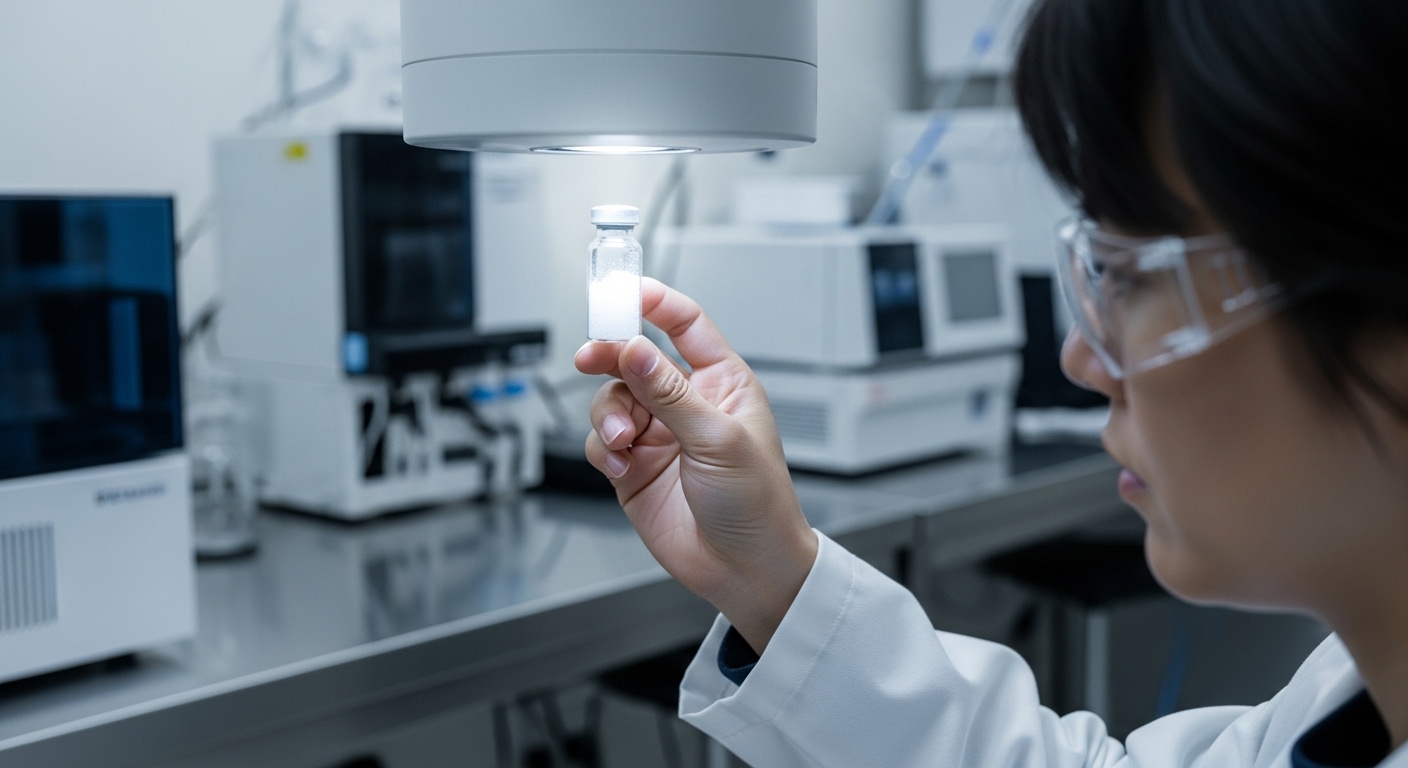

Purity Standard
What ≥98% Actually Means
A ≥98% HPLC purity result means that at least 98 out of every 100 parts of the compound in the vial is the target peptide. No more than 2% consists of synthesis byproducts, truncated sequences, residual solvents, or other impurities.
For context, pharmaceutical-grade compounds used in clinical trials typically require 95 to 98 percent purity. Spartan’s ≥98% floor holds every research batch to the same standard.
≥98% target peptide by molecular fraction
Mass spectrometry confirms molecular identity
Purity data published per product, per batch
Batches failing threshold are rejected, not sold
Independent Laboratory Verification
Tested by MZ Biolabs. Every Compound Verified.
Every compound we sell is submitted to MZ Biolabs in Tucson, AZ for independent HPLC purity analysis and mass spectrometry identity confirmation. Spartan does not perform any in-house testing. The Certificates of Analysis below are the original reports issued by MZ Biolabs, signed by the laboratory’s analytical chemist.
Signed By
Ken Pendarvis, ChE
Analytical Chemist
Methods
HPLC-UV for purity quantification
HPLC-MS for molecular identity
Certificates of Analysis
BPC-157
10mg, Lot PEP-04-26
GHK-Cu
50mg, Lot PEP-04-26
MOTS-c
10mg, Lot PEP-04-26
Tesamorelin
5mg, Lot PEP-04-26
Thymosin Beta-4
10mg, Lot PEP-04-26
CJC-1295 + Ipamorelin Blend
5mg + 5mg, Lot PEP-04-26
Additional compounds in our catalog are tested under the same protocol; certificates will be added as new lots are released.
FAQ
Common Questions
What purity level are Spartan Peptides products? +
All Spartan Peptides products meet a minimum purity threshold of ≥98% as verified by HPLC testing conducted by independent third-party analytical laboratories.
Who conducts the testing? +
All purity and identity testing is conducted by independent third-party analytical laboratories. Spartan Peptides does not perform testing in-house. Third-party testing eliminates conflicts of interest and ensures objective, unbiased verification.
Where can I find purity data for a specific product? +
Purity data is available on individual product pages and in the Certificates of Analysis section above. Each Certificate of Analysis is the original report issued by MZ Biolabs, our independent analytical laboratory. It includes the HPLC purity percentage, mass spectrometry identity confirmation, lot number, and the chemist’s signature. Download the relevant COA directly from this page or from the product page.
What happens to a batch that fails purity testing? +
Batches that fail to achieve ≥98% HPLC purity are rejected and never released to customers. Only batches that pass both HPLC purity verification and mass spectrometry identity confirmation are approved for sale.
What is the difference between HPLC and mass spectrometry? +
HPLC confirms purity. It measures what percentage of the sample is the target compound. Mass spectrometry confirms identity. It verifies the molecular weight matches the theoretical mass of the target peptide. Both are required. A compound could be 99% pure and still be the wrong molecule without MS confirmation.
Who is MZ Biolabs? +
MZ Biolabs is an independent analytical laboratory based in Tucson, Arizona. Spartan Peptides has no ownership, financial interest, or operational relationship with MZ Biolabs beyond paying for testing services. All Certificates of Analysis are issued and signed directly by MZ Biolabs’s analytical chemist. You can verify the lab independently at www.mzbiolabs.com.
Why is mass spectrometry required if HPLC already measures purity? +
HPLC measures how pure a sample is. It tells you what percentage of the material is the target compound versus impurities. Mass spectrometry confirms what the compound actually is by measuring its molecular mass against the theoretical mass of the target peptide. A sample could be 99 percent pure and still be the wrong molecule. Both methods together verify both purity and identity. Each Certificate of Analysis includes both readings.
How often are new lots tested? +
Every production lot is tested before it is approved for release. When a new lot enters inventory, a representative sample is sent to MZ Biolabs for HPLC and MS analysis. The Certificate of Analysis shown on this page corresponds to the current lot in stock. If you want to verify which lot you received, contact us through the support form and we will share the corresponding COA.
What does the mass number on the COA mean? +
The mass number on each Certificate of Analysis is the molecular mass of the peptide measured in Daltons (Da). The COA shows two values: the expected mass (the theoretical mass of the target peptide) and the found mass (the mass MZ Biolabs measured during HPLC-MS analysis). When these values match to within typical instrument tolerance, the compound’s identity is confirmed.
Our quality standards are reflected throughout our educational content.