
How to Identify Quality Research Peptides: Color, Texture, and Purity Markers Explained

Written bySpartan Research Team
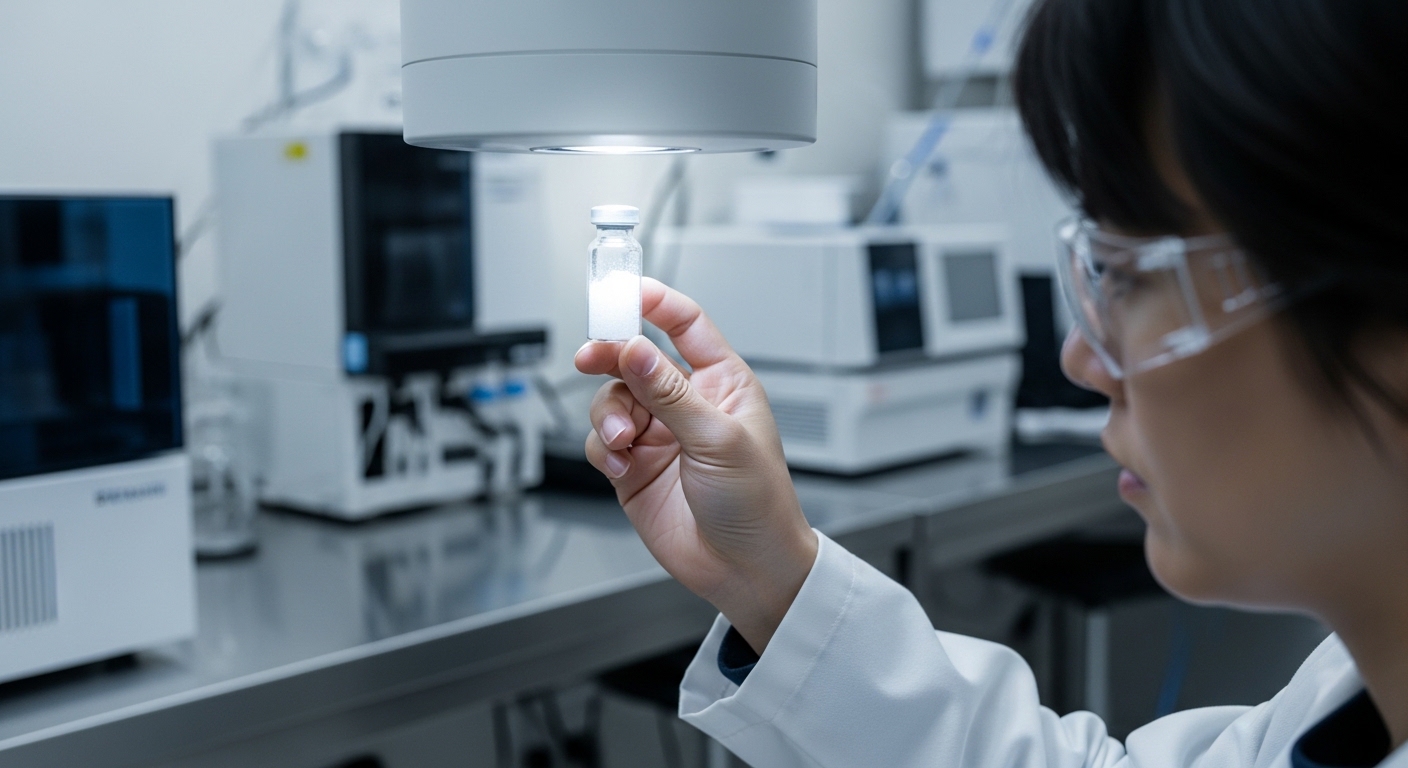
When a research peptide arrives, most researchers go straight to reconstitution. But spending 60 seconds on a visual inspection before opening the vial can tell you a surprising amount about product quality, and potentially save you from using a degraded compound.
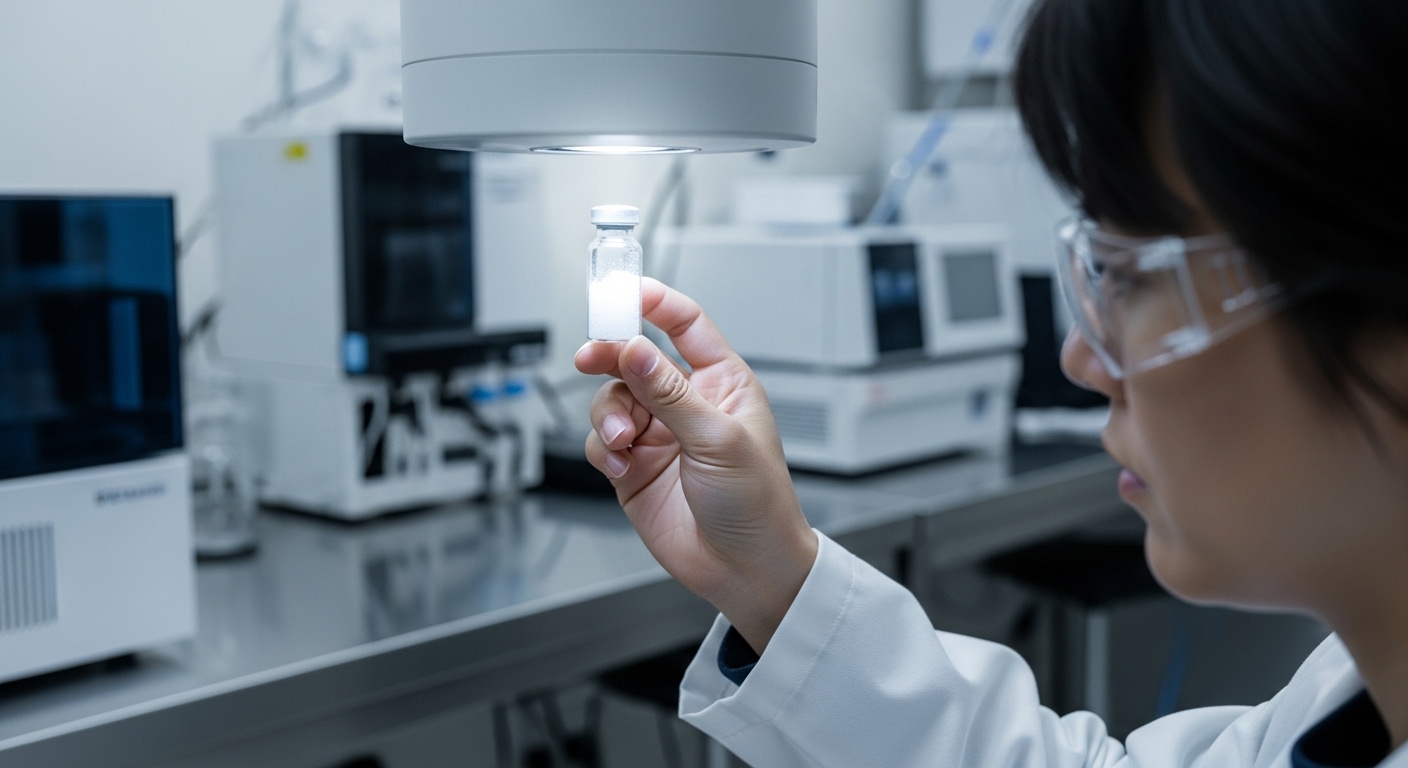
This guide covers what properly manufactured, lyophilized research peptides should look like, why some compounds naturally appear colored (and why that’s not a red flag), and the specific signs that indicate moisture damage, oxidation, or substandard manufacturing. It also covers what HPLC-verified purity actually means in practical terms.
🔬 Key Research Findings
- Peptide color is determined by molecular structure, copper-chelated compounds naturally appear blue/violet due to d-d electron transitions (PMID: 25866793)
- Moisture is the primary lyophilized peptide degradation pathway, clumping is the most reliable visual indicator of moisture exposure
- HPLC ≥98% purity combined with mass spectrometry confirmation provides definitive verification of both purity and molecular identity
- Oxidation affects methionine, cysteine, and tryptophan residues, yellowing or browning indicates oxidative degradation
- Proper lyophilization produces fine, free-flowing powder; poor technique or moisture exposure produces compressed, caked material (PMID: 26491941)
What Lyophilized Peptides Should Look Like: The Baseline
The vast majority of research peptides are shipped in lyophilized (freeze-dried) form. Lyophilization removes water from the peptide under vacuum conditions, producing a stable, dry powder that resists degradation during shipping and storage.
A properly lyophilized peptide should appear as:
- A fine, fluffy powder, loose and airy, not compressed or crystalline
- Uniform in color throughout the vial, no streaking, patches, or layering
- Free-flowing when tapped, powder should move freely; it should not be stuck in clumps or adhered to the glass
- Dry in appearance, no visible moisture, condensation inside the vial, or wet/shiny texture
The color of the powder depends on the specific compound. Most peptides, includingBPC-157, TB-500, CJC-1295/Ipamorelin, and NAD+, are white to off-white. Others, due to their molecular structure, naturally appear as a different color entirely. This is expected and does not indicate a quality problem on its own.
Why Some Peptides Are Naturally Colored: The Science
The most commonly misunderstood quality signal is color. Researchers who expect all peptides to be white are sometimes alarmed when a compound arrives with a distinct hue. In most cases, this is a direct result of the compound’s chemistry, not contamination or degradation.
Copper-Chelated Peptides (e.g., GHK-Cu)
GHK-Cu (copper peptide) is the most common example. The “Cu” designates copper(II) ions that are chelated, chemically bound, to the GHK tripeptide backbone. Copper(II) ions absorb specific wavelengths of visible light through d-d electron transitions, producing a characteristic blue to blue-violet appearance. This coordination chemistry is fundamental to copper’s interaction with light, it is not a sign of contamination.
The degree of color intensity can vary between batches depending on the copper content and the specific lyophilization process used, slight variation in shade from one vial to the next is normal. What matters is whether the powder is uniform and free-flowing, not whether it matches a specific shade. (PMID:25866793)
Other Naturally Tinted Compounds
Other compounds may appear slightly off-white, cream, or pale yellow depending on their amino acid composition, the presence of aromatic residues (tryptophan, tyrosine, phenylalanine), or minor oxidation of methionine residues that can occur normally during synthesis. A slight cream or pale yellow tint in a compound that would otherwise be expected to be white is usually not a concern, but a bright yellow, brown, or strongly discolored powder warrants scrutiny and should be verified against the supplier’s purity data.
Signs of Moisture Damage
Moisture is the primary enemy of lyophilized peptides. Water reintroduction accelerates hydrolysis (peptide bond cleavage), promotes microbial growth, and can cause irreversible structural changes. The signs are usually visible.
Clumping
The most common indicator. When moisture enters a vial, hygroscopic peptide powder absorbs it and the particles bind together into clumps or a compressed cake. Tapping the vial and observing that the powder does not move freely, or seeing chunks rather than loose powder, strongly suggests moisture exposure.
Color Darkening or Streaking
Moisture-damaged peptides sometimes show localized darkening, particularly for metal-chelated compounds where increased water activity can alter the coordination environment. In white/off-white peptides, moisture damage may produce yellowish or brownish streaking that differs from the compound’s expected appearance.
Condensation or Wet Appearance
Visible moisture on the inner glass surface, a wet or shiny texture to the powder, or any liquid pooling at the bottom of the vial is a clear indicator that the seal was compromised or storage conditions failed. Do not use a vial with visible liquid in what should be a lyophilized product.
Powder Adhered to Glass
Some moisture-damaged peptides partially dissolve and then re-dry, leaving a film or crust adhered to the interior glass walls. This residue may represent a fraction of the labeled dose that is no longer fully recoverable during reconstitution.
Signs of Oxidation
Oxidation is a secondary degradation pathway that affects specific amino acid residues, particularly methionine (Met), cysteine (Cys), and tryptophan (Trp). Visual indicators include:
- Yellowing, progressive yellowing of a white peptide often indicates tryptophan oxidation or cysteine oxidation products
- Brown discoloration, significant browning suggests advanced oxidative degradation or improper storage at elevated temperatures
- Odor upon opening, peptides should be essentially odorless; any sulfurous or unusual smell suggests methionine oxidation or microbial contamination
Light exposure accelerates oxidative degradation, which is why research peptides should always be stored in opaque or amber vials and kept away from direct light.
What HPLC Purity Actually Tells You
Visual inspection can identify obvious quality problems, but it cannot confirm molecular identity or detect colorless, odorless impurities. That’s where analytical purity data becomes essential.
High-Performance Liquid Chromatography (HPLC) separates a peptide sample into its molecular components and quantifies the relative proportion of each. A ≥98% HPLC purity result means that at least 98% of the material in the vial is the target peptide, with no more than 2% consisting of synthesis byproducts, truncated sequences, or residual reagents.
When evaluating purity claims, look for:
- HPLC chromatogram data, a visible peak representing the target peptide with quantified purity percentage
- Mass spectrometry (MS) confirmation, verifies molecular weight matches the theoretical mass, confirming identity not just purity
- Batch-specific data, purity data should be specific to the batch you’re purchasing, not a generic representative sample
At Spartan Peptides, every batch is HPLC-verified to ≥98% purity before shipment, with purity data available on individual product pages. This provides a documented baseline you can reference when evaluating what’s in the vial.
Storage Conditions That Preserve Quality
- Unopened lyophilized peptides: -20°C for long-term; refrigerator (2 to 8°C) acceptable for up to 4 to 6 weeks
- Reconstituted peptides: Refrigerator only (2 to 8°C); use within 4 weeks; freeze aliquots for longer storage
- Avoid freeze-thaw cycles: Aliquot before freezing if using small amounts over time
- Light protection: Keep vials in packaging or a dark location; UV accelerates oxidation
- Desiccants: Store with desiccant packet when temporarily at room temperature
Red Flags When Sourcing Research Peptides
- No purity data available, the single biggest red flag; legitimate research-grade suppliers always provide HPLC results
- Prices dramatically below market rate, peptide synthesis at ≥98% purity has real costs; extreme discounts typically reflect compromised purity or mislabeled compounds
- No mass spectrometry confirmation, HPLC confirms purity but not identity; MS is required to verify the compound is what it claims to be
- No clear US address or accountability, domestic suppliers are subject to different standards than overseas gray-market sources
Quick Visual Inspection Checklist
- ✅ Powder is fine and fluffy, not compressed or crystalline
- ✅ Powder moves freely when vial is tapped, no clumping or adhered residue
- ✅ Color is uniform throughout, no patches, streaking, or localized darkening
- ✅ No visible moisture, condensation, or liquid in the vial
- ✅ Color matches the compound’s expected appearance (white/off-white for most; blue/violet for copper-chelated compounds is normal)
- ✅ No unusual odor upon opening
- ✅ Purity data confirms HPLC ≥98% with MS identity verification
Combined with sourcing from suppliers who provide batch-specific HPLC purity data, this checklist gives you the most complete picture of what you’re working with before you begin any research protocol.
For a deeper look at how to interpret purity data in practice, see: Understanding Peptide Purity: HPLC, MS, and Quality Markers Explained.
References
- Pickart L, Vasquez-Soltero JM, Margolina A. GHK Peptide as a Natural Modulator of Multiple Cellular Pathways in Skin Regeneration. BioMed Research International. 2015. PMID: 25866793
- Vogt G, et al. Peptide drug stability and lyophilization: physicochemical considerations. Journal of Pharmaceutical Sciences. 2015. PMID: 26491941
- Manning MC, et al. Stability of protein pharmaceuticals: an update. Pharmaceutical Research. 2010. PMID: 20143256
Research Disclaimer: All compounds referenced in this article are intended strictly for laboratory research and in vitro study purposes only. They are not approved for human consumption, therapeutic use, or veterinary application. This content is educational and does not constitute medical advice. All research must comply with applicable local, state, and federal regulations.
Written by the Spartan Research Team
Our team of peptide researchers and biochemists reviews every article for scientific accuracy. Learn more about our team →