
BPC-157 for Gut Healing: Mechanisms, Research, and the Gut-Body Connection

Written bySpartan Research Team
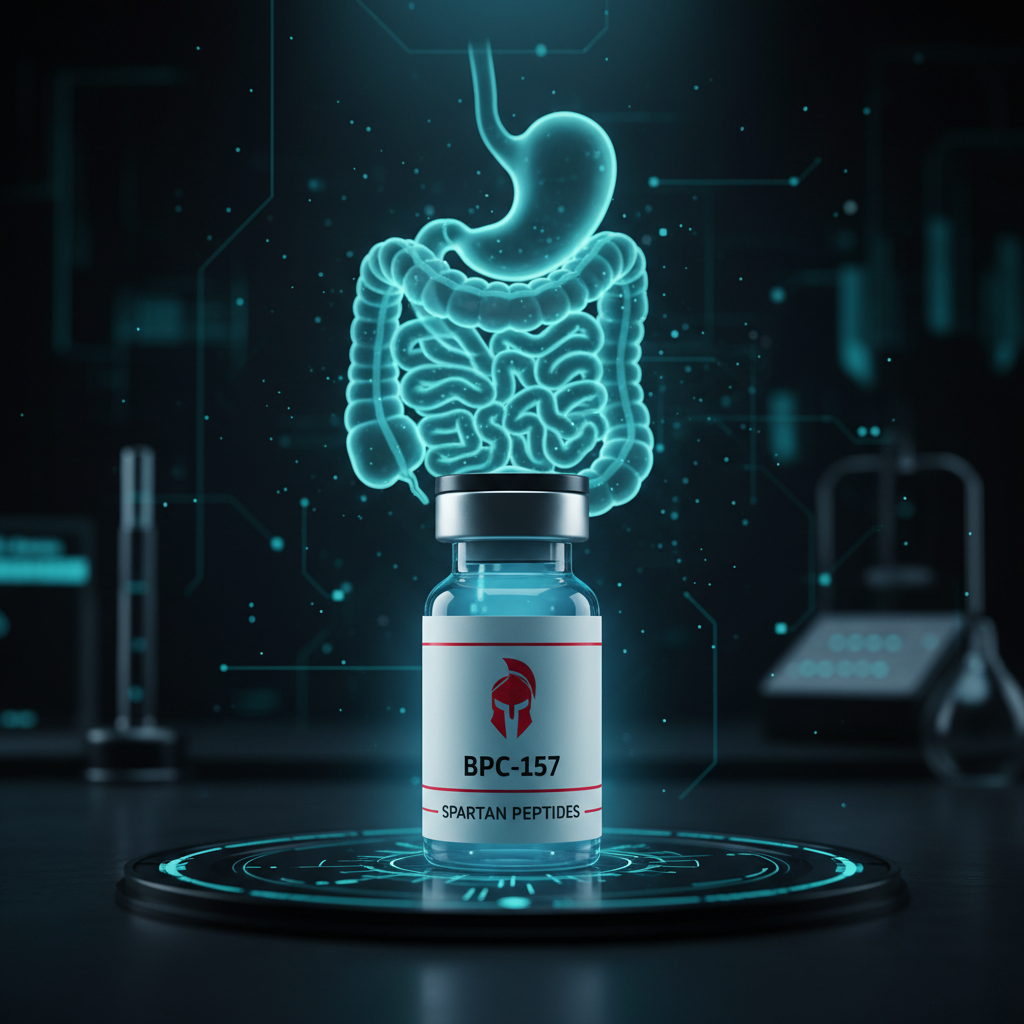
Among the tissue systems studied in BPC-157 research, the gastrointestinal tract holds a special position: it is both the origin of the peptide and its most extensively characterized research target. BPC-157 was first isolated from a protein fraction of human gastric juice specifically because researchers were investigating why the stomach can withstand its own acid. What followed was decades of research establishing BPC-157 as one of the most potent cytoprotective agents studied in GI models. This article examines the mechanisms, data, and broader gut-body implications of that research.
Researchers sourcing BPC-157 for laboratory studies can review Spartan Peptides’ BPC-157 research compound — available in 5mg vials with ≥98% HPLC-verified purity.
For a complete overview of BPC-157 across all research domains, visit our comprehensive BPC-157 research guide.
The Cytoprotective Foundation: How BPC-157 Protects GI Tissue
The term “cytoprotection” in gastroenterology refers to the ability of certain compounds to protect cells from injury even when the injurious agent is still present—a phenomenon distinct from simple acid suppression. BPC-157 exemplifies this property through multiple converging mechanisms.
VEGF-Driven Mucosal Repair
BPC-157 upregulates Vascular Endothelial Growth Factor (VEGF), which drives angiogenesis—the formation of new blood vessels. In the context of GI mucosal repair, angiogenesis is fundamental: the gastric and intestinal mucosa are among the most vascularized tissues in the body, and adequate blood supply is prerequisite for the rapid epithelial turnover that characterizes healthy gut tissue. Published studies show that BPC-157 increases VEGF expression in damaged gastric tissue, accelerating the revascularization necessary for mucosal healing.
Nitric Oxide (NO) Modulation
Nitric oxide plays a critical but dual role in GI physiology. At physiological levels, NO maintains mucosal blood flow, regulates gastric motility, and suppresses inflammatory signaling. BPC-157 modulates the NO-system—specifically the interaction between constitutive NOS (cNOS) and inducible NOS (iNOS)—to restore balance in inflamed tissue. Multiple published studies have demonstrated that BPC-157 counteracts both NOS overactivation (which generates damaging peroxynitrite) and NOS blockade (which impairs mucosal perfusion), effectively normalizing NO-mediated signaling in damaged gut tissue.
Growth Factor Transcription Activation
BPC-157 activates Early Growth Response protein 1 (EGR-1), a transcription factor that drives expression of multiple repair-associated growth factors including PDGF (Platelet-Derived Growth Factor) and TGF-β (Transforming Growth Factor-beta). These downstream growth factors orchestrate fibroblast proliferation, extracellular matrix deposition, and epithelial regeneration—all essential components of mucosal healing following injury.
Mitochondrial Protection
Emerging data suggests BPC-157 exerts cytoprotective effects at the mitochondrial level, helping maintain cellular energy production under oxidative stress conditions. This mitochondrial protection may explain some of the rapid cellular survival effects observed when BPC-157 is administered to acutely damaged GI tissue.
Ulcer Healing: The Published Evidence
Gastric ulcer healing represents the most extensively studied GI application of BPC-157. Research from multiple animal model systems has consistently demonstrated accelerated healing across different ulcer induction methods.
Ethanol-Induced Ulceration
Ethanol induces acute gastric hemorrhagic lesions through direct mucosal cytotoxicity and vascular injury. Multiple published studies demonstrate that BPC-157 administration—both orally and via injection—significantly reduces the size and number of ethanol-induced lesions in rat models, even when administered after injury. Importantly, some protocols administer BPC-157 simultaneously with ethanol and still observe significant protection, suggesting an extremely rapid cytoprotective mechanism rather than a purely reparative one.
NSAID-Induced Damage Reversal
Nonsteroidal anti-inflammatory drug (NSAID)-induced GI damage is one of the most clinically relevant ulcer models. NSAIDs inhibit cyclooxygenase (COX) enzymes, reducing prostaglandin synthesis and leaving the gastric mucosa vulnerable to acid-mediated injury. This mechanism is responsible for millions of cases of GI bleeding, ulceration, and perforation annually in clinical populations.
BPC-157 has been shown to counteract NSAID-induced GI damage despite the continued presence of NSAID-mediated COX inhibition—a demonstration of true cytoprotection rather than COX pathway restoration. Sikiric et al. have published multiple studies showing that BPC-157 rescues indomethacin and aspirin-induced gastric lesions via its VEGF and NO-dependent pathways, bypassing the COX pathway entirely. This mechanistic independence from prostaglandins is a distinguishing feature of BPC-157’s GI cytoprotection.
Acetic Acid Chronic Ulcer Model
The acetic acid-induced chronic ulcer model produces gastric lesions that more closely resemble human peptic ulcer disease in terms of chronicity, depth, and healing trajectory. Published studies using this model show that BPC-157-treated rats demonstrate significantly reduced ulcer area, increased ulcer margin cell proliferation, and enhanced granulation tissue formation compared to controls—effects consistent with accelerated healing rather than simply cytoprotection of intact tissue.
Inflammatory Bowel Disease (IBD) Research
Beyond ulcer models, BPC-157 has been studied extensively in the context of inflammatory bowel disease—specifically colitis models representing both Crohn’s disease and ulcerative colitis pathology.
Trinitrobenzene sulfonic acid (TNBS)-induced colitis and dextran sodium sulfate (DSS)-induced colitis are the two most commonly used IBD animal models. In both, BPC-157 administration has been shown to:
- Reduce macroscopic colon damage scores
- Decrease tissue levels of pro-inflammatory cytokines (TNF-α, IL-6, IL-1β)
- Restore colon length (reduced by colitis-induced fibrosis and inflammation)
- Improve histological scores of mucosal integrity
- Reduce intestinal bleeding and weight loss endpoints
The clinical relevance of this data prompted PL BioScience to advance BPC-157 (as PL-10) into Phase II clinical trials for IBD, representing the most advanced human clinical program for this peptide to date. For more detailed BPC-157 gut health research, additional study data is available in our dedicated analysis.
Leaky Gut and Tight Junction Research
Intestinal barrier integrity—the ability of the gut epithelium to form a selective barrier that prevents pathological translocation of bacteria, toxins, and antigens from the gut lumen into systemic circulation—has emerged as a central concept in GI health research. Compromised intestinal barrier function (“leaky gut”) has been associated with systemic inflammatory states, autoimmune conditions, and metabolic dysregulation in the literature.
The intestinal barrier is maintained by tight junction proteins—notably occludin, claudin, and zonula occludens (ZO-1)—that seal the spaces between adjacent epithelial cells. BPC-157 has been shown in published research to upregulate the expression and proper localization of these tight junction proteins in damaged intestinal epithelium. Studies examining NSAID-induced and stress-induced gut permeability increases have demonstrated BPC-157’s ability to restore barrier function at the molecular level.
This tight junction restoration mechanism provides a molecular basis for BPC-157’s observed effects on intestinal permeability and explains why systemic markers of gut-derived inflammation (LPS, circulating cytokines) may be reduced in BPC-157-treated animals—the barrier itself is reinforced, reducing translocation of inflammatory stimuli.
The Gut-Brain Axis: BPC-157’s Bidirectional Reach
The gut-brain axis—the bidirectional communication network between the enteric nervous system and the central nervous system—is increasingly understood as a major determinant of both gastrointestinal and neurological health. BPC-157 research has touched on this axis in several ways that warrant attention.
The enteric nervous system contains an estimated 500 million neurons embedded throughout the GI tract, making it the largest peripheral component of the nervous system. BPC-157 has been shown to modulate enteric neurotransmitter systems—including serotonin, dopamine, and GABA pathways—that are shared between the enteric and central nervous systems. This provides a mechanistic link between BPC-157’s GI effects and its published neurological outcomes.
Multiple published studies have demonstrated BPC-157’s effects on dopaminergic and serotonergic function in both gut and brain tissue. Sikiric et al. have argued that BPC-157’s systemic effects—including effects on mood, cognition, and nociception observed in animal models—may be at least partly mediated through its influence on the gut-brain axis rather than solely through direct CNS effects.
This bidirectional relationship suggests that BPC-157’s GI cytoprotection may have downstream neurological consequences, and vice versa—a hypothesis that remains an active area of investigation in the preclinical literature.
Gut Microbiome Context
The intestinal microbiome—the trillions of commensal bacteria, archaea, and fungi inhabiting the GI tract—is increasingly recognized as a critical determinant of gut health, immune function, and metabolic regulation. While direct studies of BPC-157’s effects on the microbiome are limited in the published literature, several mechanistic connections are worth noting:
- Barrier integrity and microbial translocation: BPC-157’s tight junction restoration effects may reduce pathological translocation of bacteria across the gut epithelium—a phenomenon associated with dysbiosis and systemic inflammation.
- Inflammatory milieu modulation: BPC-157’s anti-inflammatory effects in the gut could alter the local inflammatory environment in ways that favor eubiosis (healthy microbial balance) over dysbiosis.
- Mucus layer protection: Some published data suggests BPC-157 may support the integrity of the mucus layer—the first line of defense separating epithelial cells from luminal bacteria—though this area requires further investigation.
The direct characterization of BPC-157’s effects on microbiome composition through 16S rRNA sequencing or metagenomic analysis remains an understudied area that represents an important gap in the literature.
For information about BPC-157’s safety and tolerability research, including GI-specific safety data, see our dedicated review.
Researchers studying musculoskeletal applications in conjunction with gut health models may also find relevant data in the BPC-157 joint and tendon research analysis.
Research Product
Spartan Peptides supplies BPC-157 5mg with independent third-party HPLC purity verification for research use. Each vial is HPLC-verified for purity ≥98% and identity-confirmed via mass spectrometry.
Frequently Asked Questions
What makes BPC-157 particularly relevant for gut research?
BPC-157 was originally derived from a gastroprotective protein in human gastric juice, making the GI tract its most natural research domain. Its oral bioavailability—unique among research peptides—allows for direct luminal delivery to gut tissue. The combination of oral stability, direct cytoprotective mechanisms, and extensive published GI data makes BPC-157 uniquely well-suited for gastrointestinal research.
What does the research show about BPC-157 and IBD?
Animal model studies using TNBS-induced and DSS-induced colitis have shown BPC-157 reduces colon damage scores, inflammatory cytokine levels, and histological injury markers. The clinical significance of these findings prompted Phase II human trials (PL-10 by PL BioScience) in IBD patients. Results from these trials have not been published in peer-reviewed literature as of this writing.
How does BPC-157 protect against NSAID-induced gut damage?
NSAIDs damage the gastric mucosa by inhibiting COX enzymes and reducing prostaglandin synthesis. BPC-157 counteracts NSAID-induced damage through COX-independent mechanisms—primarily VEGF-driven angiogenesis and NO modulation—that restore mucosal integrity without restoring the COX pathway. This mechanistic independence from prostaglandins distinguishes BPC-157’s cytoprotection from most conventional GI-protective agents.
What is the gut-brain axis and how does BPC-157 relate to it?
The gut-brain axis is the bidirectional communication network between the enteric nervous system (embedded in the GI tract) and the central nervous system. BPC-157 has been shown to modulate shared neurotransmitter systems including serotonin, dopamine, and GABA pathways. Some researchers have proposed that BPC-157’s neurological effects may be partly mediated through its influence on the gut-brain axis, though this remains an active area of investigation.
Does BPC-157 help with leaky gut?
Published research shows BPC-157 upregulates tight junction proteins (occludin, claudin, ZO-1) and restores their proper localization in damaged intestinal epithelium. In animal models of NSAID and stress-induced intestinal permeability increases, BPC-157 has demonstrated barrier restoration effects at the molecular level. “Leaky gut” as a clinical diagnosis has varying acceptance; the tight junction biology underlying BPC-157’s effects is well-characterized in preclinical literature.
How does BPC-157 compare to standard GI protective medications?
Standard GI protective agents like proton pump inhibitors (PPIs) and H2 blockers work by reducing gastric acid production—addressing the medium of injury but not directly repairing damaged tissue. BPC-157 works through cytoprotective mechanisms that protect and repair tissue regardless of acid presence—a fundamentally different approach. Published data shows BPC-157 protects against gastric injury even under conditions of maintained acid secretion, which proton pump inhibitors cannot do by themselves.
📚 Research References
- Sikiric P, et al. Stable gastric pentadecapeptide BPC 157: novel therapy in gastrointestinal tract. Curr Pharm Des. 2011;17(16):1612–32. PMID: 21548867
- Sikiric P, et al. Focus on ulcerative colitis: stable gastric pentadecapeptide BPC 157. Eur J Pharmacol. 2014;742:183–91. PMID: 25036779
- Sikiric P, et al. Brain-gut axis and pentadecapeptide BPC 157: theoretical and practical implications. Curr Neuropharmacol. 2016;14(8):857–65. PMID: 27050267
- Sikiric P, et al. Cytoprotection and injury of stomach, duodenum and colon treated with stable gastric pentadecapeptide BPC 157. J Physiol Pharmacol. 2013;64(1):5–14. PMID: 23568973
- Vukojevic J, et al. Pentadecapeptide BPC 157 and the esophagogastric anastomosis healing impaired by bile. J Surg Res. 2018;230:15–25. PMID: 30100038
- Klicek R, et al. Pentadecapeptide BPC 157, in clinical trials as a therapy for inflammatory bowel disease. World J Gastroenterol. 2012;18(48):7455–61. PMID: 23326153
Spartan Research Team
Research Director · Spartan Peptides
The Spartan Research Team compiles and analyzes peer-reviewed preclinical literature on bioactive peptides. Our content is written for researchers, academics, and laboratory professionals — not for clinical or consumer use. All referenced studies are sourced from PubMed-indexed journals.
Research Disclaimer: BPC-157 is a research peptide intended for laboratory and preclinical research use only. It is not approved by the FDA or any regulatory authority for human use, diagnosis, treatment, or prevention of any medical condition. All information presented in this article is for scientific and educational purposes only and does not constitute medical advice. Do not use research peptides for self-administration. Consult a qualified healthcare professional for any health-related concerns. Spartan Peptides supplies research compounds exclusively for legitimate scientific research in compliance with all applicable laws and regulations.