
CJC-1295 for Sale: Research Sourcing Guide for GHRH Analogs in 2026

Written bySpartan Research Team
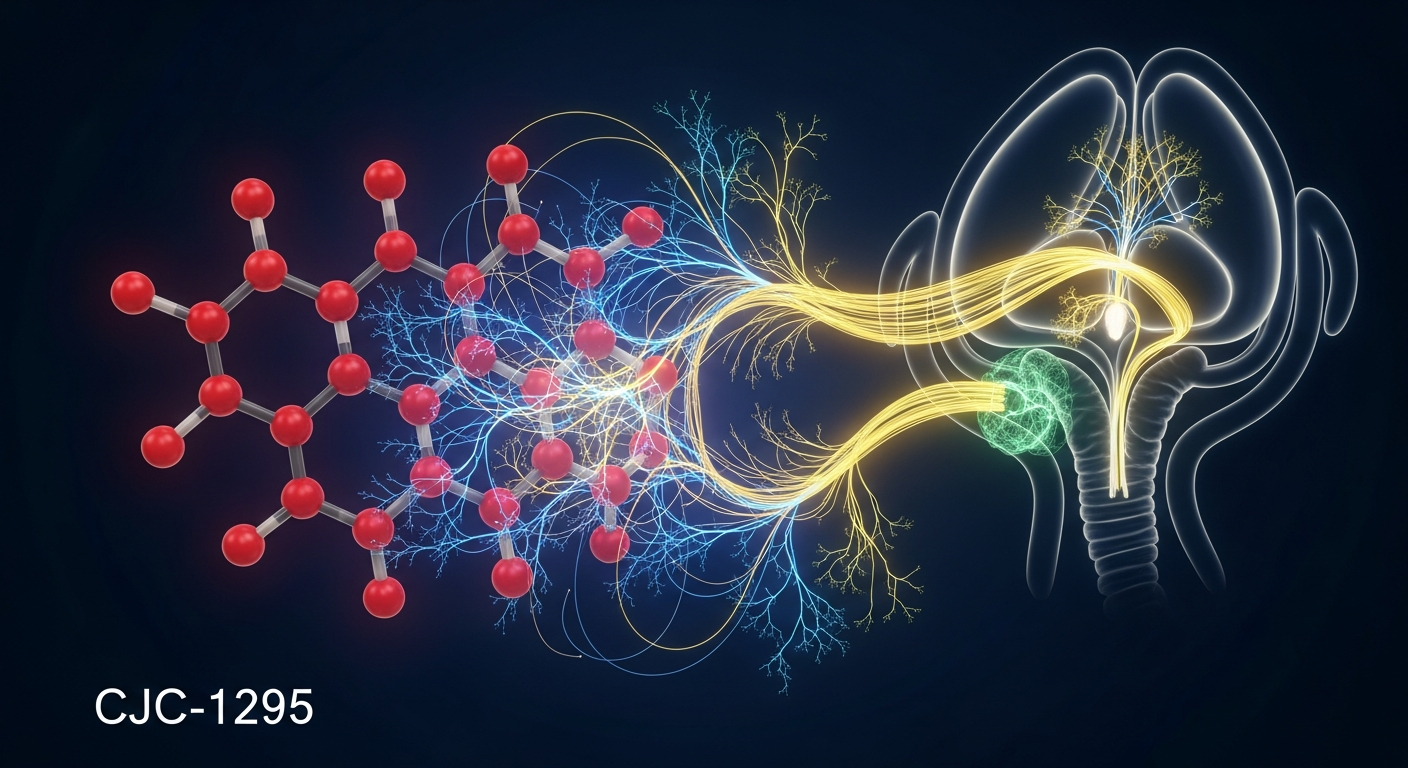

CJC-1295 remains one of the most consistently sourced GH secretagogue peptides in the performance research community. Its modified GHRH backbone with Drug Affinity Complex (DAC) technology separates it from shorter-acting analogs — and that distinction is exactly where sourcing decisions get critical. If you are evaluating suppliers for CJC-1295, this guide covers what sequence-verified, HPLC-confirmed product looks like and why the DAC vs no-DAC question cannot be skipped.
Key Research Findings on CJC-1295
- CJC-1295 with DAC achieves a half-life of 6 to 8 days via albumin binding — versus approximately 30 minutes for the no-DAC version (Mod GRF 1-29)
- Published clinical data document dose-dependent increases in serum GH and IGF-1 persisting for 6 or more days following a single CJC-1295 administration in healthy subjects
- The CJC-1295 and Ipamorelin stack is the most documented dual GH secretagogue protocol in the GH research literature, with complementary GHRH and ghrelin receptor activity
- Incorrect or incomplete DAC modification produces a chemically distinct compound — sequence verification by mass spectrometry is non-negotiable for this analog
- HPLC purity of 98 percent or higher is the floor standard for research-grade GHRH analogs; compounds below this threshold introduce uncharacterized impurities that invalidate preclinical data
DAC vs No DAC: The Distinction That Determines What You Are Actually Buying
Stack builders sourcing CJC-1295 for GH secretagogue research protocols will tell you: the DAC question is where most sourcing mistakes happen. The two compounds — CJC-1295 with DAC and CJC-1295 without DAC (Mod GRF 1-29) — share the same 29 amino acid GHRH-derived core sequence but behave as pharmacologically distinct entities in research models.
The Drug Affinity Complex modification attaches a lysine-maleimidoproprionic acid moiety to the peptide backbone, enabling reversible albumin binding in circulation. That single modification pushes the half-life from roughly 30 minutes (no-DAC) to 6 to 8 days (DAC). The extended half-life produces sustained GH axis stimulation but smooths out the pulsatile pattern that optimization-focused researchers often want to preserve. Protocols studying pulsatile GH dynamics require the no-DAC version. Protocols targeting sustained IGF-1 elevation use the DAC version. Mislabeling between these two — a documented problem in the research peptide market — is not a minor quality issue. It fundamentally changes the pharmacokinetic profile of the experiment.
What to Look For When Buying CJC-1295 for Research in 2026
The GH secretagogue research community has developed a clear hierarchy of sourcing criteria for CJC-1295. Performance-focused researchers consistently prioritize the following when evaluating suppliers:
- HPLC purity of 98 percent or greater. HPLC trace analysis is the baseline quality standard for peptide research compounds. Anything below 98 percent purity means roughly 2 or more percent of the vial mass is uncharacterized byproducts of synthesis — a level of contamination that compromises data integrity in any serious preclinical model. Suppliers who cite purity without providing the underlying HPLC documentation are offering a claim, not a verified result.
- Mass spectrometry sequence and DAC modification confirmation. For CJC-1295 specifically, HPLC purity alone is insufficient. The DAC modification can fail to attach properly while still producing a compound that elutes similarly on basic HPLC. Mass spectrometry confirms both the correct amino acid sequence and the presence of the DAC moiety — this is the test that distinguishes real CJC-1295 DAC from an unlabeled Mod GRF 1-29 sold under the wrong name.
- Lyophilized vial format. Lyophilization (freeze-drying) is the standard preservation method for research-grade peptides. Lyophilized CJC-1295 stored at -20 degrees Celsius maintains integrity for 24 months or longer. Pre-reconstituted liquid formulations degrade rapidly and introduce bacterial contamination risk — not a format that belongs in any serious research protocol.
- USA manufacturing and verified supply chain. Domestic manufacturers operate under regulatory frameworks that overseas bulk producers do not. Chain-of-custody documentation from US-based synthesis partners means a researcher can trace the compound from raw amino acid to finished vial. For a modification-sensitive analog like CJC-1295, that traceability matters.
- Explicit DAC vs no-DAC labeling on the vial. This should not have to be stated, but it does: the vial label must clearly identify whether the compound is CJC-1295 with DAC or CJC-1295 without DAC. Ambiguous labeling — or labeling that just says “CJC-1295” without specifying modification status — disqualifies a supplier for any researcher who understands the compound.
Standard Research Formats and Vial Sizes
CJC-1295 is supplied in lyophilized powder form, typically in 2mg and 5mg vials. The 2mg format is common for single-use or short-duration research protocols; the 5mg vial is standard for multi-dose research applications in the performance research community. Reconstitution uses bacteriostatic water (BAC water) for multi-dose vials — BAC water’s benzyl alcohol preservative extends the functional stability of the reconstituted solution under refrigeration. Sterile water for injection is appropriate for single-use protocols. Reconstituted CJC-1295 is stored at 2 to 8 degrees Celsius and used within 28 days. Unreconstituted lyophilized vials store at -20 degrees Celsius for long-term stability.
CJC-1295 Dosing Frameworks in Published Research
The landmark clinical study of CJC-1295 pharmacokinetics (Teichman et al., 2006) administered single doses ranging from 0.03 to 3 mcg/kg bodyweight in healthy adult subjects and documented dose-dependent increases in serum GH and IGF-1 that persisted for 6 or more days. This persistence is consistent with the extended half-life profile of the DAC version. Multiple dosing studies in the literature have used weekly or twice-weekly administration intervals.
In the GH secretagogue research community, combination protocols pairing CJC-1295 with Ipamorelin are among the most frequently referenced. These protocols typically use the no-DAC version of CJC-1295 to preserve pulsatile GH dynamics while adding Ipamorelin’s ghrelin receptor activity for synergistic pulse amplitude. The specific parameters from published studies vary and should be reviewed directly from primary sources. Nothing in this guide constitutes dosing guidance for human use.
CJC-1295 Stacking Protocols in the Research Literature
The most documented stack in GH secretagogue research is CJC-1295 paired with Ipamorelin. The combination exploits complementary receptor pathways: CJC-1295 stimulates the GHRH receptor to amplify GH pulse amplitude, while Ipamorelin acts on the ghrelin receptor (GHS-R1a) to increase GH pulse frequency. In preclinical models, the dual-pathway approach consistently produces greater GH release than either compound alone. Researchers comparing GHRH analog profiles also frequently study CJC-1295 alongside Tesamorelin, another GHRH analog with clinical-stage development data. The comparison is valuable for isolating the structural and pharmacokinetic differences between GHRH modifications and their downstream IGF-1 response profiles.
Why Supplier Verification Is Non-Negotiable for CJC-1295
The DAC modification is one of the more technically demanding attachments in commercial peptide synthesis. Incomplete or incorrect coupling can produce a compound that passes visual inspection and even shows adequate HPLC purity peaks — but lacks the albumin-binding moiety that defines the pharmacokinetic behavior of true CJC-1295. In practice, this means a researcher buying “CJC-1295 DAC” from an unverified supplier may be running experiments with Mod GRF 1-29, and drawing conclusions that do not match the published literature. For muscle development and GH axis research, where protocol reproducibility depends on matching the compound used to the compound described in cited studies, this is a critical failure mode. Mass spectrometry verification — not HPLC alone — is the only test that conclusively confirms the DAC modification is present and structurally intact.
Source Research-Grade CJC-1295 at Spartan Peptides
Spartan Peptides supplies research-grade CJC-1295 with HPLC purity verification, explicit DAC labeling, and USA-based manufacturing standards. Our GH secretagogue compounds are available as the CJC-1295 / Ipamorelin research blend and the CJC and Tesamorelin research stack — formulated for the performance research community that demands sequence-verified, modification-confirmed compounds.
Frequently Asked Questions: CJC-1295 for Research
What is the difference between CJC-1295 with DAC and CJC-1295 without DAC?
CJC-1295 with DAC has a half-life of 6 to 8 days due to the Drug Affinity Complex albumin-binding modification. CJC-1295 without DAC (Mod GRF 1-29) has a half-life of approximately 30 minutes and maintains pulsatile GH secretion dynamics. The GH secretagogue research community treats these as distinct compounds with different protocol applications — not interchangeable variants of the same product. Suppliers that do not clearly label which version they are selling should not be considered for serious research applications.
What is the best CJC-1295 for research?
Performance-focused researchers consistently select CJC-1295 with HPLC purity of 98 percent or greater, mass spectrometry confirmation of the correct sequence and DAC modification status, lyophilized vial format, and clear labeling identifying the DAC variant. USA-sourced, third-party-tested product from a supplier who can speak to their synthesis and testing methodology is the standard that the serious GH secretagogue research community applies when sourcing this compound.
Is CJC-1295 Ipamorelin for sale as a combined research compound?
Yes. CJC-1295 and Ipamorelin are available as pre-blended research compounds and represent the most sourced dual GH secretagogue combination in the performance research community. Researchers sourcing the combination should confirm the individual concentrations of each compound in the blend and verify that the CJC-1295 component carries explicit DAC or no-DAC designation consistent with the target research protocol.
How do researchers reconstitute CJC-1295?
CJC-1295 lyophilized powder is reconstituted with bacteriostatic water (BAC water) for multi-dose research applications or sterile water for injection for single-use protocols. BAC water is the standard choice in the research community for multi-dose peptide vials due to the benzyl alcohol preservative extending solution stability. Target concentration is calculated based on vial mass and desired concentration per unit volume. Reconstituted solution stores at 2 to 8 degrees Celsius and should be used within 28 days. Never shake the vial — swirl gently to dissolve.
References
- Teichman SL, Neale A, Lawrence B, Gagnon C, Castaigne JP, Frohman LA. Prolonged stimulation of growth hormone (GH) and insulin-like growth factor I secretion by CJC-1295, a long-acting analog of GH-releasing hormone, in healthy adults. J Clin Endocrinol Metab. 2006;91(3):799-805. PMID: 16352683
- Ionescu M, Frohman LA. Pulsatile secretion of growth hormone (GH) persists during continuous stimulation by CJC-1295, a long-acting GH-releasing hormone analog. J Clin Endocrinol Metab. 2006;91(12):4792-4797. PMID: 16985925
Spartan Research Library
Go Deeper on the Science
Browse study indexes, compound comparisons, and protocol stacks in the Spartan Peptides Research Library.
Written by the Spartan Research Team
Our team of peptide researchers and biochemists reviews every article for scientific accuracy. Learn more about our team →