
DSIP (Delta Sleep Inducing Peptide): Sleep Architecture Research

Written bySpartan Research Team
DSIP (delta sleep-inducing peptide) was first isolated from rabbit brain tissue in 1977. The Monnier group in Basel described a compound that, when infused intraventricularly in rabbit models, produced consistent slow-wave EEG activity. The isolation paper (Monnier et al., Brain Research, 1977) established the compound’s sleep-induction profile and launched roughly two decades of follow-up research into its mechanisms.
It’s a nonapeptide. Nine amino acids: Trp-Ala-Gly-Gly-Asp-Ala-Ser-Gly-Glu. That’s a short chain by peptide standards, with a molecular weight of about 849.9 Da in the free acid form. DSIP appears endogenously across multiple vertebrate species, and its CSF concentrations seem to follow circadian patterns, peaking in concert with nocturnal sleep phases in rodent models.
- Monnier et al. (1977) documented EEG delta wave induction following intraventricular DSIP infusion in rabbit models, establishing the compound’s classification as a sleep-promoting neuropeptide (PMID 410011).
- Schoenenberger et al. (1984) reviewed the accumulated DSIP literature and confirmed sleep-promoting effects across multiple animal species and administration routes, noting effects on both REM and NREM architecture (PMID 6386350).
- Research in the 1980s and 1990s extended into DSIP effects on hypothalamic-pituitary axis signaling, stress responses, and opioid tolerance modulation in preclinical models.
What Is DSIP?
The compound belongs to a class of neuropeptides involved in sleep regulation, sitting alongside better-known players like adenosine, melatonin, and the orexin/hypocretin system. What distinguishes DSIP from those compounds is its peptide nature and its proposed interaction with sleep architecture at the EEG level rather than simply promoting sedation. The Monnier group’s original work described specific slow-wave (delta) activity rather than a general reduction in arousal.
Endogenous DSIP concentrations have been detected in cerebrospinal fluid, hypothalamus, pituitary, and limbic structures. That distribution suggests a role in central sleep regulation rather than purely peripheral signaling. Circadian fluctuations in CSF DSIP levels have been documented in animal models, with higher concentrations observed during sleep phases.
Worth noting: the compound shows reasonable stability for a short peptide. Unlike many neuropeptides that degrade rapidly in biological fluids, DSIP has been reported to maintain activity across various administration routes in research settings, which has contributed to its ongoing use as a research tool.
Sleep Architecture: REM and NREM Research
Sleep architecture refers to the pattern and proportion of sleep stages across a sleep period. NREM sleep (particularly slow-wave stage N3) is associated with adenosine accumulation, growth hormone secretion, and synaptic downscaling. REM sleep has separate functions related to memory consolidation and emotional processing. A compound that modulates sleep architecture, rather than simply inducing sedation, represents a mechanistically distinct research target.
The Schoenenberger 1984 review synthesized the existing literature and noted that DSIP appeared to affect both REM and NREM proportions in animal models. This dual-stage effect, if confirmed in further research, would distinguish DSIP from compounds like benzodiazepines, which tend to suppress slow-wave sleep while promoting total sleep time. That’s a meaningful difference for researchers studying sleep quality versus sleep duration.
Later polysomnographic studies in animal models attempted to characterize the stage-specific effects more precisely. Results were not entirely consistent across research groups, which isn’t unusual for a neuropeptide with multiple possible receptors and administration-route-dependent pharmacokinetics. The data overall suggests slow-wave sleep promotion as the most reproducible finding, with REM effects being more variable across studies.
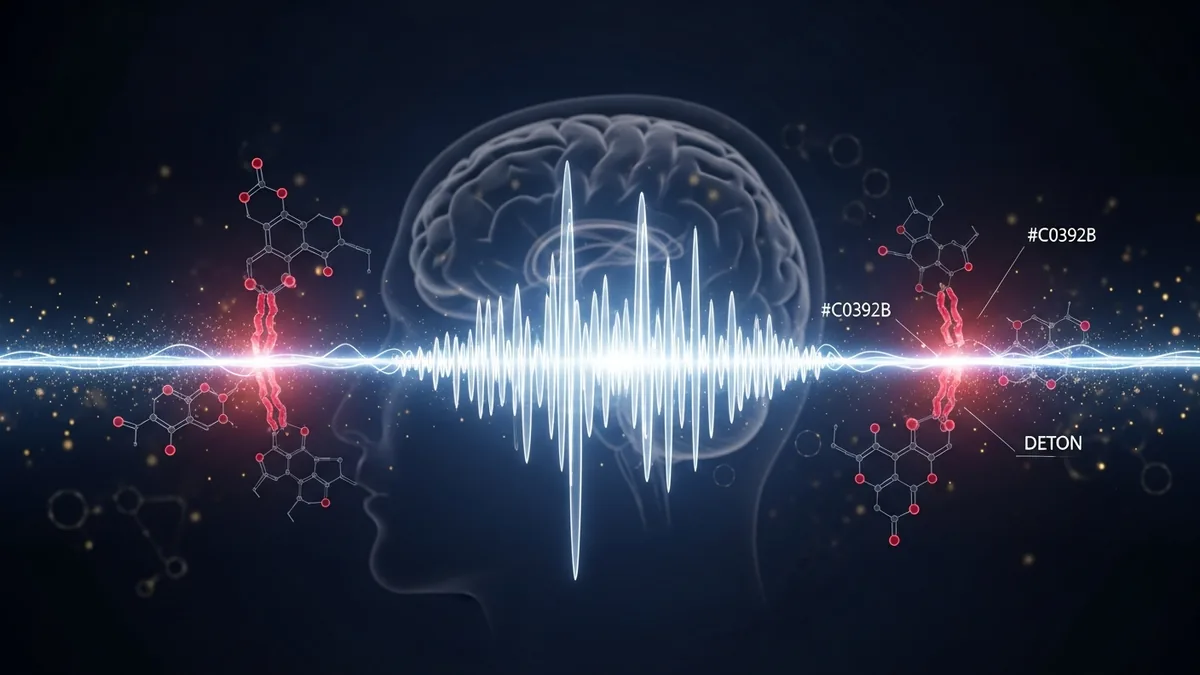
DSIP nonapeptide compounds for in vitro sleep architecture research. Explore Spartan Peptides catalog.
Hypothalamic-Pituitary Interactions
Here’s where DSIP research gets more complex. The compound isn’t just a “sleep peptide” in the narrow sense. Research from multiple groups has documented DSIP interactions with corticotropin release, suggesting a modulatory role in HPA axis signaling. Some studies found that DSIP administration in animal models altered cortisol (or its rodent equivalent, corticosterone) rhythms, with effects on the normal diurnal cortisol pattern.
The mechanism proposed for this effect involves DSIP interactions with CRH (corticotropin-releasing hormone) signaling in the hypothalamus. Slow-wave sleep is normally associated with suppressed HPA activity, so a compound that promotes slow-wave sleep might secondarily affect cortisol dynamics. Whether DSIP directly modulates HPA signaling or does so indirectly through sleep promotion is still an open question.
Stress response research is the other angle here. The Yehuda group and others examined DSIP concentrations in animal models with disrupted sleep or elevated stress markers, finding altered peptide levels compared to controls. Interpreting that data is tricky since altered DSIP levels could be cause, effect, or compensatory response to disrupted sleep architecture.
Opioid Tolerance Research: An Unexpected Direction
One branch of DSIP research went somewhere nobody anticipated from the original sleep studies. In the 1980s, several groups examined whether DSIP could reduce opioid tolerance development in preclinical models. The hypothesis was that DSIP’s sleep-promoting properties might interact with opioid receptor regulation, since opioid tolerance is partly modulated by receptor cycling and endogenous modulator systems.
Results from these studies were mixed. Some showed reduced tolerance development in rodent models with DSIP co-administration, others found no significant effect. The inconsistency may reflect differences in opioid compounds tested, administration schedules, or animal model selection. But the finding was notable enough that several research groups pursued it across different experimental designs throughout the late 1980s and 1990s.
This is a good example of how neuropeptide research often follows unexpected paths. DSIP was classified as a sleep compound and ended up being investigated in opioid pharmacology, stress biology, and endocrine regulation. That breadth is one reason the literature on shorter neuropeptides often reveals more complexity than their initial characterization suggests.
Modern Research Context
Sleep research has changed considerably since 1977. High-density EEG arrays, optogenetics, and single-cell resolution transcriptomics have opened mechanistic windows that simply didn’t exist when the Monnier group was working with rabbit ventricular infusions. That creates renewed interest in compounds like DSIP, where early observational data was solid but the mechanism remained undercharacterized.
Our team reviewed recent PubMed citations and found DSIP continuing to appear in neuropeptide sleep regulation literature through the 2010s. It shows up in reviews examining the peptidergic regulation of sleep alongside orexin, galanin, and other neuropeptides that modulate sleep-wake circuits. The compound has been proposed as a useful experimental tool for dissecting slow-wave sleep regulation in rodent models, given its relatively specific effect profile compared to GABA-active compounds.
For research peptide scientists studying sleep mechanisms, DSIP occupies an interesting niche: a well-characterized (if not fully mechanistically resolved) sleep-promoting peptide with documented endogenous presence and circadian-associated dynamics. Compare it with something like Epithalon, which targets circadian regulation through a different mechanism (telomerase/epigenetic pathway), and you start to see how diverse the peptidergic approach to sleep and circadian biology actually is. The broader Spartan research library covers many of these related compounds.
Research Purity and Compound Quality
For researchers sourcing DSIP, purity verification matters. The short amino acid chain makes DSIP relatively straightforward to synthesize, but truncated sequences (missing one or more residues at either terminus) can produce compounds with altered or absent activity. Research-grade DSIP should come with HPLC chromatography showing minimum 98% purity, and mass spectrometry confirmation of the correct molecular weight (849.9 Da free acid) is standard for serious laboratory applications.
Lyophilized storage at -20°C maintains stability. Reconstitution in sterile water or PBS is standard. Once reconstituted, aliquoting and freezing individual use volumes prevents repeated freeze-thaw cycles that can degrade activity over time.
Summary
DSIP remains one of the more intriguing neuropeptides in the sleep research literature, not because its mechanism is fully resolved but because it isn’t. The original 1977 Monnier finding was clear: infused DSIP produced slow-wave EEG activity in rabbit models. What followed was roughly two decades of research that confirmed and extended that finding while revealing unexpected interactions with HPA axis signaling and opioid pharmacology. The mechanistic gaps that remain are now addressable with modern tools that weren’t available to the original researchers.
For researchers building out a sleep or neuropeptide research program, DSIP is worth understanding as a reference compound and as a tool for dissecting slow-wave sleep architecture.
Written by the Spartan Research Team
Our team of peptide researchers and biochemists reviews every article for scientific accuracy. Learn more about our team →