
Research Peptides for Sale: What to Look For Before You Buy

Written bySpartan Research Team
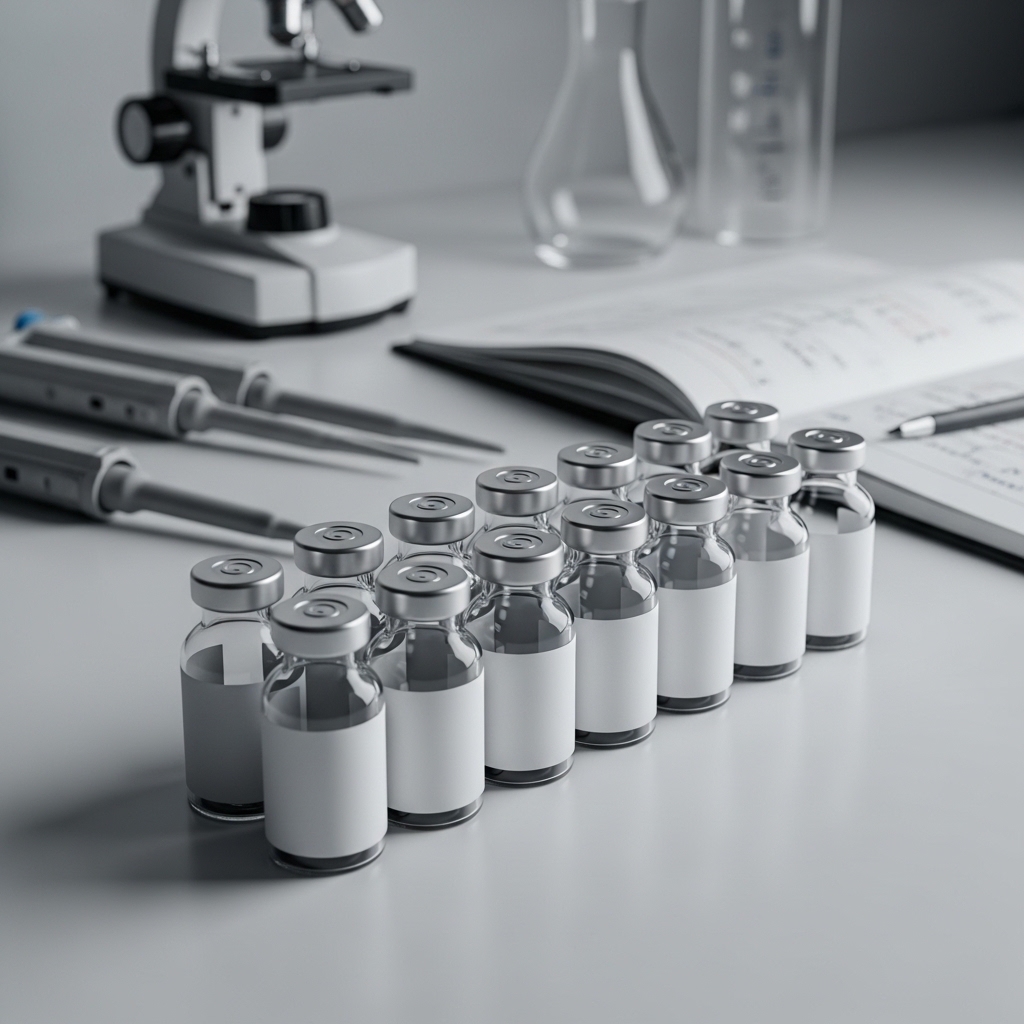
The research peptide market has expanded significantly over the past decade, with hundreds of suppliers now offering compounds ranging from classic growth hormone secretagogues to novel GLP-class molecules. For a researcher trying to source reliable material, that abundance is both an opportunity and a liability. Quality varies enormously — and the consequences of working with substandard reagents range from wasted experiments to datasets that simply cannot be replicated.
Key Research Findings
- Third-party COA (HPLC + mass spectrometry) is the minimum standard for legitimate research peptides
- Research-grade peptides should be ≥98% purity; lower purity introduces uncontrolled experimental variables
- Bacteriostatic water and cold-chain shipping protect compound integrity from synthesis to delivery
- Supplier transparency — lot numbers, independent lab verification, traceable batch documentation — is the clearest signal of legitimacy
This guide is written for researchers who already understand what peptides are and why purity matters. The goal is to give you a practical framework for evaluating suppliers and vetting the material you receive — before it enters your protocol.
Why Purity Is the Foundational Variable
Peptide purity is not a marketing stat — it is the single most consequential specification in your experimental setup. A compound listed at 95% purity means up to 5% of what you’re working with is something else: truncated sequences, oxidized residues, unreacted protecting groups, solvent residue, or microbial contamination. In a dose-response study, that impurity profile can shift EC50 values, introduce off-target binding, or produce artifacts that look like meaningful signal.
The industry standard for research-grade peptides is ≥98% purity, verified by high-performance liquid chromatography (HPLC). Anything below that threshold should prompt additional scrutiny before use. Some specialist suppliers now offer 99%+ material for particularly sensitive assays — worth the premium when your downstream readout depends on it.
HPLC and Mass Spectrometry: What the Certificate Should Show
Every reputable supplier will provide a Certificate of Analysis (CoA) for each lot. The minimum acceptable documentation includes:
- Analytical HPLC trace — A reverse-phase HPLC chromatogram showing the main peak area and any detectable impurities. The integration table should clearly state the purity percentage. Be skeptical of CoAs that only state a number without the underlying trace.
- Mass spectrometry confirmation — Electrospray ionization (ESI-MS) or MALDI-TOF data confirming the correct molecular weight. This rules out sequence errors and deletion peptides that may co-elute with the target compound on HPLC.
- Lot-specific documentation — The CoA should reference the specific lot number of the material you received. Generic or undated certificates are a red flag.
For deeper technical background on interpreting HPLC traces and mass spec data, see Spartan’s detailed explainer: Understanding Peptide Purity: HPLC, MS, and Quality Markers Explained.
Independent Third-Party Testing: The Difference Between Trust and Verification
In-house CoAs are a starting point, not an endpoint. A supplier testing their own product has an obvious incentive to present favorable results. Independent third-party testing — where an accredited external lab analyzes a sample blind — removes that conflict of interest.
When evaluating a supplier, ask directly: does your CoA represent in-house testing or independent third-party analysis? High-quality suppliers will have no hesitation answering this, and many proactively post third-party reports on individual product pages.
Additionally, look for batch testing rather than periodic spot-checks. Every lot should be analyzed — not just representative samples from each product line. Peptide synthesis is inherently variable; a batch from six months ago may have a different impurity profile than the one shipped last week.
Storage Requirements and Cold Chain Integrity
Peptide stability is highly compound-dependent. Most lyophilized research peptides are stable at room temperature for short periods, but long-term storage typically requires −20°C or −80°C. Certain compounds — particularly disulfide-bridged peptides and those with susceptible residues like methionine or tryptophan — degrade rapidly if exposed to humidity, light, or temperature excursions.
Key storage questions to ask a potential supplier:
- What temperature is material stored at in your warehouse?
- How is shipping handled? Is cold-pack or dry ice included for temperature-sensitive compounds?
- What is the recommended storage temperature and reconstitution solvent for this specific compound?
- Is the compound lyophilized or shipped in solution? (Solution-phase is far more susceptible to degradation.)
A supplier that ships lyophilized peptides at ambient temperature without desiccant, or that cannot tell you the recommended storage conditions for a specific compound, is one to avoid regardless of their stated purity numbers.
Red Flags When Evaluating Vendors
Experience in this space reveals a consistent set of warning signs. None individually disqualifies a supplier, but patterns matter:
- No lot-specific CoA provided per lot — If a supplier cannot provide documentation tied to the specific lot you purchased, you have no way to verify what’s actually in your vial.
- Pricing significantly below market — Legitimate synthesis at ≥98% purity is expensive. Material priced 40–60% below comparable suppliers should prompt questions about where those costs were cut.
- No clear contact or physical address — Reputable suppliers operating in the research space maintain identifiable business information. Anonymity is inconsistent with accountability.
- Health claims in product descriptions — Research peptide suppliers should describe mechanism and research context, not therapeutic outcomes. Health claims indicate either regulatory non-compliance or a mischaracterization of the intended market.
- No information on synthesis method or source — Solid-phase peptide synthesis (SPPS) is the industry standard for research-grade material. Suppliers sourcing bulk intermediates from undisclosed origins cannot guarantee the provenance or purity of their compounds.
- Pressure tactics or “limited stock” urgency — Research procurement decisions should be made on quality criteria, not manufactured scarcity. High-pressure sales language is inconsistent with a professional research-supply relationship.
Compound Classes Worth Knowing
The current research peptide landscape includes several well-characterized compound categories. Growth hormone-releasing peptides (GHRPs) and growth hormone-releasing hormones (GHRHs) remain among the most studied, alongside melanocortin peptides, thymosin derivatives, and repair-associated sequences like BPC-157 and TB-500. The GLP-1 receptor agonist class — including GLP-1(Sema) and GLP-2(Tirz) analogs — has seen particularly intense research interest given the mechanistic work on metabolic regulation and body composition.
For a comprehensive overview of current research applications across these classes, Spartan’s 2026 guide is a useful reference: The Complete Guide to Research Peptides in 2026: Science, Applications, and What Researchers Need to Know.
Reconstitution and Handling Best Practices
Purity at the point of manufacture is only meaningful if handling in the lab preserves it. A few protocol-level considerations:
- Reconstitute in bacteriostatic water or the solvent specified in the CoA — not plain sterile water for compounds intended for extended use, as bacteriostatic water extends stability post-reconstitution.
- Aliquot and freeze reconstituted solutions; avoid repeated freeze-thaw cycles, which accelerate aggregation and degradation.
- Use low-binding tubes and pipette tips for hydrophobic peptides, which adsorb to standard plastics and create dosing variability.
- Track reconstitution date and discard reconstituted solutions beyond the manufacturer’s recommended stability window.
Sourcing Peptides for Sale: A Decision Framework
When evaluating any supplier of peptides for sale, the core questions reduce to four:
- Can they prove it? — Lot-specific CoA with HPLC trace and MS confirmation, ideally from an independent lab.
- Do they know what they’re selling? — Technical staff who can answer synthesis, storage, and stability questions without consulting a generic FAQ.
- Can they maintain integrity through to delivery? — Appropriate packaging, cold chain for temperature-sensitive compounds, and discreet/professional labeling.
- Do they operate transparently? — Identifiable business, clear return and quality guarantee policies, research-appropriate product descriptions.
Suppliers that check all four boxes are uncommon. When you find one, the investment in the relationship — getting to know their synthesis team’s typical impurity profiles, establishing a point of contact — pays dividends in research reliability over time.
Spartan’s Catalog
Spartan Peptides sources and tests all compounds to ≥98% HPLC purity with lot-specific CoAs. Our catalog covers GHRPs, GHRHs, melanocortin peptides, repair sequences, thymosin derivatives, and GLP-class research compounds. Each product page includes the relevant CoA documentation and storage recommendations.
If you’re sourcing peptides for sale for your research program, browse the full Spartan catalog to find the compounds that fit your protocol requirements.
All content is intended for laboratory and academic research purposes only. Not for human consumption.
References
Written by the Spartan Research Team
Our team of peptide researchers and biochemists reviews every article for scientific accuracy. Learn more about our team →
Sourcing in bulk for your lab or institution?
Spartan Peptides offers wholesale access for research institutions, CROs, and licensed distributors. Minimum 50g per SKU or 2,000 units — every order ships with a third-party Certificate of Analysis.
Apply for Wholesale Access →