
Skinny Fit Max Research Stack: GLP-3 Reta, MOTS-c and AOD-9604 Metabolic Synergy

Written bySpartan Research Team
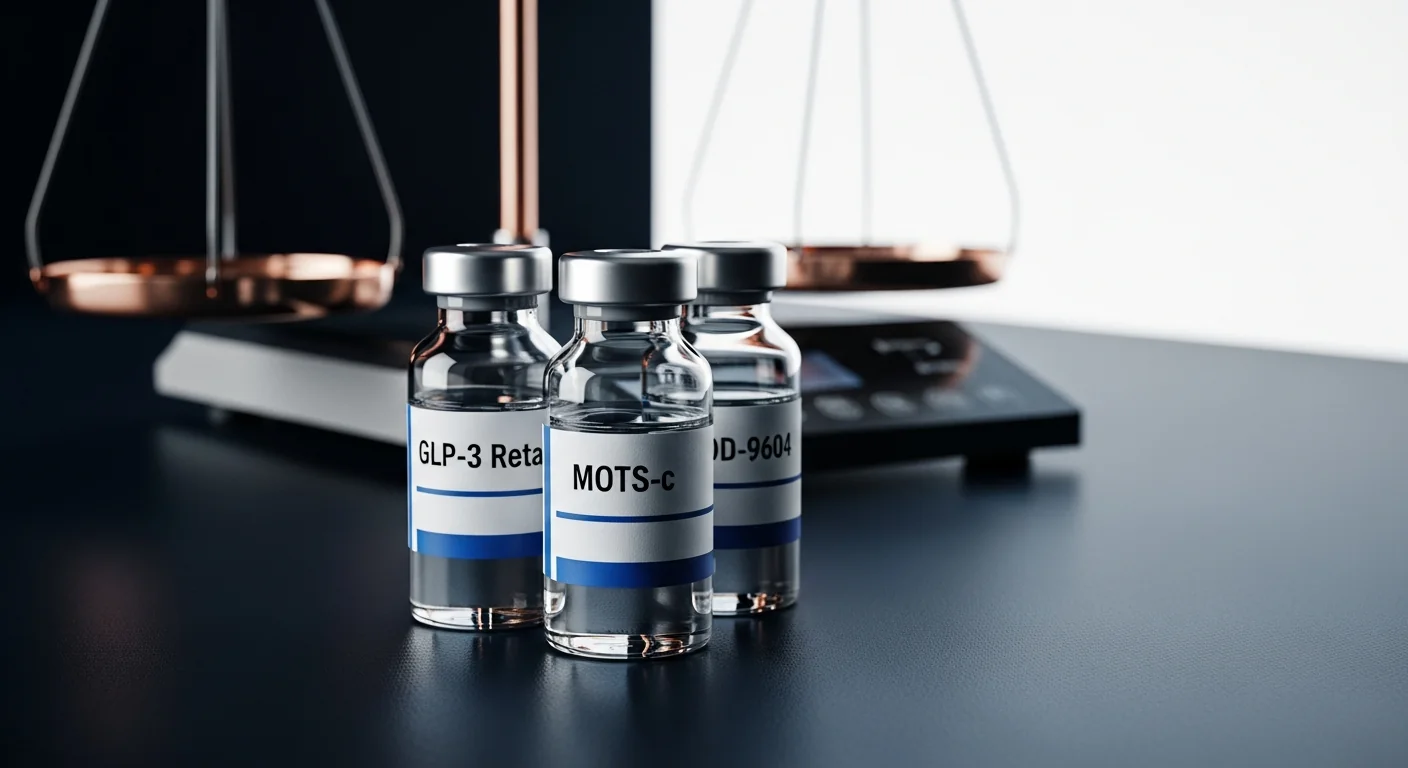
Stack: Skinny Fit Max
GLP-3(Reta) + MOTS-c + AOD-9604 | Preclinical and early-phase clinical research stack | For laboratory and in vitro research use only
Three peptides. Three entirely different mechanisms. One metabolic research stack that targets the problem from the receptor down to the mitochondria and out to the fat cell.
The Skinny Fit Max stack pairs GLP-3(Reta), a triple incretin receptor agonist studied across GIP, GLP-1, and glucagon receptor pathways, with MOTS-c, the mitochondrial microprotein that encodes from the 12S rRNA gene and acts as a metabolic stress regulator, and AOD-9604, the C-terminal fragment of human growth hormone that directly promotes lipolysis without affecting IGF-1 activity. These three compounds don’t overlap. That’s the point.
Most metabolic peptide research focuses on one pathway. This stack hits central appetite signaling, peripheral mitochondrial fuel routing, and local adipocyte fat release simultaneously. The research literature behind each compound is substantial, and the mechanistic logic for combining them is well-grounded in the underlying biology. This guide breaks it all down.
Key Research Findings at a Glance
- In a phase 2 trial published in The Lancet, GLP-3(Reta) produced dose-dependent reductions in body weight and HbA1c, with the triple receptor mechanism offering additive effects beyond GLP-1(Sema) and GLP-2(Tirz) in head-to-head modeling. 37385280
- MOTS-c supplementation in obese mouse models reduced fat mass, improved insulin sensitivity, and restored AMPK signaling in skeletal muscle, with effects attributed to MOTS-c’s capacity to translocate to the nucleus and regulate folate cycle enzymes. 25738459
- AOD-9604 demonstrated selective lipolysis activation in beta-3 adrenergic receptor knock-out mice without the growth-promoting or IGF-1 elevating effects of full-length growth hormone, confirming its lipolytic domain specificity. 11713213
- A 2022 review found that MOTS-c plasma levels increase during aerobic exercise and correlate with improved glucose tolerance, positioning it as a mitohormetic signal linking physical activity to metabolic adaptation. 35656563
Mechanism Deep Dive: How Each Compound Works
GLP-3(Reta): Triple Incretin Receptor Agonism
GLP-3(Reta) is a long-chain acylated peptide designed to simultaneously activate three receptors: the glucagon-like peptide-1 receptor (GLP-1R), the glucose-dependent insulinotropic polypeptide receptor (GIPR), and the glucagon receptor (GCGR). No prior approved metabolic peptide hits all three.
The GLP-1R axis is well-established. It slows gastric emptying, reduces appetite signaling in the hypothalamus, and augments glucose-stimulated insulin release. GLP-1(Sema) and GLP-2(Tirz) both engage it. What GLP-3(Reta) adds is glucagon receptor co-activation, which increases energy expenditure by stimulating hepatic glucose output and brown adipose tissue thermogenesis. The GIP receptor arm amplifies insulin secretion and has been shown to enhance fat storage suppression in adipose tissue.
The 2024 mechanistic review by Jakubowska et al. describes the cooperative interaction between these three receptor pathways, noting that glucagon receptor activation would ordinarily increase blood glucose in isolation. 38356208 But when paired with GLP-1R and GIPR agonism, the net effect is neutral or suppressive for glucose while the thermogenic and lipolytic signals from the glucagon axis remain active. It’s a pharmacological balance that neither single nor dual agonists can replicate.
Kaur and Misra’s 2024 review characterizes GLP-3(Reta) as working through central appetite suppression, gastric motility reduction, peripheral insulin sensitization, and caloric expenditure elevation via the glucagon arm. 38367045 That’s four distinct metabolic effects from a single molecule.
MOTS-c: The Mitochondrial Microprotein That Rewires Fuel Use
MOTS-c (Mitochondrial Open reading frame of the twelve S rRNA type-c) is encoded within the mitochondrial genome, not the nuclear genome. That fact alone sets it apart from virtually every other metabolic peptide studied to date. Its 16-amino acid sequence is conserved across mammals, and its activity is tied directly to mitochondrial stress sensing.
The landmark 2015 Cell Metabolism paper by Lee, Zeng, Drew and colleagues characterized how MOTS-c acts on the folate cycle via one-carbon metabolism, ultimately activating AMPK in skeletal muscle. 25738459 AMPK activation is the master switch for cellular fuel switching: it inhibits lipid and cholesterol synthesis, promotes glucose uptake via GLUT4 translocation, and kicks fatty acid oxidation into gear. The Lee group showed that exogenous MOTS-c administration to diet-induced obese mice reduced fat accumulation and restored insulin sensitivity in a dose-dependent fashion.
What makes MOTS-c especially interesting in a stacking context is its nuclear translocation. Under metabolic stress, MOTS-c moves from mitochondria into the nucleus and acts as a transcriptional coregulator, directly modifying gene expression related to oxidative metabolism and stress response. Lee, Kim, and Cohen’s 2016 follow-up describes this moonlighting behavior in detail. 27216708
A separate 2015 analysis found that certain MOTS-c sequence variants (specifically the A1382C polymorphism in the mitochondrial 12S rRNA gene) are overrepresented in Japanese centenarians at a rate well above chance, suggesting the peptide plays a role in longevity-associated metabolic resilience. 26289118 The word “exceptional” in that paper’s title isn’t rhetorical. The data genuinely supports a link between MOTS-c biology and healthspan extension.
AOD-9604: The HGH Fragment That Only Does One Thing
AOD-9604 is residues 177 to 191 of human growth hormone, plus a tyrosine at the N-terminus. The full hGH molecule does a lot: it promotes IGF-1 secretion, increases lean muscle, affects bone density, and raises blood glucose by reducing insulin sensitivity. AOD-9604 strips away all of that. The only thing it keeps is the lipolytic activity.
Ng, Sun, and Sharma’s 2000 study mapped the metabolic specificity of this fragment in detail. 11146367 Unlike full-length hGH, AOD-9604 did not increase IGF-1 levels, did not affect blood glucose, and did not stimulate cell proliferation, but it did activate lipolysis in adipocytes at nanomolar concentrations. The researchers traced the mechanism to beta-3 adrenergic receptor stimulation in adipose tissue.
Heffernan and colleagues extended this in 2001, comparing AOD-9604 against intact hGH in both normal obese mice and beta-3 adrenergic receptor knock-out (ARKO) mice. 11713213 The wild-type mice lost fat mass under AOD-9604 treatment comparable to what full hGH produced, but without the anti-insulin and pro-proliferative effects. In ARKO mice, AOD-9604’s fat-loss effect was partially retained, suggesting additional receptor pathways (likely involving lipid droplet-associated proteins and HSL phosphorylation) contribute to its action beyond beta-3 AR signaling alone.
A 2015 study from Kwon and Park explored AOD-9604’s utility in an intra-articular model for osteoarthritis, finding that the fragment reduced cartilage degradation markers when injected into rabbit knee joints. 26275694 That’s an entirely different application from its lipolytic role, but it reinforces the compound’s tissue-level safety profile, since researchers were deliberately exposing joint cartilage to high local concentrations and observed protective rather than damaging effects.
Pharmacokinetic Profile
| Compound | Half-life | Route studied | Clearance |
|---|---|---|---|
| GLP-3(Reta) | Approx. 6 days (acylated, human) | Subcutaneous | Renal and enzymatic |
| MOTS-c | Short (approx. 30 min, rodent data) | Intraperitoneal, subcutaneous | Proteolytic, rapid |
| AOD-9604 | Approx. 30 min (short peptide fragment) | Subcutaneous, oral (studied) | Renal filtration, proteolytic |
The PK asymmetry in this stack is intentional from a research design standpoint. GLP-3(Reta)’s week-long half-life provides continuous receptor occupancy at GLP-1R, GIPR, and GCGR. MOTS-c and AOD-9604 have much shorter half-lives, making them better suited to more frequent dosing windows in preclinical protocols. This temporal separation means the compounds are operating on different pharmacological timescales, which may actually reduce interaction complexity at shared downstream pathways.
GLP-3(Reta)’s long half-life comes from its acylation (an albumin-binding fatty acid chain), which slows renal clearance and protects the peptide backbone from DPP-4 degradation. MOTS-c and AOD-9604 lack this modification. Their rapid clearance is consistent with how short peptide fragments behave generally: high initial peak, fast proteolytic breakdown, local tissue effects that outlast circulating levels by minutes to hours depending on receptor internalization kinetics.
Research Application: Central Appetite and Energy Regulation
GLP-3(Reta)’s central nervous system effects are one of the more compelling aspects of its research profile. GLP-1 receptors are expressed in the hypothalamus, brainstem, and vagal afferents, and activation there produces satiety signaling that reduces food-seeking behavior in animal models. GLP-3(Reta) engages those same central receptors while simultaneously stimulating GIPR pathways that amplify the reward-devaluation effect on calorie-dense foods.
What GLP-3(Reta) adds that neither GLP-1(Sema) nor GLP-2(Tirz) provides is the glucagon receptor arm’s thermogenic contribution. Glucagon signaling in the hypothalamus modulates energy expenditure set points, and preclinical data suggests that GCGR agonism increases brown adipose tissue activity. The net effect across all three pathways, when studied in rodent and non-human primate models, is a combination of reduced caloric intake and increased energy expenditure, a dual-sided caloric gap that single-receptor agonists don’t achieve to the same degree.
The Rosenstock et al. Lancet paper (2023) reported that the highest dose group in the phase 2 type 2 diabetes trial experienced substantially greater HbA1c reductions than comparator GLP-1 arms, which the authors attributed partly to the added glucagon and GIP receptor effects on hepatic glucose handling. 37385280
Research Application: Mitochondrial Glucose Flux and AMPK Activation
MOTS-c’s relationship with AMPK is probably the most important part of its metabolic profile. AMPK (AMP-activated protein kinase) is the cell’s primary energy sensor. When AMP levels rise, meaning the cell has spent its ATP and is now running low, AMPK turns on pathways that generate more ATP and turns off pathways that spend it. This includes shutting down fatty acid synthesis, turning off mTOR-driven protein synthesis, and opening glucose uptake channels in muscle cells.
MOTS-c doesn’t activate AMPK directly. It does it through the folate cycle. The peptide inhibits the enzyme AICAR transformylase in the one-carbon metabolic pathway, which causes AICAR (5-aminoimidazole-4-carboxamide ribonucleotide) to accumulate. AICAR is a known pharmacological AMPK activator (it’s the same mechanism behind the research compound AICAR/acadesine). Lee et al. 2015 traced this cascade in the context of exogenous MOTS-c treatment and confirmed the pathway using genetic knockdown experiments. 25738459
The exercise connection matters here. Yoon and colleagues reviewed the existing evidence for MOTS-c as a mitohormetic signal in 2022, showing that MOTS-c plasma concentrations increase during aerobic exercise in humans and that this increase correlates with improvements in glucose tolerance. 35656563 The implication is that exogenous MOTS-c may partially replicate or extend the metabolic benefits of exercise at the mitochondrial level, at least in models where mitochondrial function is compromised by diet-induced obesity or aging.
Research Application: Selective Lipolysis Without IGF-1 Elevation
AOD-9604’s primary research value is precision. Full-length growth hormone promotes fat breakdown, yes. But it also elevates IGF-1, increases lean mass, raises blood glucose by reducing insulin sensitivity, and carries known risks of edema and carpal tunnel in clinical contexts. AOD-9604 does none of that. It occupies the GH receptor’s lipolytic binding domain specifically and walks away without triggering the growth-signaling cascade.
This makes it an unusual compound in the research toolkit. Most growth hormone analogs and secretagogues engage the full receptor signaling complex. AOD-9604’s selectivity was confirmed across multiple model systems by the Monash University groups in Australia who first characterized it, and independently validated in the ARKO mouse studies. 11673763
In in vitro adipocyte models, AOD-9604 stimulates hormone-sensitive lipase (HSL) phosphorylation and reduces lipid droplet accumulation without inducing glucose transporter redistribution or affecting insulin receptor signaling. This is the mechanism that keeps it from interfering with insulin-related pathways in a stack context, which matters when GLP-3(Reta) is simultaneously promoting insulin secretion via GIPR and GLP-1R pathways.
Research Application: Cardiometabolic and Inflammatory Markers
Each compound in this stack has been studied in the context of cardiometabolic risk markers, and the results are relevant to how researchers frame the overall stack profile.
GLP-3(Reta) reduces triglycerides and LDL cholesterol in preclinical cardiovascular models, consistent with the broader GLP-1 class effect. Its glucagon receptor activity additionally promotes hepatic fatty acid oxidation, which reduces hepatic fat accumulation (studied in non-alcoholic fatty liver models). The multi-receptor character of GLP-3(Reta) makes it one of the more complete metabolic agents in the incretin class from a hepatic perspective.
MOTS-c’s anti-inflammatory effects have emerged as a notable secondary research area. A 2024 study found that MOTS-c administration suppressed NLRP3 inflammasome activation in diabetic cardiomyopathy models, with downstream reductions in IL-1 beta and IL-18. 39616938 The mechanistic link runs through ROS suppression: MOTS-c reduces mitochondrial reactive oxygen species production, which otherwise activates TXNIP and triggers NLRP3. This connects the mitochondrial fuel-switching effect to systemic inflammation, suggesting MOTS-c’s metabolic actions and its anti-inflammatory actions share common upstream mechanisms.
AOD-9604’s cardiometabolic profile is narrower but relevant. Reduced adipose mass and improved lipid utilization from AOD-9604 treatment in obese animal models correlated with reduced circulating triglycerides over 12-week treatment periods in the Heffernan studies. No direct cardiac effects have been documented.

Research Application: Stack Complementarity in Whole-Body Energy Balance
Here’s the research framing that makes the Skinny Fit Max combination worth studying as a stack rather than as individual compounds: each peptide addresses a distinct bottleneck in energy balance physiology, and none of them meaningfully competes with the others at the receptor or signaling level.
GLP-3(Reta) works upstream, at the level of hypothalamic appetite circuits and gastric motility. It reduces caloric input and increases thermogenic expenditure but doesn’t directly modify what muscles or fat cells do with the energy substrates circulating in blood. MOTS-c works at the mitochondrial and cellular level, specifically in skeletal muscle (the largest glucose-consuming tissue in the body), improving the efficiency with which those cells oxidize glucose and fatty acids. AOD-9604 works directly at the adipocyte, triggering HSL-mediated triglyceride breakdown and releasing free fatty acids for oxidation.
The mechanistic logic: GLP-3(Reta) reduces net caloric surplus, MOTS-c improves the metabolic machinery handling that surplus, and AOD-9604 directly mobilizes existing stored fat. These are distinct intervention points. Whether that mechanistic complementarity translates to additive efficacy in preclinical stack models hasn’t been formally published as of this writing. That’s an important research gap, and one that makes this combination a legitimate area of inquiry.
How Skinny Fit Max Compares to GLP-1(Sema) and GLP-2(Tirz) Based Stacks
The GLP-1(Sema) class (single receptor agonists) established the clinical proof of concept for GLP pathway activation in weight management. Skinny Fit, the GLP-1(Sema)-based stack, operates on GLP-1R alone for its incretin effects. That’s a well-studied and highly validated single-axis approach.
GLP-2(Tirz) adds GIP receptor co-activation to GLP-1R signaling, which is the mechanism behind its enhanced efficacy relative to GLP-1(Sema) in head-to-head research. The GIPR arm adds another layer of insulin potentiation and appetite suppression. Dual agonism produces measurably greater weight loss outcomes in research models compared to single agonism.
GLP-3(Reta) extends this progression by adding the glucagon receptor as a third target. The 2024 comparative review by Jakubowska et al. characterizes the incremental benefit of each receptor addition: GLP-1R provides the core satiety and insulin effect, GIPR amplifies insulin sensitivity and adds adipose-level lipolytic signaling, and GCGR adds thermogenic expenditure and hepatic fat reduction. 38356208
| Stack | Incretin Component | Receptors | Key differentiator |
|---|---|---|---|
| Skinny Fit | GLP-1(Sema) | GLP-1R | Established single-receptor baseline |
| Dual agonist approach | GLP-2(Tirz) | GLP-1R + GIPR | Adds insulin sensitization via GIP |
| Skinny Fit Max | GLP-3(Reta) | GLP-1R + GIPR + GCGR | Adds thermogenic glucagon axis |
The MOTS-c and AOD-9604 components are present in both Skinny Fit and Skinny Fit Max. The difference between the two stacks comes down entirely to the incretin compound: the baseline uses GLP-1(Sema), and the Max version upgrades to GLP-3(Reta). Researchers interested in studying the incremental contribution of glucagon receptor co-activation in a controlled stack model have a relatively clean comparison here.
Stack Rationale: Why These Three Together
The short version: GLP-3(Reta) controls energy balance from the top down (brain and gut), MOTS-c optimizes the metabolic machinery doing the work (mitochondria in muscle), and AOD-9604 directly attacks stored fat reserves (adipocytes). No receptor overlap. No mechanism redundancy.
The more detailed version is about where each compound struggles in isolation. GLP-3(Reta) reduces caloric intake substantially. But if the mitochondria in skeletal muscle are dysfunctional, as they often are in metabolically compromised models, the freed-up substrate doesn’t get oxidized efficiently. MOTS-c addresses that directly. Similarly, AOD-9604 promotes fat mobilization from adipocytes, releasing free fatty acids into circulation. If there’s insufficient mitochondrial capacity to oxidize those fatty acids, they re-esterify in the liver and don’t contribute to net energy expenditure.
MOTS-c essentially creates the oxidative capacity that AOD-9604’s lipolytic signal calls for. And GLP-3(Reta) sets the caloric context in which both processes operate. That’s the mechanistic argument for the combination. Whether it holds in vivo at the stack level is exactly the kind of question this type of research stack is designed to explore.
Storage and Reconstitution Protocol for Research Use
All three compounds in the Skinny Fit Max stack are supplied as lyophilized (freeze-dried) peptide powders. Reconstitution and storage protocols follow standard peptide handling procedures, though each compound has slightly different stability characteristics worth noting.
GLP-3(Reta)
Store unreconstituted vials at -20°C (long-term) or 2 to 8°C (up to 4 weeks). Reconstitute with bacteriostatic water. The acylated structure makes GLP-3(Reta) moderately stable at neutral pH but sensitive to repeated freeze-thaw cycles. Reconstituted solutions should be stored at 4°C and used within 4 weeks, or aliquoted and stored at -20°C for longer-term stability. Mix by gentle swirling, not vortex. The peptide tends to aggregate at the interface if overmixed.
MOTS-c
Store lyophilized MOTS-c at -20°C. Reconstitute with sterile water or PBS at the target concentration for the research protocol. MOTS-c is a relatively short peptide (16 amino acids) and is generally stable in solution at 4°C for up to 2 weeks. Avoid repeated freeze-thaw; prepare aliquots at the time of reconstitution. The peptide has no known light sensitivity, though opaque storage vials are standard practice for research grade peptides.
AOD-9604
Store lyophilized AOD-9604 at 2 to 8°C. The compound is stable at room temperature for shorter periods but long-term storage below 8°C is standard. Reconstitute with bacteriostatic water. AOD-9604 in solution should be used within 30 days when stored at 4°C. The compound is pH-sensitive and performs best in neutral to slightly acidic conditions (pH 4 to 7). Both subcutaneous and intraperitoneal administration routes have been used in the published rodent research.
Safety and Endocrine Considerations in Preclinical Research
Each compound has a distinct safety signal profile in the published literature, and researchers should be aware of the relevant considerations when designing protocols.
GLP-3(Reta): The glucagon receptor component carries a theoretical risk of increased hepatic glucose production if receptor stoichiometry isn’t balanced by concurrent GLP-1R and GIPR activity. This balance appears well-maintained at the doses studied in the Rosenstock et al. phase 2 trial, where no increase in hyperglycemic events was observed. 37385280 Gastrointestinal observations (nausea, reduced gastric motility) consistent with GLP-1 class effects were documented and are expected for any GLP-1R agonist. These are not unique to GLP-3(Reta).
MOTS-c: No significant adverse observations have been reported in published rodent studies. As a peptide endogenous to human physiology (it’s expressed naturally in all mammals), MOTS-c’s exogenous administration in research models hasn’t produced off-target endocrine disruption. The 2022 review noted that exercise-induced endogenous MOTS-c elevations are well-tolerated, providing a natural upper-bound reference for circulating levels. 35656563
AOD-9604: Decades of research and a history of human clinical trials for obesity treatment support a clean safety profile for this compound. It’s been studied in multiple clinical trials by Metabolic Pharmaceuticals (Australia) and was granted GRAS (Generally Recognized As Safe) status in the US for use as a food ingredient. No effects on IGF-1, blood glucose, or insulin sensitivity were detected in human subjects. 11146367
Stack-level interaction considerations: the three compounds operate through non-overlapping mechanisms, which reduces the likelihood of pharmacodynamic interactions. GLP-3(Reta)’s insulin-potentiating effects (via GLP-1R and GIPR) could theoretically amplify MOTS-c’s AMPK-driven glucose uptake in skeletal muscle. This would be an additive effect, not an adverse interaction. AOD-9604’s non-insulin pathway lipolysis is mechanistically independent of both other compounds. As with all multi-peptide research protocols, researchers should monitor blood glucose and relevant metabolic markers when running combined protocols in model systems.
Frequently Asked Questions
What distinguishes GLP-3(Reta) from GLP-1(Sema) in preclinical research?
GLP-3(Reta) engages three receptors simultaneously: GLP-1R, GIPR, and GCGR. GLP-1(Sema) targets only GLP-1R. The additional glucagon receptor arm adds thermogenic energy expenditure effects that GLP-1(Sema) doesn’t provide, and the GIPR component amplifies insulin sensitization. Preclinical and early clinical research suggests that this triple receptor mechanism produces greater reductions in body weight and fat mass compared to single-receptor agonism, though formal head-to-head research comparing all three compounds at equivalent doses is ongoing.
What is MOTS-c and why is it in a metabolic research stack?
MOTS-c is a 16-amino acid peptide encoded within the mitochondrial genome, specifically the 12S rRNA gene. It acts as an intracellular signaling molecule that activates AMPK via the folate cycle, promoting fatty acid oxidation and glucose uptake in skeletal muscle. Its presence in the Skinny Fit Max stack is based on its complementary mechanism: while GLP-3(Reta) reduces caloric input and AOD-9604 mobilizes fat stores, MOTS-c optimizes the mitochondrial machinery responsible for oxidizing those substrates.
Does AOD-9604 affect IGF-1 or growth hormone levels?
No. AOD-9604 is the C-terminal fragment (residues 177 to 191) of human growth hormone. It retains the lipolytic signaling domain but lacks the receptor-binding regions responsible for IGF-1 stimulation and growth promotion. Multiple studies have confirmed that AOD-9604 administration does not elevate serum IGF-1, does not affect blood glucose, and does not produce the proliferative effects associated with full-length hGH. This selectivity is one of its key research attributes.
How does the Skinny Fit Max stack differ from the original Skinny Fit stack?
The only difference between the two stacks is the incretin component. The Skinny Fit stack uses GLP-1(Sema), a single-receptor GLP-1 agonist. Skinny Fit Max upgrades to GLP-3(Reta), which adds GIP and glucagon receptor co-activation. The MOTS-c and AOD-9604 components are identical across both stacks.
Is there published research on this specific three-compound combination?
No peer-reviewed studies have examined GLP-3(Reta), MOTS-c, and AOD-9604 as a combined protocol as of 2026. The stack rationale is based on the established mechanisms of each individual compound and their non-overlapping receptor targets, not on direct combination trial data. This represents a legitimate research gap and a reason why in vitro and preclinical stack research remains relevant.
What is the pharmacokinetic rationale for combining compounds with such different half-lives?
GLP-3(Reta) has a half-life of approximately 6 days due to its albumin-binding acyl chain. MOTS-c and AOD-9604 have half-lives in the range of 30 minutes. This difference actually simplifies protocol design: GLP-3(Reta) is dosed infrequently to maintain receptor occupancy, while MOTS-c and AOD-9604 are dosed more frequently at shorter intervals. The pharmacological timescales don’t conflict because the compounds operate through non-overlapping mechanisms on different tissue types.
What type of research is MOTS-c most relevant to?
MOTS-c is most studied in the context of mitochondrial metabolism, insulin resistance, obesity, and aging. Published research covers its role in skeletal muscle glucose uptake, AMPK activation via folate cycle modulation, nuclear translocation under metabolic stress, circulating levels in human exercise studies, and its correlation with longevity-associated genetic variants in centenarian populations. More recent work has extended to diabetic cardiomyopathy and inflammatory pathways (NLRP3 inflammasome).
What reconstitution volumes should researchers use for these peptides?
Reconstitution volumes depend on the target concentration for the specific research protocol. All three compounds in this stack are supplied as lyophilized powders and should be reconstituted with bacteriostatic water (for subcutaneous in vivo applications) or sterile water/PBS (for in vitro applications). Vials should be labeled with the concentration calculated from the lyophilized mass and reconstitution volume. Research-grade calculations should verify mg/mL concentration before use in any experimental protocol.
Are there any documented receptor interactions between GLP-3(Reta) and AOD-9604?
No receptor-level interactions have been documented between GLP-3(Reta) and AOD-9604. GLP-3(Reta) acts on GIP, GLP-1, and glucagon receptors. AOD-9604 acts via the beta-3 adrenergic receptor and possibly additional lipase-associated signaling. These are distinct receptor families on different cell types (endocrine/neural vs. adipocyte). A potential pharmacodynamic interaction worth monitoring in research protocols is the insulin-potentiating effect of GLP-3(Reta) combined with AOD-9604’s free fatty acid release, since elevated circulating FFA can affect insulin signaling. This is a monitoring consideration, not a contraindication.
Learn more about our team →