
TB-500 Dosage Research Protocols: Thymosin Beta-4 Guide

Written bySpartan Research Team
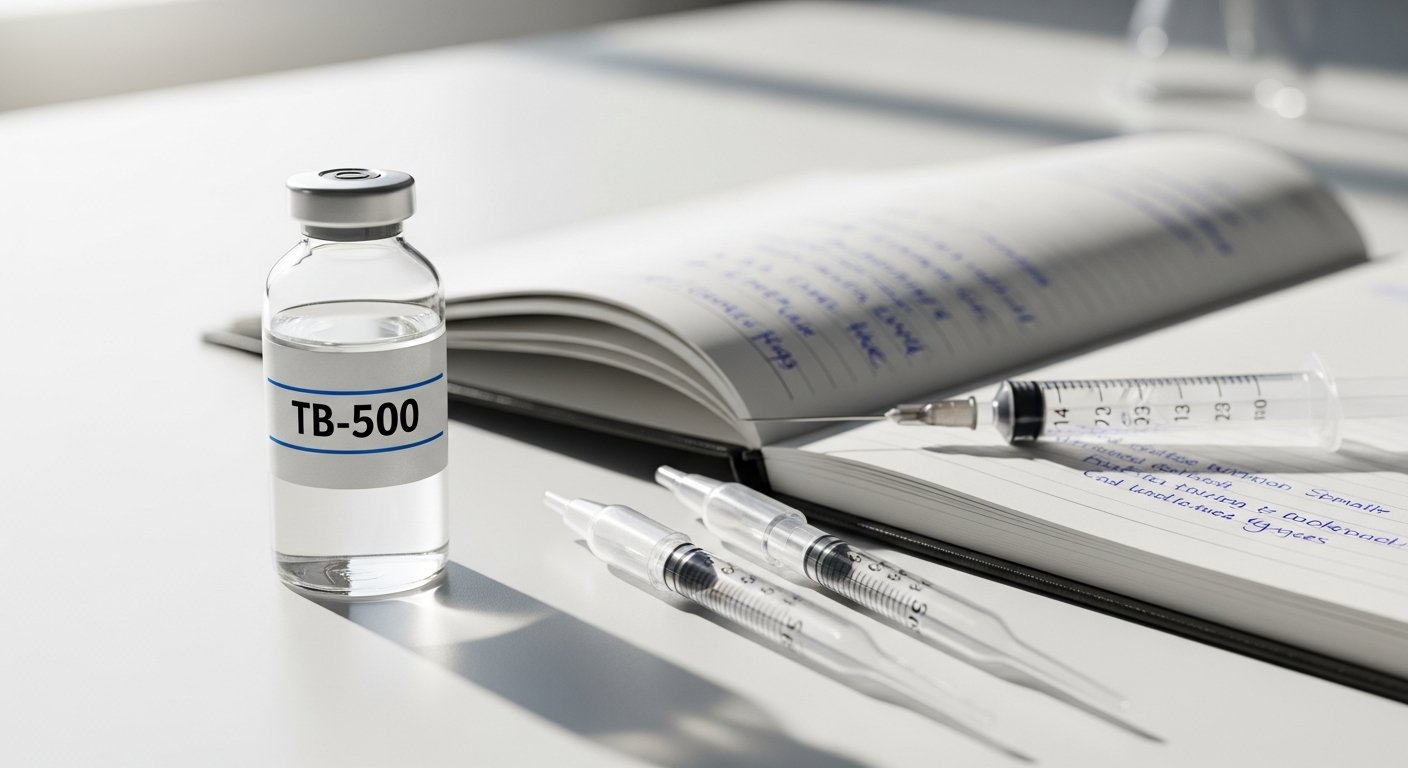
TB-500 is the synthetic form of the active region of Thymosin Beta-4 (TB4), a naturally occurring peptide originally isolated from thymus tissue and found throughout the body in concentrations particularly high in platelets, wound fluid, and sites of active tissue repair. The synthetic fragment corresponds to the actin-binding domain of TB4, specifically the sequence Ac-LKKTETQ, though TB-500 as commonly referenced in research literature typically refers to the full active peptide fragment. It’s one of the more heavily studied tissue-repair peptides in preclinical research, with work spanning wound healing, tendon biology, cardiac repair, and skeletal muscle recovery models.
- Goldstein et al. demonstrated that Thymosin Beta-4 (parent molecule of TB-500) accelerated corneal wound healing and reduced inflammatory infiltrate in animal models, establishing the wound-healing research framework for this peptide class (PMID 15692186).
- Bock-Marquette et al. (2004) published landmark data showing TB4 activation of ILK (integrin-linked kinase) in cardiac progenitor cells, resulting in cardiomyocyte migration, survival signaling, and regenerative responses in infarcted heart models (PMID 15229469).
- In rat tendon injury models, TB4-derived fragments reduced fibrosis markers and improved structural organization of healing tendon tissue compared to untreated controls.
What Is TB-500 and How Does It Differ from TB4?
Thymosin Beta-4 is a 43-amino acid peptide encoded by the TMSB4X gene. It’s one of the most abundant intracellular proteins in most mammalian cells and exists in high concentrations in platelets, which is why wound fluid contains elevated TB4 levels. The peptide’s primary intracellular function involves G-actin sequestration, maintaining the pool of free actin monomers available for cytoskeletal remodeling. That’s the structural biology. The signaling biology is what drives the tissue repair research.
TB-500 as used in research typically refers to the synthetic fragment containing the LKKTETQ actin-binding domain sequence. Some research uses the full TB4 sequence, some uses specific subfragments. The distinction matters for interpreting published protocols because the active fragment responsible for cell migration and anti-inflammatory effects may differ from the full molecule’s cytoskeletal sequestration function. Research protocols in the literature reflect this diversity, and comparing dosages across studies requires attention to which specific sequence was used.

TB-500 is available from Spartan Peptides for in vitro and preclinical tissue repair research. View product details.
Reconstitution Protocols Used in Published Research
Before getting into the research data, it’s worth covering the handling protocols documented in the literature, because they’re directly relevant to anyone designing in vitro experiments.
TB-500 (as lyophilized peptide) is typically reconstituted with sterile bacteriostatic water (0.9% benzyl alcohol) for in vitro applications. Most published cell culture work uses concentrations in the nanomolar to low micromolar range. Stock solutions are prepared at higher concentrations and diluted to working concentrations at the time of experiment. Reconstituted peptide stored at 4°C is generally considered stable for several weeks; long-term storage uses frozen aliquots at -20°C or below to prevent freeze-thaw degradation.
For in vivo rodent studies in the published literature, subcutaneous injection is the most commonly used route, with intraperitoneal administration also used in some cardiac models. Dose ranges in published animal studies span a wide range: from approximately 150 micrograms per kilogram to several milligrams per kilogram depending on the study objective and species. The Goldstein group’s wound-healing studies used topical application in corneal models. Researchers designing their own protocols should use published peer-reviewed data as the reference for dose range selection, not extrapolations from other compound classes.
Published Protocol Ranges: Wound Healing and Tissue Repair
The wound healing research base for TB4 and its synthetic derivatives is substantial. Goldstein et al. (2005, PMID 15692186) published a thorough review of TB4’s role in wound healing processes, documenting effects on keratinocyte migration, angiogenesis, and inflammatory resolution. The corneal wound healing data are particularly clean because corneal models allow direct visualization and quantification of wound closure rates over time.
In these studies, TB4 accelerated corneal epithelial wound closure, and the active LKKTETQ fragment reproduced the effect, confirming that the actin-binding domain carries the relevant biological activity. Anti-inflammatory effects were documented alongside the migration data: treated wounds showed reduced levels of inflammatory mediators including IL-1 and TNF-alpha compared to untreated controls, and inflammatory cell infiltration was reduced.
Tendon research with TB4 derivatives shows a somewhat different profile. Rather than simply accelerating healing, several studies found that TB4 treatment reduced fibrosis in healing tendons, producing more organized collagen architecture compared to the disorganized scar tissue in vehicle-treated controls. Ho et al. (2010) examined TB4 in an Achilles tendon injury model in rats, finding reduced pro-fibrotic TGF-beta1 signaling and improved biomechanical properties (tensile strength) in the healing tendon at 4-week follow-up. That combination, less fibrosis plus better mechanical properties, is what makes TB4 research particularly interesting in the connective tissue context.
Loading vs. Maintenance Concepts in Published Animal Protocols
Several rodent studies have used what might loosely be described as loading and maintenance phases in their dosing protocols, though the terminology isn’t standardized across the literature. The basic design involves higher-frequency or higher-dose administration during the initial acute injury or early treatment phase, followed by lower-frequency or lower-dose administration during a maintenance period.
The rationale, where it’s discussed in the papers, relates to TB4’s role in mobilizing cardiac stem cells and tissue progenitor cells. Bock-Marquette et al. (2004, PMID 15229469) showed that TB4 activated ILK in cardiac progenitor cells, stimulating their migration toward injury sites. Higher initial concentrations may be needed to recruit progenitor cells during the acute phase, while lower concentrations during tissue remodeling phases may suffice to maintain the anti-fibrotic and anti-inflammatory signaling.
This isn’t a formally validated two-phase protocol in the way that cancer chemotherapy protocols are developed. It’s a pattern that emerges from how researchers have structured their animal studies, and it’s worth acknowledging as a research observation rather than a validated clinical protocol framework.
Administration Routes in the Research Literature
The primary administration routes documented in TB4 and TB-500 research are subcutaneous injection, intraperitoneal injection, and topical application. Intravenous administration has been used in some cardiac models where rapid biodistribution is important. Intranasal delivery has been studied for CNS applications (TB4 has neuroprotective data in stroke models) but is less common in the musculoskeletal and wound healing literature.
Route choice in published studies tends to reflect the research objective. Cardiac progenitor cell studies favor intraperitoneal or intravenous routes for systemic distribution. Local wound healing studies often use topical or local injection protocols. Skeletal muscle and tendon studies use subcutaneous administration with the injection site distal to the injury location in most published designs.
TB-500 in the Context of BPC-157 Combination Research
TB-500 and BPC-157 are frequently studied together in tissue repair research because they have complementary activity profiles. BPC-157 operates primarily through nitric oxide-dependent vascular mechanisms and has particularly strong gastrointestinal cytoprotection data. TB-500 operates through actin cytoskeletal signaling and ILK-mediated progenitor cell activation. The two pathways aren’t directly overlapping, which is why combination designs can potentially show additive effects on different components of the repair process.
Published combination studies are limited but the mechanistic case for complementarity is solid. For researchers studying tissue repair biology, having both available from a verified source matters for experimental design flexibility. Spartan Peptides offers both TB-500 and BPC-157 at HPLC–verified purity for laboratory research use.
Frequently Asked Questions
Written by the Spartan Research Team
Our team of peptide researchers and biochemists reviews every article for scientific accuracy. Learn more about our team →