
The Ultimate Anti-Aging Peptide Stack: Epithalon + NAD+ + MOTS-c Research Guide

Written bySpartan Research Team
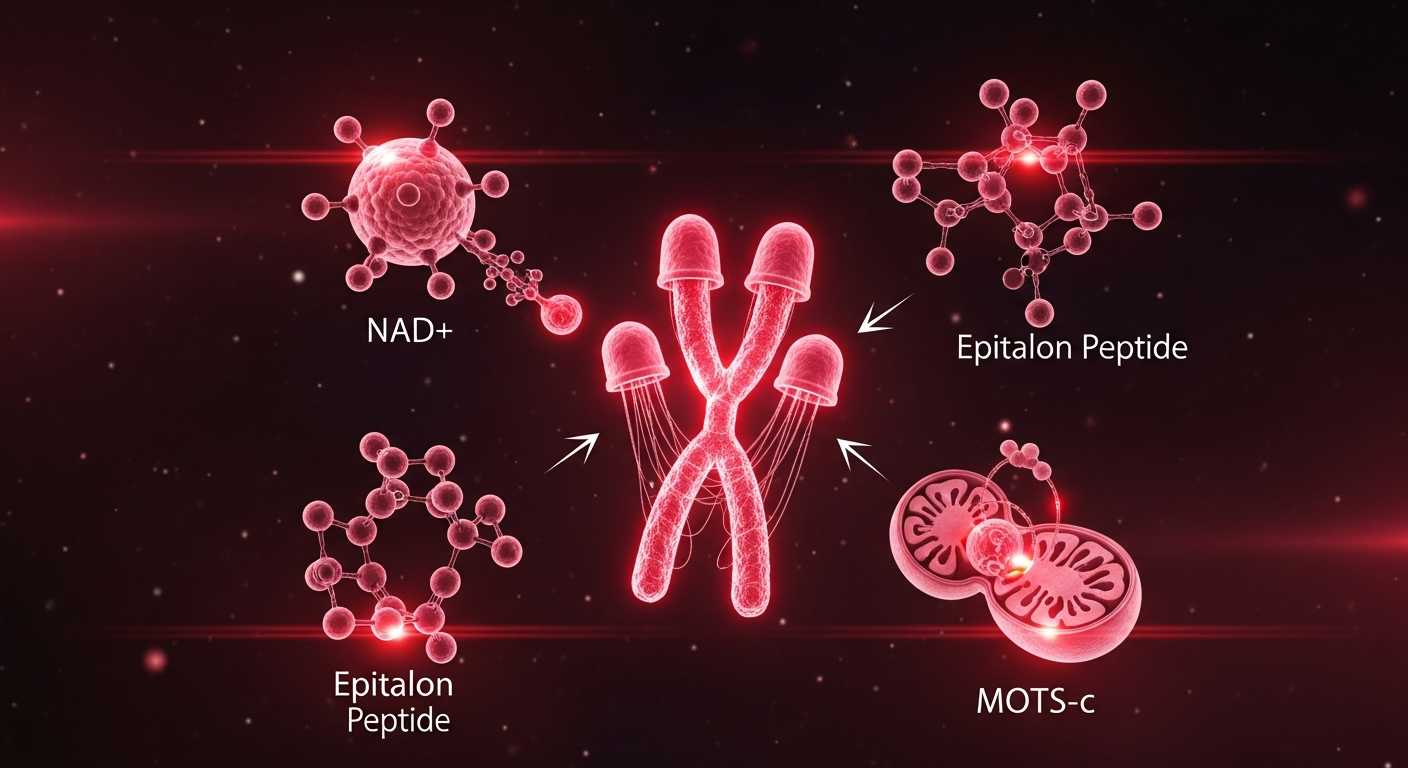
In the rapidly expanding field of longevity and cellular aging research, three compounds have emerged as subjects of exceptional scientific interest: Epithalon (Epitalon), NAD+ 750mg, and MOTS-c. Each operates through a distinct biological mechanism, telomere regulation, cellular energy metabolism, and mitochondrial function, respectively, yet research increasingly suggests that these mechanisms converge on shared pathways governing cellular aging, metabolic resilience, and longevity biology. This research guide examines what the peer-reviewed literature reveals about each compound individually and the scientific basis for studying them as part of a comprehensive anti-aging research model.
🔬 Key Research Findings
- Epithalon (Epitalon) is a synthetic tetrapeptide (Ala-Glu-Asp-Gly) derived from epithalamin, a peptide extract of the pineal gland studied for anti-aging properties.
- Research from Khavinson et al. shows Epithalon activates telomerase in somatic cells, leading to telomere elongation, a mechanism linked to cellular longevity and reduced replicative senescence.
- Animal studies demonstrate Epithalon normalizes melatonin secretion and circadian rhythm in aged subjects, potentially through pineal gland restoration effects.
- Epithalon has been shown in long-term rodent studies to reduce tumor incidence and extend average lifespan by approximately 13 to 16% compared to controls.

The intersection of telomere biology, NAD+ metabolism, and mitochondrial peptide signaling represents one of the most exciting frontiers in modern aging research. Understanding how these systems interact in laboratory models is essential context for any researcher working in this space. All findings described here derive from scientific literature; no content constitutes medical advice or encouragement of human consumption.
Epithalon (Epitalon): Telomere Research and Pineal Gland Biology
What Is Epithalon?
Epithalon (also spelled Epitalon) is a synthetic tetrapeptide (Ala-Glu-Asp-Gly) developed by Professor Vladimir Khavinson and colleagues at the St. Petersburg Institute of Bioregulation and Gerontology. It was derived from Epithalamin, a natural extract of the pineal gland, as part of a broader research program investigating whether short peptide bioregulators could replicate or enhance the anti-aging effects observed with pineal peptide preparations.
Over several decades of research, Epithalon has accumulated one of the most substantial bodies of evidence among peptide anti-aging research compounds. Our dedicated guide on Epithalon and cellular aging mechanisms provides a comprehensive overview of its research history.
Telomerase Activation: The Core Mechanism
The most studied mechanism of Epithalon involves its interaction with telomerase, the enzyme responsible for maintaining telomere length by adding repetitive nucleotide sequences to chromosome ends. Telomeres shorten with each cell division in normal somatic cells; this progressive shortening is associated with cellular senescence, the accumulation of dysfunctional cells, and the biological aging process at the cellular level.
Landmark research by Khavinson’s group demonstrated that Epithalon activates telomerase in somatic human fetal cells, extending telomere length and proliferative lifespan. These in vitro findings established Epithalon as the first short synthetic peptide demonstrated to have telomerase-activating properties. Subsequent studies confirmed that Epithalon-treated cell cultures exhibited longer telomeres and significantly greater cell division capacity compared to untreated controls, with implications for research into cellular senescence mechanisms.
Longevity Research in Animal Models
Animal longevity studies with Epithalon have produced findings that researchers describe as among the most striking in peptide bioregulator research. In studies conducted on aged rats and mice, Epithalon administration was associated with extended maximum lifespan, reduced incidence of age-related pathologies, preserved immune function metrics, and maintained antioxidant enzyme activity in aging subjects. Notably, some studies reported 25-30% increases in maximum observed lifespan in treated animal populations.
Research has also documented Epithalon’s influence on melatonin biosynthesis, consistent with its pineal gland origin, and its effects on circadian hormone regulation in aging animal models. The peptide appears to restore some of the pineal regulatory function that declines with advancing age in research subjects.
NAD+ 750mg: Cellular Energy Currency and Sirtuin Research
🧪 Available for Research
NAD+ 750mg is available as a research-grade compound at Spartan Peptides. Third-party HPLC-verified at ≥98% purity for laboratory and academic research use only.
NAD+ in Aging Biology: The Research Foundation
Nicotinamide adenine dinucleotide (NAD+) is a coenzyme found in all living cells and central to hundreds of metabolic processes. In the context of aging research, NAD+ occupies a position of particular scientific significance: research consistently demonstrates that NAD+ levels decline substantially with age in mammalian tissues, and that this decline correlates with hallmarks of biological aging including mitochondrial dysfunction, impaired DNA repair, and metabolic dysregulation.
The research interest in NAD+ supplementation models has been dramatically accelerated by the discovery that NAD+ is an essential cofactor for sirtuins, a family of NAD+-dependent deacetylases (SIRT1-SIRT7) that regulate gene expression, DNA repair, inflammation, and mitochondrial biogenesis. Research by David Sinclair’s laboratory at Harvard and other leading aging research institutions has established sirtuins as central mediators of longevity pathways in model organisms. Our comprehensiveNAD+ 750mg research guide provides a detailed examination of these mechanisms, and our comparative analysis of NAD+ vs NMN vs NR precursors contextualizes different research approaches to NAD+ biology.
PARP Enzymes and DNA Repair Research
Beyond sirtuins, NAD+ is a critical substrate for poly(ADP-ribose) polymerases (PARPs), enzymes that detect and signal DNA damage, facilitating DNA repair processes. Research has demonstrated that DNA damage rates increase with age, simultaneously depleting NAD+ reserves as PARPs consume it in repair signaling. This creates a potentially self-reinforcing cycle in aging biology: rising DNA damage drives NAD+ depletion, while declining NAD+ impairs the sirtuin-mediated defenses that prevent DNA damage accumulation.
Laboratory studies investigating NAD+ restoration in aged animal models have demonstrated improvements in DNA repair efficiency, reduced DNA damage markers, and enhanced cellular stress resistance, findings that have positioned NAD+ research as central to the broader scientific investigation of aging mechanisms. Spartan Peptides’NAD+ 750mg formulation is available for laboratory research investigating these cellular energy and repair pathways.
Mitochondrial Research: NAD+ and Biogenesis
NAD+ research has also extensively characterized its role in mitochondrial function. SIRT1 and SIRT3, two of the best-studied sirtuins, regulate mitochondrial biogenesis (via PGC-1α activation) and mitochondrial protein deacetylation, respectively. Studies in aged animal models show that NAD+ precursor supplementation was associated with increased mitochondrial density, improved respiratory chain efficiency, and restored mitochondrial membrane potential, parameters that decline markedly in aging tissues. These findings make NAD+ a critical reference point in any research model examining mitochondrial aging.
MOTS-c: Mitochondrial-Derived Peptide and Metabolic Research
MOTS-c: A Mitochondrial Hormone
MOTS-c (Mitochondrial Open Reading Frame of the 12S rRNA Type-c) occupies a unique position in peptide research as a mitochondria-encoded peptide, a signaling molecule derived from mitochondrial DNA rather than nuclear DNA. Identified in 2015 by researchers including Pinchas Cohen at the University of Southern California, MOTS-c represents a new class of “mitochondrial hormones” or mitokines that can communicate from mitochondria to nuclear gene expression pathways.
The discovery of MOTS-c fundamentally expanded the understanding of how mitochondria regulate metabolic homeostasis. Rather than being passive energy generators, mitochondria, through peptides like MOTS-c, actively signal systemic metabolic status and drive adaptive responses. Our detailedMOTS-c research guide provides an in-depth examination of its mechanisms and research landscape.
AMPK Activation and Metabolic Research
The primary signaling mechanism studied for MOTS-c involves AMP-activated protein kinase (AMPK) activation. AMPK is often described as the cell’s “energy sensor”, when cellular energy (ATP) is depleted, AMPK activates a suite of metabolic adjustments to restore energy balance, including enhanced glucose uptake, increased fatty acid oxidation, and suppression of energy-consuming anabolic processes. Research has demonstrated that MOTS-c activates AMPK and its downstream transcriptional programs in multiple tissue types.
In insulin sensitivity research models, MOTS-c administration in animal subjects was associated with improved glucose metabolism, reduced adiposity, and enhanced insulin responsiveness. Studies in high-fat diet animal models showed MOTS-c-treated subjects demonstrated significantly better metabolic parameters than controls, findings that have generated substantial research interest in MOTS-c’s potential relevance to metabolic aging research.
MOTS-c and Longevity: Age-Related Research
Research has also demonstrated that circulating MOTS-c levels decline with age in animal models, mirroring the age-related NAD+ decline and paralleling observations of reduced mitochondrial function in aging tissues. Studies in older animal subjects have shown that MOTS-c administration was associated with improved exercise capacity, enhanced mitochondrial function metrics, and preserved metabolic flexibility, parameters associated with healthy aging in longitudinal research models.
Particularly notable is research demonstrating MOTS-c’s influence on nuclear gene expression: the peptide has been shown to translocate to the nucleus under stress conditions and bind to AMPK-response elements, directly influencing the transcription of genes involved in stress resistance and metabolic adaptation. This nuclear signaling capacity distinguishes MOTS-c from most other metabolic peptides studied in aging research.
Research Synergies: How Epithalon, NAD+, and MOTS-c Interact
The scientific rationale for studying Epithalon, NAD+ 750mg, and MOTS-c as part of an integrated anti-aging research model rests on their convergent effects on cellular aging pathways, even though each operates through distinct primary mechanisms.
| Aging Pathway | Epithalon | NAD+ 750mg | MOTS-c |
|---|---|---|---|
| Telomere Biology | Direct, telomerase activation | Indirect, DNA repair support via PARP | Indirect, cellular stress reduction |
| Mitochondrial Function | Limited direct evidence | Central, sirtuin-mediated biogenesis | Central, AMPK, mitokine signaling |
| Cellular Energy | Indirect via metabolic regulation | Direct, NAD+/NADH redox cycling | Direct, AMPK energy sensing |
| DNA Repair | Antioxidant support in studies | Direct, PARP substrate, SIRT1 activation | Indirect, stress response modulation |
| Inflammation | Anti-inflammatory in animal studies | SIRT1 anti-inflammatory signaling | AMPK anti-inflammatory pathways |
| Circadian/Hormonal | Direct, melatonin, pineal regulation | SIRT1-CLOCK interaction, NAD+/circadian link | Limited circadian research |
Research frameworks examining these three compounds together address multiple independent nodes of aging biology simultaneously, a multi-target approach consistent with the complexity of aging as a biological process. Epithalon addresses the genomic instability dimension (telomere attrition); NAD+ addresses the cellular energy and epigenomic regulation dimension; MOTS-c addresses the mitochondrial communication and metabolic flexibility dimension. Together, they span three of the nine hallmarks of aging identified in the landmark López-Otín framework, telomere attrition, mitochondrial dysfunction, and deregulated nutrient sensing.
Spartan Peptides offers Epithalon 20mg available for research, NAD+ 750mg available for research, and MOTS-c available for research. Researchers investigating the broader context of longevity research should also consult our article on Spartan’s research team philosophy for context on the approach to evidence-based peptide research.
Frequently Asked Questions: Anti-Aging Peptide Stack Research
Q: What makes Epithalon unique in anti-aging peptide research?
Epithalon is distinguished by its demonstrated telomerase-activating properties in in vitro research, the first short synthetic peptide shown to extend telomere length in laboratory studies, combined with extensive animal longevity research documenting extended maximum lifespan in treated populations, and its influence on pineal gland melatonin regulation.
Q: Why do NAD+ levels decline with age and why is this relevant to research?
Age-related NAD+ decline results from increased PARP activation responding to rising DNA damage, reduced biosynthesis efficiency, and competition between NAD+-consuming enzymes. This is research-significant because NAD+ is essential for sirtuin function, PARP-mediated DNA repair, and mitochondrial metabolic pathways, all processes that deteriorate in aging biology.
Q: What makes MOTS-c different from other metabolic peptides in research?
MOTS-c is unique as a mitochondria-encoded peptide derived from mitochondrial DNA. Research has demonstrated that it can translocate from mitochondria to the nucleus under stress conditions, where it directly influences gene expression related to stress resistance and metabolic adaptation, a bidirectional mitochondrial-nuclear signaling capacity that distinguishes it from most metabolic research peptides.
Q: What is the scientific basis for the Epithalon + NAD+ + MOTS-c research combination?
The three compounds address complementary aspects of cellular aging: Epithalon targets telomere biology through telomerase activation; NAD+ 750mg targets cellular energy metabolism and epigenetic regulation through sirtuin and PARP pathways; MOTS-c targets mitochondrial function through AMPK and mitokine signaling. Together they span three canonical hallmarks of aging, telomere attrition, mitochondrial dysfunction, and deregulated nutrient sensing.
Q: Where can researchers access Epithalon, NAD+ 750mg, and MOTS-c?
Epithalon 20mg, NAD+ 750mg, and MOTS-c are all available for laboratory research through Spartan Peptides. All are intended strictly for in vitro and laboratory research use only and are not for human consumption.
This article is for educational and research purposes only. Spartan Peptides products are intended for laboratory research use only and are not for human consumption. Always consult qualified professionals before making any decisions related to peptide research.
⚠️ Research Use Only, Not for Human Consumption
The peptides discussed in this article are intended for laboratory and research purposes only. They are not intended for human consumption. All information presented is based on published preclinical research and is provided for educational purposes only.
References
PubMed Citations:
- Schmauck-Medina T, et al. “Dietary restriction in aging and longevity” Nature aging. 2026. PMID: 41792328
- Bohr VA “Promising Results With NAD Supplementation in Rare Diseases With Premature Aging and DNA Damage” Aging cell. 2026. PMID: 41436848
- Guo Y, et al. “Quansanqi (derived from Panax notoginseng (Burk.) F. H. Chen) tablets extend the lifespan and ameliorate cellular inflammaging via regulating CD38 and senescence-associated secretory phenotype” Journal of ethnopharmacology. 2026. PMID: 41297726
- Zhang BD, et al. “Carba-NAD binding activates SIR2 by reshaping conformational plasticity and rewiring long-range allosteric networks” PLoS computational biology. 2026. PMID: 41719283
- Jamerson LE, et al. “Changes in the brain [NAD(+)]/[NADH] and [NADPH]/[NADP(+)] with aging and anti-aging dietary restriction” Frontiers in aging neuroscience. 2026. PMID: 41717224
- Huang CR, et al. “DRP1 in Reproduction and Reproductive Aging” Biology of reproduction. 2026. PMID: 41660882
Research Disclaimer: The information presented in this article is intended for educational and research purposes only. The compounds discussed are research chemicals and are not approved by the FDA for human use, consumption, or therapeutic application. All research must be conducted in accordance with applicable laws and regulations. Spartan Peptides supplies research-grade compounds exclusively for in vitro and laboratory research use.
Written by the Spartan Research Team
Our team of peptide researchers and biochemists reviews every article for scientific accuracy. Learn more about our team →