
Complete Guide to Peptides for Muscle Growth

Written bySpartan Research Team
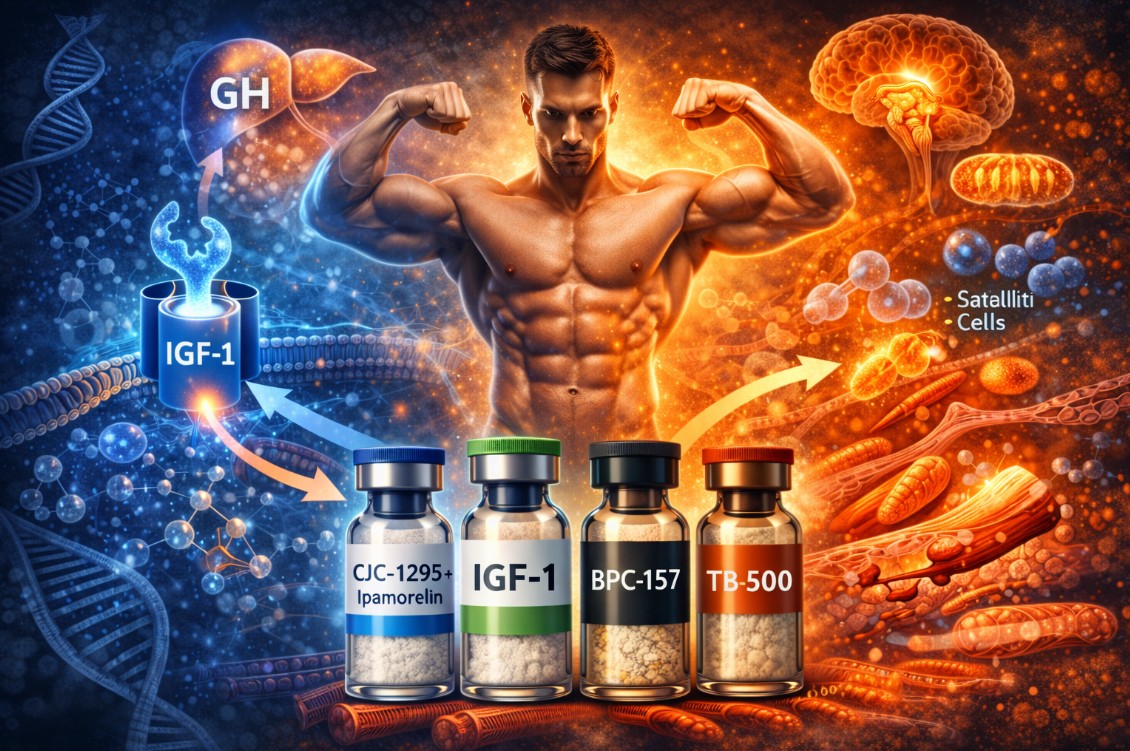
Peptides for muscle growth represent one of the most scientifically active areas in exercise and metabolic biology research. The interest is well-founded: skeletal muscle is the largest metabolically active organ in the human body, and the signaling pathways governing its growth, maintenance, and repair involve some of the most precisely characterized molecular biology in biomedical science. Growth hormone, IGF-1, myostatin, follistatin, satellite cell activation — each of these processes offers a discrete research target, and peptides have proven to be remarkably precise tools for modulating them.
This guide provides a comprehensive, research-grounded overview of the best peptides for bodybuilding research and muscle development science. It covers the primary mechanisms through which these compounds interact with the GH axis, IGF-1 signaling, and tissue repair biology; reviews the key clinical and preclinical evidence for each compound class; and compares the major research tools currently under investigation. Whether the focus is on HGH peptides, growth hormone secretagogues, or repair-oriented compounds that create the physiological substrate for muscle hypertrophy, each class operates through a distinct and well-characterized pathway.
All compounds discussed here are research peptides, supplied strictly for laboratory investigation. They are not approved for human consumption and are referenced exclusively in the context of ongoing scientific research.
The Biology of Muscle Growth: What Research Peptides Target

Skeletal muscle hypertrophy — the increase in muscle fiber cross-sectional area — occurs when the rate of muscle protein synthesis exceeds the rate of protein degradation over a sustained period. At the molecular level, this net anabolic state is regulated by a network of signaling pathways, the most extensively characterized of which involves the growth hormone (GH) and insulin-like growth factor-1 (IGF-1) axis.
Understanding this biology is a prerequisite to understanding what each peptide class actually does. The key processes that research peptides in this category target are:
- Growth hormone secretion: GH is released from the anterior pituitary in episodic pulses regulated by GHRH (stimulatory) and somatostatin (inhibitory). GH drives downstream anabolic signaling, directly and through IGF-1.
- IGF-1 signaling: Hepatic IGF-1 production is the primary mediator of GH’s systemic anabolic effects. IGF-1 activates the PI3K/Akt/mTOR pathway in skeletal muscle — the central intracellular cascade driving protein synthesis and satellite cell proliferation.
- Satellite cell activation: Satellite cells are muscle stem cells that, when activated by mechanical loading or growth factor signaling, proliferate and fuse with existing fibers to support repair and hypertrophy. IGF-1, MGF (mechano growth factor), and several peptides indirectly facilitate this process.
- Myostatin suppression: Myostatin is a TGF-beta family member that limits muscle growth by inhibiting satellite cell activation and protein synthesis. Its natural antagonist, follistatin, is an active area of research as a muscle growth target.
- Connective tissue and repair biology: Functional muscle hypertrophy requires intact connective tissue — tendons, ligaments, and the extracellular matrix — that can withstand increasing contractile forces. Repair-oriented peptides that support connective tissue recovery are therefore relevant to muscle growth research in the broadest sense.
| ★ | Key context: Growth hormone does not directly stimulate muscle protein synthesis in most research models. Its primary anabolic contribution is indirect — mediated through hepatic IGF-1 production — which is why HGH peptides that elevate GH secondarily elevate IGF-1, and IGF-1 is the proximal driver of mTOR-dependent anabolism. |
How Muscle Growth Peptides Work: Primary Mechanism Classes
Growth Hormone Secretagogues: GHRH Analogues
Growth hormone-releasing hormone (GHRH) analogues stimulate GH secretion by binding GHRH receptors on somatotroph cells in the anterior pituitary. This produces a physiological, pulsatile GH release pattern — preserving the natural episodic architecture of GH secretion, as opposed to the sustained, supraphysiological GH levels associated with exogenous GH administration. The resulting GH pulses drive hepatic IGF-1 production, which in turn activates downstream anabolic signaling in skeletal muscle.
Key compounds in this class include tesamorelin (a GHRH analogue with N-terminal stabilization) and CJC-1295 (a GHRH analogue with DAC technology for albumin binding and extended half-life). These compounds differ primarily in their pharmacokinetic profiles rather than receptor mechanism: CJC-1295’s albumin binding extends its half-life to approximately 6–8 days, enabling sustained GH pulse amplification, while tesamorelin’s half-life is considerably shorter, producing a more acute stimulation profile.
Growth Hormone Secretagogues: GHRPs
Growth hormone-releasing peptides (GHRPs) operate through a distinct receptor — the ghrelin receptor (GHSR) — and stimulate GH secretion through a pathway that is partially independent of and partially synergistic with GHRH signaling. Ipamorelin is the most research-favored GHRP due to its selectivity: it stimulates GH release with minimal co-secretion of ACTH, cortisol, or prolactin, the hormonal side-effects that limit the research utility of earlier, less selective GHRPs.
The combination of a GHRH analogue with a GHRP is a well-established research paradigm. GHRH receptor activation and GHSR activation work on complementary intracellular pathways within the somatotroph — cAMP/PKA signaling versus Gq/phospholipase C signaling, respectively, producing synergistic GH pulse amplification that exceeds what either compound achieves individually.
IGF-1 Pathway Modulation
IGF-1 itself, and synthetic analogues including Long R3 IGF-1 and des(1-3) IGF-1, directly activate the IGF-1 receptor (IGF1R) on skeletal muscle cells, triggering PI3K/Akt/mTOR signaling without the intermediary step of GH-dependent hepatic production. MGF (mechano growth factor) is a splice variant of the IGF-1 gene that is preferentially expressed in mechanically loaded muscle tissue and appears to play a specific role in satellite cell activation independent of circulating IGF-1.
These compounds target the anabolic signaling cascade at a downstream point relative to GH secretagogues, which has research implications for distinguishing the GH-dependent and GH-independent components of muscle protein synthesis stimulation.
Connective Tissue and Repair Peptides
BPC-157 (Body Protection Compound 157) and TB-500 (Thymosin Beta-4) occupy a distinct mechanistic niche. Neither directly activates the GH/IGF-1 axis; instead, they operate through pathways involved in angiogenesis, extracellular matrix remodeling, satellite cell migration, and tissue repair. In the context of muscle growth research, their relevance lies in the connective tissue substrate that must support hypertrophy: tendon and ligament integrity are physiological prerequisites for progressive loading, the primary stimulus for muscle protein synthesis.
BPC-157 has been shown in preclinical models to accelerate tendon-to-bone healing, promote angiogenesis through VEGF pathway modulation, and reduce fibrosis following muscle injury. TB-500 (Thymosin Beta-4) acts through actin sequestration and regulates cell migration, differentiation, and survival in damaged tissue.
Key Peptides for Muscle Growth Research: Compound Profiles
- CJC-1295 / Ipamorelin Blend
The CJC-1295/Ipamorelin combination is the most widely studied GHRH + GHRP research protocol for GH-axis modulation. CJC-1295 with DAC technology maintains sustained GHRH receptor occupancy — producing consistent GH pulse amplification across a multi-day window — while ipamorelin provides acute GHSR-mediated GH secretion with high selectivity. The mechanistic complementarity of these two receptor systems produces synergistic GH output that has been documented in both animal and human pharmacokinetic studies. For comprehensive 2026 research data, see the CJC-1295 Ipamorelin Complete Research Guide.
Human pharmacokinetic data for CJC-1295 (Jetté et al., 2005) demonstrated dose-dependent increases in GH AUC of 2- to 10-fold relative to baseline, with corresponding IGF-1 increases of 1.5- to 3-fold, persisting for 6 days post-administration. Ipamorelin’s GH selectivity profile was characterized by Raun et al. (1998), who documented equivalent GH-releasing potency to GHRP-6 without the ACTH and cortisol co-stimulation that complicates the research interpretation of less selective GHRPs.
In animal models examining body composition, GH secretagogue combinations have consistently produced reductions in fat mass and preservation or increase of lean mass relative to controls. The lean mass effects are attributed to the combination of IGF-1-mediated mTOR activation in muscle and GH-mediated lipolysis in adipose tissue.
Spartan Peptides offers the CJC-1295 / Ipamorelin 10mg blend at ≥98% HPLC-verified purity with full CoA documentation.
- Tesamorelin
Tesamorelin is a synthetic GHRH analogue stabilized by trans-3-hexenoic acid conjugation at the N-terminus, which protects against endopeptidase cleavage and extends functional half-life relative to native GHRH. Its mechanism is identical to endogenous GHRH — binding and activating pituitary GHRH receptors to drive pulsatile GH secretion — but with substantially improved pharmacokinetic characteristics. Tesamorelin is notable for being the only GHRH analogue to have undergone full Phase 3 clinical development, generating the most robust human data of any compound in this class.
The FDA-approved indication for tesamorelin (lipodystrophy-associated visceral fat in HIV patients) was established through Phase 3 trials (Falutz et al., 2010) that documented significant visceral adipose tissue reductions by MRI over 26 weeks. Parallel body composition analyses from those trials showed preservation of lean mass alongside fat reduction — a finding consistent with the GH axis’s dual role in lipolysis and anabolic support. A direct mechanistic comparison with CJC-1295 is available in our Tesamorelin vs. CJC-1295 research analysis.
Explore the Tesamorelin 5mg research compound for GH-axis research applications.
- Spartan Strong: CJC-1295 + Tesamorelin Combination
The Spartan Strong formulation combines CJC-1295 and tesamorelin within a single research compound, targeting both the albumin-binding sustained GH pulse mechanism of CJC-1295 and the acute GHRH receptor activation profile of tesamorelin. The rationale for combining two GHRH pathway compounds — rather than a GHRH/GHRP stack — is to saturate GHRH receptor signaling through compounds with complementary pharmacokinetic profiles: tesamorelin’s acute peak combined with CJC-1295’s sustained trough elevation. For the research rationale and study data behind this combination, see Enhancing Performance with CJC-1295 and Tesamorelin.
This approach reflects a broader principle in GH secretagogue research: that the total integrated GH exposure — measured as GH AUC over 24 hours — is a more physiologically relevant metric for anabolic outcome than peak GH concentrations. By maintaining GHRH receptor stimulation across a longer time window, combination protocols attempt to maximize integrated GH output within the physiological pulsatile architecture.
The Spartan Strong CJC-Tesamorelin research compound is available at ≥98% purity with full documentation.
- BPC-157
BPC-157 (Body Protection Compound 157) is a synthetic pentadecapeptide derived from a gastric juice protein, with a sequence of 15 amino acids (Ala-Gly-Glu-Gly-Pro-Pro-Pro-Gly-Lys-Pro-Ala-Asp-Asp-Ala-Gly). In the context of muscle growth research, its primary relevance is connective tissue repair — tendon, ligament, and muscle-tendon junction healing — that underlies the mechanical capacity for progressive loading.
Preclinical models have documented several relevant BPC-157 effects: acceleration of Achilles tendon-to-bone healing with improved histological organization (Staresinic et al., 2003); promotion of angiogenesis through VEGF receptor upregulation; reduction of inflammatory markers following crush muscle injury; and stimulation of fibroblast proliferation and collagen production in injured tendon tissue. These effects are mediated through multiple pathways, including FAK-paxillin and Egr-1 signaling, rather than a single receptor target.
The research significance for muscle hypertrophy is indirect but mechanistically coherent: tendon stiffness and strength are rate-limiting factors in force transmission, and connective tissue insufficiency is a primary constraint on progressive overload across research models. BPC-157’s tendon healing effects have therefore made it a point of interest in combined GH secretagogue/repair peptide research protocols.
Spartan Peptides supplies BPC-157 research peptide with ≥98% HPLC purity.
- TB-500 (Thymosin Beta-4)
Thymosin Beta-4 (TB-500) is a 43-amino acid peptide involved in actin sequestration, cell migration, differentiation, and survival. Its principal molecular mechanism involves binding G-actin (monomeric actin) through an LKKTET motif, thereby regulating actin polymerization dynamics critical to cell motility and tissue remodeling. In muscle research, TB-500 is relevant both for its direct effects on satellite cell migration and for its documented capacity to promote blood vessel formation and reduce fibrotic scarring following injury.
Goldstein et al. (2012) reviewed the growing body of evidence for thymosin beta-4 in cardiac and skeletal muscle repair, noting consistent findings across models of stem cell recruitment, angiogenesis promotion, and anti-inflammatory signaling. The combination of BPC-157 and TB-500 — sometimes referred to in the research literature as the ‘Wolverine Protocol’ for injury recovery — targets complementary aspects of tissue repair: BPC-157 for extracellular matrix remodeling and angiogenesis, TB-500 for cell migration and satellite cell recruitment.
Comparative Overview: Muscle Growth Peptides at a Glance
| Compound | Primary Mechanism | Key Research Finding | Primary Target | Compound Class |
|---|---|---|---|---|
| CJC-1295 / Ipa | GHRH + GHSR agonism → synergistic GH pulse amplification | 2–10× GH AUC increase; IGF-1 elevation sustained 6 days (Jetté et al., 2005) | GHRHR + GHSR / IGF-1R | GHRH analogue + GHRP |
| Tesamorelin | GHRH receptor agonism → pulsatile GH secretion | Lean mass preservation + visceral fat reduction in Phase 3 trials | GHRHR / IGF-1R | GHRH analogue |
| Spartan Strong | Dual GHRH pathway → sustained + acute GH stimulation | Maximal GHRH receptor coverage via complementary PK profiles | GHRHR / IGF-1R | GHRH combination |
| BPC-157 | VEGF/FAK/Egr-1 pathway → angiogenesis + ECM remodeling | Accelerated tendon-to-bone healing in murine models | VEGFR / FAK-paxillin | Repair peptide |
| TB-500 | Actin sequestration → cell migration + satellite cell | Stem cell recruitment; reduced fibrosis post-injury | G-actin / LKKTET motif | Thymosin-derived peptide |
The GH/IGF-1 Axis: How HGH Peptides Drive Anabolic Signaling

Understanding how HGH peptides translate into muscle-relevant biology requires tracing the signaling cascade from GH secretion to protein synthesis. This pathway is among the most well-characterized in endocrinology, and it is the foundational mechanism underlying the research rationale for all growth hormone secretagogue compounds.
Step 1: Pituitary GH Secretion
GHRH analogues (CJC-1295, tesamorelin) bind GHRH receptors on pituitary somatotrophs, activating adenylyl cyclase and elevating cAMP, which triggers GH gene transcription and vesicular GH release. GHRPs (ipamorelin) simultaneously activate GHSR on the same cells, using Gq/phospholipase C signaling to raise intracellular calcium and potentiate GH secretion. The dual-pathway activation accounts for the synergy observed when these compound classes are combined.
Step 2: Hepatic IGF-1 Production
GH enters systemic circulation and reaches the liver, where it binds to GH receptors on hepatocytes and activates JAK2/STAT5b signaling. This drives transcription of the IGF-1 gene, producing hepatic IGF-1 — the primary systemic form of IGF-1 that circulates bound to IGF-binding proteins (IGFBPs). GH also stimulates local IGF-1 expression in muscle tissue itself, though hepatic IGF-1 is quantitatively dominant under most physiological conditions.
Step 3: IGF-1 Receptor Activation in Skeletal Muscle
Circulating IGF-1 binds the IGF-1 receptor (IGF1R) on skeletal muscle cells — a receptor tyrosine kinase. IGF1R autophosphorylation recruits IRS-1 and activates PI3K, producing PIP3 at the plasma membrane. PIP3 activates PDK1, which phosphorylates Akt. Phospho-Akt then activates mTORC1 — the master regulator of protein synthesis — by phosphorylating downstream targets including S6K1 and 4E-BP1, both of which promote ribosomal biogenesis and translation initiation.
Step 4: mTOR-Dependent Protein Synthesis
S6 kinase 1 (S6K1) activation promotes ribosome biogenesis and elongation factor activity. 4E-BP1 phosphorylation releases eIF4E, enabling cap-dependent mRNA translation. Together, these downstream effects increase the rate of muscle protein synthesis, shifting the muscle protein synthesis/degradation balance toward net anabolism. The magnitude of this shift, and its translation into measurable lean mass change, depends on the degree of IGF-1 receptor activation, the availability of amino acid substrates, and the concurrent mechanical loading stimulus.
| ★ | Research note: GH secretagogues elevate IGF-1, which activates PI3K/Akt/mTOR signaling in skeletal muscle — the same intracellular pathway activated by mechanical loading and resistance exercise. This mechanistic convergence is why GH secretagogue research is conducted alongside resistance exercise models in many preclinical body composition studies. |
Research Evidence: Clinical and Preclinical Data
GH Secretagogue Human Studies
The most rigorous human data in this category come from the tesamorelin Phase 3 program, which was conducted in HIV-associated lipodystrophy but provides the most controlled assessment of GHRH analogue effects on body composition available in the literature. Falutz et al. (2010) documented statistically significant reductions in visceral adipose tissue area alongside preservation of lean body mass over 52 weeks — a pattern consistent with GH’s dual metabolic role. IGF-1 levels in the tesamorelin arm were elevated significantly relative to placebo, confirming the mechanistic chain from GHRH receptor activation to hepatic IGF-1 production.
CJC-1295 human pharmacokinetic data (Jetté et al., 2005) demonstrated dose-dependent GH AUC increases of 2- to 10-fold and mean IGF-1 increases of 1.5- to 3-fold, persisting for up to six days, establishing the pharmacokinetic basis for the sustained anabolic support claimed for this compound in research protocols. Controlled body composition trials using CJC-1295 as a primary intervention remain limited in the peer-reviewed literature, with most body composition conclusions extrapolated from the GH/IGF-1 elevation data.
Ipamorelin Selectivity Data
Raun et al. (1998) characterized ipamorelin in porcine and rat models, demonstrating GH-releasing potency comparable to GHRP-6 but without the ACTH, cortisol, or prolactin co-stimulation observed with less selective GHRPs. This selectivity profile has made ipamorelin the preferred GHRP in research designs where GH-specific effects need to be isolated from the confounding effects of stress hormone activation. The clean GH selectivity is particularly relevant in body composition research, where cortisol elevation would introduce a catabolic signal that complicates the interpretation of lean mass outcomes.
BPC-157 Connective Tissue Data
The BPC-157 musculoskeletal literature is predominantly preclinical but extensive. Staresinic et al. (2003) demonstrated accelerated Achilles tendon healing in rat models with improved histological organization and biomechanical properties. Chang et al. (2011) documented accelerated healing of the transected quadriceps tendon with BPC-157 administration. Consistent findings across muscle crush injury models show reduced inflammatory infiltrate, accelerated angiogenesis, and faster functional recovery with BPC-157 relative to controls.
The mechanistic studies have implicated VEGF pathway upregulation, FAK-paxillin signaling in fibroblasts, and Egr-1 transcription factor activation as primary effectors of BPC-157’s repair activity. The compound has shown activity in both systemic and local administration models, suggesting its mechanism operates through circulating rather than purely local pathways.
Peptides vs. Anabolic Steroids: What Research Shows
A recurring question in muscle-related peptide research is how GH secretagogue effects compare to the anabolic effects of androgenic steroids. The mechanistic difference is fundamental: androgens act through androgen receptor-mediated nuclear transcription, producing direct effects on muscle protein synthesis, satellite cell activation, and IGF-1 gene expression. GH secretagogues work through the GH/IGF-1 axis, with anabolic effects that are indirect and more modest in magnitude but with a substantially different safety and selectivity profile.
In terms of absolute lean mass accretion in clinical data, anabolic steroids produce larger and faster muscle mass increases than GH secretagogues. However, the GH/IGF-1 axis compounds offer a research model with distinct mechanistic characteristics — including effects on fat mass, connective tissue, and metabolic function — that steroids do not replicate.
Combination Research Approaches in Muscle Development
The mechanistic diversity among muscle growth-relevant peptides has generated substantial interest in combination research protocols targeting multiple pathways simultaneously. The most well-studied combination in the GH axis literature pairs a GHRH analogue with a GHRP — exploiting their complementary receptor mechanisms for synergistic GH output. For a broader overview of combination research approaches, see Peptide Stacking: Research Guide to Synergistic Combinations.
Beyond GH axis combinations, the pairing of GH secretagogues with connective tissue repair peptides such as BPC-157 or TB-500 reflects the physiological logic that muscle growth requires structural support systems capable of transmitting and tolerating increased contractile forces. Research protocols examining the interaction between GH/IGF-1 axis activation and connective tissue repair are an emerging area, though controlled studies with defined endpoints remain relatively sparse.
Hormone optimization approaches that combine GH secretagogues with metabolic modulators are reviewed in our Hormone Optimization Peptides research overview.
| ★ | Research principle: The synergy between GHRH analogues and GHRPs is well-characterized at the pituitary receptor level. Both compound classes converge on GH secretion but through distinct second messenger systems — cAMP/PKA for GHRH receptors, Gq/PLC for GHSR — allowing simultaneous receptor engagement without competitive inhibition. |
Research-Grade Compound Quality in Muscle Research
The reproducibility of results in muscle growth peptide research is highly sensitive to compound quality. Purity variation, sequence errors, and oxidation artifacts are established sources of data variability in the peptide research literature, and their effects are particularly pronounced in body composition studies where effect sizes are modest relative to the total signal from diet and training variables.
For GH secretagogue research specifically, purity requirements are stringent because these compounds act at concentrations in the nanomolar range, where impurity contributions to receptor activity can represent a meaningful fraction of the total biological signal at sub-maximal doses. The critical quality parameters are:
- HPLC purity ≥98%: Confirms that the major peak accounts for ≥98% of total UV-absorbing material at 214–220nm, the standard detection wavelength for peptide bonds.
- Mass spectrometry (ESI-MS or MALDI-TOF): Verifies molecular weight matches the theoretical value for the target sequence, confirming correct synthesis and ruling out deletion sequences, oxidation artifacts, or amino acid substitutions.
- Certificate of Analysis (CoA): Batch-specific documentation of purity, mass confirmation, and synthesis date — required for protocol traceability and result reproducibility.
- Cold-chain integrity: Peptides are susceptible to degradation during transit at ambient temperatures. US-origin sourcing with documented cold-chain management reduces degradation risk substantially relative to international suppliers without temperature controls.
Spartan Peptides applies ≥98% HPLC purity standards across all muscle growth compounds and provides batch-specific CoA documentation. The full muscle development research catalog includes CJC-1295/Ipamorelin, Tesamorelin, Spartan Strong, and complementary compounds. For guidance on evaluating peptide supplier quality, see How to Identify the Best Peptide Companies.
Frequently Asked Questions
Q: What is the difference between CJC-1295 and tesamorelin as muscle growth research tools?
Both are GHRH analogues that stimulate pulsatile GH secretion, but they differ in pharmacokinetic profile. CJC-1295 with DAC technology uses albumin binding to extend its half-life to approximately 6–8 days, producing sustained GH pulse amplification over a multi-day window. Tesamorelin has a shorter half-life and produces a more acute GHRH receptor activation profile. In research terms, CJC-1295 is better suited for protocols examining sustained IGF-1 elevation, while tesamorelin’s more acute profile may be preferable when GH pulse timing is a controlled variable. The Spartan Strong combination uses both compounds to achieve complementary pharmacokinetic coverage of GHRH receptor stimulation.
Q: How do HGH peptides differ from exogenous human growth hormone in muscle research?
HGH peptides — specifically GHRH analogues and GHRPs — stimulate the pituitary to produce and secrete endogenous GH in a physiological, pulsatile pattern. Exogenous recombinant human growth hormone (rhGH) bypasses pituitary regulation entirely, producing continuous supraphysiological GH exposure that suppresses endogenous GH secretion through somatostatin feedback. In research terms, GH secretagogues preserve the physiological GH pulse architecture, which is believed to be important for normal GH receptor biology and downstream IGF-1 dynamics. Exogenous rhGH at pharmacological doses produces larger and more immediate IGF-1 elevations, but with a different risk profile and feedback suppression that secretagogue compounds avoid.
Q: Why is BPC-157 relevant to muscle growth peptide research if it doesn’t act on the GH axis?
Functional muscle hypertrophy requires both the biochemical stimulus for protein synthesis — primarily IGF-1/mTOR signaling — and intact connective tissue capable of transmitting increasing contractile forces. Tendons and ligaments are frequent limiting factors in progressive loading research models: their healing capacity is substantially slower than muscle fiber adaptation, creating a mechanical bottleneck. BPC-157’s preclinical data demonstrating accelerated tendon-to-bone healing and improved collagen organization position it as a research tool for addressing this connective tissue constraint. In research protocols examining muscle growth, connective tissue repair compounds are therefore relevant to the overall biological picture, even when their mechanism is distinct from anabolic signaling.
Q: What does the research show about GH secretagogues and lean mass versus fat mass?
The body composition data from tesamorelin’s Phase 3 trials — the most controlled human evidence available for any GHRH analogue — show a consistent reduction in visceral adipose tissue alongside preservation of lean mass. This dual outcome reflects GH’s two primary metabolic roles: lipolysis in adipose tissue (particularly visceral depots, which express high GH receptor density) and anabolic support of lean tissue through IGF-1 elevation. Animal studies with CJC-1295 and ipamorelin have generally confirmed this pattern — fat reduction with lean mass maintenance or increase. Absolute lean mass gains in human GH secretagogue studies are modest relative to anabolic steroid comparators, which is consistent with the indirect, IGF-1-mediated mechanism of action.
Q: What quality standards are required for peptides used in muscle growth research protocols?
Research reproducibility in this area demands HPLC-verified purity ≥98% with mass spectrometry sequence confirmation and batch-specific CoA documentation. For GH secretagogues acting in the nanomolar concentration range, sub-98% purity introduces meaningful impurity contributions that can confound dose-response relationships. Cold-chain management during shipping is critical for maintaining peptide structural integrity — degraded peptide will not produce expected receptor activity, making result interpretation impossible. Endotoxin testing adds a layer of quality control for in vivo applications where bacterial lipopolysaccharide would introduce an independent inflammatory confound.
Conclusion
The landscape of peptides for muscle growth research is defined by mechanistic precision. Growth hormone secretagogues — GHRH analogues and GHRPs — target the most directly anabolic signaling axis in muscle biology, translating pituitary GH output into IGF-1-driven mTOR activation in skeletal muscle. Connective tissue repair peptides address the structural substrate that enables progressive loading, the primary physiological driver of muscle protein synthesis. Together, these compound classes offer research tools for interrogating the full biological system underlying skeletal muscle development, from pituitary secretion to satellite cell activation to extracellular matrix integrity.
For researchers working in this space, Spartan Peptides maintains a dedicated muscle development research catalog covering CJC-1295/Ipamorelin, Tesamorelin, and Spartan Strong, all supplied at ≥98% HPLC-verified purity with full Certificate of Analysis documentation. For a broader view of the research landscape — including peptide approaches across all major biological systems — see our Complete Guide to What Are Peptides (2026).
Disclaimer: All products offered by Spartan Peptides are intended for laboratory research purposes only. They are not approved by the FDA for human consumption, and are not intended to diagnose, treat, cure, or prevent any disease or medical condition. This content is provided for informational and educational purposes only and does not constitute medical advice.
References
Written by the Spartan Research Team
Our team of peptide researchers and biochemists reviews every article for scientific accuracy. Learn more about our team →