
GHK-Cu Topical: Research Guide to Copper Peptide Topical Applications

Written bySpartan Research Team
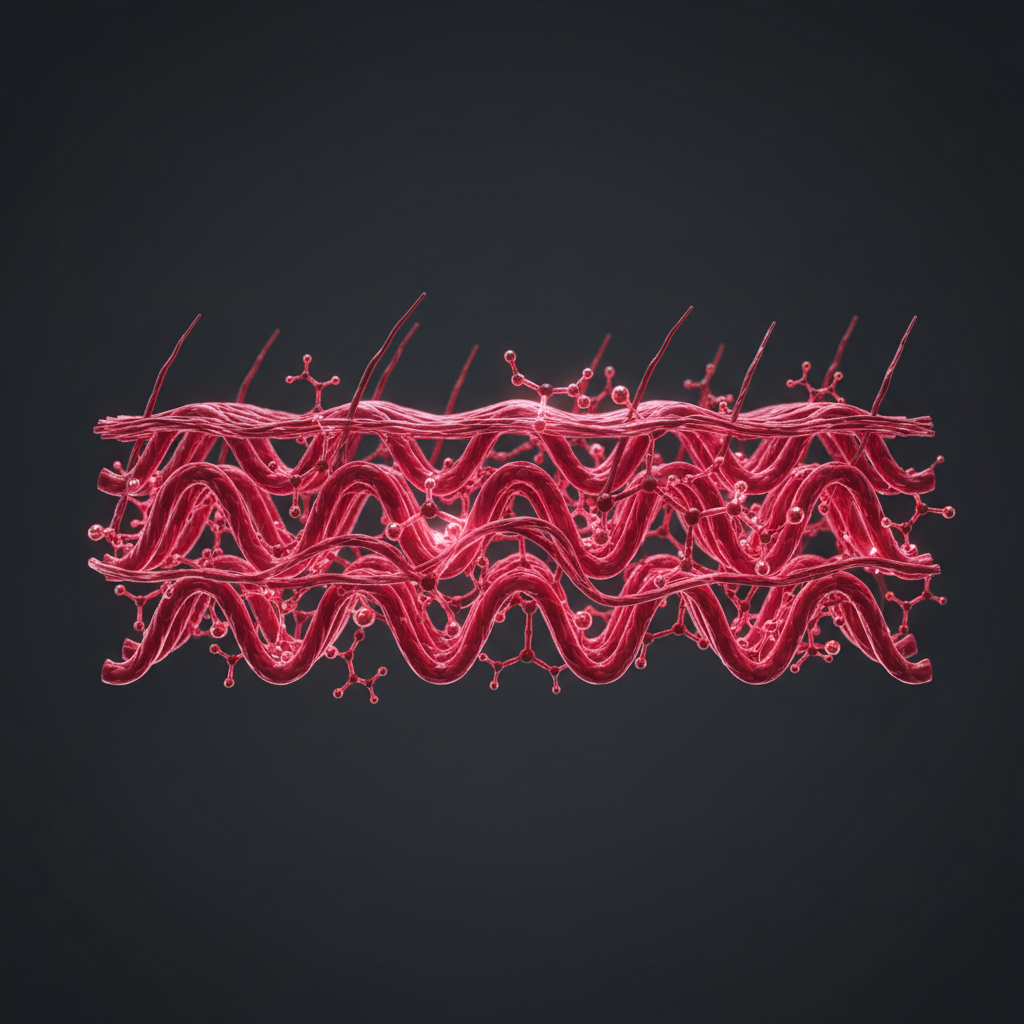
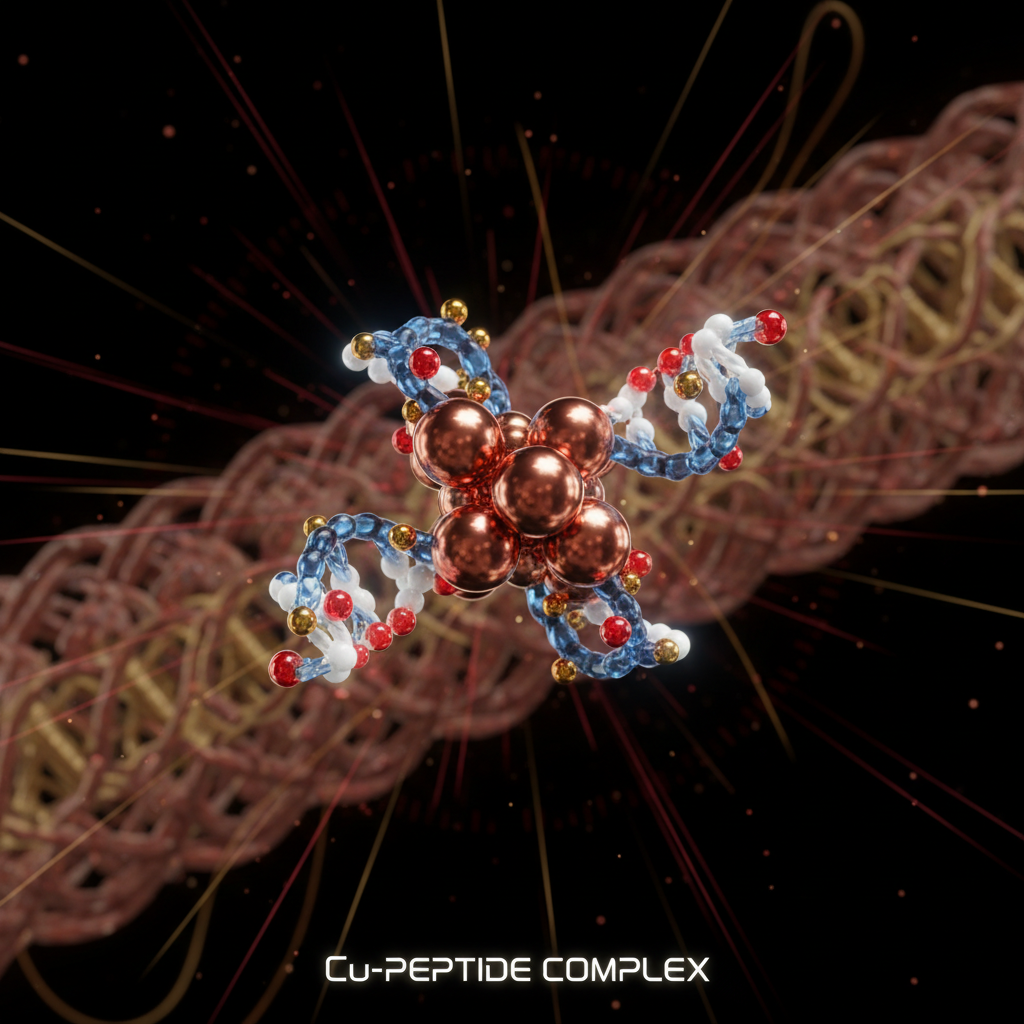
GHK-Cu — the tripeptide complex glycine-histidine-lysine bound to a copper (II) ion — has emerged as one of the most extensively studied bioactive peptides in dermatological and regenerative research. Among the delivery methods explored in preclinical literature, topical application stands out as a primary research vector. Researchers studying localized tissue responses frequently select topical formulations because they allow direct application to target tissue while minimizing systemic distribution. This guide surveys the current state of preclinical and in vitro research on GHK-Cu topical delivery, covering skin matrix biology, wound healing models, carrier system research, and purity standards relevant to research use.
🔬 Key Research Findings
- GHK-Cu topical delivery studied as a primary localized research vector for dermal tissue models
- Collagen I and III synthesis upregulation documented in fibroblast culture models
- VEGF pathway activation and anti-inflammatory cytokine modulation observed in wound healing research
- Liposomal and aqueous carrier systems studied for differential stratum corneum penetration
- ≥98% HPLC purity required — copper chelation is sensitive to peptide sequence degradation
What Is GHK-Cu?
GHK-Cu is a naturally occurring tripeptide composed of glycine, histidine, and lysine (GHK), chelated with a copper (II) ion. This endogenous complex is found in human plasma, saliva, and urine, and its serum concentration has been documented to decline with advancing age — from approximately 200 ng/mL in young adults to significantly lower levels by the sixth decade of life.
The copper chelation component is central to GHK-Cu’s biological signaling role. Copper is an essential cofactor for numerous enzymatic processes including lysyl oxidase activity (critical for collagen and elastin crosslinking) and superoxide dismutase function (a key antioxidant enzyme). GHK-Cu is studied in research contexts because of its documented interactions with multiple cellular signaling pathways, its apparent role in gene expression modulation, and the accessibility of its molecular structure for formulation research.
- Tripeptide structure: Glycine-Histidine-Lysine + Cu(II) ion
- Endogenous origin: found in human plasma and tissue fluids
- Age-related decline in circulating concentration documented in literature
- Copper chelation enables interaction with copper-dependent enzymatic pathways
- Studied across dermatological, wound healing, and regenerative research models
Why Researchers Study Topical GHK-Cu Delivery
Topical application has become a dominant research vector for GHK-Cu for several reasons rooted in study design logic. When researchers are investigating localized tissue responses — particularly within the dermal and epidermal layers — topical delivery offers a method for applying the compound directly to the target tissue without requiring systemic administration.
The skin itself presents a dual role in GHK-Cu research: it functions as both the primary target tissue in dermatological models and as the delivery route through which the compound must penetrate to reach the dermal fibroblasts and extracellular matrix components of interest. This dual function has driven substantial research interest in how GHK-Cu traverses the stratum corneum and reaches the viable epidermis and dermis.
- Topical application allows localized delivery to dermal target tissue
- Avoids systemic distribution — useful when studying tissue-specific responses
- Skin barrier research: studying how GHK-Cu penetrates stratum corneum layers
- Distinct from injectable research models that achieve systemic peptide distribution
- Preferred model when research question centers on dermal or epidermal biology
GHK-Cu Topical and Skin Matrix Research
The most extensively documented area of GHK-Cu topical research involves skin extracellular matrix biology. Multiple preclinical studies and in vitro models have examined GHK-Cu’s role in collagen synthesis signaling, fibroblast behavior, and glycosaminoglycan production pathways.
A frequently cited reference in this literature is the 2018 review by Pickart and Margolina published in BioMed Research International (PMID 30050905), titled “GHK Peptide as a Natural Modulator of Multiple Cellular Pathways in Skin Regeneration.” This review consolidates in vitro and preclinical data on GHK-Cu’s documented signaling roles across collagen synthesis, anti-inflammatory pathways, and cellular proliferation in skin tissue models.
- Collagen synthesis: Upregulation of collagen I and III synthesis documented in fibroblast culture models and preclinical animal studies
- Fibroblast activation: GHK-Cu has been studied for its role in stimulating fibroblast proliferation and migration in extracellular matrix remodeling models
- Glycosaminoglycan synthesis: In vitro data documents GHK-Cu’s involvement in hyaluronic acid and other glycosaminoglycan synthesis pathways within dermal tissue models
- ECM remodeling: Research models have examined GHK-Cu’s influence on matrix metalloproteinase (MMP) regulation, relevant to extracellular matrix turnover dynamics
- Reference: Pickart L, Margolina A. GHK Peptide as a Natural Modulator of Multiple Cellular Pathways in Skin Regeneration. Biomed Res Int. 2018;2018:9145019. PMID 30050905
Wound Healing and Tissue Repair: What Preclinical Data Shows
Beyond baseline skin matrix biology, GHK-Cu has been studied in wound healing and tissue repair models. Animal and in vitro studies have examined the compound’s documented activity across wound contraction signaling, angiogenesis pathways, and anti-inflammatory mechanisms — all of which are relevant to tissue repair research design.
A key reference in this area is Pickart et al., published in Oxidative Medicine and Cellular Longevity in 2012 (PMID 23346288), examining GHK-Cu’s role in oxidative stress prevention — a mechanism relevant to both wound healing environments and tissue maintenance research models.
- Wound contraction: Preclinical animal models have documented accelerated wound contraction rates in GHK-Cu-treated groups vs. controls
- Angiogenesis signaling: VEGF pathway activation has been observed in research models examining GHK-Cu’s role in new vessel formation during tissue repair
- Anti-inflammatory signaling: In vitro data documents GHK-Cu’s modulation of inflammatory cytokine expression, including documented reduction of TNF-α and IL-1β signaling in cell culture models
- Oxidative stress pathways: GHK-Cu has been studied for its interaction with superoxide dismutase and other antioxidant enzyme pathways relevant to oxidative tissue damage models
- Reference: Pickart L et al. The Human Tripeptide GHK-Cu in Prevention of Oxidative Stress and Degenerative Conditions of Aging. Oxid Med Cell Longev. 2012;2012:324832. PMID 23346288
Carrier Systems Studied for Topical GHK-Cu Delivery
A critical and often underappreciated dimension of GHK-Cu topical research is the role of the carrier system. Researchers studying topical delivery have investigated multiple formulation approaches, each presenting different characteristics for dermal penetration, peptide stability, and bioavailability in research models. The choice of carrier system can substantially affect experimental outcomes, making this an active area of formulation research in its own right.
- Aqueous serums: The simplest delivery vector — GHK-Cu dissolved in an aqueous base. Studied for surface application models where deep dermal penetration is not the primary variable
- Liposomal encapsulation: Liposomal delivery systems have been studied for their capacity to enhance dermal penetration by improving passage through the lipid-rich stratum corneum. Phospholipid bilayer encapsulation is the most studied approach
- Cream and emulsion bases: Hydrophilic/lipophilic balance (HLB) in emulsion formulations has been examined for its effect on GHK-Cu delivery kinetics and skin residence time
- pH stability: GHK-Cu peptide integrity is pH-sensitive. Research has documented stability ranges relevant to formulation design — the copper-peptide chelation complex can degrade outside optimal pH windows
- Penetration enhancers: Some research models have examined chemical penetration enhancers (such as propylene glycol or ethanol at specific concentrations) as additives to increase transdermal delivery in preclinical topical models
For researchers designing topical GHK-Cu experiments, carrier system selection should be documented as an experimental variable — published models vary significantly in their formulation approaches, which must be considered when comparing outcomes across studies.
Topical vs. Injectable GHK-Cu in Research Models
Researchers selecting between topical and injectable GHK-Cu delivery are making a fundamental study design decision that determines the tissue distribution profile of the compound. Understanding how these models differ is essential for interpreting published data and designing new experiments.
- Tissue distribution: Topical models produce localized concentration gradients within the skin layers. Injectable models (subcutaneous, intravenous, or intraperitoneal in animal studies) produce systemic distribution with potential uptake across multiple tissue compartments
- Localized vs. systemic response: Topical research models are appropriate when the research question involves dermal or epidermal biology. Injectable models are selected when researchers are studying non-dermal tissue effects or require systemic peptide exposure
- Concentration gradients: Topical application creates a concentration gradient from the skin surface inward. The depth of penetration depends on formulation factors (carrier system, concentration, contact time) and skin condition — variables that must be controlled in study design
- Bioavailability comparison: Injectable delivery achieves more predictable systemic bioavailability. Topical delivery involves variable absorption influenced by multiple formulation and biological factors — a recognized limitation in topical research models
- Research model selection: Published GHK-Cu literature includes both topical and injectable models; when reviewing studies, delivery route should be among the first variables assessed in methodology sections
Researchers studying GHK-Cu in injectable or systemic models can reference Spartan Peptides’ GHK-Cu 50mg, available for research use in either application context.
Purity Standards in GHK-Cu Research
Research integrity in peptide studies depends substantially on compound purity. For GHK-Cu specifically, purity requirements are driven by two factors: the sensitivity of the copper-peptide chelation complex to sequence integrity, and the contamination variables introduced by lower-purity compounds that compromise reproducibility and data interpretation.
- ≥98% HPLC-verified purity: The standard specification for research-grade GHK-Cu. High-performance liquid chromatography (HPLC) analysis confirms peptide identity and quantifies impurity levels. Studies published in peer-reviewed journals typically specify HPLC-verified compounds
- Copper chelation integrity: The biological activity attributed to GHK-Cu in research models depends on the intact copper-chelated peptide complex. Degraded or incompletely chelated compounds introduce uncontrolled variables that make results difficult to interpret or replicate
- Contamination risks: Lower-purity peptide preparations may contain synthesis byproducts, residual solvents, or degradation products. In cellular or animal models, these contaminants can produce off-target biological effects that confound results
- Third-party CoA documentation: A certificate of analysis (CoA) from an independent analytical laboratory is the standard for research-grade peptide procurement. CoA documentation should specify purity percentage, HPLC methodology, and compound identity confirmation
- USA manufacturing: Domestic manufacturing supply chains offer additional quality control advantages relevant to research procurement — consistent production standards and regulatory environment traceability
Spartan Peptides provides GHK-Cu 50mg at ≥98% HPLC-verified purity, USA manufactured, with third-party CoA documentation — meeting research-grade standards for topical and injectable study applications.
Frequently Asked Questions
What is GHK-Cu topical used for in research?
In preclinical models, GHK-Cu applied topically has been studied for its documented role in collagen synthesis signaling, fibroblast activation, and extracellular matrix remodeling. Researchers use topical application when studying localized tissue responses vs. systemic delivery.
How does GHK-Cu topical differ from injectable GHK-Cu?
Topical and injectable GHK-Cu differ primarily in delivery route and concentration distribution. Topical models are studied for localized skin tissue responses; injectable models are used when researchers require systemic distribution or study non-dermal tissue effects. Both use the same GHK-Cu compound — the research question determines the delivery method.
What does GHK-Cu do in the skin in preclinical research?
Preclinical models have documented GHK-Cu’s role in upregulating collagen I and III synthesis, activating fibroblast proliferation, increasing glycosaminoglycan production, and modulating anti-inflammatory signaling pathways in skin tissue.
What purity is needed for GHK-Cu topical research?
Research-grade GHK-Cu requires ≥98% HPLC-verified purity. The copper chelation complex is sensitive to peptide sequence integrity — lower-purity compounds introduce contamination variables that compromise research results. Third-party CoA documentation is standard for research use.
Where can researchers source GHK-Cu for topical research?
Research-grade GHK-Cu should come from a manufacturer providing ≥98% HPLC purity, third-party certificate of analysis, and USA-manufactured supply chain. Spartan Peptides offers GHK-Cu 50mg for research use with full CoA documentation.
GHK-Cu’s documented activity in skin matrix research has made topical delivery one of the most studied application routes for this compound. As with all research peptides, sourcing quality compounds with verified purity is essential for reliable results. Spartan Peptides’ GHK-Cu 50mg is HPLC-verified at ≥98% purity, USA manufactured, and available for research use. Researchers seeking a consistent, documented-purity source for topical or injectable GHK-Cu studies can view the product listing here.
These statements have not been evaluated by the Food and Drug Administration. This product is not intended to diagnose, treat, cure, or prevent any disease. For research use only. Not for human consumption.
Written by the Spartan Research Team
Our team of peptide researchers and biochemists reviews every article for scientific accuracy. Learn more about our team →