
GHRP-6 Research Guide: Growth Hormone Secretagogue Mechanisms

Written bySpartan Research Team
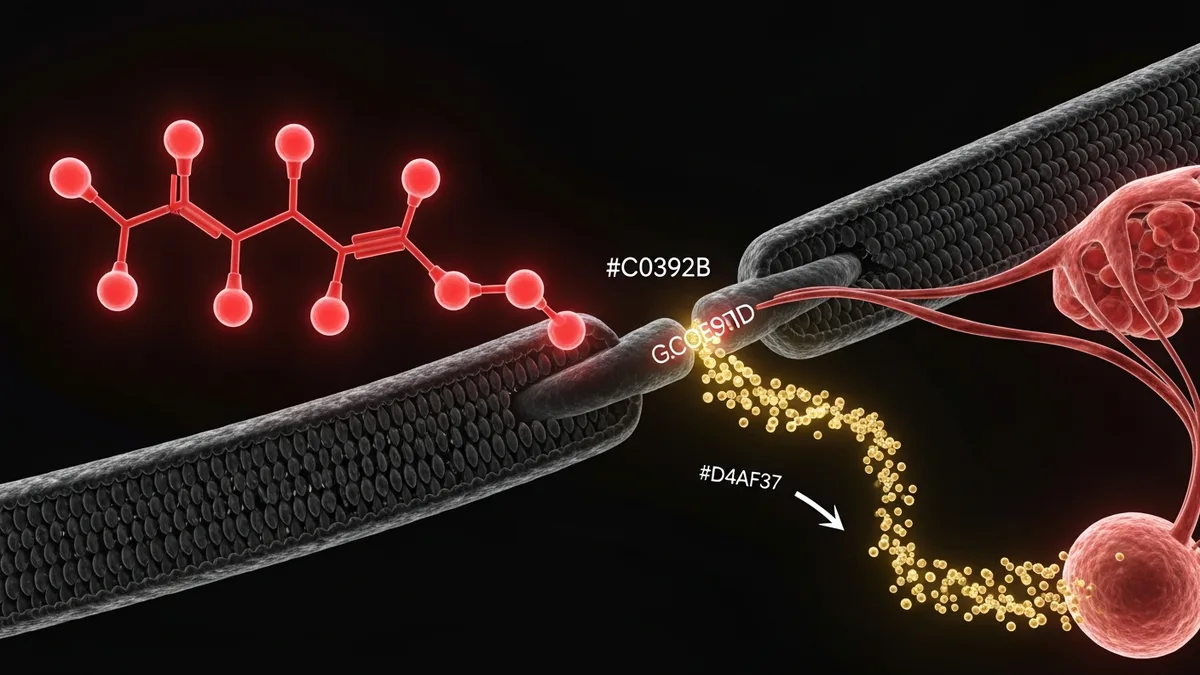
GHRP-6 (growth hormone-releasing peptide 6) is a synthetic hexapeptide (His-D-Trp-Ala-Trp-D-Phe-Lys-NH2) that activates the growth hormone secretagogue receptor type 1a (GHSR-1a) to stimulate pituitary GH secretion. First synthesized by Bowers et al. in the 1980s, GHRP-6 was foundational in the discovery of the ghrelin receptor system and the concept of non-GHRH-pathway GH stimulation. Researchers use GHRP-6 to study the ghrelin signaling axis, appetite regulation linked to GH secretion, and the synergistic interactions between GHSR and GHRH receptor pathways in pituitary somatotrophs.
- Bowers CY et al. (1984) described the first synthetic peptide GH secretagogues, establishing the structural requirements for GHSR activation that define GHRP-6 and related compounds. (PMID 6326892)
- Smith RG et al. (1996) identified the growth hormone secretagogue receptor (GHSR-1a) and confirmed GHRP-6 as its cognate ligand, predating the identification of endogenous ghrelin. (PMID 8637540)
- GHRP-6 is distinguished from other GHRP compounds by its significant appetite-stimulating effect, mediated through hypothalamic GHSR-1a receptors, making it a research tool for appetite regulation studies alongside GH axis research.
- Combination studies pairing GHRP-6 with GHRH analogs (sermorelin or CJC-1295) document synergistic GH pulse amplification exceeding the additive effects of either compound alone, consistent with dual-receptor convergence at the somatotroph.
- Preclinical GH response data in rodent models shows GHRP-6 produces GH peaks 30-60 minutes post-administration, with peak GH concentrations that are substantially amplified when co-administered with a GHRH analog.
GHSR-1a Receptor Mechanism: Ghrelin Pathway Research
GHRP-6 activates GHSR-1a, a G-protein coupled receptor that is also the endogenous receptor for ghrelin. Receptor activation couples primarily to Gq protein, triggering phospholipase C (PLC) to generate inositol trisphosphate (IP3) and diacylglycerol (DAG). IP3 releases calcium from the endoplasmic reticulum, and DAG activates protein kinase C (PKC). Together, these second-messenger events depolarize the somatotroph membrane, open voltage-gated calcium channels, and trigger exocytosis of GH-containing secretory granules.
This Gq pathway is mechanistically distinct from the Gs-cAMP pathway activated by GHRH receptor agonists like sermorelin. The convergence of both pathways at the level of intracellular calcium and GH granule exocytosis explains the synergistic GH response when GHRP-6 and a GHRH analog are co-administered. Both signals amplify calcium transients through different upstream mechanisms, creating a larger exocytotic response than either pathway alone.
GHRP-6 vs. Ipamorelin and Other GHRPs
Within the GHRP compound class, researchers distinguish GHRP-6 from newer analogs primarily by its selectivity profile. Ipamorelin, a pentapeptide GHRP available from Spartan as part of the CJC-1295/Ipamorelin blend, was specifically designed to activate GHSR-1a without stimulating cortisol, prolactin, or other pituitary hormone secretion. GHRP-6 lacks this selectivity and produces measurable increases in cortisol, prolactin, and ACTH in research models, effects that researchers consider when designing studies focused on clean GH axis endpoints. Spartan does not carry GHRP-6 itself, but researchers studying the same GH secretagogue family can review the CJC-1295/Ipamorelin blend product page for the closest available comparison compound.
GHRP-2, another hexapeptide GHRP, produces higher GH release per dose than GHRP-6 in preclinical models but also exhibits more robust cortisol stimulation. Hexarelin, a related hexapeptide, is the most potent GHRP in terms of GH secretagogue activity but shows rapid desensitization with repeated dosing, a characteristic less pronounced with GHRP-6 in published chronic dosing protocols.

GHRP-6 and Appetite Research
A defining characteristic of GHRP-6 research is its pronounced appetite-stimulating effect. GHSR-1a is expressed in hypothalamic arcuate nucleus neurons that regulate feeding behavior, and activation by GHRP-6 increases appetite through a mechanism analogous to ghrelin. Researchers studying appetite regulation and energy homeostasis use GHRP-6 as a tool to pharmacologically activate the ghrelin appetite axis while simultaneously stimulating pituitary GH release.
This dual effect on appetite and GH secretion distinguishes GHRP-6 from other GH secretagogues in research design. Studies examining anabolic signaling in catabolic animal models, including burn injury, surgical stress, and cachexia models, have used GHRP-6 for its combined appetite-stimulating and GH-releasing properties. Published literature on GHRP-6 in intestinal cytoprotection models has also emerged, with researchers noting reduced mucosal injury in GHRP-6-treated rodent models of inflammatory bowel pathology.
GHRP-6 Research Protocol Design
GHRP-6 is administered by subcutaneous or intravenous injection in preclinical models. Half-life in research animals is approximately 15-60 minutes, somewhat longer than the 15-30 minute range reported for sermorelin. GH peak response occurs 30-60 minutes post-dose in most rodent models. Researchers requiring maximal GH pulse amplification often combine GHRP-6 with a GHRH analog such as CJC-1295 or Tesamorelin to exploit the dual-receptor synergy.
Desensitization studies show that GHRP-6 produces less tachyphylaxis than hexarelin with repeated dosing, making it suitable for chronic dosing protocols. For body composition endpoints in aging or catabolic models, daily or twice-daily administration schedules have been used in published rodent research with DEXA and tissue weight outcomes measured at study completion. The appetite effects should be controlled in body composition studies by using pair-feeding designs when comparing GHRP-6 and non-appetite-stimulating comparators.
Cardioprotective Research Applications
Beyond the GH axis, a specialized body of GHRP-6 research focuses on direct cardiac cytoprotection through GHSR-1a receptors expressed on cardiomyocytes. Published preclinical studies have evaluated GHRP-6 in ischemia-reperfusion injury models, reporting reduced infarct size and improved cardiac function parameters in treated animals. This cardioprotective signal appears to be partially GH-independent, mediated by direct GHSR activation on cardiac tissue and downstream anti-apoptotic pathways including PI3K/Akt signaling.
This cardioprotective research application is distinct from the GH-secretagogue applications that dominate the GHRP-6 literature, but represents an emerging area where the compound is studied as a direct organ-protective agent rather than a hypothalamic-pituitary signaling tool. Researchers in this area design controlled ischemia-reperfusion protocols with GHRP-6 administered perioperatively and measure troponin release, left ventricular function, and infarct area as primary endpoints.
GHRP-6 in Cardiovascular and Cytoprotective Research
Beyond its role in the growth hormone axis, GHRP-6 has attracted research interest for putative cardioprotective properties that appear independent of GH secretion. Preclinical models have demonstrated that GHRP-6 administration before or during ischemia-reperfusion injury reduces myocardial infarct size and improves functional recovery parameters. Investigators attribute these effects partly to direct GHSR-1a receptor activation in cardiac tissue and partly to anti-apoptotic signaling via PI3K/Akt and NFkB pathways.
Research published in the journal Regulatory Peptides (PMID 18469204) documented that GHRP-6 and related secretagogues activate GHS-R1a receptors present on cardiomyocytes, providing a receptor basis for the cardiac effects observed in these models. This finding expanded the research relevance of GHRP-6 beyond pituitary-centric GH studies into cardiovascular biology and cytoprotection research.
GHRP-6 has also been studied in models of hepatic injury and fibrosis. Research using carbon tetrachloride hepatotoxicity models found that GHRP-6 administration was associated with reduced hepatocyte apoptosis and attenuated fibrotic signaling markers, including reductions in TGF-beta1 expression. These observations have made GHRP-6 a subject of hepatoprotection research, particularly in models where oxidative stress-induced liver damage is the primary endpoint.
In wound healing research models, GHRP-6 has been explored for its ability to modulate local growth factor expression and fibroblast activity. Published data from controlled animal studies indicate that topical or local administration of GHRP-6 in wound models increases collagen deposition rates and accelerates epithelial closure compared to vehicle controls. These findings support continued investigation of GHRP-6 in tissue repair and regenerative biology research contexts.
The appetite-stimulating properties of GHRP-6, mediated through central GHSR-1a receptors, make it a useful tool in research designs studying orexigenic signaling pathways. By activating the ghrelin receptor, GHRP-6 increases neuropeptide Y (NPY) and agouti-related protein (AgRP) expression in the hypothalamus, pathways that are also studied in obesity, metabolic syndrome, and appetite dysregulation models.
Explore Spartan Peptides’ catalog of research-grade compounds: Browse All Research Peptides at Spartan Peptides
Written by the Spartan Research Team
Our team of peptide researchers and biochemists reviews every article for scientific accuracy. Learn more about our team →