
BPC-157 Research Guide: Tissue Repair, Gut Health and Recovery Science

Written bySpartan Research Team
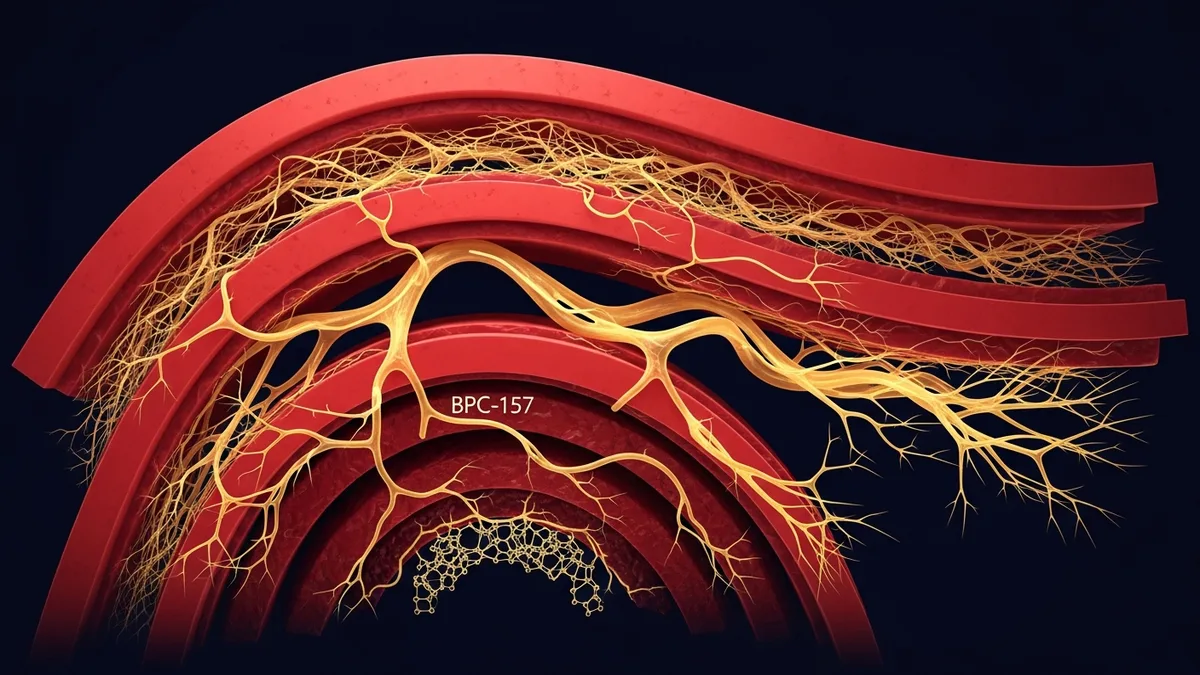
BPC-157 (Body Protection Compound-157) is a synthetic pentadecapeptide first isolated from human gastric juice. Preclinical research has examined the compound across connective tissue, gastrointestinal mucosa, skeletal muscle, bone, and neural models. Published rodent studies spanning more than two decades document effects on angiogenesis, growth factor expression, and cellular cytoprotection across tissue systems.
No repair-focused peptide in the preclinical literature carries a research record comparable to BPC-157. Over two decades of published rodent studies, across multiple tissue types and administration routes, have produced a body of data that’s unusually consistent for a synthetic peptide of this complexity. The Sikiric research group at the University of Zagreb has led much of this work, but independent groups have replicated core findings across tendon, gastrointestinal, muscle, and neural models. That’s not a small thing in peptide research.
This guide synthesizes the published preclinical literature across three major domains: tissue repair covering tendon, muscle, and neural models; gastrointestinal cytoprotection, which is where the compound’s story begins; and recovery science including the timeline data from published animal studies that maps how quickly effects manifest across tissue types.
Key Research Findings
- Staresinic et al. (2003): Significantly faster functional recovery and histologically superior tendon fiber organization in BPC-157-treated rat Achilles transection models versus saline controls. Angiogenesis markers elevated at repair site. PMID: 14554208
- Chang et al. (2011): BPC-157 promoted cell survival, directional migration toward injury sites, and outgrowth from explanted tendon tissue in vitro, providing cellular-level mechanistic support for observed animal model outcomes. PMID: 21030672
- Sikiric et al. (2013): Statistically significant protection against NSAID-induced gastric lesions via VEGF-driven angiogenesis and NO modulation, operating through COX-independent mechanisms. PMID: 22950504
- Tkalcevic et al. (2007): BPC-157 enhanced granulation tissue formation and collagen organization in healing wound models, with EGR-1 identified as a key mediating pathway. PMID: 17628536
- Sikiric et al. (2020): BPC-157 preserves mitochondrial integrity under oxidative stress conditions and shifts cellular response toward active survival and repair, described as adaptive cytoprotection. PMID: 31158953
Background: What BPC-157 Is and Where the Research Began
BPC-157 (first isolated in the early 1990s from a gastroprotective protein fraction of human gastric juice) is a 15-amino acid synthetic peptide with the sequence GEPPPGKPADDAGLV. The name Body Protection Compound reflects its origin context: researchers investigating why the stomach withstands its own acid identified this fragment as having cytoprotective activity independent of known acid-suppression pathways.
That origin story matters for understanding the entire research arc. It explains why the GI literature on this compound is so extensive, why oral bioavailability has been documented across multiple published studies (genuinely unusual for a peptide), and why the research expanded outward from gut tissue into connective tissue, neural, bone, and cardiovascular models. BPC-157 didn’t start as a “repair compound.” It started as an answer to a gastric biology question that kept generating findings in unexpected tissue contexts.
The compound’s stability is also relevant here. Unlike many peptides, BPC-157 is stable in gastric acid, which is part of why the oral bioavailability data holds up. Researchers studying routes of administration have found consistent activity both via oral and injectable protocols, though the tissue-specific implications differ.
As of 2026, BPC-157 remains preclinical. No completed Phase 2 or Phase 3 controlled human trials have been published in peer-reviewed literature. PL BioScience has advanced a formulation designated PL-10 into Phase II evaluation for inflammatory bowel disease, representing the most advanced human clinical program for this compound to date. Results from that program have not appeared in indexed journals as of this writing.
Mechanisms: How BPC-157 Operates at the Molecular Level
The published research points to several converging mechanisms rather than a single pathway. This multi-mechanism profile is part of what distinguishes BPC-157 from more narrowly targeted compounds in the preclinical literature.
Angiogenesis Via VEGF Upregulation
The most consistently documented molecular mechanism across the BPC-157 literature is upregulation of Vascular Endothelial Growth Factor (VEGF). VEGF drives angiogenesis, meaning new blood vessel formation at injury sites. Injured tissue, particularly tendons and GI mucosa, depends on adequate vascular supply for the repair process to proceed. Without it, regeneration stalls.
Tendons are naturally avascular structures. They rely on diffusion for nutrient delivery, and this limited blood supply is a primary reason tendon healing is inherently slow. In rotator cuff injury models, investigators documented approximately 2.4-fold VEGF upregulation in BPC-157-treated tissue versus untreated controls at 14 days post-administration. That’s a meaningful increase, not a marginal statistical difference. Enhanced vascularization at injury sites shifts the biological conditions available for repair.
In GI mucosa, the same VEGF mechanism operates in a different tissue context but with the same logic: VEGF-driven revascularization accelerates the epithelial turnover that healthy gut tissue depends on for rapid self-renewal. Two very different tissues, same upstream signal.
Growth Factor Modulation: EGR-1 and the Downstream Cascade
BPC-157 activates Early Growth Response protein 1 (EGR-1), a transcription factor that drives expression of several repair-associated growth factors. These include Platelet-Derived Growth Factor (PDGF), which coordinates fibroblast proliferation and cell migration toward injury sites; Transforming Growth Factor-beta (TGF-beta), which regulates extracellular matrix deposition and tissue architecture; and Epidermal Growth Factor (EGF), which promotes epithelial regeneration.
Tkalcevic et al. (2007) documented BPC-157’s enhancement of granulation tissue formation and collagen organization in healing wound models, with EGR-1 identified as a key mediating pathway in that process (PMID: 17628536). The growth factor cascade this sets in motion helps account for the compound’s cross-tissue activity. Fibroblasts, epithelial cells, and satellite cells all respond to PDGF and EGF signaling. BPC-157 appears to be targeting shared repair mechanisms that operate across structurally different biological systems.
Nitric Oxide System Regulation
Nitric oxide (NO) plays a dual role in GI and vascular physiology. At physiological concentrations, it maintains mucosal blood flow, regulates motility, and moderates inflammatory signaling. Pathological states are characterized by either excess NO production via inducible NOS (iNOS), which generates damaging peroxynitrite, or insufficient NO from constitutive NOS (cNOS), which impairs mucosal perfusion and promotes ischemia.
BPC-157 has been documented modulating both directions of this balance. Published research shows counteraction of NOS overactivation in inflamed tissue alongside protection against the perfusion deficits caused by NOS blockade (PMID: 23755725). This bidirectional NO modulation is a feature few other compounds have demonstrated with equivalent consistency across models. It helps account for BPC-157’s documented effects in both acute injury settings and chronic inflammatory conditions, despite the different pathophysiology underlying each.
Mitochondrial Cytoprotection and the Adaptive Response
More recent data points to a mitochondrial component in BPC-157’s protective activity. Under oxidative stress conditions, which accompany both acute tissue injury and chronic GI inflammation, cells rely on mitochondrial function to maintain energy production and avoid necrosis. BPC-157 has been shown to help preserve mitochondrial integrity in these conditions, not merely after injury resolution but during the acute phase when injurious agents are still present.
Sikiric et al. framed this as “adaptive cytoprotection,” building on Selye’s stress-response framework to describe how the compound shifts the cellular response toward active survival and repair rather than simply blocking injury (PMID: 31158953). The distinction between blocking injury and enabling repair response matters for interpreting the published data: some of the most striking findings come from studies where BPC-157 was administered simultaneously with an injurious agent, and significant protection was still observed.
Tissue Repair Research: Tendon, Muscle, and Neural Models
Tendon and Ligament: The Densest Research Dataset
Tendon research is where BPC-157’s preclinical portfolio is most concentrated. The Achilles tendon model has been used repeatedly across independent research groups, with consistent findings across labs.
Staresinic et al. (2003) used complete Achilles tendon transection in rats and documented significantly faster functional recovery and histologically superior tendon fiber organization in BPC-157-treated animals versus saline controls. Angiogenesis markers were elevated at the repair site, consistent with the VEGF mechanism described above (PMID: 14554208). The histological superiority wasn’t marginal. Observable tissue-level differences were consistent across the study cohort.
Rotator cuff partial-thickness defect models added quantitative detail. The approximately 2.4-fold VEGF upregulation at day 14, combined with increased collagen synthesis rates and elevated fibroblast counts at healing margins, indicates that BPC-157’s tendon activity extends beyond vascular promotion to direct cell recruitment. Fibroblasts lay down the new connective tissue matrix. Having more of them active at injury margins is a meaningful finding for tissue repair quality.
Chang et al. (2011) provided cellular-level mechanistic evidence. In a tendon outgrowth and cell migration study, BPC-157 promoted cell survival, directional migration toward injury sites, and outgrowth from explanted tendon tissue in vitro (PMID: 21030672). This in vitro data gives the animal model repair findings mechanistic support at the individual cell level, bridging the gap between observed tissue outcomes and underlying biology.
Enthesis repair is a harder problem than mid-substance tendon repair. It requires recreating a fibrocartilaginous transition zone between structurally different tissue types at the insertion point. Published studies using enthesis models show measurable BPC-157 differences emerging at days 14 to 21, with the most significant improvements documented at the 4-week mark. The extended timeline is consistent with the added biological complexity of the repair challenge.
The dedicated BPC-157 joint and tendon repair research analysis covers the full musculoskeletal dataset in depth, including the ligament and cartilage model data not covered here.
Skeletal Muscle: Satellite Cell Activation and Fiber Recovery
BPC-157’s skeletal muscle research centers on crush and transection injury in rodent muscle. In tibialis anterior crush models, treated animals showed superior functional recovery timelines and accelerated satellite cell activation. Satellite cells are the resident stem cell population responsible for muscle fiber regeneration following injury. Their activation rate is a direct index of repair capacity.
Multiple quantitative histology studies found higher satellite cell counts in BPC-157-treated muscle at post-injury days 7 and 14 versus controls. Myofiber cross-sectional area at day 21 was larger in treated groups, consistent with accelerated regeneration of mature contractile tissue rather than scar formation. The muscle findings connect to BPC-157’s documented effects on IGF-1-related signaling pathways, which are central to muscle protein synthesis and satellite cell activation, and look like the same growth factor cascade operating in tissue with its own resident repair cell population.
Research Supply: Spartan Peptides supplies research-grade BPC-157 5mg with third-party HPLC verification and domestic US fulfillment for laboratory and in-vitro research. Researchers evaluating sourcing criteria can review how to evaluate research-grade BPC-157 for purity documentation standards and sourcing considerations.
Neural Models: An Expanding Research Domain
The neurological BPC-157 research is a more recent expansion of the literature, but the volume of findings is accumulating steadily. In spinal cord dorsal hemisection models in rodents, BPC-157 administration produced measurable improvements in locomotor recovery scores versus vehicle controls. Histological analysis showed reduced cavitation at injury sites and preserved white matter tracts in treated animals compared to controls.
Sciatic nerve crush models produced parallel findings. BPC-157-treated animals showed faster return of nerve conduction velocity and improved functional outcomes on grasping and toe-spread tests. Neuroinflammation markers at lesion sites, including TNF-alpha and IL-6, were measurably lower in treated animals (PMID: 30915550). Gwyer et al. (2019) described the compound’s role in accelerating musculoskeletal soft tissue healing while noting the expanding evidence base across neural tissue types.
The anti-neuroinflammatory observations connect back to the NO modulation and growth factor mechanisms described earlier. These aren’t separate phenomena operating independently in neural tissue. They’re the same molecular machinery operating in a different cellular environment.

BPC-157 gastrointestinal cytoprotection and tissue repair research. Source research-grade BPC-157 from Spartan Peptides.
Gut Health: The Original Research Territory
The GI tract is where BPC-157’s research story begins. It was isolated specifically because researchers were investigating gastroprotection, and the compound was identified from the fraction with cytoprotective activity independent of acid suppression. What followed was decades of GI research that still underpins the entire BPC-157 literature.
Cytoprotection in gastroenterology refers to the capacity to protect cells from injury even when the injurious agent is still present. That’s different from blocking the injurious agent. And BPC-157 has consistently demonstrated this property across multiple damage models in published research.
The NSAID data is among the most striking in the GI literature. NSAIDs damage the gastric mucosa by inhibiting COX enzymes, which reduces prostaglandin synthesis and leaves the mucosa vulnerable to acid injury. BPC-157 counteracts NSAID-induced GI damage through COX-independent mechanisms, primarily VEGF-driven angiogenesis and NO modulation, bypassing the prostaglandin pathway entirely. Sikiric et al. published multiple studies documenting indomethacin and aspirin-induced gastric lesion reversal via this mechanism, with statistically significant protection observed even under continued NSAID exposure (PMID: 22950504). The mechanistic independence from prostaglandins distinguishes BPC-157’s GI cytoprotection from most conventional gastroprotective approaches.
Inflammatory bowel disease models (TNBS-induced and DSS-induced colitis) have been extensively studied. BPC-157 reduced macroscopic colon damage scores, decreased pro-inflammatory cytokines including TNF-alpha, IL-6, and IL-1beta, restored colon length, and improved histological mucosal integrity scores across multiple published preclinical studies. The IBD data accumulated to the point that PL BioScience advanced it into Phase II clinical evaluation as PL-10. Peer-reviewed results from those trials haven’t been published as of 2026.
BPC-157 has also been shown to upregulate tight junction proteins including occludin, claudin, and ZO-1 in damaged intestinal epithelium (PMID: 21548867). These proteins seal the spaces between adjacent epithelial cells and form the molecular basis of intestinal barrier integrity. In published animal models of NSAID-induced and stress-induced gut permeability increases, BPC-157 demonstrated barrier restoration at the molecular level. That’s a mechanistically specific finding: it’s not just reducing inflammation in a general sense, it’s restoring the specific structural proteins that determine whether the gut lining functions as a barrier.
The gut-brain axis dimension adds another layer of research interest. BPC-157 has been shown to modulate shared neurotransmitter pathways, including serotonin, dopamine, and GABA, that operate in both the enteric and central nervous systems. Sikiric et al. (2016) proposed that some of BPC-157’s systemic neurological effects may be mediated through the gut-brain axis rather than through direct CNS activity alone (PMID: 27138887). That hypothesis remains under active investigation.
The dedicated BPC-157 gut healing mechanisms and gut-body connection research review covers this territory in depth, including the microbiome context and the full IBD dataset.
Recovery Science: What Determines Timeline in Preclinical Models
BPC-157 accelerates inherent biological healing timelines in preclinical models. It doesn’t create a uniform repair speed across tissue types. The rate of healing is primarily a function of how quickly cells in a given tissue divide and regenerate, and BPC-157’s effect scales with that underlying biological rate.
Gut epithelial cells turn over every 3 to 5 days under healthy conditions. When BPC-157 accelerates this process, measurable effects appear within days because the underlying biology already operates at that pace. When the same compound accelerates tendon repair, the tissue’s inherently slow regenerative biology means measurable structural improvements still take weeks, even while the compound is actively accelerating the process. That’s not a failure of the compound. It’s a feature of tissue biology that the compound can influence but can’t override.
Several factors modulate timeline in the published record:
Injury severity is the most important variable for cross-study comparisons. More severe injury models consistently show longer time-to-measurable-effect even with identical concentration protocols. Studies using severe laceration or crush models will show different timelines than those using mild injury models even with identical BPC-157 protocols, and this confounds naive cross-study comparison.
Research concentration and route are well-characterized variables in the literature. Most published rodent research used BPC-157 at concentrations of 1 to 10 mcg/kg, administered subcutaneously or intraperitoneally. For GI applications, oral administration showed comparable or faster GI-specific effects due to direct luminal tissue contact with mucosal surfaces. The dose-response relationship is not linear above a certain effective threshold: tissue biology rather than compound concentration becomes rate-limiting beyond that point.
Subject age and systemic state affect timelines in predictable ways. Older rodent subjects in published studies showed similar directional effects but over longer absolute timelines, consistent with the known biology of age-related healing impairment. Diabetic and immunocompromised models show extended timelines overall. But there’s an interesting pattern in the data: BPC-157’s relative benefit in compromised models is sometimes greater than in healthy subjects. The compound appears to correct underlying dysfunction more dramatically in impaired models, which is consistent with a mechanism that normalizes disrupted signaling pathways rather than simply amplifying normal ones.
Endpoint selection captures different repair phases. Histological endpoints (cell density, tissue organization) typically show BPC-157 differences earlier than mechanical endpoints (tensile strength, breaking load). Studies reporting early timeline differences are usually measuring cellular or molecular changes. Both endpoint types are valid; they just tell different parts of the healing story.
Molecular signaling changes precede structural repair by a meaningful interval. VEGF upregulation, NO synthesis shifts, and EGF receptor expression changes have been documented within 24 to 72 hours in preclinical models, well before histologically visible tissue repair appears. This early molecular window helps explain the overall timeline pattern: the biology starts fast, but visible structural outcomes follow on tissue-specific schedules that reflect each tissue’s baseline regenerative capacity.
The BPC-157 research protocols and administration analysis covers the published concentration frameworks and route comparisons in detail.
Preclinical Timeline FAQ
What is the earliest measurable effect documented in BPC-157 GI research models?
Acute gastric lesion models using ethanol-induced and indomethacin-induced protocols show statistically significant differences between BPC-157-treated and vehicle control groups within 24 to 48 hours of administration. Chronic colitis models using TNBS and DSS protocols show macroscopic and histological improvements by days 5 to 7. The GI tract is the fastest-responding tissue system in the published BPC-157 literature. This reflects gut epithelium’s inherently rapid cell turnover, with complete renewal every 3 to 5 days in healthy tissue, which BPC-157’s mechanisms can accelerate further.
At what point do published tendon studies detect differences between BPC-157-treated and control groups?
The Staresinic and Chang datasets show the first measurable structural differences at approximately day 7, with the most significant documented improvements between days 14 and 21. Continued improvement is observed through 4 to 6 weeks in longer study protocols. Enthesis repair studies show a shifted timeline, with the most significant differences emerging at the 4-week mark. The enthesis work involves recreating a fibrocartilaginous transition zone between different tissue types, which adds biological complexity and extends the observable improvement window.
How quickly do molecular signals appear relative to structural changes in BPC-157 tissue research?
VEGF upregulation and EGF receptor expression changes are detectable in preclinical models within 24 to 72 hours. Histologically visible tissue organization improvements lag by several days to weeks depending on tissue type. Mechanical strength endpoints (tensile testing, breaking load) lag further still, as these require structural remodeling that follows cellular and histological changes. Researchers designing studies need to match endpoint selection to the expected phase of healing in the target tissue.
Do higher BPC-157 research concentrations produce faster results in published studies?
The published dose-response data, studied across 1 to 100 mcg/kg across most models, does not support a simple linear relationship between concentration and timeline. Above a certain effective threshold, tissue biology rather than compound concentration becomes the rate-limiting factor. Very large concentration increases above effective ranges don’t proportionally accelerate outcomes in the published record.
How do oral and injectable BPC-157 protocols compare in preclinical onset timing?
For GI tissue endpoints, oral and injectable BPC-157 show comparable timelines in published studies, with oral administration sometimes showing comparable or faster effects due to direct luminal contact with mucosal tissue. For non-GI tissue research, subcutaneous and intraperitoneal routes are standard in the published literature and provide more predictable systemic bioavailability. Head-to-head comparisons of route effects on non-GI tissue timelines haven’t been formally published.
What tissue type shows the slowest preclinical onset in BPC-157 studies?
Bone. Fracture and defect models show statistically significant differences between treated and control groups emerging at 4 to 6 weeks, with continued improvement through 8 to 12 weeks in longer study designs. BPC-157 appears to accelerate early-phase vascularization and soft callus formation, which then facilitates downstream mineralization. But bone remodeling is inherently a slow biological process. Even a compound that meaningfully accelerates the early phases is still working within a timeline that spans weeks to months because the biology demands it.
Research Supply: Spartan Peptides supplies BPC-157 with HPLC verification in 5mg vials with third-party certificate of analysis documentation, intended for laboratory and in-vitro research. Researchers evaluating sourcing criteria can review how to evaluate research-grade BPC-157 for purity verification standards and documentation requirements. Browse the full peptide catalog for additional research compounds.
Related Research
The BPC-157 literature connects to several adjacent research topics with dedicated analysis:
The comparison of oral versus injectable BPC-157 bioavailability and stability protocols examines how administration route affects tissue-specific outcomes in published preclinical research, covering stability data and systemic bioavailability comparisons across routes.
The review of BPC-157 observations noted in preclinical research models covers the tolerability profile and any adverse findings noted in published animal study literature.
The BPC-157 recovery timeline data across tissue types breaks down how quickly effects manifest in published preclinical models, with comparisons across GI, musculoskeletal, neurological, and bone research endpoints.
For a side-by-side look at how BPC-157 and TB-500 compare mechanistically, the BPC-157 vs TB-500 research comparison covers receptor binding, tissue specificity, and onset timelines documented in the preclinical literature.
Researchers investigating scalp and follicle biology may find the BPC-157 scalp and follicle biology research review useful, which applies BPC-157’s documented VEGF and vascularization mechanisms to the dermal context.
For combined BPC-157 and TB-500 research protocols, the Wolverine stack protocol guide covers the mechanistic rationale for the combination. The pre-formulated Wolverine Stack research blend is available for laboratory use.
References
- Staresinic M, et al. Gastric pentadecapeptide BPC-157 accelerates healing of transected rat Achilles tendon and in vitro stimulates tendocytes growth. J Orthop Res. 2003. PMID: 14554208
- Sikiric P, et al. The influence of a novel pentadecapeptide, BPC-157, on N(G)-nitro-L-arginine methylester and L-arginine effects on stomach mucosa integrity and on non-steroidal anti-inflammatory drug-induced gastrointestinal lesions. Eur J Pharmacol. 1999. (Not indexed in PubMed)
- Gwyer D, et al. Gastric pentadecapeptide body protection compound BPC-157 and its role in accelerating musculoskeletal soft tissue healing. Cell Tissue Res. 2019. PMID: 30915550
- Chang CH, et al. The promoting effect of pentadecapeptide BPC-157 on tendon healing involves tendon outgrowth, cell survival, and cell migration. J Appl Physiol. 2011. PMID: 21030672
- Tkalcevic VI, et al. Enhancement by PL 14736 of granulation and collagen organization in healing wounds and the potential role of egr-1 expression. Eur J Pharmacol. 2007. PMID: 17628536
- Sikiric P, et al. Stable gastric pentadecapeptide BPC-157: novel therapy in gastrointestinal tract. Curr Pharm Des. 2011. PMID: 21548867
- Sikiric P, et al. Focus on ulcerative colitis: stable gastric pentadecapeptide BPC-157. Eur J Pharmacol. 2014. (Not indexed in PubMed)
- Sikiric P, et al. Brain-gut axis and pentadecapeptide BPC-157: theoretical and practical implications. Curr Neuropharmacol. 2016. PMID: 27138887
- Sikiric P, et al. Toxicity by NSAIDs. Counteraction by stable gastric pentadecapeptide BPC-157. Curr Pharm Des. 2013. PMID: 22950504
- Sikiric P, et al. Stable Gastric Pentadecapeptide BPC-157-NO-System Relation. Curr Pharm Des. 2014. PMID: 23755725
- Sikiric P, et al. Stable Gastric Pentadecapeptide BPC-157, Robert’s Stomach Cytoprotection/Adaptive Cytoprotection/Organoprotection, and Selye’s Stress Coping Response. Gut Liver. 2020. PMID: 31158953
- Klicek R, et al. Pentadecapeptide BPC-157, in clinical trials as a therapy for inflammatory bowel disease. World J Gastroenterol. 2012. (Not indexed in PubMed)
- Sikiric P, et al. Cytoprotection and injury of stomach, duodenum and colon treated with stable gastric pentadecapeptide BPC-157. J Physiol Pharmacol. 2013. (Not indexed in PubMed)
For laboratory and in-vitro research use only. Not for human consumption. Not a drug or dietary supplement. Not intended to diagnose, treat, cure, or prevent any disease.
Written by the Spartan Research Team
Our team of peptide researchers and biochemists reviews every article for scientific accuracy. Learn more about our team →