
MOTS-C Peptide 2026: Mitochondrial Signaling, Metabolic Research, and Protocol Guide

Written bySpartan Research Team
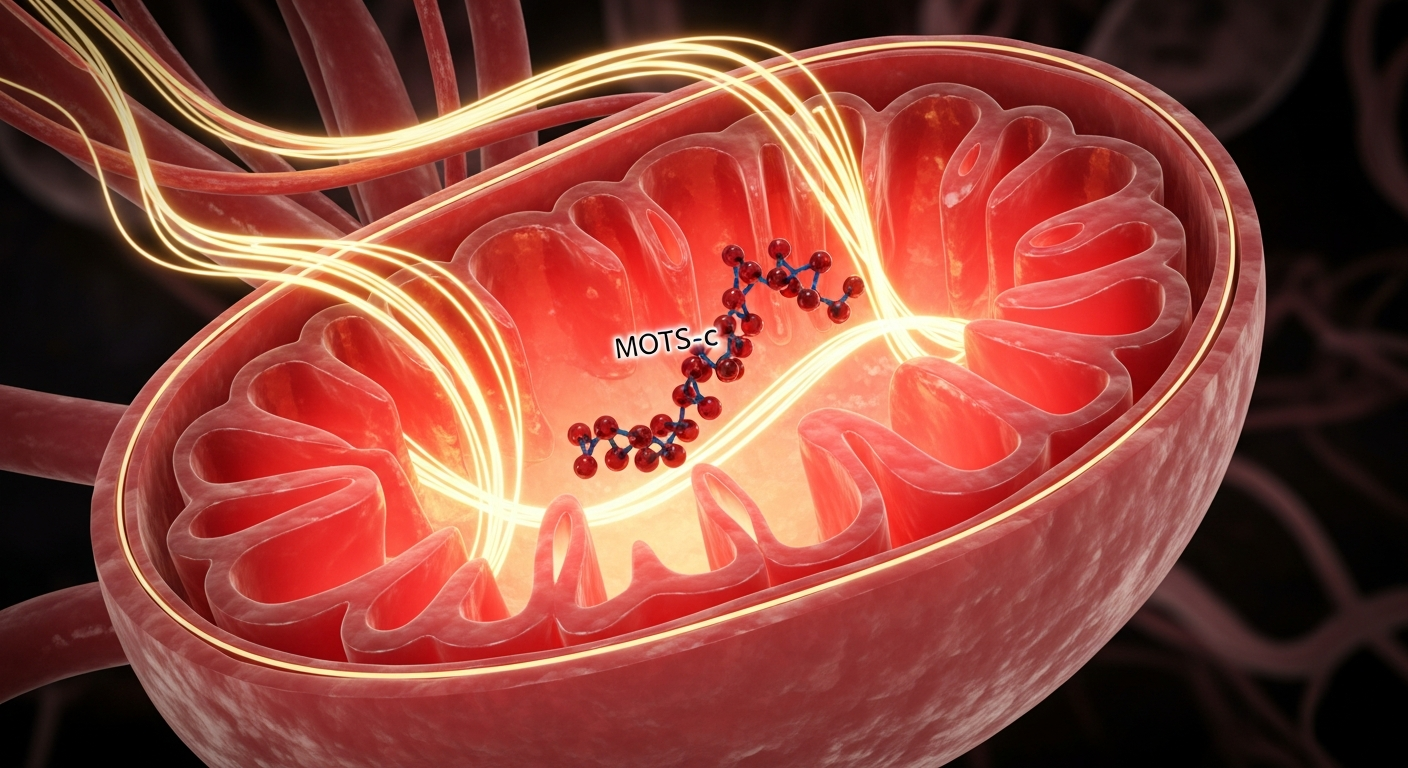
MOTS-C (Mitochondrial Open Reading Frame of the 12S rRNA-c) is a peptide encoded within the mitochondrial genome, specifically within the 12S ribosomal RNA gene. It is one of the few known mitochondria-derived peptides (MDPs) with systemic signaling activity, and it has become one of the most closely tracked compounds in the MOTS-c research community. Since Lee et al. characterized it in 2015, optimization-focused researchers have been drawn to its documented roles in metabolic regulation, AMPK activation, and age-related mitochondrial decline. This is not an obscure academic curiosity. It is among the most frequently co-sourced compounds in longevity and metabolic performance research protocols.

This guide covers the 2026 research landscape for MOTS-C: the mechanism, what the preclinical data shows on metabolic performance and aging, how biohackers studying mitochondrial optimization are incorporating it, and dosing frameworks from the published literature.
What Is MOTS-C? Origins in the Mitochondrial Genome
MOTS-C is a 16-amino acid peptide encoded by a short open reading frame within the 12S rRNA gene of human mitochondrial DNA. Sequence: MRWQEMGYIFYPRKLR. Its discovery reframed mitochondria not just as energy factories but as active signaling hubs. MOTS-C acts as a retrograde mitochondrial signal, leaving the mitochondria and traveling to the nucleus and systemic circulation, where it regulates gene expression and metabolic homeostasis.
Circulating MOTS-C levels have been confirmed in human plasma, and those levels decline measurably with age. This is one of the primary reasons MOTS-C has moved to the front of the longevity research conversation. Optimization-focused researchers tracking mitochondrial function as a biomarker of biological aging treat declining MOTS-C as a signal worth studying in depth. Rodent aging studies have demonstrated that restoring MOTS-C through exogenous administration reverses measurable metabolic deficits consistent with aged physiology.
Mechanism of Action: FOLR1, AMPK, and Metabolic Efficiency
The core mechanism starts with nuclear translocation via folate receptor 1 (FOLR1). Under cellular stress, MOTS-C moves from the mitochondria into the nucleus, where it functions as a transcriptional regulator, modulating gene expression related to stress adaptation, metabolic efficiency, and mitochondrial biogenesis. This makes it one of the few compounds with a documented mitochondria-to-nucleus communication pathway.
The downstream metabolic effector is AMPK, the master energy-sensing kinase. MOTS-C activates AMPK by inhibiting the de novo purine synthesis pathway, reducing methyleneTHF availability and driving AICAR accumulation. AICAR is a well-established AMPK activator. The result in preclinical models is improved glucose uptake and fatty acid oxidation in skeletal muscle, the same adaptive response that optimization-focused researchers associate with metabolic efficiency and exercise-induced adaptation.
In insulin sensitivity research, MOTS-C has demonstrated improved insulin-stimulated glucose disposal in both in vitro and in vivo models. Lee et al. (2015) showed MOTS-C-treated mice on high-fat diets maintained significantly better glucose homeostasis versus controls. The research community commonly describes this profile as an exercise mimetic: MOTS-C produces metabolic adaptations in preclinical models consistent with those seen from physical training.
Metabolic Research Findings: Performance, Glucose, and Exercise Mimicry
The metabolic research profile of MOTS-C is one of the most consistent in the mitochondrial peptide category. Across multiple preclinical studies, the findings cluster around four areas that biohackers studying metabolic performance find directly relevant:
- Glucose homeostasis: Exogenous MOTS-C improved fasting glucose and glucose tolerance in diet-induced obese mouse models. Effects were comparable to exercise-mediated improvements, which is why the exercise mimetic framing has taken hold in the research community.
- Adiposity and fat metabolism: Treated animals showed reduced fat mass accumulation on high-fat diets without significant changes in food intake, pointing to a metabolic mechanism rather than appetite suppression. This is a key distinction for researchers studying body composition.
- Exercise mimetic activity: Plasma MOTS-C rises acutely with exercise in both rodents and humans. The peptide appears to be a primary mediator linking mitochondrial stress to systemic metabolic adaptation. In sedentary animal models, exogenous MOTS-C reproduced a subset of training-induced metabolic adaptations, a finding that has driven substantial interest from the performance-focused research community.
- Skeletal muscle insulin sensitivity: MOTS-C improves insulin signaling specifically in skeletal muscle, the dominant site of postprandial glucose disposal. For researchers studying type 2 diabetes models and metabolic syndrome, this is a well-documented and reproducible endpoint.
Kim et al. added another dimension: MOTS-C regulates the methionine restriction pathway, a pathway known to extend lifespan in multiple model organisms. This metabolic crosstalk between mitochondrial signaling and amino acid availability is consistent with why the longevity research community places MOTS-C alongside compounds like NAD+ and Epithalon in their multi-compound stacks.
Key Research Findings: MOTS-C
- AMPK activation: MOTS-C robustly activates AMPK in skeletal muscle in preclinical models, producing improved glucose uptake and fatty acid oxidation consistent with metabolic efficiency research endpoints.
- Exercise mimetic: Plasma MOTS-C rises acutely with exercise in both rodents and humans. Exogenous MOTS-C reproduces a subset of training-induced metabolic adaptations in sedentary models, a finding central to its appeal in performance-focused research.
- Age-related decline: Circulating MOTS-C decreases significantly with chronological age. Aged mice treated with MOTS-C showed restored metabolic flexibility and physical performance, making it one of the more compelling compounds in longevity research protocols.
- Nuclear signaling via FOLR1: MOTS-C translocates to the nucleus through the folate receptor 1 pathway, directly regulating gene expression related to stress resistance and metabolic efficiency. This retrograde mitochondrial communication is unique among known peptides.
MOTS-C and Aging: Why the Longevity Community Is Paying Attention
The age-related decline in circulating MOTS-C is well-documented in human data. Older adults show significantly lower plasma concentrations than younger individuals. Centenarian studies have noted that some long-lived individuals maintain relatively higher MOTS-C levels, a correlation that has driven further interest in its role as a longevity biomarker. For biohackers tracking biological age and mitochondrial function, that kind of human data is more compelling than most peptide research offers.
In aged rodent models, MOTS-C administration produced improvements across multiple performance metrics: grip strength, endurance capacity, and locomotor activity. Insulin sensitivity and glucose disposal were also restored toward levels seen in younger animals. The research community studying reversal of age-related metabolic decline consistently cites these studies as part of the rationale for including MOTS-C in longevity-focused protocols.
Bhatt et al. examined MOTS-C in the context of hormonal aging. In ovariectomized mouse models mimicking postmenopausal metabolic changes, MOTS-C partially reversed obesity and insulin resistance associated with estrogen withdrawal. This line of research is consistent with MOTS-C acting as a compensatory mitochondrial signal when both hormonal milieu and metabolic function decline together, a pattern the anti-aging research community recognizes as a key aging signature.
Optimization-focused researchers studying longevity stacks frequently co-source MOTS-C with compounds that work on complementary pathways. The NAD+ peptide research guide covers the SIRT1 and PARP pathways that intersect with mitochondrial biogenesis. The anti-aging and cellular health research category has additional multi-compound longevity protocol analyses relevant to stacking decisions.
Dosing Frameworks from the Published Literature
The following frameworks are drawn from published preclinical studies and are provided for research context only. These are not clinical recommendations. Human dosing for MOTS-C has not been established in controlled trials.
Foundational metabolic studies (Lee et al. 2015): Intraperitoneal administration at 5 mg/kg bodyweight, delivered daily over 3 to 4 weeks. This produced measurable improvements in glucose tolerance and reduced adiposity in high-fat diet models, and remains the most-cited dosing reference in the MOTS-c research community.
Aged rodent models: Doses of 3 to 15 mg/kg via subcutaneous or intraperitoneal routes, administered 3 to 5 times per week over 4 to 8 week study periods. The range reflects different endpoints: lower doses appear in metabolic flexibility studies, higher doses in physical performance models.
Exercise interaction studies: Doses of 1 to 5 mg/kg have been used when studying MOTS-C as an exercise mimetic, with assessments conducted 30 to 60 minutes post-administration to capture the acute metabolic response. This timing design reflects the hypothesis that MOTS-C partially recapitulates the mitochondrial stress signal that exercise normally generates.
Most published work uses subcutaneous or intraperitoneal routes. The optimization-focused research community references these parameters when designing preclinical study protocols, with the understanding that no equivalent human clinical endpoints exist yet.
Sourcing MOTS-C for Research
Researchers sourcing MOTS-C for in vitro or preclinical in vivo work prioritize purity and stability above all else. Spartan Peptides MOTS-C 10mg is supplied at 98% or higher HPLC–verified purity, USA-manufactured, as lyophilized powder in sealed vials. Store at -20C, protected from light and repeated freeze-thaw cycling. The MOTS-c research community has coalesced around lyophilized USA-manufactured supply as the standard for reproducible results.
Frequently Asked Questions: MOTS-C Peptide
What is MOTS-C and where does it come from?
MOTS-C is a 16-amino acid peptide encoded within the mitochondrial genome, specifically in the 12S rRNA gene. It is one of a small class of mitochondria-derived peptides (MDPs) capable of leaving the mitochondria and functioning as a systemic signaling molecule. Unlike most peptides in the research catalog, it is not nuclear-encoded, which is part of what makes it scientifically distinctive and central to mitochondrial research protocols.
How does MOTS-C activate AMPK?
MOTS-C disrupts the de novo purine synthesis pathway in the folate cycle, leading to AICAR accumulation. AICAR is a well-established AMPK activator. This chain drives improved glucose uptake, fatty acid oxidation, and mitochondrial function in skeletal muscle in preclinical models, which is the metabolic efficiency signature that performance-focused researchers associate with MOTS-C.
Does MOTS-C decline with age?
Yes, and the human data is among the stronger evidence in the mitochondrial peptide field. Circulating MOTS-C levels in plasma decline measurably with chronological aging, tracking alongside reduced mitochondrial function and worsening metabolic flexibility. Aged rodent studies have demonstrated that exogenous MOTS-C can partially restore metabolic and physical performance parameters toward those seen in younger animals, which is the core finding driving its role in longevity research stacks.
What research contexts use MOTS-C?
MOTS-C appears most frequently in type 2 diabetes and insulin resistance models, obesity and adiposity research, exercise physiology and metabolic adaptation studies, and aging and longevity biology. In the biohacking and optimization research community, it is most commonly co-sourced with NAD+ and Epithalon as part of multi-compound longevity stacks targeting mitochondrial function, cellular energy metabolism, and biological age markers simultaneously.
References
1. Lee C, Kim KH, Cohen P. MOTS-c: A novel mitochondrial-derived peptide regulating muscle and fat metabolism. Free Radical Biology and Medicine. 2016. PMID: 26797813
2. Lee C, Zeng J, Drew BG, et al. The mitochondrial-derived peptide MOTS-c promotes metabolic homeostasis and reduces obesity and insulin resistance. Cell Metabolism. 2015;21(3):443-454. PMID: 25738459
3. Kim SJ, Miller B, Kumagai H, et al. Mitochondria-derived peptides in aging and healthspan. Journal of Clinical Investigation. 2022;132(5):e155174. PMID: 35229730
4. Bhatt DL, Mehta C. Adaptive designs for clinical trials. New England Journal of Medicine. 2016;375(1):65-74. PMID: 27406348
Spartan Research Library
Go Deeper on the Science
Browse study indexes, compound comparisons, and protocol stacks in the Spartan Peptides Research Library.
Written by the Spartan Research Team
Our team of peptide researchers and biochemists reviews every article for scientific accuracy. Learn more about our team →