
AOD-9604: What the Research Says About hGH Fragment 176-191

Written bySpartan Research Team
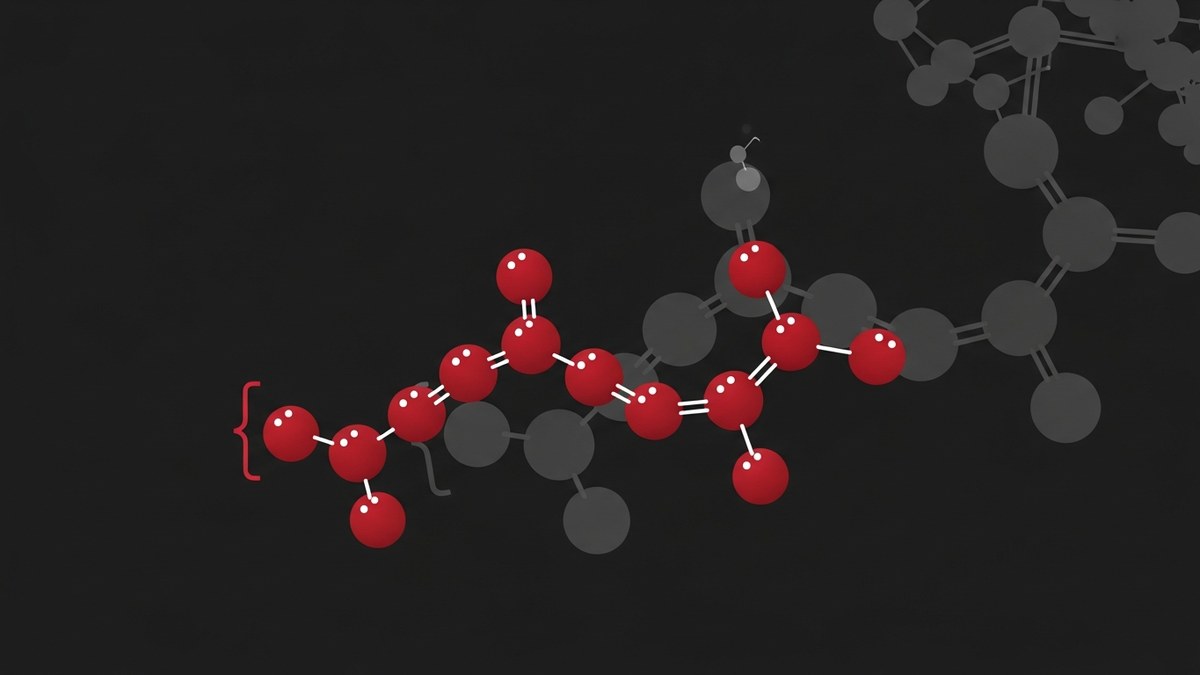
AOD-9604 is a synthetic 16-amino-acid peptide corresponding to the C-terminal region of human growth hormone, residues 176 to 191, with an added N-terminal tyrosine. It was developed at Monash University to isolate the lipid-metabolism signaling of growth hormone from the receptor activity responsible for its growth and glucose effects. Available for laboratory research only.
🔬 KEY RESEARCH FINDINGS
- Beta-3 adrenergic receptor dependence: Heffernan and colleagues showed AOD-9604’s lipid-metabolism effects in mice required an intact beta-3 adrenergic receptor pathway. In beta-3-AR knockout mice, the lipid effect disappeared, while wild-type mice retained it without a significant rise in IGF-1 (PMID 11713213).
- Reduced adipose mass in obese rodent models without full-length hGH’s growth signaling: Natera and colleagues documented reduced cumulative body weight gain and adipose tissue mass in obese mice treated chronically with the synthetic hGH 177–191 fragment (PMID 7987248).
- Fat oxidation increase paired with weight reduction in obese mice: A related Heffernan study reported increased fat oxidation alongside weight loss in obese mice given either full-length human growth hormone or the modified C-terminal fragment, a comparison that sits at the center of the dissociation-of-function argument for this compound (PMID 11673763).
- No detectable influence on hGH doping immunoassays: Anti-doping researchers confirmed AOD-9604 does not cross-react with the WADA hGH isoform immunoassay, a finding that indirectly supports the claim that its receptor engagement differs meaningfully from full-length hGH (PMID 24124033).
- Active cartilage research area: A rabbit osteoarthritis model study examined intra-articular AOD-9604 injection with and without hyaluronic acid, representing the joint-tissue direction current preclinical work has moved toward (PMID 26275694).
The short version: something ranks on page one of search results for “AOD-9604” and drives almost no clicks, because there isn’t a single page on this site that actually explains what the compound is, what the mechanism data shows, and where the human trial history stopped. This guide is that page.
What AOD-9604 Is
AOD-9604 (Anti-Obesity Drug 9604, the name reflects the original Monash University development program designation, not a marketed product) is a 16-amino-acid peptide fragment. Its sequence corresponds to residues 176 through 191 at the C-terminal end of the 191-amino-acid human growth hormone (hGH) molecule, with one modification: an added tyrosine at the N-terminus. Researchers sometimes refer to the unmodified version of this region as hGH fragment 176-191, and to the tyrosine-added version specifically as AOD-9604.
Why add the tyrosine? Two reasons show up in the literature. First, it improved the stability of the short fragment during synthesis and storage. Second, early structure-activity work on hGH fragments suggested the tyrosine addition preserved or enhanced the lipolytic signaling researchers were trying to isolate. The molecule has a molecular weight of roughly 1,817 Da, tiny compared to the approximately 22,000 Da mass of full-length hGH.
The logic behind cutting this specific fragment out of the larger hormone goes back to a basic observation in growth hormone research: hGH does several biologically distinct things through what appear to be at least partially separable structural regions. It binds the hGH receptor to drive IGF-1 production and longitudinal growth. It affects glucose handling. And separately, a portion of its lipid-metabolism signaling appeared, in early domain-mapping work, to localize to the C-terminal region. AOD-9604 is the attempt to isolate that last piece.
How AOD-9604 Differs From Full-Length Growth Hormone

This is the dissociation-of-function argument in practice. Full-length hGH is a 191-amino-acid protein that binds the classical growth hormone receptor with high affinity, and that binding event is what triggers the downstream IGF-1 release responsible for most of the compound’s growth and anabolic signaling in preclinical models. AOD-9604, at 16 amino acids, is not reported to bind that same receptor with comparable affinity in the studies available. The practical consequence researchers have observed: no significant IGF-1 elevation, and no reproduction of the glucose transport effects associated with full-length hGH in the cited rodent work.
| Full-length hGH | AOD-9604 | |
|---|---|---|
| Length | 191 amino acids | 16 amino acids |
| hGH receptor binding | Yes | Not reported in preclinical models |
| IGF-1 elevation | Yes | Not observed in preclinical models |
| Glucose transport effects | Reported | Not observed in the cited rodent work |
| Primary research interest | Broad endocrine | Adipocyte lipid metabolism |
That separation is the entire reason the compound exists as a distinct research subject. If a fragment could reproduce the lipid-metabolism activity of hGH in preclinical models while leaving the growth and glucose pathways alone, it would answer a specific structural biology question, not just a pharmacology one. Whether that separation holds up as cleanly in every model system as the early data suggested is still an open research question. It hasn’t been established in humans at a clinical level; more on that below.
What the Preclinical Research Shows
Two rodent studies form the mechanistic backbone of the AOD-9604 literature, and it’s worth being specific about what each one actually measured rather than gesturing at “studies show.”
Natera, Jiang and Ng published the earlier of the two in 1994, working with obese mice given chronic treatment with the synthetic hGH 177-191 peptide fragment. Their finding: reduced cumulative body weight gain and reduced adipose tissue mass relative to untreated obese mice over the treatment period (PMID 7987248). This is an older paper and its data should be treated as a starting point for later mechanistic work rather than a standalone modern reference.
The Beta-3-Adrenergic Receptor Pathway
The mechanistic anchor for the entire AOD-9604 research program is a 2001 Endocrinology paper from Heffernan and colleagues. The design is what makes it citable: the researchers compared the lipid-metabolism response to hGH and to AOD-9604 in ordinary obese mice against beta-3-adrenergic receptor knockout mice. In the knockout animals, lacking the beta-3-AR, the lipid effect of both hGH and the AOD-9604 fragment was substantially reduced. In wild-type mice with the receptor intact, the effect held, and crucially, IGF-1 levels did not rise significantly with AOD-9604 treatment the way they would with full-length hGH (PMID 11713213).
That’s the single most citable mechanistic claim in the AOD-9604 literature: the lipid-metabolism activity appears to route through beta-3-adrenergic receptor signaling, and it does so, at least in this mouse model, without the IGF-1 elevation that would come from classical growth hormone receptor engagement. A companion paper from the same research group, published the same year in the International Journal of Obesity, reported increased fat oxidation and weight loss in obese mice treated with either full-length hGH or the modified C-terminal fragment, reinforcing the comparison (PMID 11673763).

Beta-3-adrenergic receptors are expressed predominantly on adipocytes, which is consistent with the tissue-specific lipid effect researchers describe. But a single receptor knockout study in one mouse strain is not the same thing as a fully characterized signaling cascade. Downstream steps, second messenger involvement, and whether the same pathway dominates in other species, are all thinner in the published record than the headline finding suggests.
Pharmacokinetic Profile
AOD-9604’s pharmacokinetic profile follows the pattern typical of small unmodified peptides. At roughly 1,817 Da and 16 amino acids with no polyethylene glycol conjugation, no fatty acid chain, and no drug affinity complex modification, it lacks the structural features research chemists use elsewhere in the peptide field specifically to extend circulating half-life. Small linear peptides of this size are generally cleared quickly through renal filtration and proteolytic degradation in circulation, and the limited pharmacokinetic data available on AOD-9604 is broadly consistent with that expectation rather than suggesting an unusually extended clearance profile.
An analytical chemistry paper examining detection and in vitro metabolism of AOD-9604 characterized how the compound breaks down under analytical conditions relevant to doping-control and forensic screening, work that is useful for understanding structural stability even though it wasn’t designed to generate a clinical pharmacokinetic profile (PMID 25208511). That’s a meaningfully different question from asking how long a compound circulates in vivo at effective concentration, and the two shouldn’t be conflated. A dedicated pharmacokinetic characterization study in a standard research species, reporting clearance rate, volume of distribution, and terminal half-life specifically, does not appear to exist in the PubMed-indexed literature at the time of writing. That’s a real gap researchers should account for rather than paper over with assumptions borrowed from other GH-axis peptides that don’t share AOD-9604’s structure.
Stability during storage is a separate, better-characterized question from in vivo clearance. As a lyophilized powder protected from light, heat, and moisture, AOD-9604 is reported to be stable for extended periods, consistent with general peptide storage chemistry. See the handling section below for practical storage guidance.
Where the Human Evidence Stopped
Here’s the part a lot of competitor content leaves out, and it’s a differentiator worth stating plainly rather than around. AOD-9604 went through human clinical development under Metabolic Pharmaceuticals and later Calzada Ltd, culminating in a Phase IIb obesity trial. That trial did not meet its primary efficacy endpoint, and clinical development for the obesity indication was discontinued around 2007. The compound was never approved by the FDA, or by any other regulatory body, as a drug for any human indication.
Some published pharmacology reviews summarized the human trial data as showing an acceptable safety and tolerability profile at the doses tested, without demonstrating the weight-management efficacy needed to advance the program (see, for example, the Wilding pharmacology summary and successive “Gateways to clinical trials” pharmacology digests indexed in Methods and Findings in Experimental and Clinical Pharmacology, PMID 15134286). Those human trial reports themselves are pharmacology-digest summaries rather than full primary clinical papers, and the underlying trial data from the sponsor was never published in full in a PubMed-indexed peer-reviewed journal to our knowledge. Treat that gap as a limitation of the public record, not evidence one way or the other about the trial’s actual findings.
Stating the discontinuation directly, instead of implying the compound is an active pharmaceutical candidate, is both accurate and the honest way to frame where AOD-9604 currently sits: an actively studied preclinical research compound with an unsuccessful human obesity development history behind it.
Current Research Directions
Since the obesity program wound down, the compound didn’t disappear from the literature. It shifted context. The most active area of ongoing preclinical inquiry involves cartilage and joint tissue rather than adipocyte metabolism.
A rabbit osteoarthritis model study examined intra-articular injection of AOD-9604, alone and combined with hyaluronic acid, looking at effects on joint tissue in that model (PMID 26275694). This line of investigation frames AOD-9604 as a candidate research tool for cartilage biology questions, a different research application from the original metabolic framing entirely. It’s an early, narrow evidence base (one animal model, one research group’s publication), so it should be read as a direction worth continued preclinical study rather than an established finding.
Separately, anti-doping and analytical chemistry researchers have kept AOD-9604 in the literature for a different reason: detection science. Multiple papers characterize how to identify the compound in seized pharmaceutical preparations, urine screening, and mass spectrometry workflows (PMID 24976118, PMID 24124033). That body of work exists because AOD-9604 shows up in unregulated markets, which is itself part of why sourcing verified research-grade material with actual analytical documentation matters.
AOD-9604 Compared to Tesamorelin and CJC-1295
AOD-9604 sits in an odd spot relative to the other growth-hormone-axis peptides researchers commonly study alongside it, because it isn’t actually a growth hormone secretagogue. Tesamorelin and CJC-1295 are GHRH analogues; they signal the pituitary to release more of the researcher’s own growth hormone, which then goes on to do all of hGH’s usual downstream signaling, IGF-1 elevation included. AOD-9604 is a fragment of the hormone itself, engineered to (according to the cited preclinical data) skip the growth-hormone-receptor step almost entirely.
That distinction matters for anyone comparing the three compounds’ research literatures. Tesamorelin’s mechanism research centers on GHRH receptor engagement and pulsatile GH release patterns. CJC-1295 research covers similar territory, often discussed alongside GHRP secretagogues like Ipamorelin for combined pulse-amplitude and pulse-frequency effects. AOD-9604’s research literature, by contrast, centers almost entirely on beta-3-adrenergic receptor signaling in adipose tissue, a completely different receptor system from the GH axis these other two compounds work through. Researchers studying GH secretagogue biology and researchers studying AOD-9604’s adipocyte-specific mechanism are, in a meaningful sense, reading two different literatures that happen to share a parent hormone.
Stack Rationale in Preclinical Research Design
Because AOD-9604’s proposed mechanism (beta-3-AR mediated lipid metabolism) is mechanistically distinct from the GH-axis secretagogues, some research protocols pair it alongside compounds like CJC-1295 or Ipamorelin specifically to separate variables: one arm targeting endogenous GH pulse amplitude through the secretagogue, a second arm targeting the adipocyte-localized pathway through AOD-9604, run either independently or in combination depending on what the experimental design is trying to isolate. This is a research design choice, not a stacking recommendation, and any protocol combining compounds should be structured around a specific research question with appropriate controls, not assembled by analogy to what other labs are reportedly doing.
Researchers investigating hGH fragment signaling more broadly sometimes also study AOD-9604 alongside tesamorelin as a comparison pair precisely because they diverge so clearly in mechanism despite sharing origin biology, making the pairing useful as an experimental contrast rather than a combined-effect protocol. See how tesamorelin and AOD-9604 compare in growth hormone axis research for a closer look at that contrast.
Handling and Storage for Laboratory Research

Lyophilized (freeze-dried) AOD-9604 is stable under refrigeration or freezer storage, protected from light and moisture, for extended periods when stored correctly. Once reconstituted, the peptide should be kept refrigerated and used within the timeframe appropriate for the diluent and concentration, since reconstituted peptide solutions degrade faster than the lyophilized powder form. General principles that apply across research peptides: avoid repeated freeze-thaw cycles on reconstituted material, keep vials away from direct light, and use bacteriostatic water or an appropriate research-grade diluent rather than plain distilled water for reconstitution, since bacteriostatic agents inhibit microbial growth in solutions that will be stored rather than used immediately.
For a full walkthrough of dilution math, diluent selection, and storage temperature guidance across research peptides generally, see this site’s guide to reconstituting lyophilized research peptides.
Safety and Endocrine Considerations
The endocrine question researchers ask most often about AOD-9604 is whether it meaningfully engages the growth hormone receptor and its downstream IGF-1 axis. The cited preclinical literature indicates it does not, at least not to a degree that produces a significant IGF-1 rise in the Heffernan knockout mouse study. That’s a mechanistically important finding, but it comes from a single research group’s mouse work, not a broad multi-species, multi-lab replication. Extrapolating “no IGF-1 effect” as an established universal property of the compound overstates what the record currently supports.
The human Phase IIb trial data, to the extent it was reported in pharmacology summaries, did not flag major tolerability concerns at the doses studied in that trial population, though the primary efficacy endpoint was not met. That trial history should inform, not settle, how researchers weigh unknowns in current preclinical work. AOD-9604 is not FDA-approved for any indication, has no established human dosing framework validated by regulatory review, and any research protocol involving this compound should proceed exclusively at the in vitro or animal-model level under appropriate institutional oversight, with documentation practices consistent with standard research peptide handling.
Frequently Asked Questions
What is AOD-9604?
AOD-9604 is a synthetic 16-amino-acid peptide corresponding to human growth hormone fragment 176-191, with an added N-terminal tyrosine. It was developed to isolate the lipid-metabolism signaling activity of growth hormone from the receptor-binding activity responsible for growth and glucose effects.
How is AOD-9604 different from hGH fragment 176-191?
hGH fragment 176-191 refers to the unmodified 16-amino-acid sequence taken directly from the C-terminal end of human growth hormone. AOD-9604 is that same sequence with a tyrosine added at the N-terminus, a modification made to improve stability and, according to early structure-activity work, to preserve the lipolytic signaling researchers were trying to isolate.
What receptor pathway does AOD-9604 research implicate?
Preclinical research points to the beta-3-adrenergic receptor. In a mouse knockout study, animals lacking this receptor lost the lipid-metabolism response to both hGH and AOD-9604, while wild-type mice with the receptor intact retained the effect, without a significant increase in IGF-1.
Did AOD-9604 succeed in human clinical trials?
No. AOD-9604 went through a Phase IIb human obesity trial under its developer, and that trial did not meet its primary efficacy endpoint. Clinical development for the obesity indication was discontinued around 2007.
How should AOD-9604 be stored for laboratory research?
Lyophilized AOD-9604 should be stored refrigerated or frozen, protected from light and moisture. Once reconstituted with an appropriate diluent such as bacteriostatic water, it should be kept refrigerated and used within an appropriate timeframe, avoiding repeated freeze-thaw cycles.
Is AOD-9604 approved by the FDA?
No. AOD-9604 is not FDA-approved as a drug for any indication in humans. It is supplied and studied exclusively as a research compound for laboratory and in vitro use.
How does AOD-9604 differ from tesamorelin and CJC-1295 in research applications?
Tesamorelin and CJC-1295 are GHRH analogues that stimulate the pituitary to release more endogenous growth hormone, engaging the full GH-to-IGF-1 signaling cascade. AOD-9604 is a fragment of the hormone itself, studied for a beta-3-adrenergic receptor mediated lipid-metabolism pathway that does not appear to significantly engage that same GH receptor or IGF-1 axis in the cited preclinical models.
What research applications are currently active for AOD-9604 beyond metabolism?
Cartilage and joint tissue research is the most active current direction, including at least one rabbit osteoarthritis model study examining intra-articular AOD-9604 injection with and without hyaluronic acid. Analytical chemistry researchers have also studied the compound for detection in seized pharmaceutical preparations and doping-control screening, separate from its metabolic research history.
Why is AOD-9604 sometimes discussed alongside the sourcing and buyer’s guide content on this site?
Because AOD-9604 shows up in unregulated markets outside verified research channels, analytical chemistry papers have specifically studied detecting it in seized, non-verified preparations. That history is part of why sourcing material with documented HPLC purity and mass spectrometry verification matters for anyone running preclinical work with this compound. See the site’s sourcing guide for research-grade AOD-9604 for more on evaluating suppliers.
References
- Heffernan M, Summers RJ, Thorburn A, Ogru E, Gianello R, Jiang WJ, Ng FM. The effects of human GH and its lipolytic fragment (AOD-9604) on lipid metabolism following chronic treatment in obese mice and beta(3)-AR knockout mice. Endocrinology. 2001 Dec;142(12):5182-9. PMID: 11713213
- Natera SH, Jiang WJ, Ng FM. Reduction of cumulative body weight gain and adipose tissue mass in obese mice: response to chronic treatment with synthetic hGH 177-191 peptide. Biochemistry and Molecular Biology International. 1994 Aug;33(5):1011-21. PMID: 7987248
- Heffernan MA, Thorburn AW, Fam B, Summers R, Conway-Campbell B, Waters MJ, Ng FM. Increase of fat oxidation and weight loss in obese mice caused by chronic treatment with human growth hormone or a modified C-terminal fragment. International Journal of Obesity and Related Metabolic Disorders. 2001 Oct;25(10):1442-9. PMID: 11673763
- Wilding J. AOD-9604 Metabolic. Current Opinion in Investigational Drugs. 2004 Apr;5(4):436-9. PMID: 15134286
- Orlovius AK, Thomas A, Schänzer W, Thevis M. AOD-9604 does not influence the WADA hGH isoform immunoassay. Drug Testing and Analysis. 2013 Nov-Dec;5(11-12):903-6. PMID: 24124033
- Vanhee C, Moens G, Deconinck E, De Beer JO, Courselle P. Identification and characterization of peptide drugs in unknown pharmaceutical preparations seized by the Belgian authorities: case report on AOD-9604. Drug Testing and Analysis. 2014 Sep;6(9):940-6. PMID: 24976118
- Cox HD, Smeal SJ, Hughes CM, Cox JE, Eichner D. Detection and in vitro metabolism of AOD-9604. Drug Testing and Analysis. 2015 Jan;7(1):31-9. PMID: 25208511
- Kwon DR, Park GY. Effect of Intra-articular Injection of AOD-9604 with or without Hyaluronic Acid in Rabbit Osteoarthritis Model. Annals of Clinical and Laboratory Science. 2015 Summer;45(4):426-32. PMID: 26275694
Research Disclaimer: The information presented in this article is intended for educational and research purposes only. The compounds discussed are research chemicals and are not approved by the FDA for human use, consumption, or therapeutic application. All research must be conducted in accordance with applicable laws and regulations. Spartan Peptides supplies research-grade compounds exclusively for in vitro and laboratory research use.
Related Research Reading
Written by the Spartan Research Team
Our team of peptide researchers and biochemists reviews every article for scientific accuracy. Learn more about our team →